Home / Families / Page 34

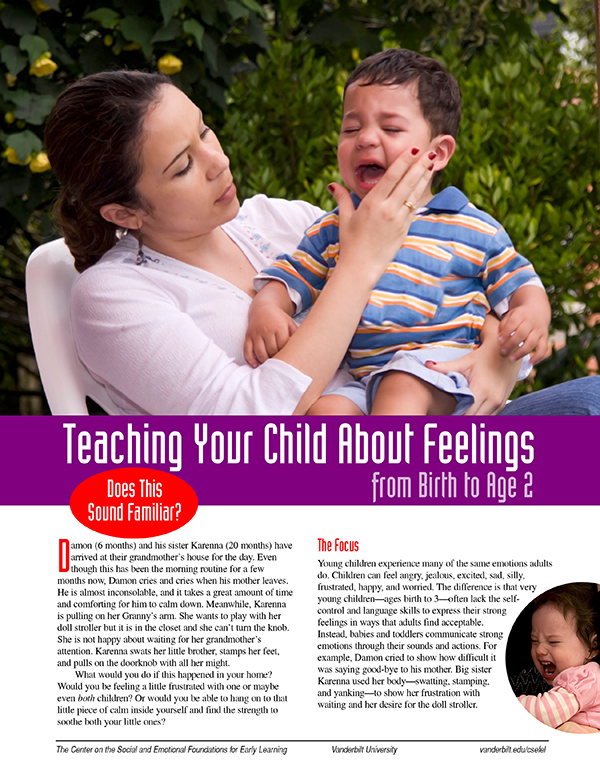
Teaching Your Child About Feelings – from Birth to Age 2

Understanding feelings is an important part of a child’s social emotional development. Babies and toddlers experience feelings just like you do, and know when you are feeling happy or down as well. When you use words to describe emotions, share in their good feelings, and comfort them when they feel sad or overwhelmed, young children are learning important social emotional skills.

Teaching Your Child About Feelings – from Birth to Age 2 (Spanish)

Understanding feelings is an important part of a child’s social emotional development. Babies and toddlers experience feelings just like you do, and know when you are feeling happy or down as well. When you use words to describe emotions, share in their good feelings, and comfort them when they feel sad or overwhelmed, young children are learning important social emotional skills.

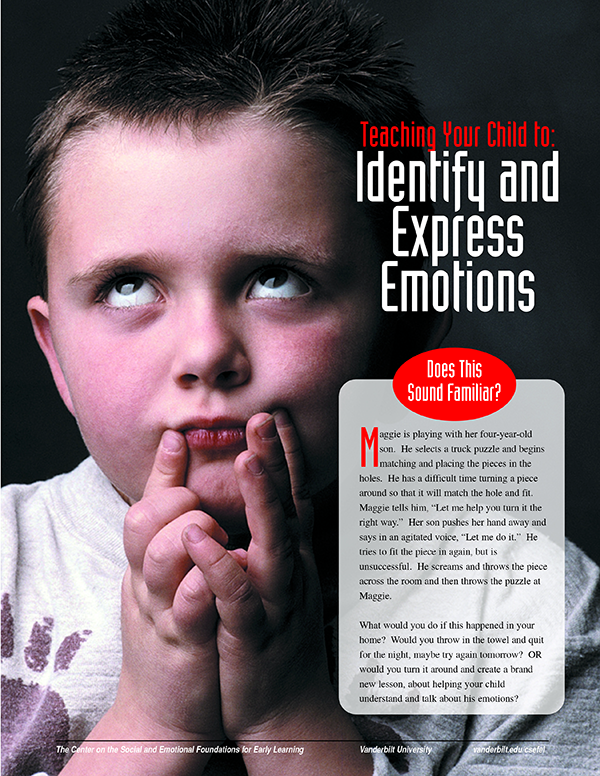
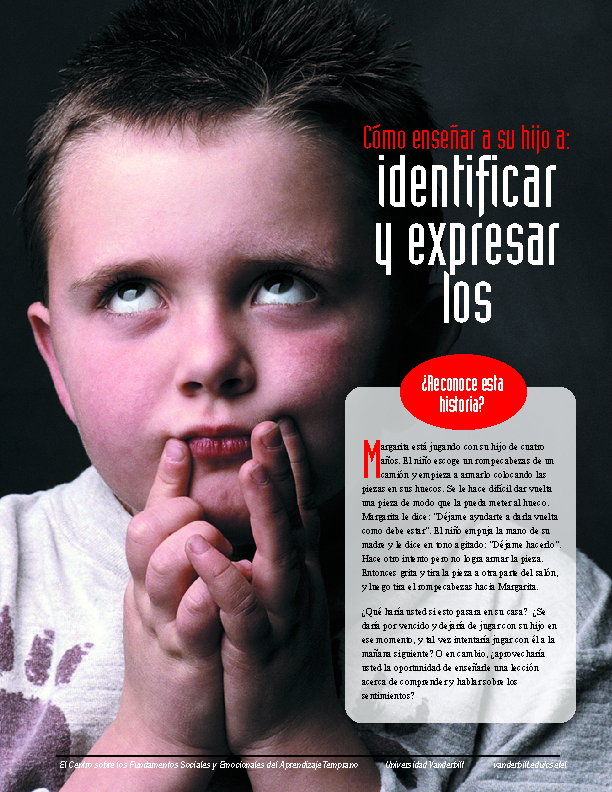
Teaching Your Child to Identify and Express Emotions

Young children deal with many of the same emotions adults do. Children get angry, sad, frustrated, nervous, happy, or embarrassed, but they often do not have the words to talk about how they are feeling. Instead, they sometimes act out these emotions in very physical and inappropriate ways. This four-page handout describes specific steps and strategies adults can use to help children express themselves in ways that are appropriate.

Teaching Your Child to Identify and Express Emotions (Spanish)

Young children deal with many of the same emotions adults do. Children get angry, sad, frustrated, nervous, happy, or embarrassed, but they often do not have the words to talk about how they are feeling. Instead, they sometimes act out these emotions in very physical and inappropriate ways. This four-page handout describes specific steps and strategies adults can use to help children express themselves in ways that are appropriate.

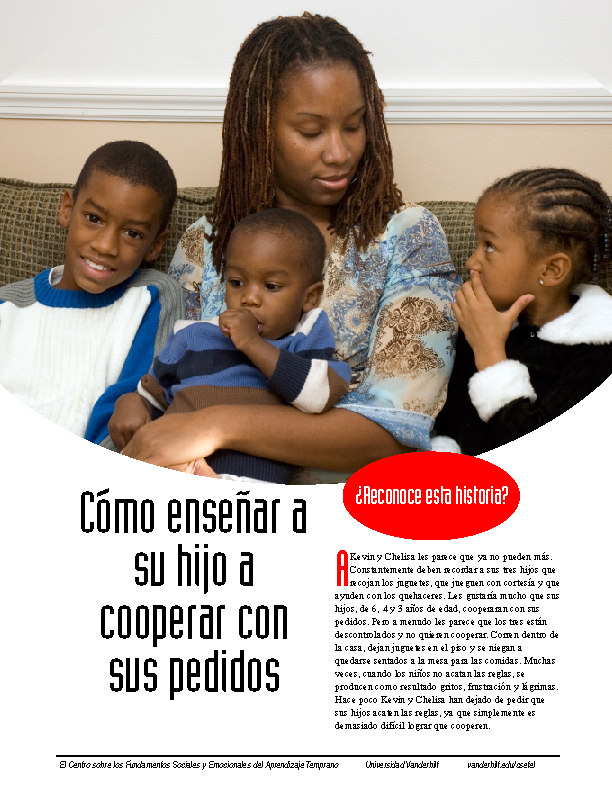
Teaching Your Child to Cooperate with Requests (Spanish)

Young children can learn to follow adult expectations, including performing simple chores, if the expectations are developmentally appropriate (meaning they match what can be expected for children at that age) and are taught to the child. This four-page handout provides information on what you might expect from your preschooler and some tips for helping your child learn and follow your requests.

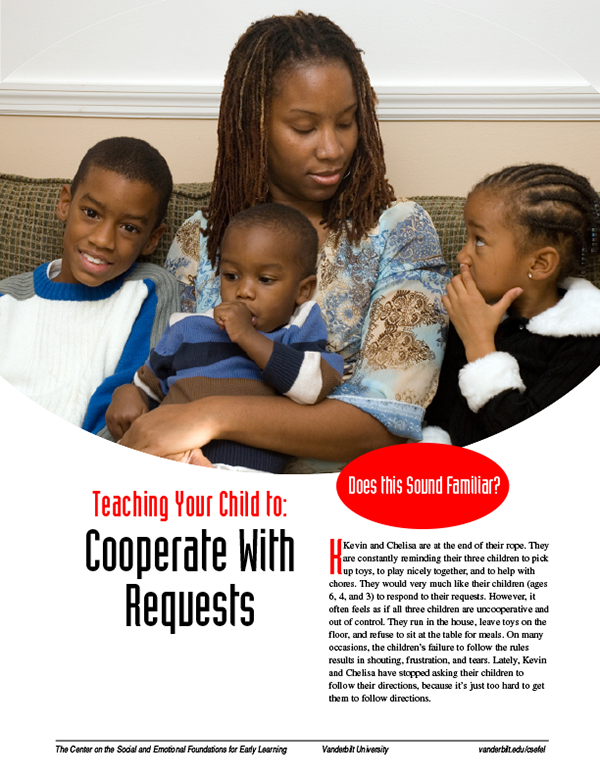
Teaching Your Child to Cooperate with Requests

Young children can learn to follow adult expectations, including performing simple chores, if the expectations are developmentally appropriate (meaning they match what can be expected for children at that age) and are taught to the child. This four-page handout provides information on what you might expect from your preschooler and some tips for helping your child learn and follow your requests.

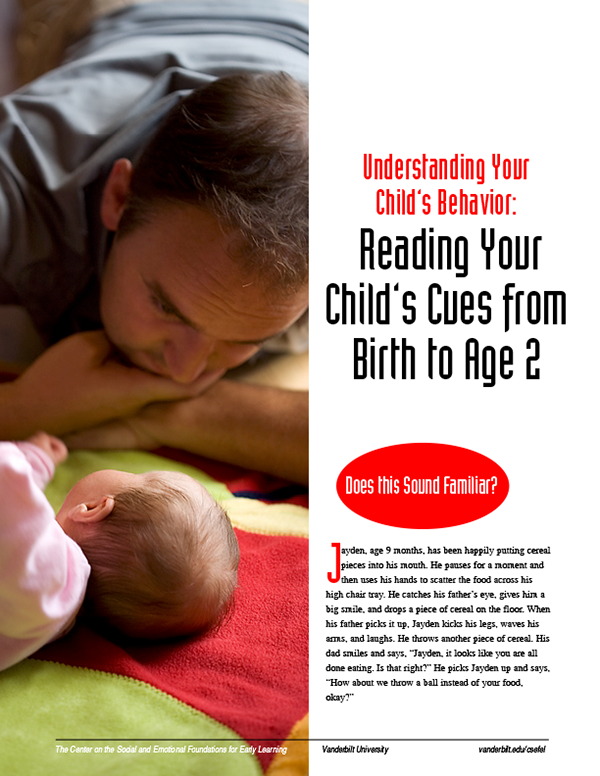
Understanding your Child’s Behavior: Reading Your Child’s Cues from Birth to Age 2

Babies and toddlers experience and express thoughts and feelings. Often they communicate their strong feelings through behaviors that adults understand right away. Other times, very young children’s behavior can be confusing or even frustrating to the adults who care for them. Being able to stay calm, make a good guess at what the behavior might mean, and then respond helps children understand that they are powerful communicators. Over the long-term, this helps children learn how to connect with others in ways that are healthy and respectful?a skill they?ll use for life.

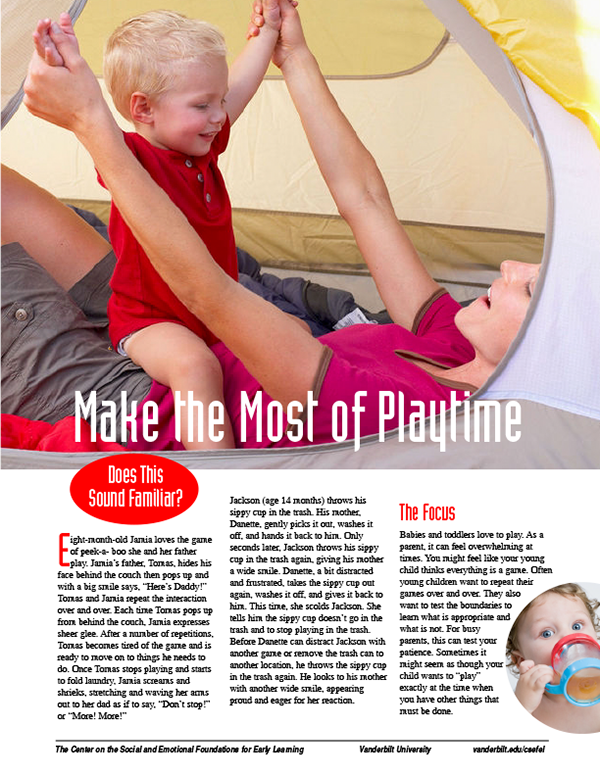
Make the Most of Playtime

Playtime is special. Playing together with your child is not only fun, but a critical time to support your baby or toddler’s healthy development. Making time for play, especially active play, can also help in reducing your child’s challenging behavior. So what can you do to make the most of your child’s playtime? To answer this question, check out the many tips and ideas for children of varying ages in this fun and useful six-page resource.

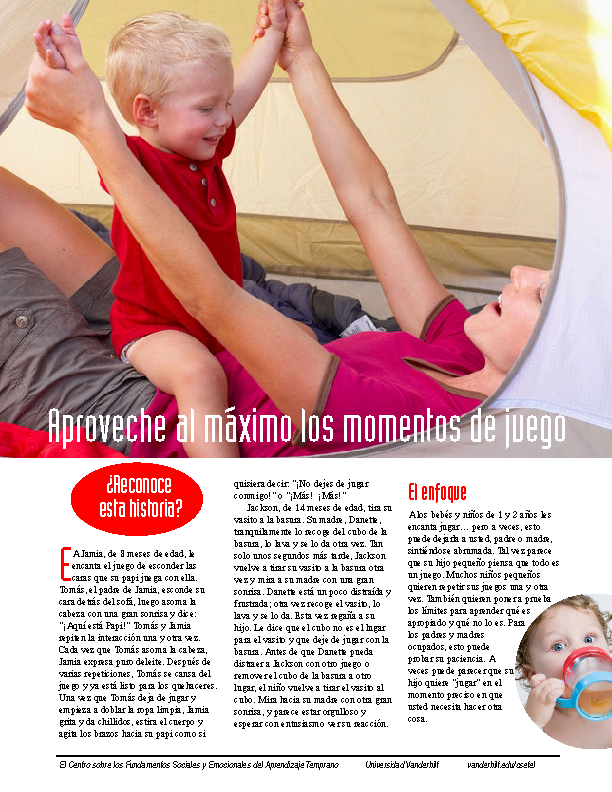
Make the Most of Playtime (Spanish)

Playtime is special. Playing together with your child is not only fun, but a critical time to support your baby or toddler’s healthy development. Making time for play, especially active play, can also help in reducing your child’s challenging behavior. So what can you do to make the most of your child’s playtime? To answer this question, check out the many tips and ideas for children of varying ages in this fun and useful six-page resource.

Responding to Your Child’s Bite (Spanish)

Many toddlers and young children bite. Developmentally, most toddlers don?t have enough words to express how they are feeling. They primarily rely on sounds and actions to communicate what they are thinking and feeling. Biting is one of the ways toddlers express their needs, desires, or feelings. This handout provides information on why children bite, what to do and what not to do, and when to seek professional help.