Home / State Leaders / Page 20

Administrator Strategies that Support High-Fidelity Implementation of the Pyramid Model for Promoting Social-Emotional Competence & Addressing Challenging Behavior
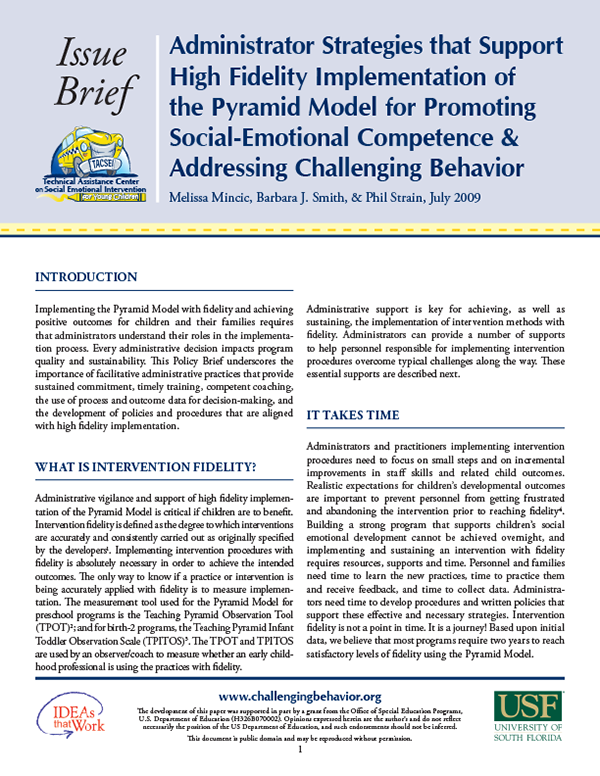
Implementing the Pyramid Model with fidelity and achieving positive outcomes for children and their families requires that administrators understand their roles in the implementation process. Every administrative decision impacts program quality and sustainability. This issue brief underscores the importance of facilitative administrative practices that provide sustained commitment, timely training, competent coaching, the use of process and outcome data for decision-making, and the development of policies and procedures that are aligned with high-fidelity implementation (July, 2009).
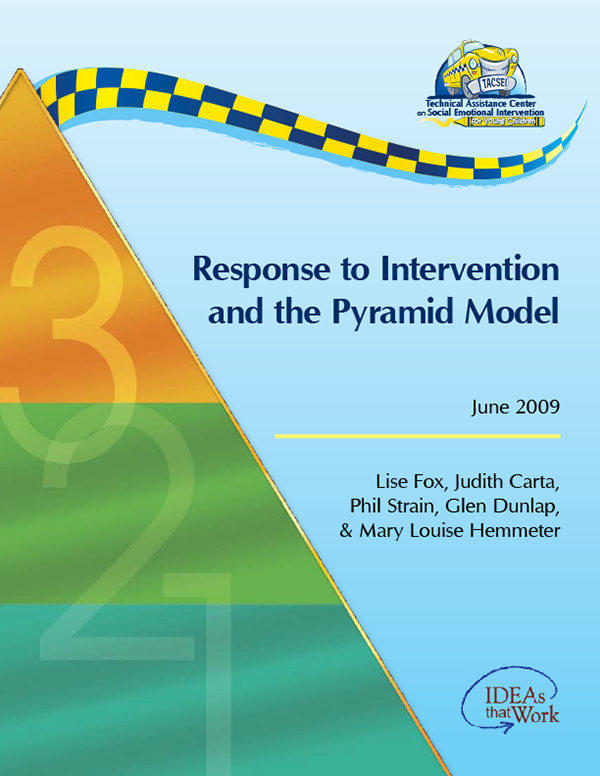
Response to Intervention and the Pyramid Model

Response to Intervention (RtI) offers a comprehensive model for the prevention of delays in learning and behavior. While this problem-solving framework was initially designed for application within Kindergarten to 12th grade programs, there is substantial research that supports the value of the model for application within early childhood programs. This paper provides an overview of RtI and discusses the Pyramid Model (Fox, Dunlap, Hemmeter, Joseph, & Strain, 2003) and its application for promoting young children’s social competence and preventing behavior challenges (June 2009).

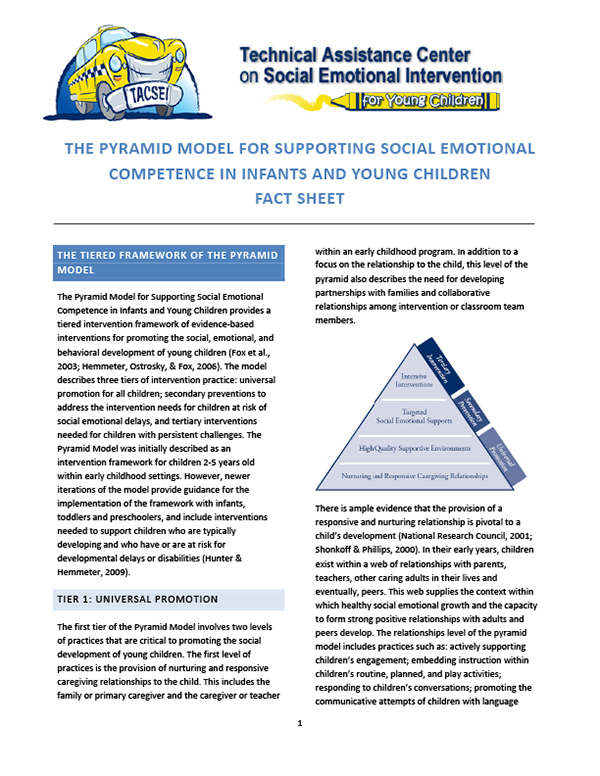
The Pyramid Model for Supporting Social-Emotional Competence in Infants and Young Children

This four-page fact sheet provides an overview of the Pyramid Model for Supporting Social-Emotional Competence in Infants and Young Children. Specifically, this fact sheet describes the three tiers of intervention practice: universal promotion for all children; secondary preventions to address the intervention needs for children at risk of social-emotional delays, and tertiary interventions needed for children with persistent challenges. Additionally, six key assumptions that were made during the design process about how the Pyramid Model would be implemented are outlined.

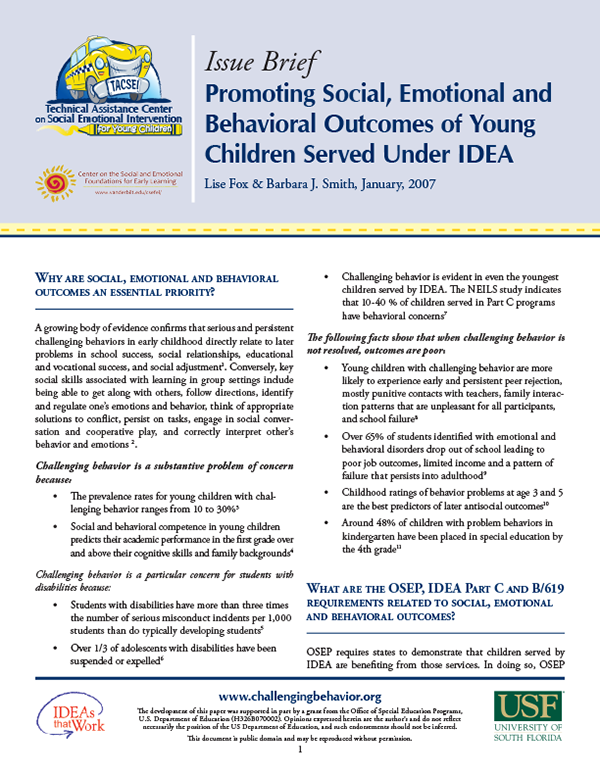
Promoting Social, Emotional, and Behavioral Outcomes of Young Children Served Under IDEA

A growing body of evidence confirms that serious and persistent challenging behaviors in early childhood directly relate to later problems in school success, social relationships, educational and vocational success, and social adjustment. This brief addresses several important questions policy makers may have about challenging behavior and how these issues relate to young children served under IDEA (January, 2007).

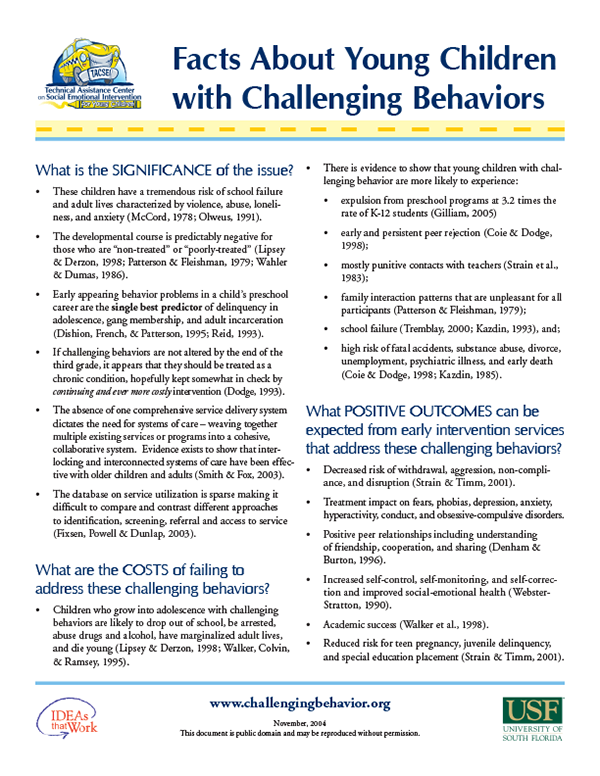
Facts About Young Children with Challenging Behavior

Young children with challenging behavior have a significant risk of continued problems, school failure, and social adjustment problems. This fact sheet provides a summary of the research on the significance of the issue, the social costs associated with young children who have challenging behavior, and the importance of early intervention.