Creating Unique Identification Codes
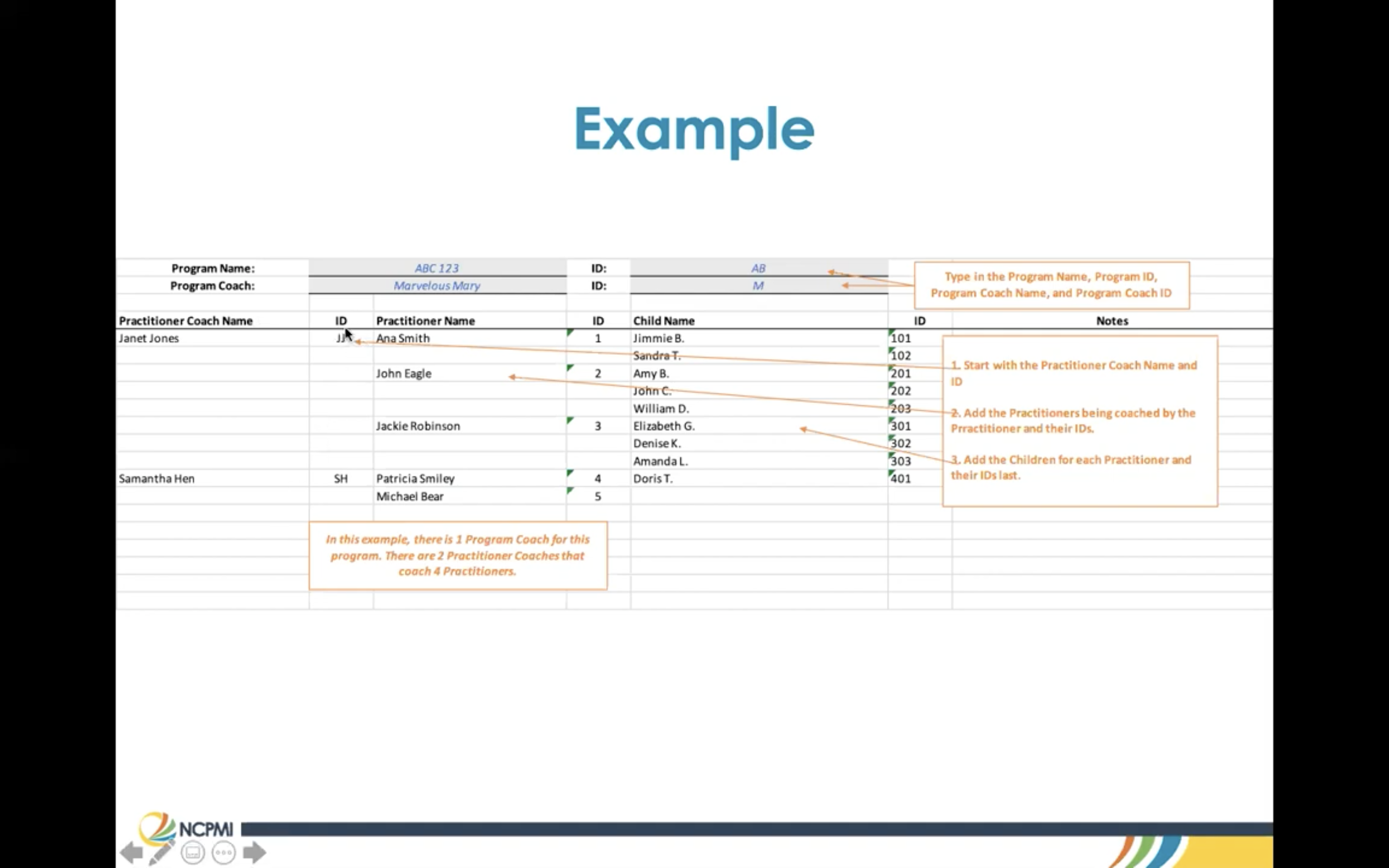
This tutorial goes through creating unique identification codes for program staff and children to be used with the various Pyramid Model data tools.
This tutorial goes through creating unique identification codes for program staff and children to be used with the various Pyramid Model data tools.
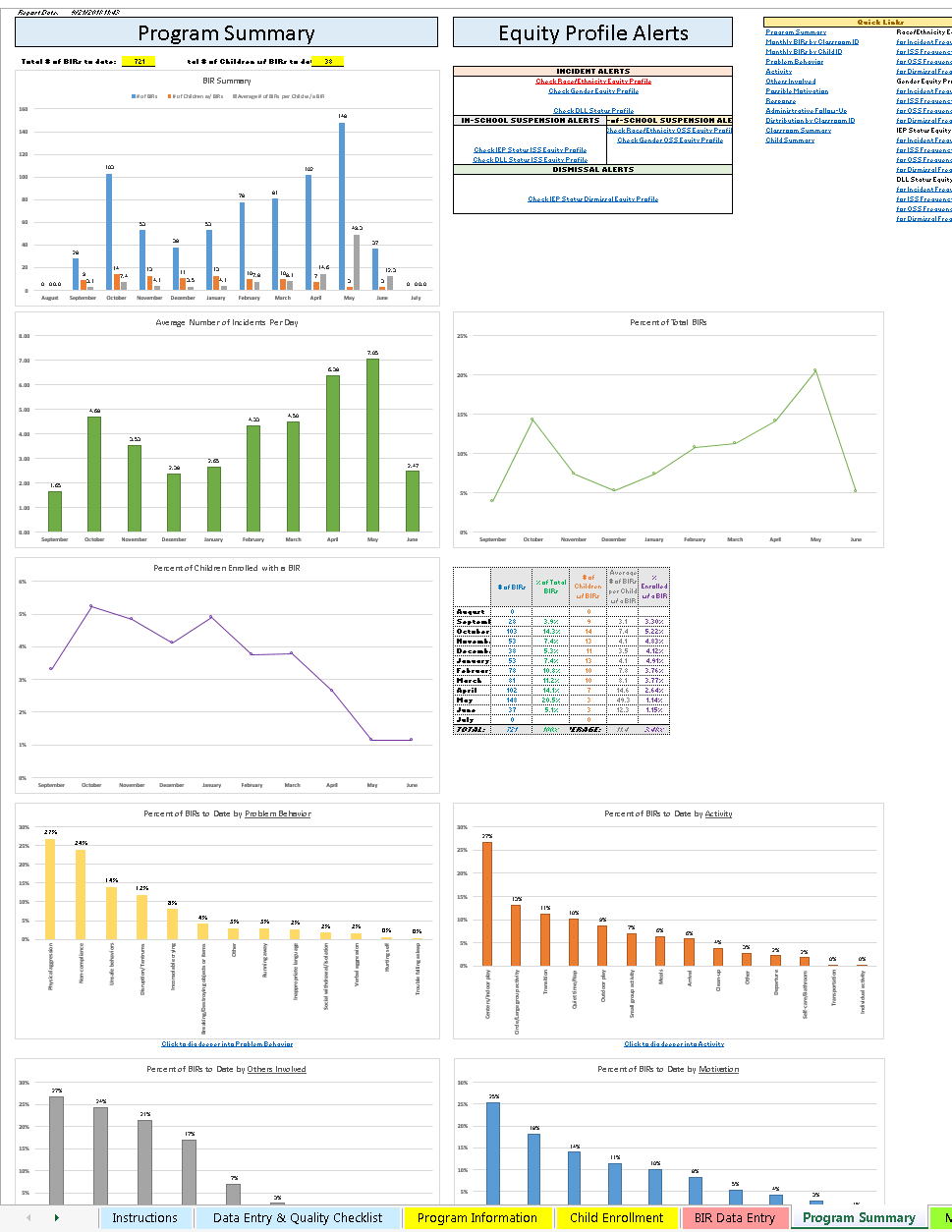
The Behavior Incident Report System (BIRS) provides early care and education programs and classrooms with a system to collect and analyze behavior incidents in their program. The system provides an efficient mechanism for gathering information on elements related to behavior incidents that can be used analytically to make decisions about providing supports to teachers and children within the program. Teachers within programs collect data on behavior incidents that are not developmentally normative or are a cause of concern to the teacher. These data are summarized monthly to provide formative data for examining factors related to behavior incidents (child, teacher, activity, behavior type, behavior motivation, and responses to the behavior). In addition, these data provide summative information on the frequency of behavior incidents over time and an analysis of potential equity issue by calculating disproportionality related to race, ethnicity, IEP status, gender, and dual language learners.

This webinar will focus on implementing, scaling and sustaining the Pyramid Model in states through the development of fiscal policy. A framework for a policy development process and types of public policy specific to funding will be shared. Panelists from states will share their success stories in the leverage of fiscal policy supporting the scaling and sustainability of the Pyramid Model.
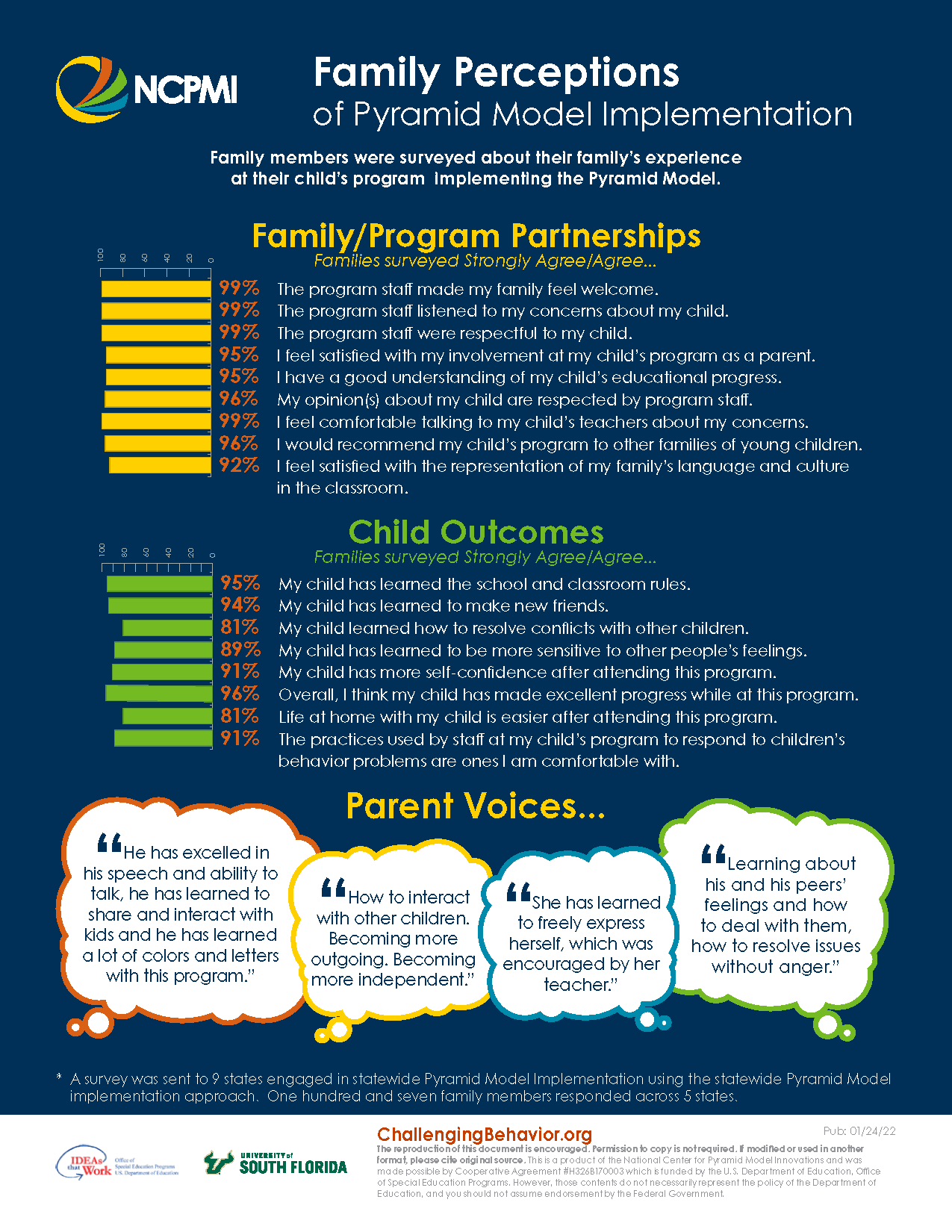
Family members were surveyed about their family’s experience at their child’s program implementing the Pyramid Model. This infographic shows the percent of families that agreed or strongly agreed with the statements reflecting family and program partnerships, and what their child has learned.
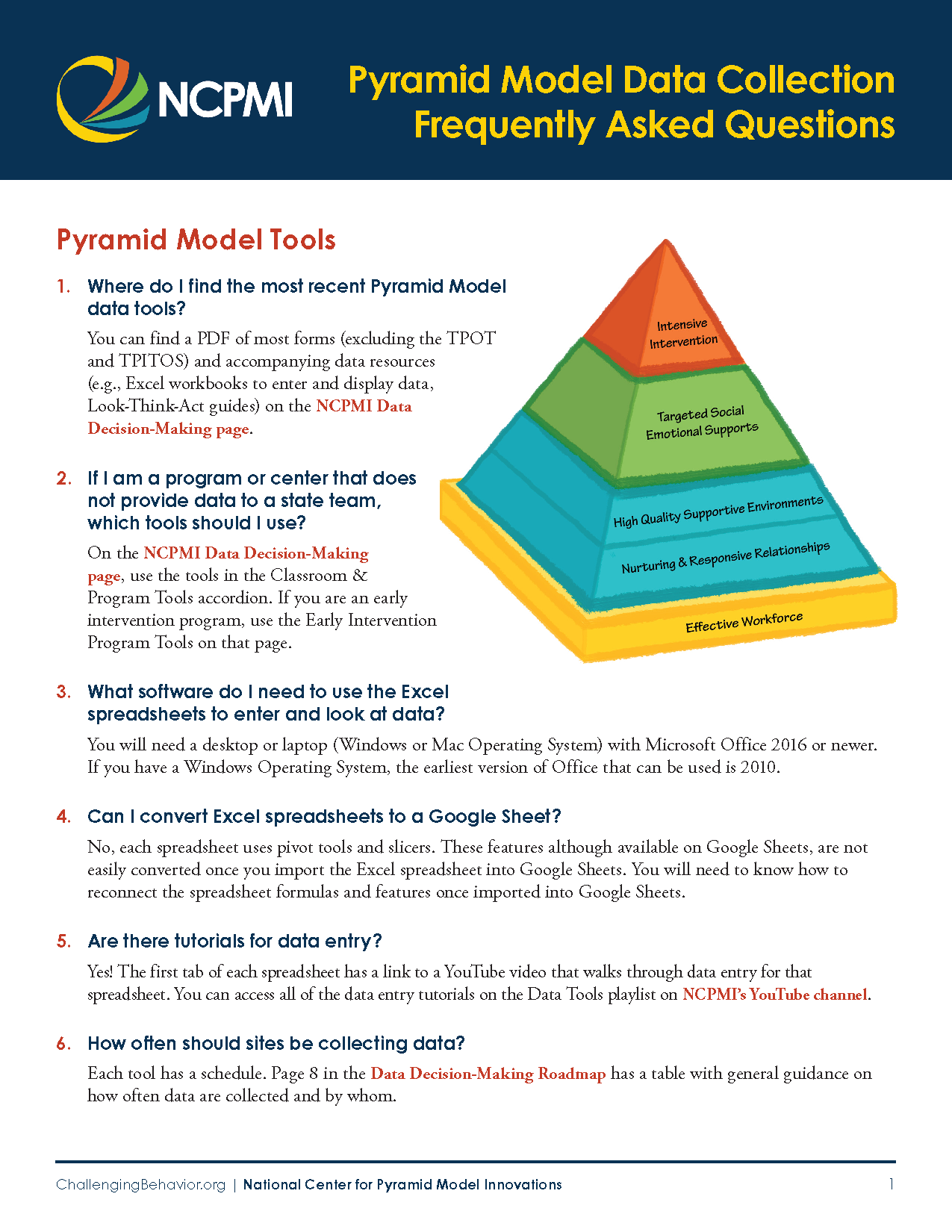
This resource answers some of the most frequently asked questions about the collection and summary of Pyramid Model data.
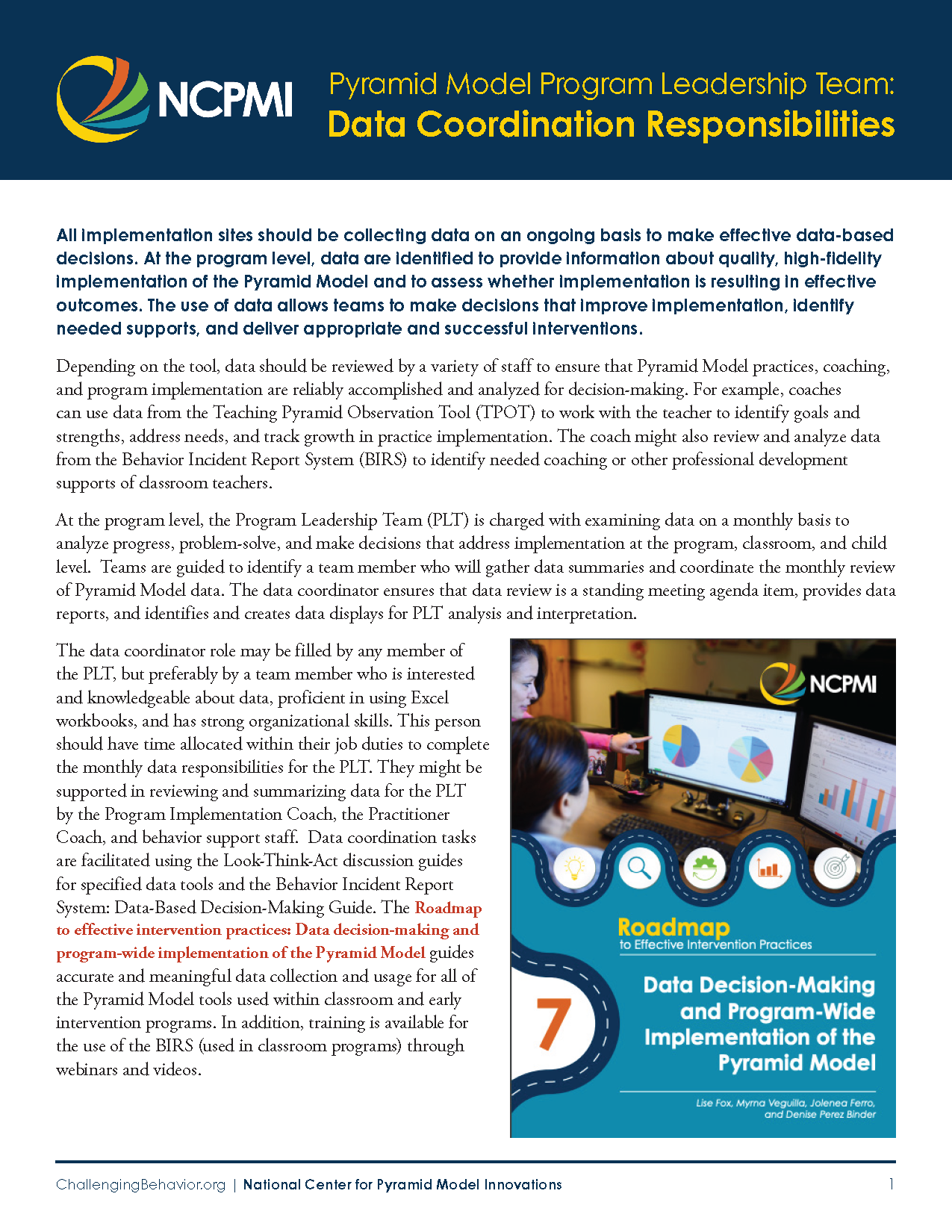
This resource describes the program level data coordination responsibilities at programs implementing the Pyramid Model.
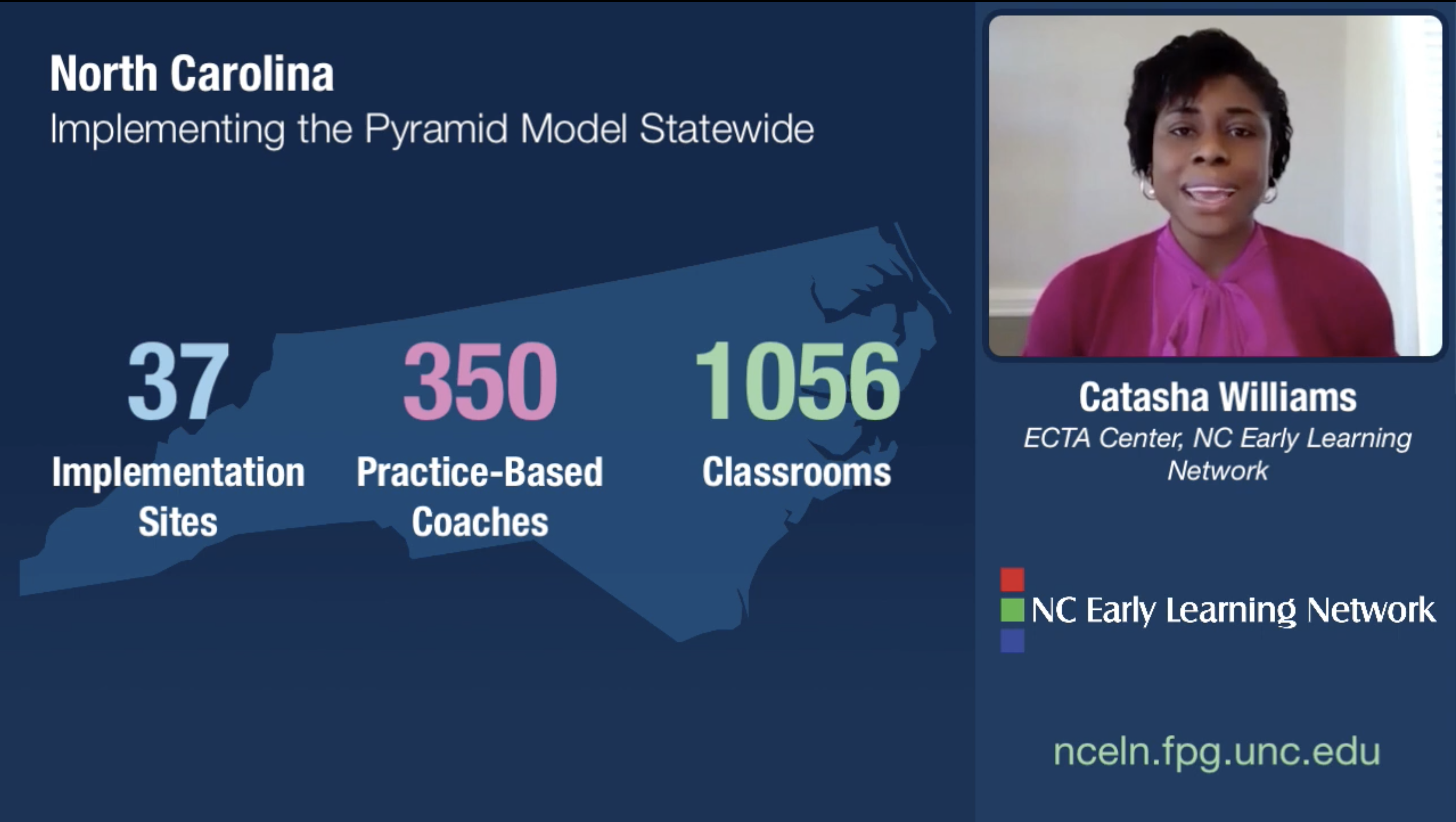
This video reviews the support structures and resources for state-wide implementation and experiene of one state implementing state-wide.
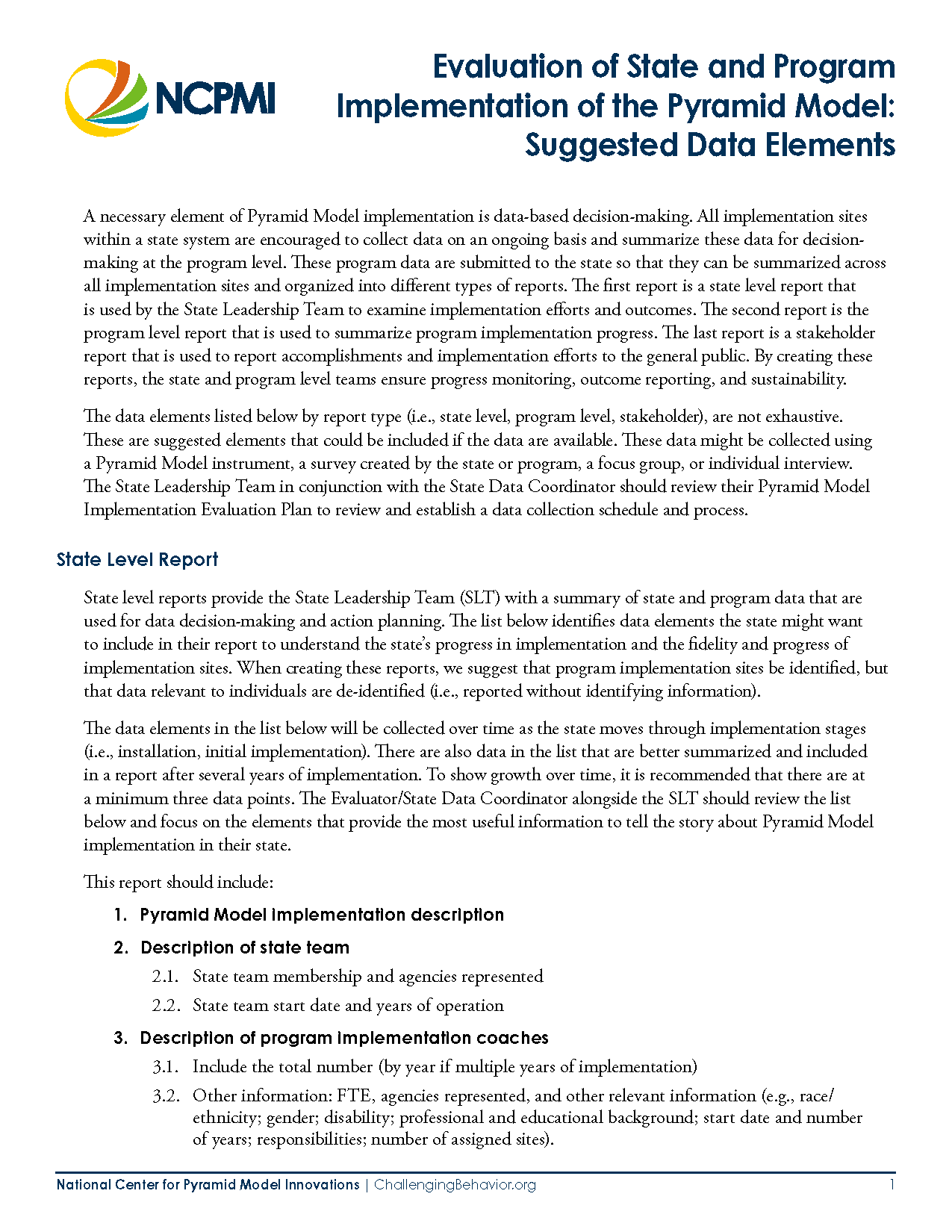
This resource describes the data elements that might be included in the different evaluation reports in a state system implementing the Pyramid Model.
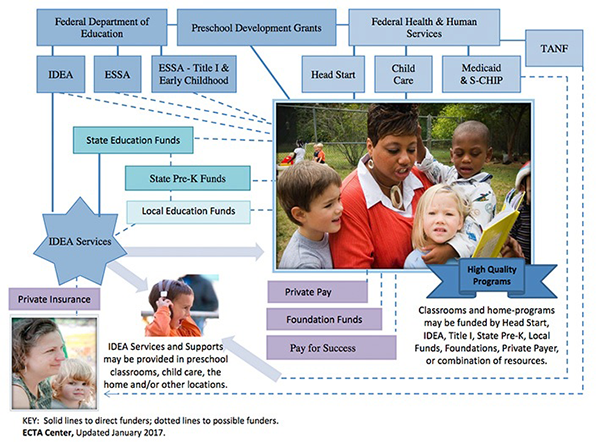
Resources for planning funding for inclusion efforts in early childhood settings, including collaborative strategies, sample interagency agreements, and alternative funding sources to support the implementation of comprehensive and inclusive services for young children.
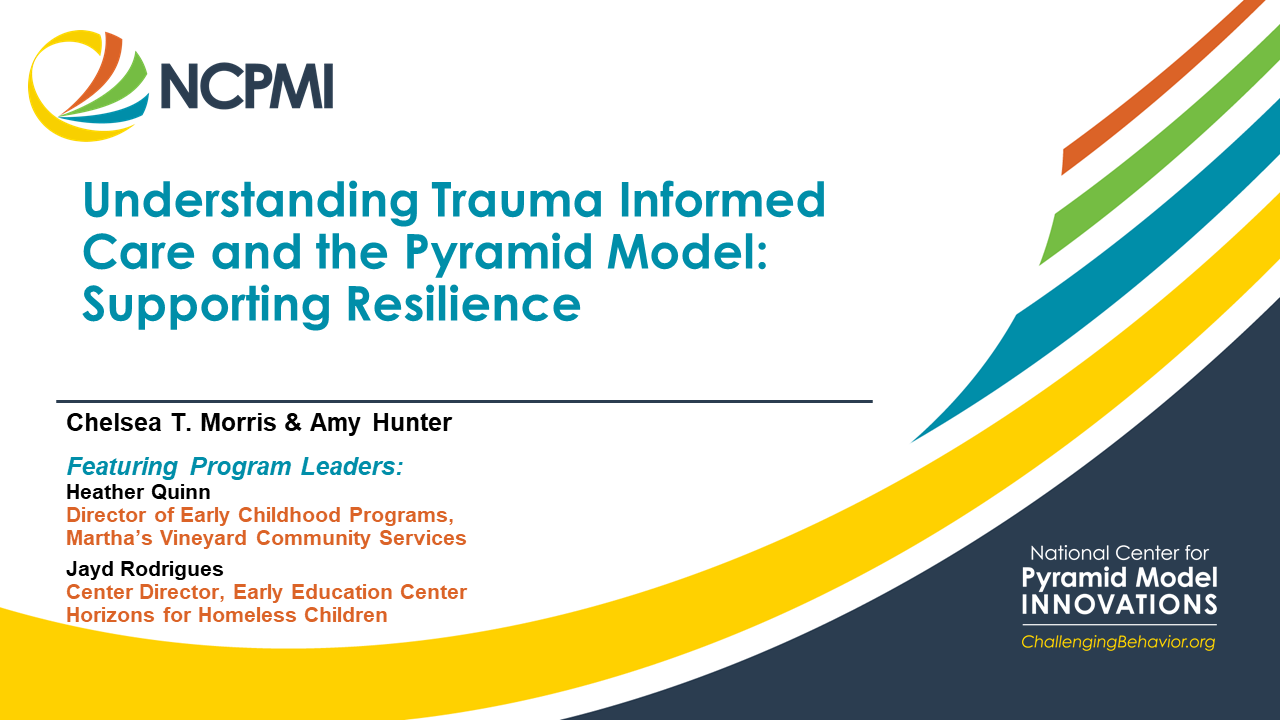
Childhood trauma may be more common than you think. Roughly 26 percent of children in the United States witness or experience a trauma before the age of 4 (Briggs-Gowan et al. 2010). It is highly likely that there are children who have experienced trauma in every early childhood classroom. Often early educators are not aware of what children have experienced in their early lives. Join this webinar to hear more about trauma informed care, the Pyramid Model and how these approaches support resilience for all children including those who have experienced trauma. This webinar will highlight how two early childhood programs use the Pyramid and trauma informed care to support children in their care. This webinar will also share resources you can use in your own programs.



This website was made possible by Cooperative Agreement #H326B220002 which is funded by the U.S. Department of Education, Office of Special Education Programs. However, those contents do not necessarily represent the policy of the Department of Education, and you should not assume endorsement by the Federal Government. This website is maintained by the University of South Florida. Contact webmaster.