Tips for Helping Your Child During the Pandemic
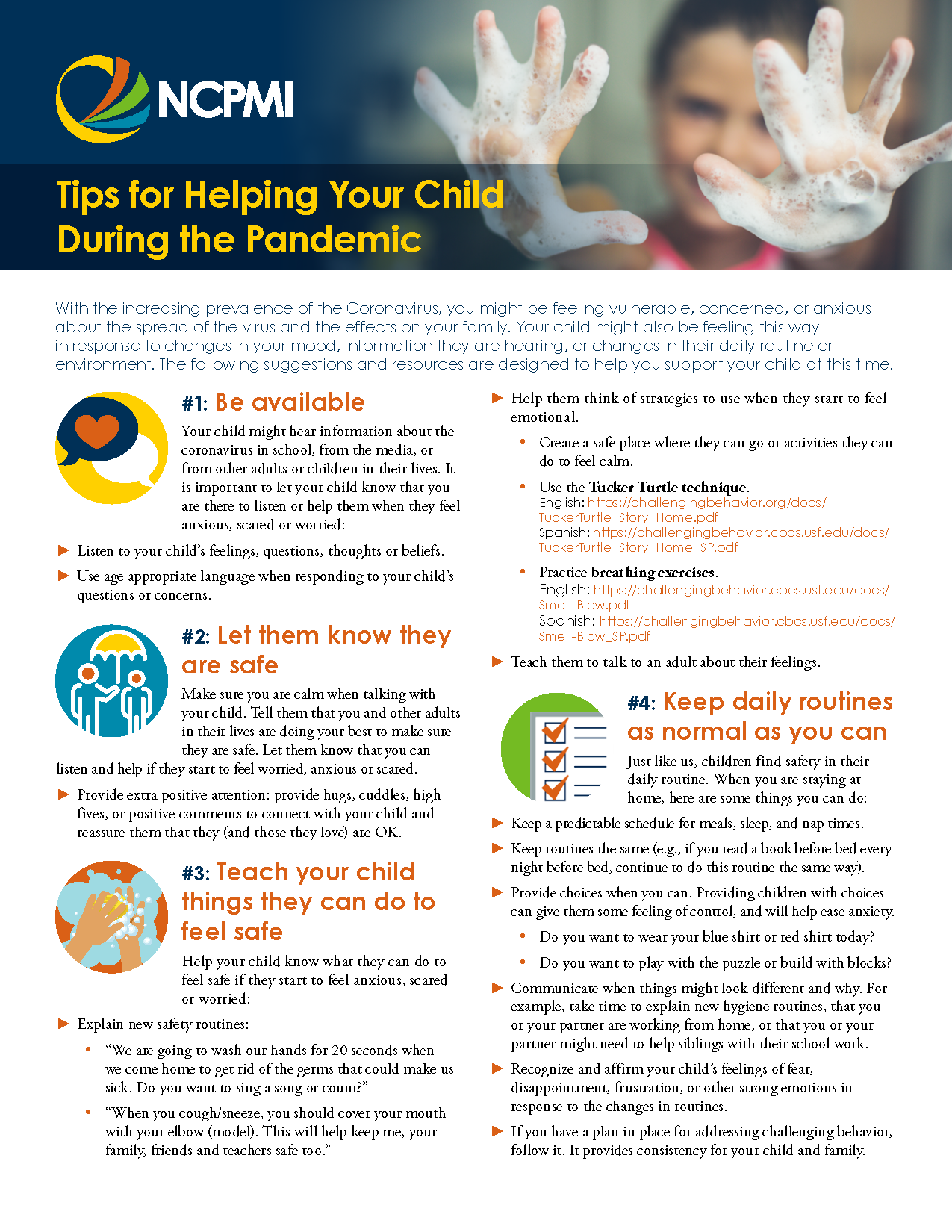
Tips for helping your child during the pandemic provides families with suggestions and resources for helping their child cope with stress, changes, and staying at home.
Tips for helping your child during the pandemic provides families with suggestions and resources for helping their child cope with stress, changes, and staying at home.
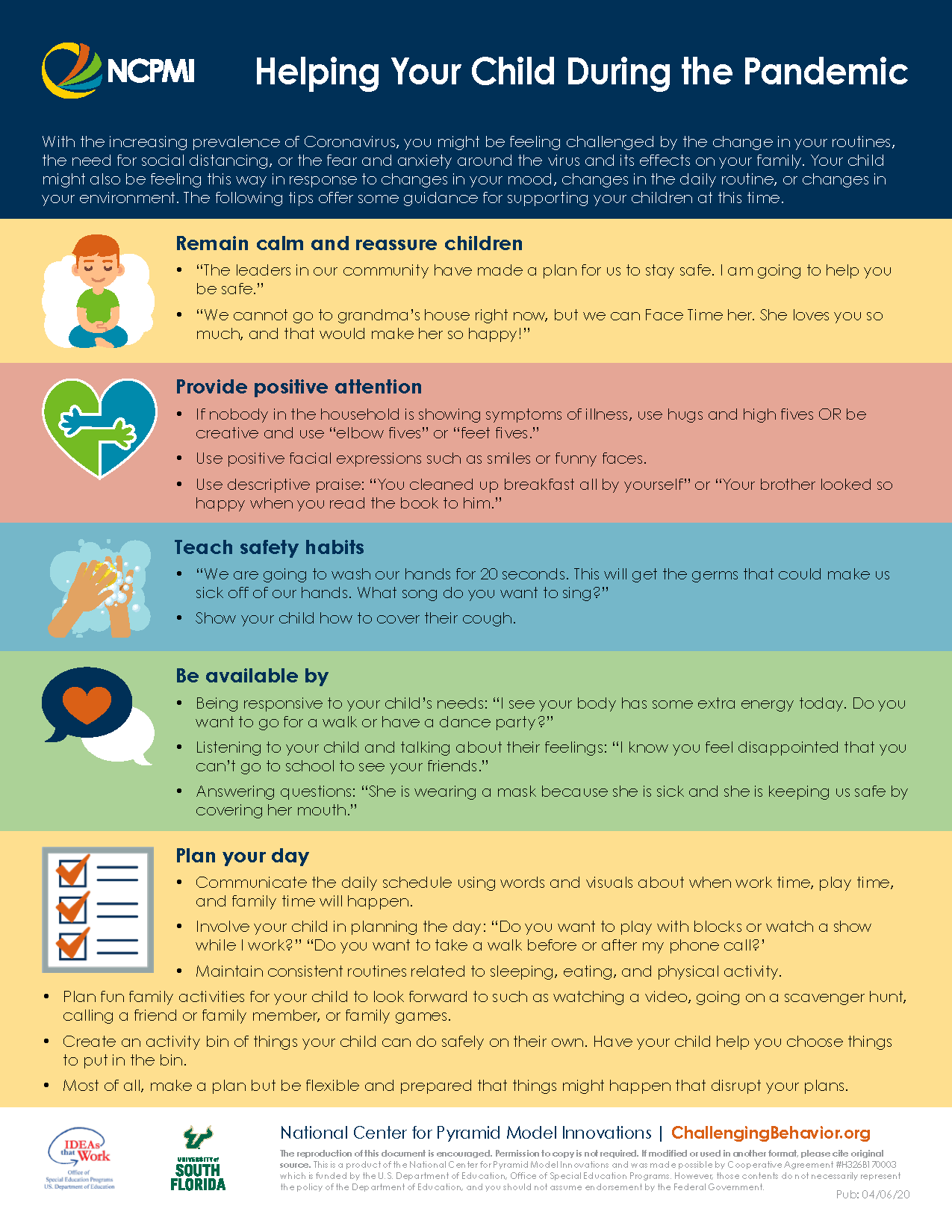
Helping your child during the pandemic provides families with a few strategies to help their child cope during the pandemic. Programs and professionals are encouraged to post this resource on their web sites or share through social media.
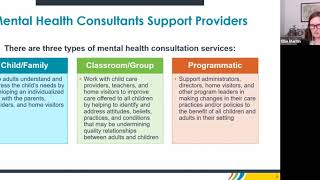
Infant and Early Childhood Mental Health Consultation (IECMHC) is emerging as an evidence-based intervention for supporting young children’s social and emotional development and addressing challenging behaviors. IECMHC aims to improve the ability of staff, families, programs, and systems to prevent, identify, treat and reduce the impact of mental health problems among children from birth to age 6 and their families. IECMHC occurs within the context of a collaborative relationship between a consultant with mental health expertise and early care and education provider, and/or a family member (Cohen & Kaufmann, 2000). In this webinar, we explain the relationship and role between IECMH consultants and Pyramid Model coaches. We also discuss how coaches can identify when they might need the support of a mental health consultant, and how to locate resources when the staff, families, or children they are working with require access to mental health supports.
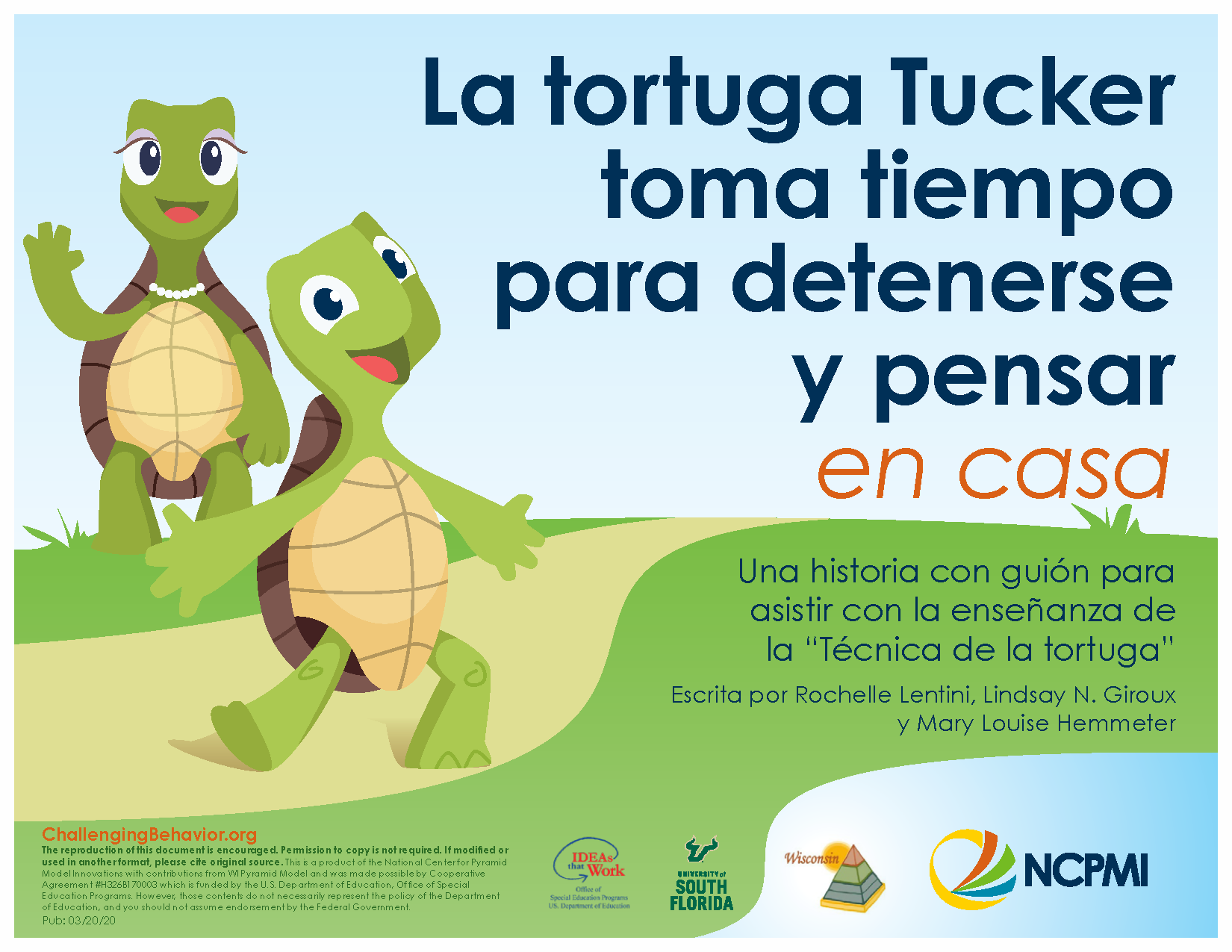
Tucker the Turtle provides a scripted story to teach young children how to calm down when they have strong feelings by tucking into their shell and taking deep breaths. The story also includes visuals to help children learn how to use the strategy.
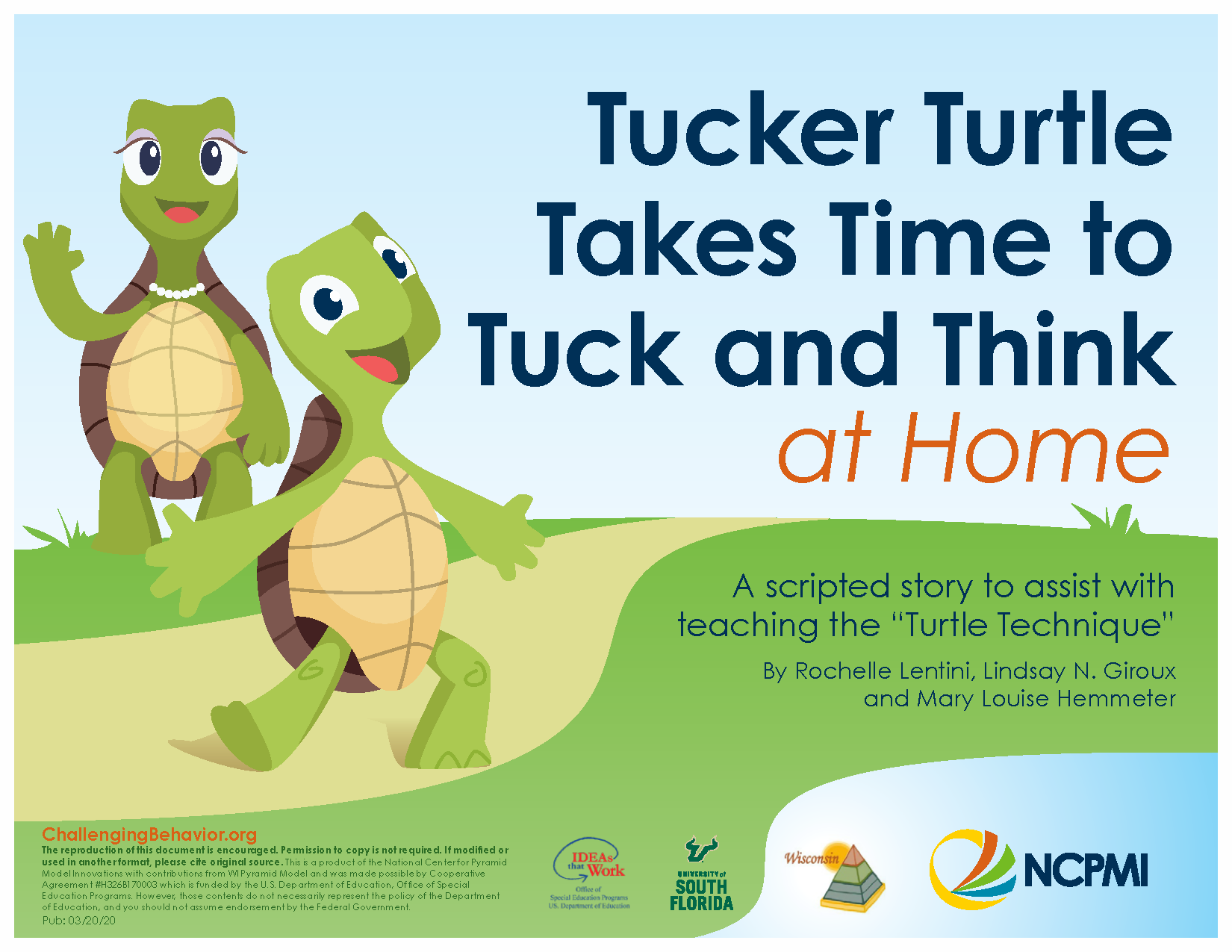
Tucker the Turtle provides a scripted story to teach young children how to calm down when they have strong feelings by tucking into their shell and taking deep breaths. The story also includes visuals to help children learn how to use the strategy.
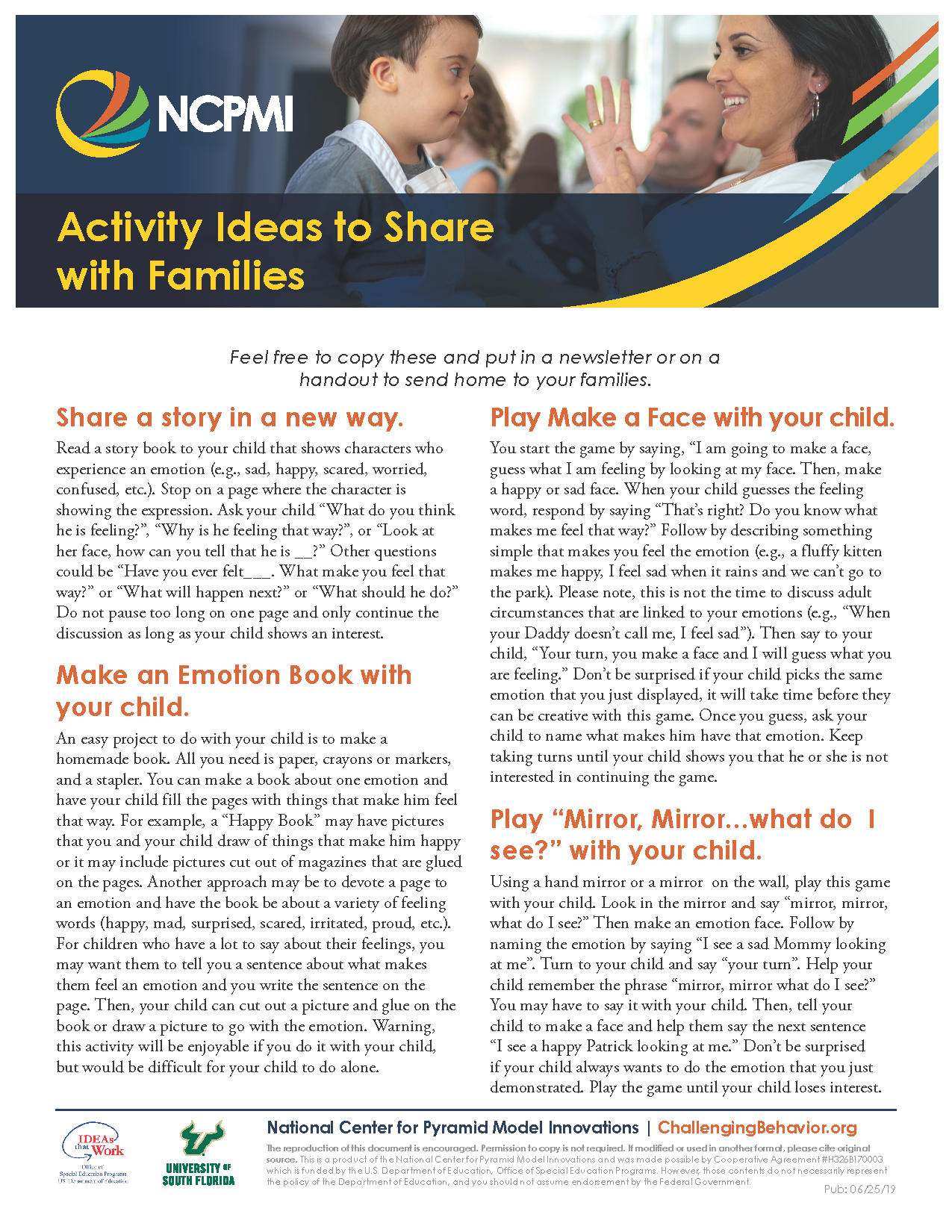
Handout with ideas for teaching emotional literacy at home.
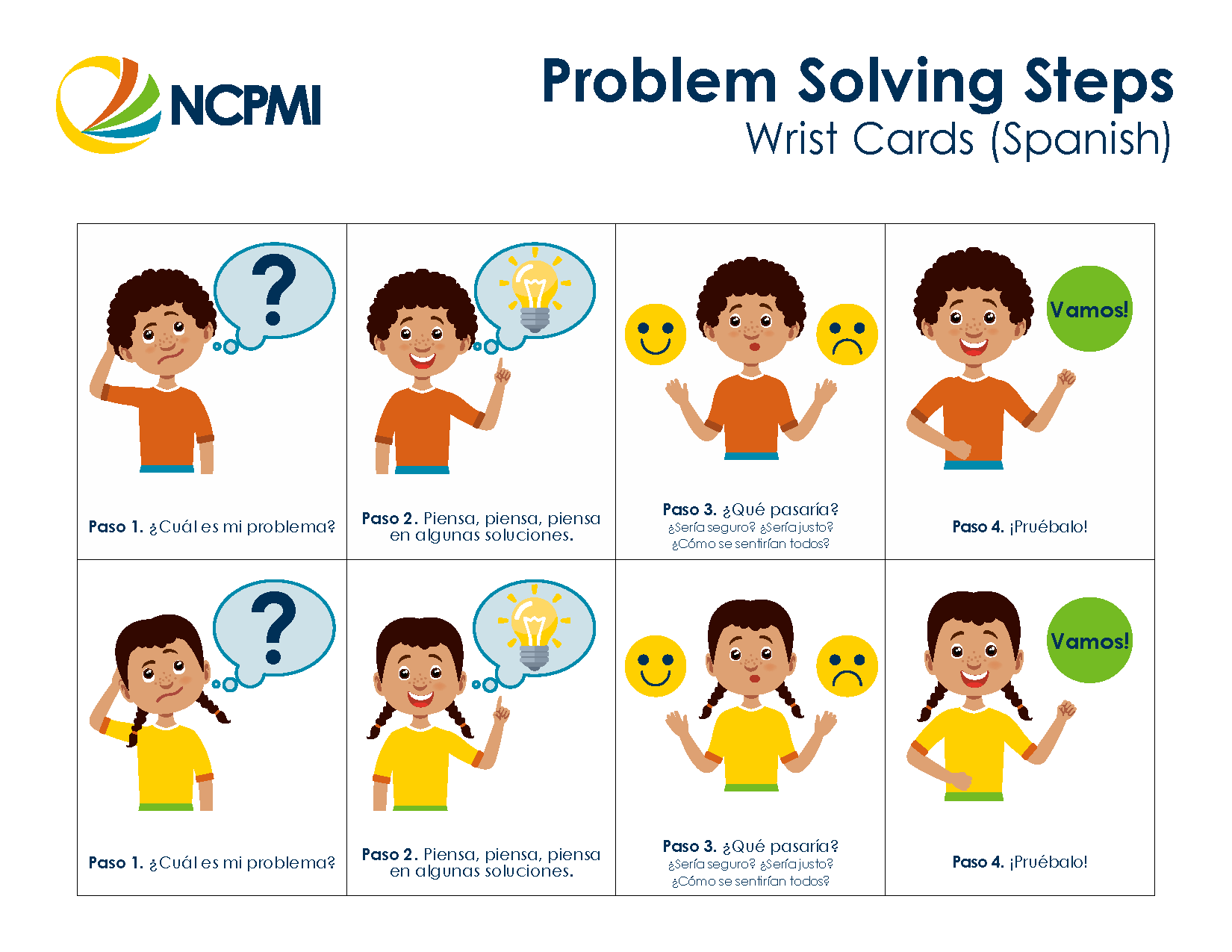
Make these wrist cards with the Problem-Solving Steps and keep within reach to review with children as needed.
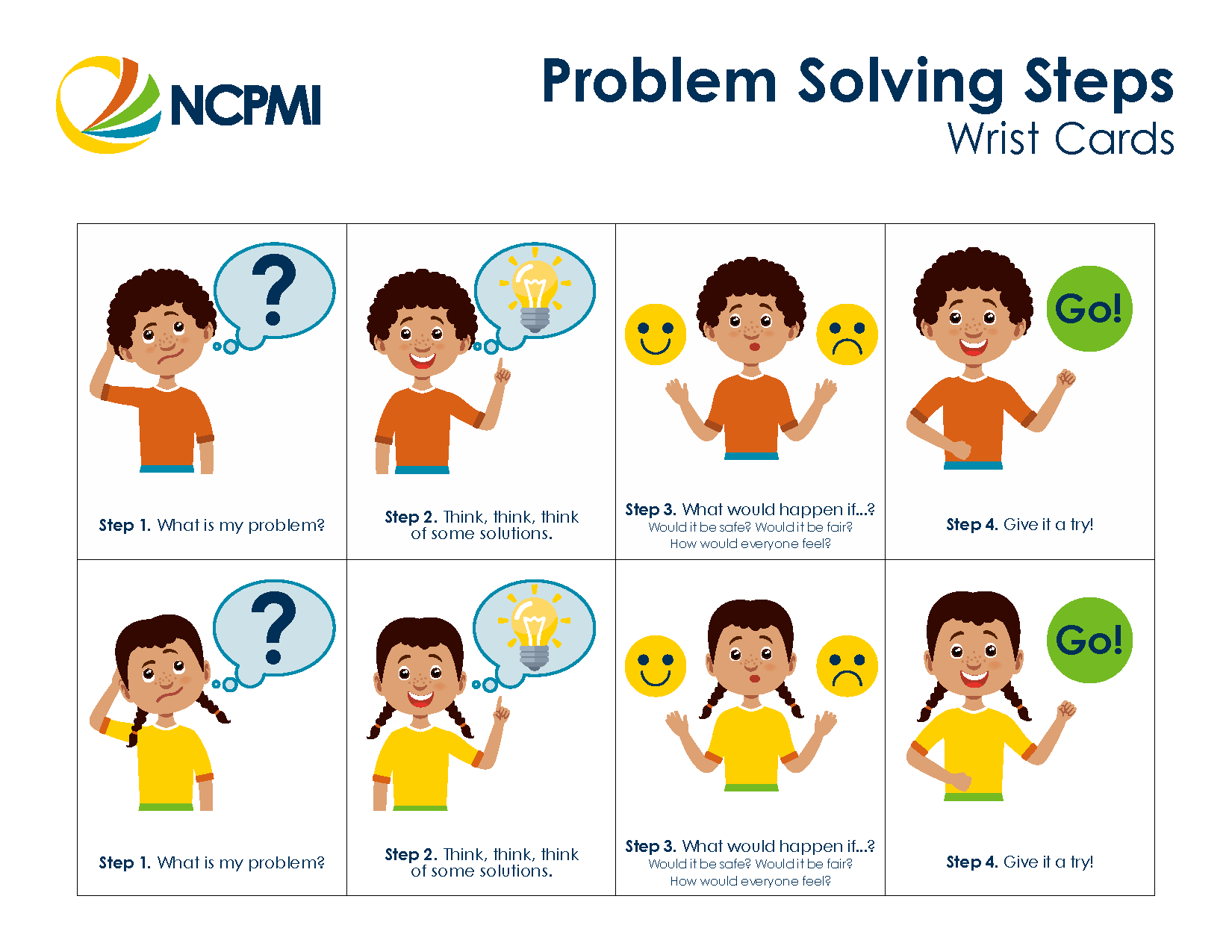
Make these wrist cards with the Problem-Solving Steps and keep within reach to review with children as needed.
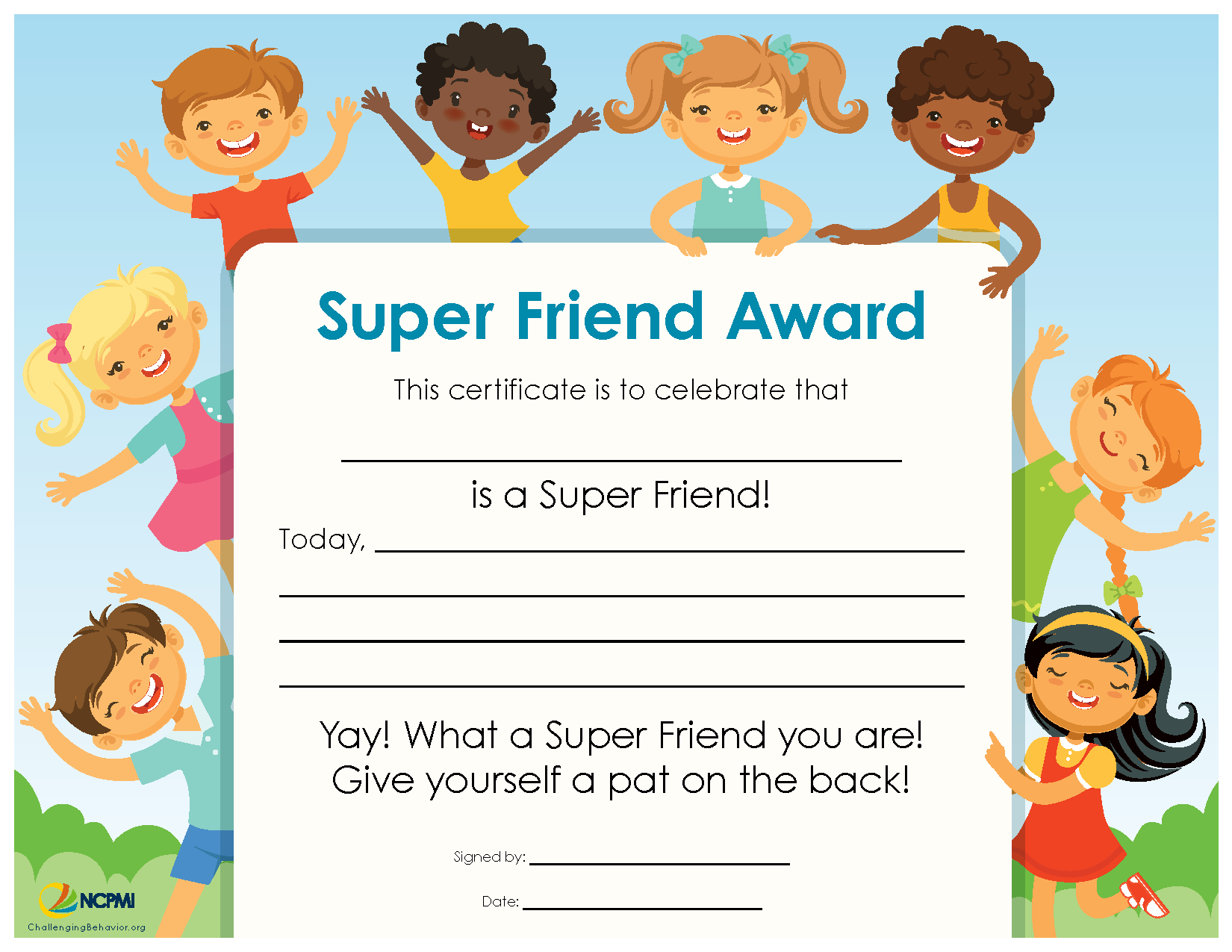
Use this certificate to acknowledge children’s friendship skills and communicate with families regarding friendship skills in the classroom.
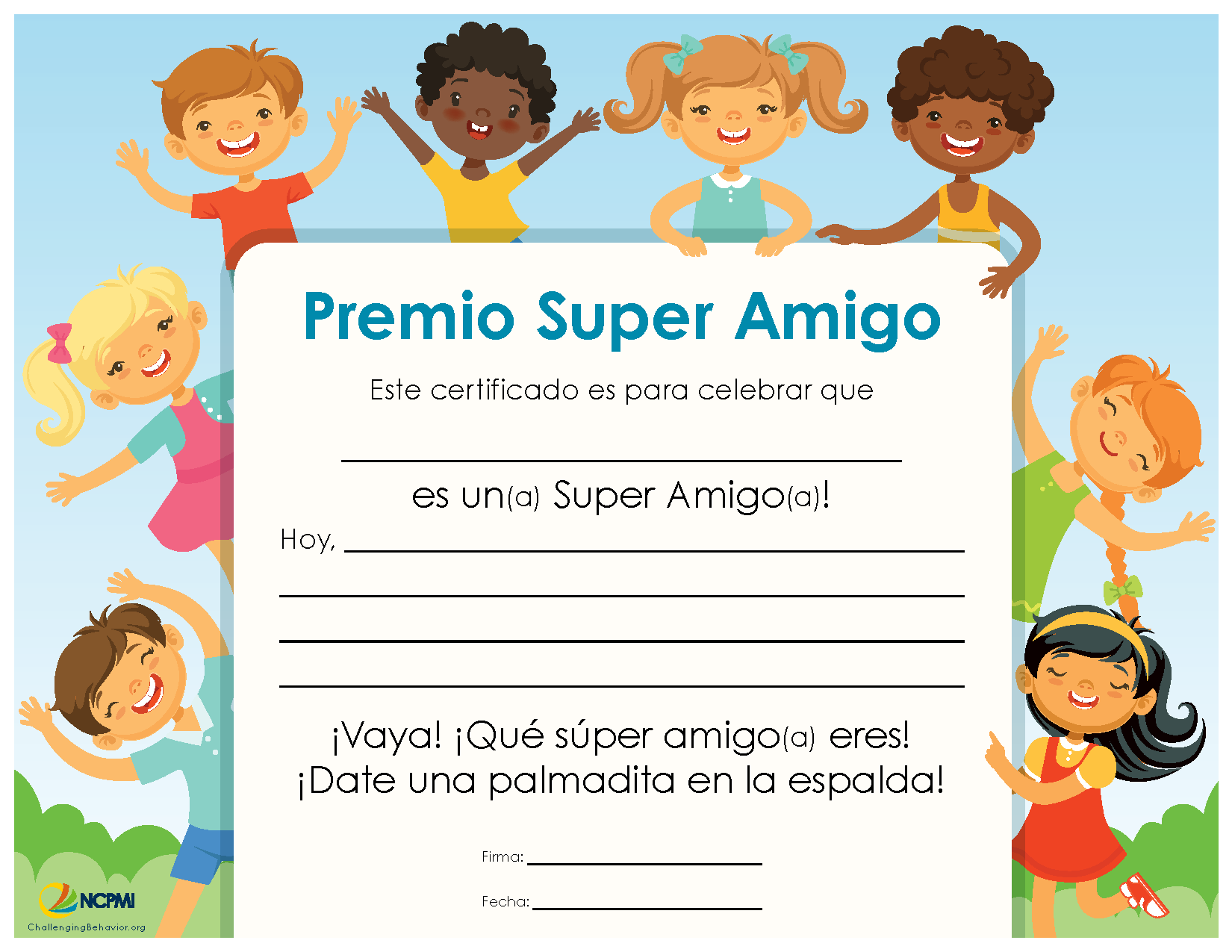
Use this certificate to acknowledge children’s friendship skills and communicate with families regarding friendship skills in the classroom.



This website was made possible by Cooperative Agreement #H326B220002 which is funded by the U.S. Department of Education, Office of Special Education Programs. However, those contents do not necessarily represent the policy of the Department of Education, and you should not assume endorsement by the Federal Government. This website is maintained by the University of South Florida. Contact webmaster.