Audience: Trainers/Coaches
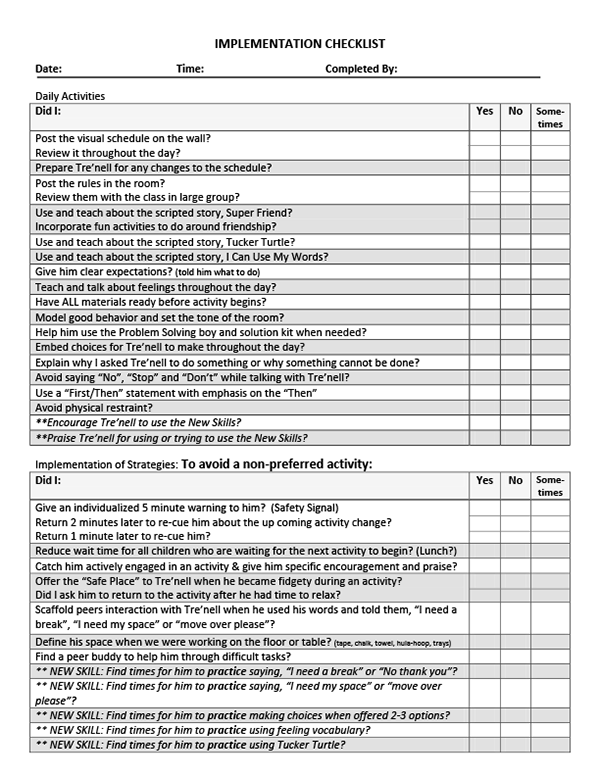
Implementation Checklist, Blank
You might also want to develop a way to help the teacher with implementation fidelity. Check out this approach to using a data-based system for tracking implementation fidelity. The process involves identifying all the plan steps and then taking data on implementation.
Implementation Checklist, Blank (Editable)
You might also want to develop a way to help the teacher with implementation fidelity. Check out this approach to using a data-based system for tracking implementation fidelity. The process involves identifying all the plan steps and then taking data on implementation.
Implementation Checklist Outcomes Worksheet, Blank
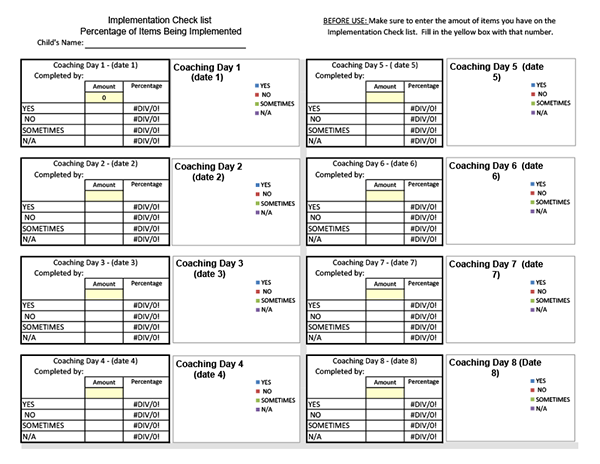
The excel spreadsheet shows the teachers’ progress with implementation.
Recommended Practices: Supporting Infants and Toddlers with Challenging Behavior
This fact sheet provides guidance on program practices that may be used to support very young children with challenging behavior and their families.
Recommended Practices: Linking Social Development and School Readiness to Behavior
Social competence is critically important for a child’s readiness for school. This fact sheet discusses the importance of school readiness and provides guidance on how to ensure that policy, programs, and educators can promote readiness.
Recommended Practices: Program Practices for Promoting the Social Development of Young Children and Addressing Challenging Behavior

Evidence-based program practices are provided in this fact sheet. A comprehensive model of universal, secondary, and indicated prevention and intervention practices are described.
Recommended Practices: Preventing Challenging Behavior in Young Children: Effective Practices
The single best way to address challenging behaviors in young children today is to take steps to make sure that they never occur. While there is no universal panacea for preventing challenging behaviors, there are several broad-based early intervention strategies that researchers suggest to prevent challenging behaviors.
Recommended Practices: Addressing Persistent Challenging Behaviors

Assessment-based, individualized interventions are needed for young children with persistent challenging behavior. This fact sheet provides guidance on the implementation of Positive Behavior Support and the development of effective behavior support strategies.
Recommended Practices: Identifying and Monitoring Outcomes Related to Children’s Social-Emotional Development
Many young children engage in challenging behavior when they do not have the social or communicative skills to express their needs or feelings in appropriate ways. This fact sheet discusses how to prevent and address problem behavior by teaching children social skills they can use in place of problem behavior.