Document Category: Data Tool

A simple data collection form to measure child engagement and challenging behavior within a routine.
Last Updated: 5/28/2026 ADA updates
Created: 05/2025
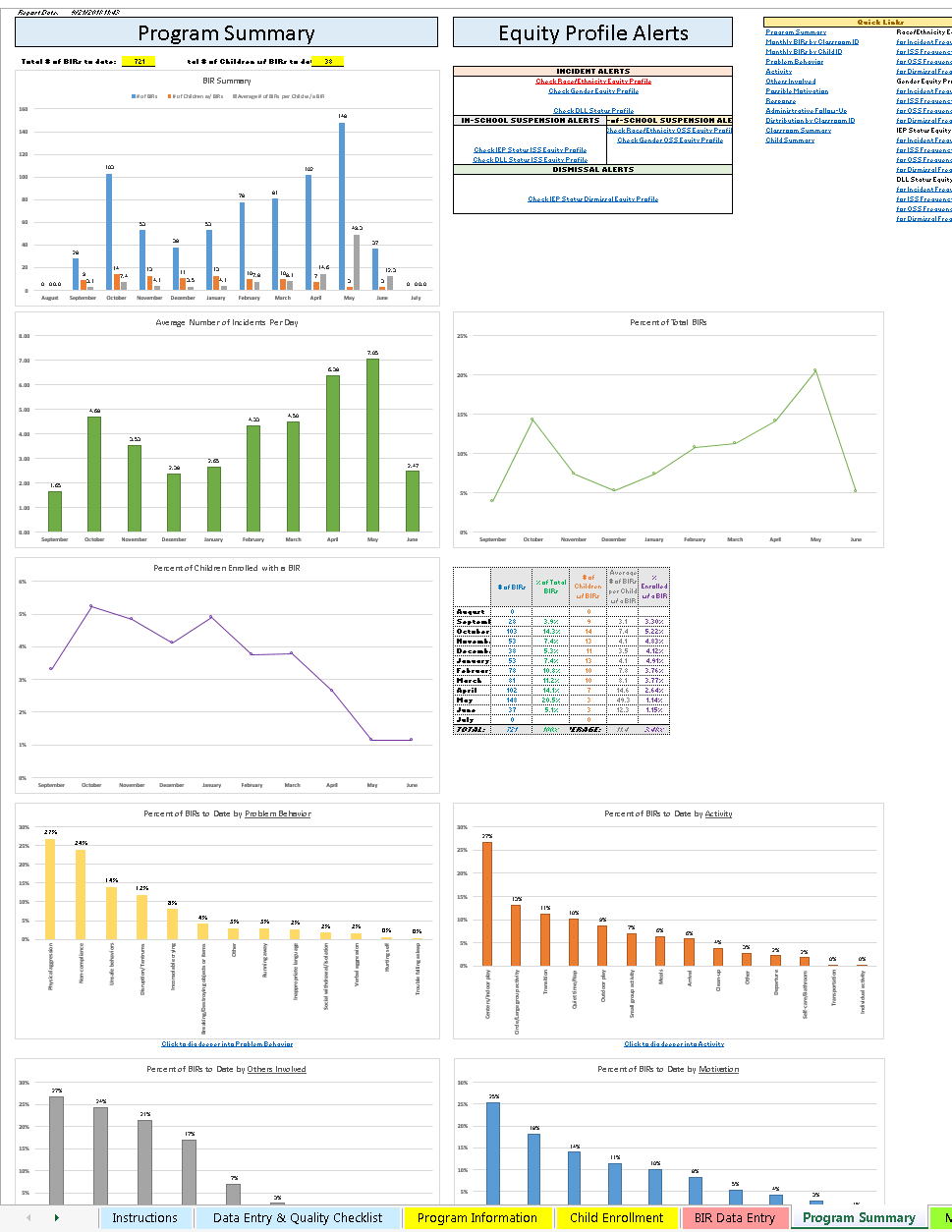
The Behavior Incident Report System (BIRS) provides early care and education programs and classrooms with a system to collect and analyze behavior incidents in their program. The system provides an efficient mechanism for gathering information on elements related to behavior incidents that can be used analytically to make decisions about providing supports to teachers and children within the program. Teachers within programs collect data on behavior incidents that are not developmentally normative or are a cause of concern to the teacher. These data are summarized monthly to provide formative data for examining factors related to behavior incidents (child, teacher, activity, behavior type, behavior motivation, and responses to the behavior). In addition, these data provide summative information on the frequency of behavior incidents over time and an analysis of potential equity issue by calculating disproportionality related to race, ethnicity, IEP status, gender, and dual language learners.
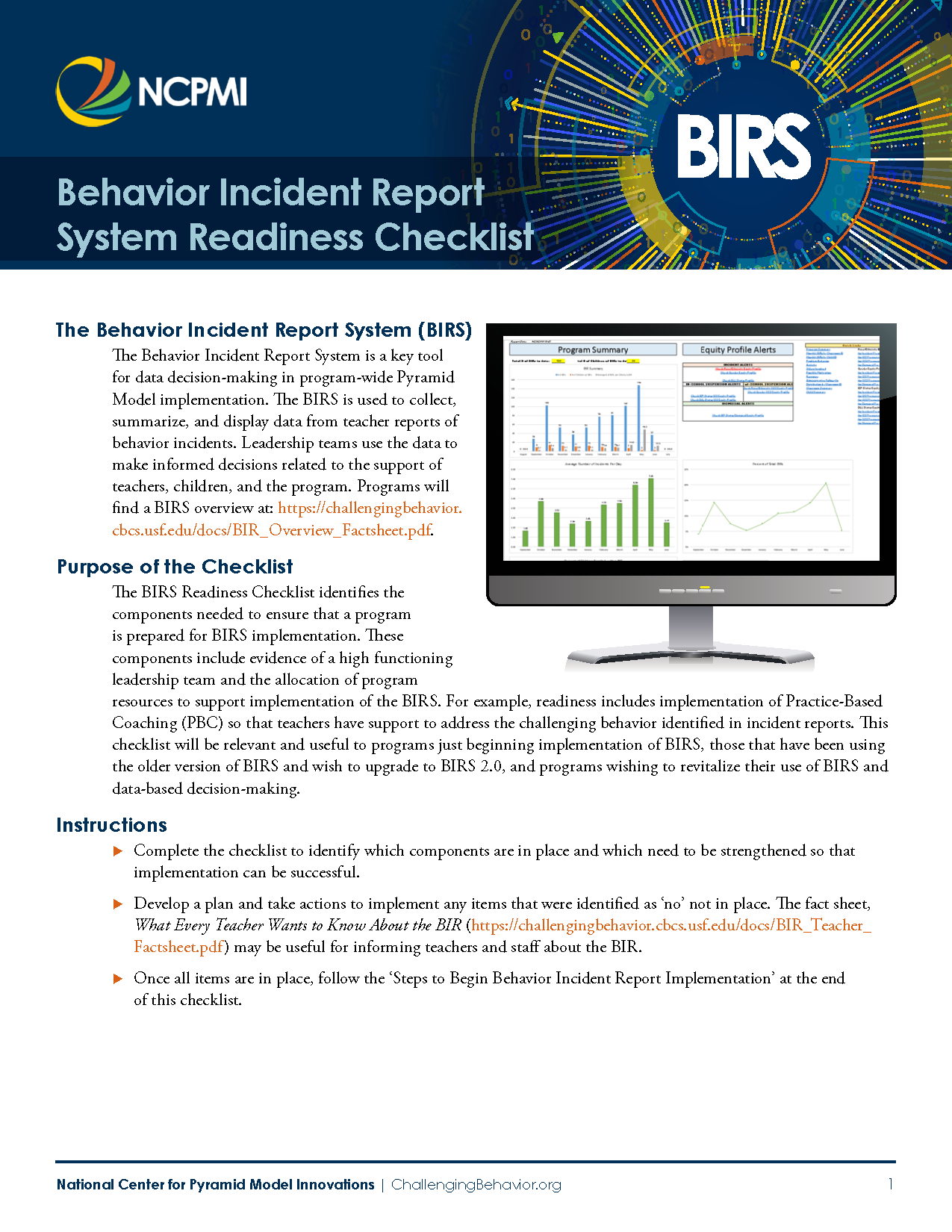
The BIRS Readiness Checklist identifies the components needed to ensure that a program is prepared for BIRS implementation.
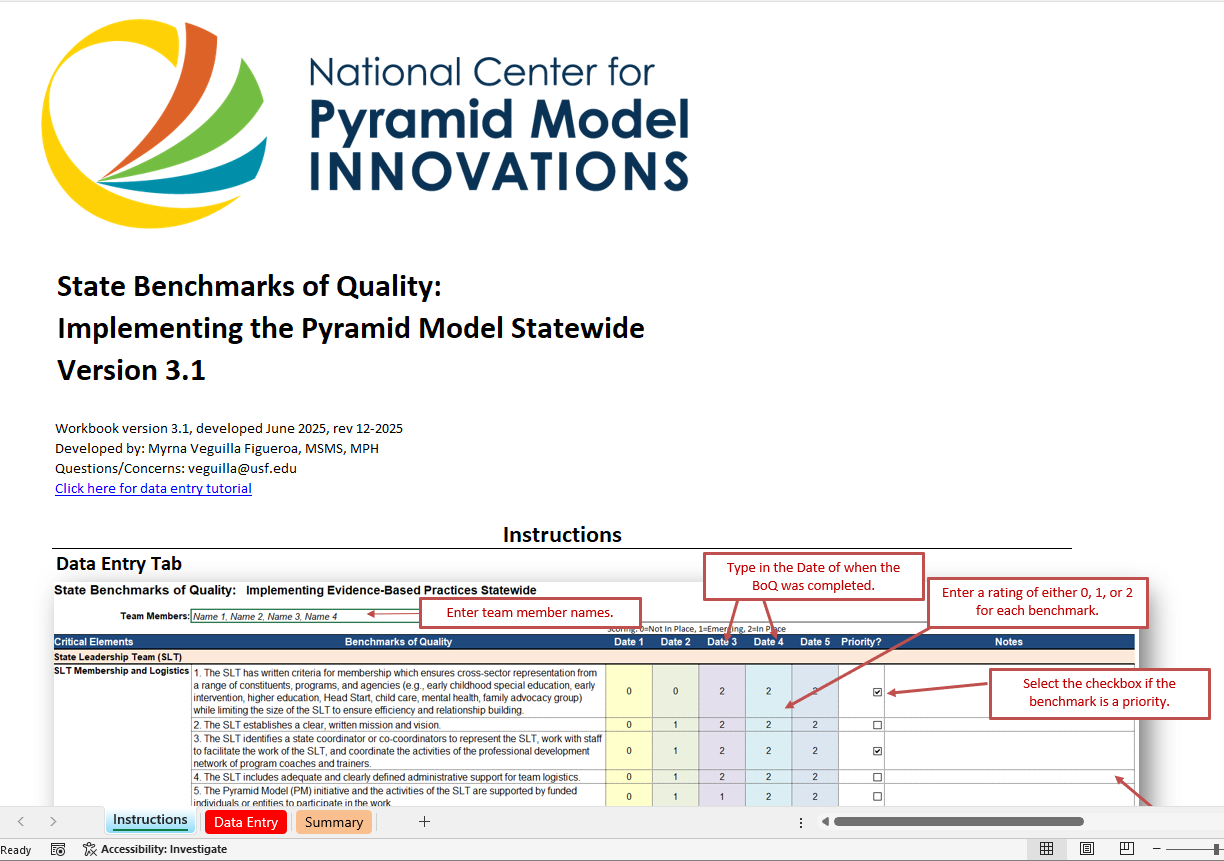
The State Benchmarks of Quality is used by a collaborative State Leadership Team (SLT) to assess progress and plan future actions so that Pyramid Model practices are available for providers and families statewide. The Benchmarks are grounded in the science of implementation which bridges the gap between an evidence-based practice (EBP) and the actual high-fidelity implementation of that practice. For a form and spreadsheet that is not Pyramid Model specific, please refer to this page: http://ectacenter.org/sig/boq.asp.
The State Benchmarks of Quality is used by a collaborative State Leadership Team (SLT) to assess progress and plan future actions so that Pyramid Model practices are available for providers and families statewide. The Benchmarks are grounded in the science of implementation which bridges the gap between an evidence-based practice (EBP) and the actual high-fidelity implementation of that practice. For a form and spreadsheet that is not Pyramid Model specific, please refer to this page: http://ectacenter.org/sig/boq.asp.
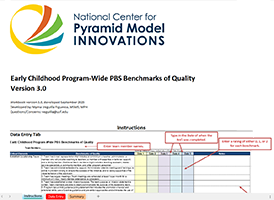
Authors: Lise Fox, Mary Louise Hemmeter, Susan Jack, and Denise Perez Binder (2017).
The Early Childhood Program-Wide PBS Benchmarks of Quality (Program BoQ) is designed to help programs evaluate their progress toward implementing the Pyramid Model program-wide. The tool was revised in 2017 to include critical elements to address issues related to equity and culturally responsive practices. The tool and spreadsheet used for analysis are provided.
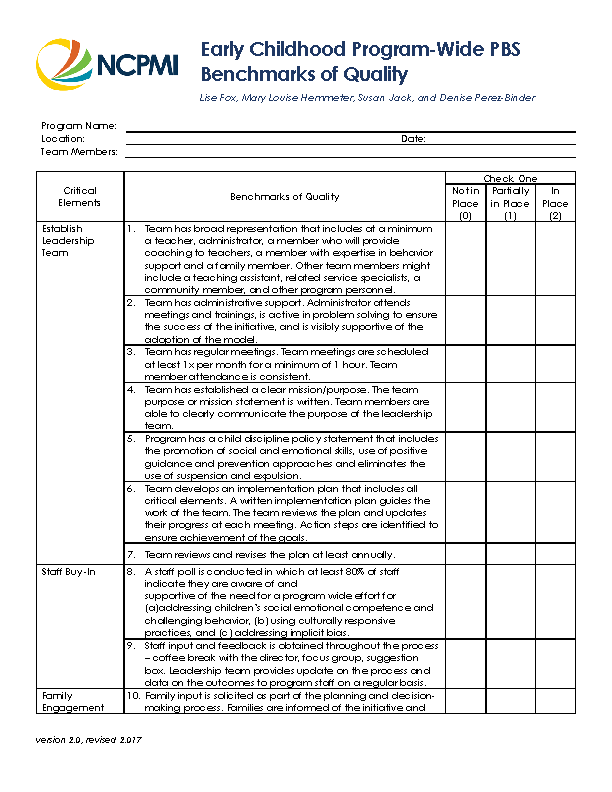
Authors: Lise Fox, Mary Louise Hemmeter, Susan Jack, and Denise Perez Binder (2017).
The Early Childhood Program-Wide PBS Benchmarks of Quality (Program BoQ) is designed to help programs evaluate their progress toward implementing the Pyramid Model program-wide. The tool was revised in 2017 to include critical elements to address issues related to equity and culturally responsive practices. The tool and spreadsheet used for analysis are provided.
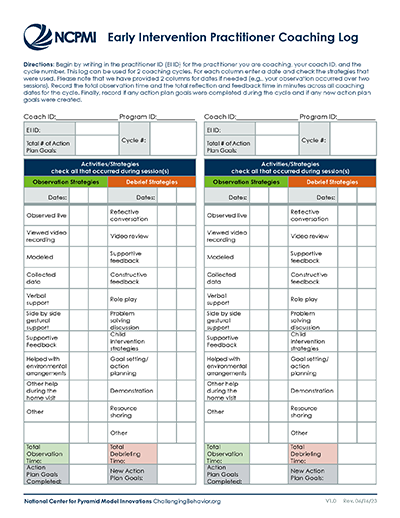
A log for practitioner coaches to use to track time, strategies, and practice-based coaching cycles provided to early intervention practitioners.
The Early Intervention Pyramid Practice Fidelity Instrument (EIPPFI) is used to assess the implementation of Pyramid Model practices by early interventionists in the coaching of family caregivers. EIPPFI practices are aligned with the Division for Early Childhood Recommended Practices and the Principles of Early Intervention. EIPPFI organizes practices within six practice categories: 1) Building Partnerships with Families; 2) Social Emotional Development; 3) Family-centered Coaching; 4) Dyadic Relationships; 5) Children with Challenging Behavior; and 6) Social Emotional Assessment.
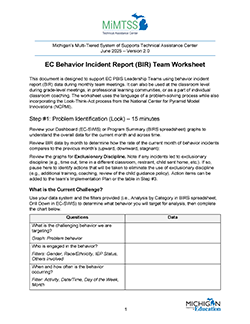

Tool to use to determine function of behavior within a routine.
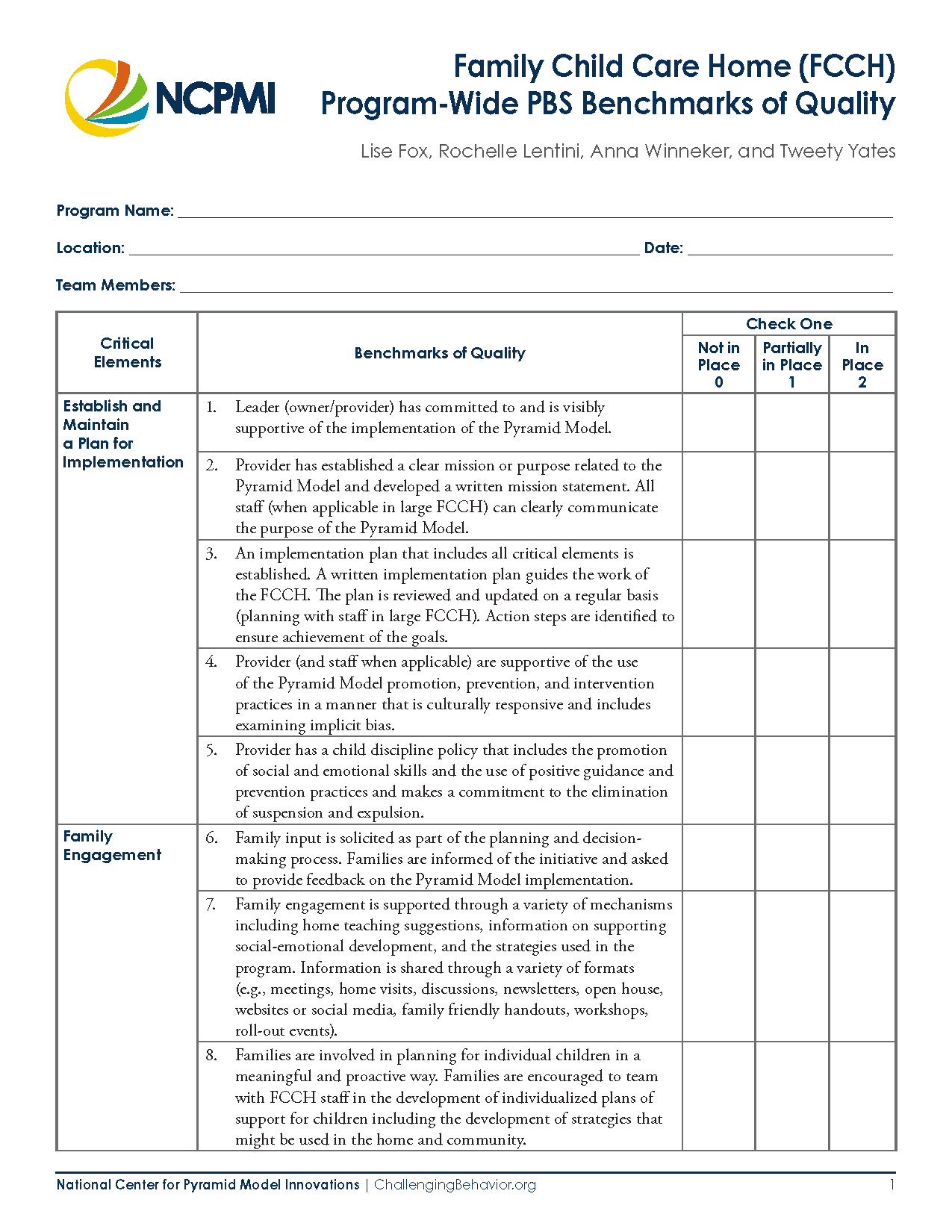
The Family Child Care Home Program-Wide Benchmarks of Quality is used by a family child care home provider to identify the critical elements for implementing the Pyramid Model for Promoting the Social and Emotional Competence of Infants and Young Children in their program.
The Family Child Care Home Program-Wide Benchmarks of Quality is used by a family child care home provider to identify the critical elements for implementing the Pyramid Model for Promoting the Social and Emotional Competence of Infants and Young Children in their program.
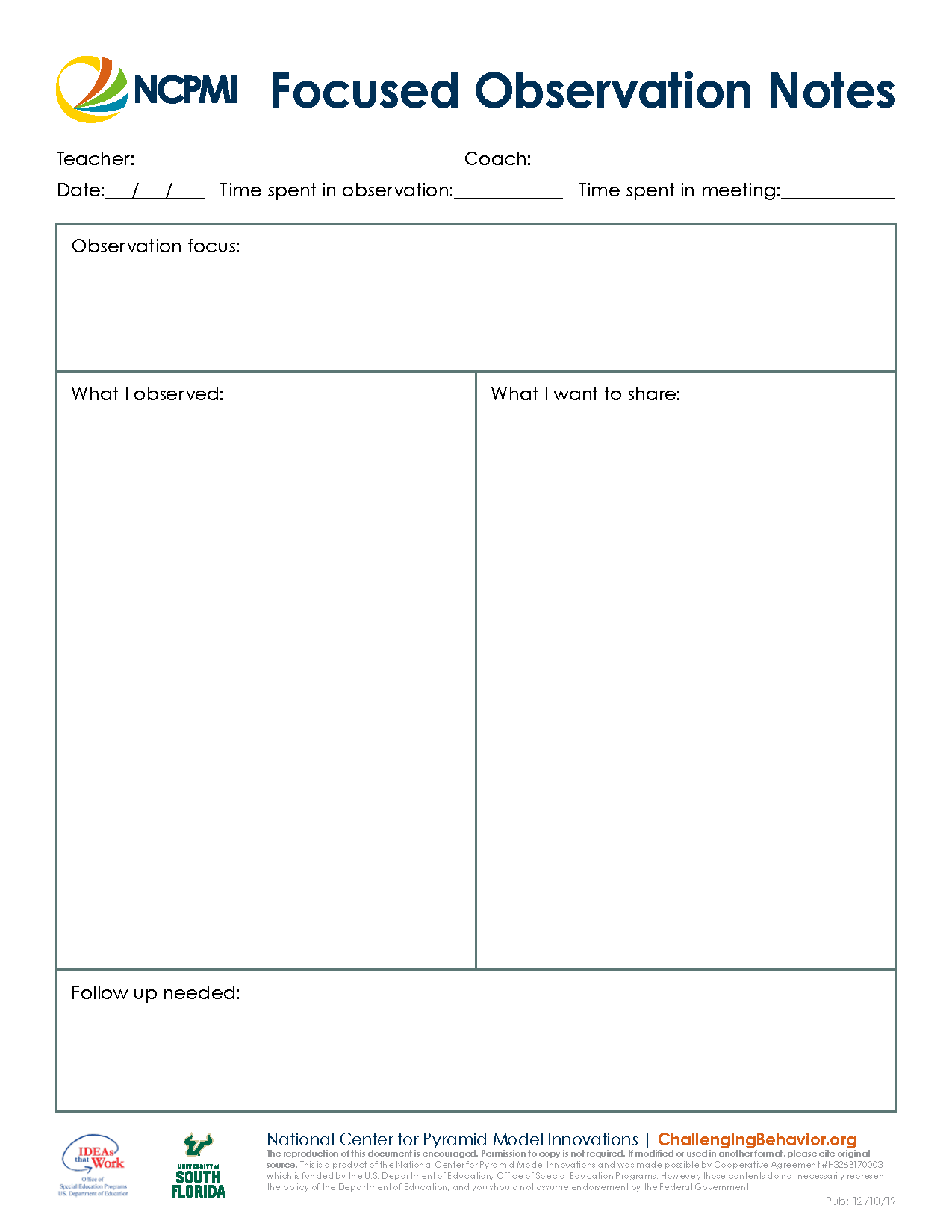
Sample template for recording notes during a Focused Observation
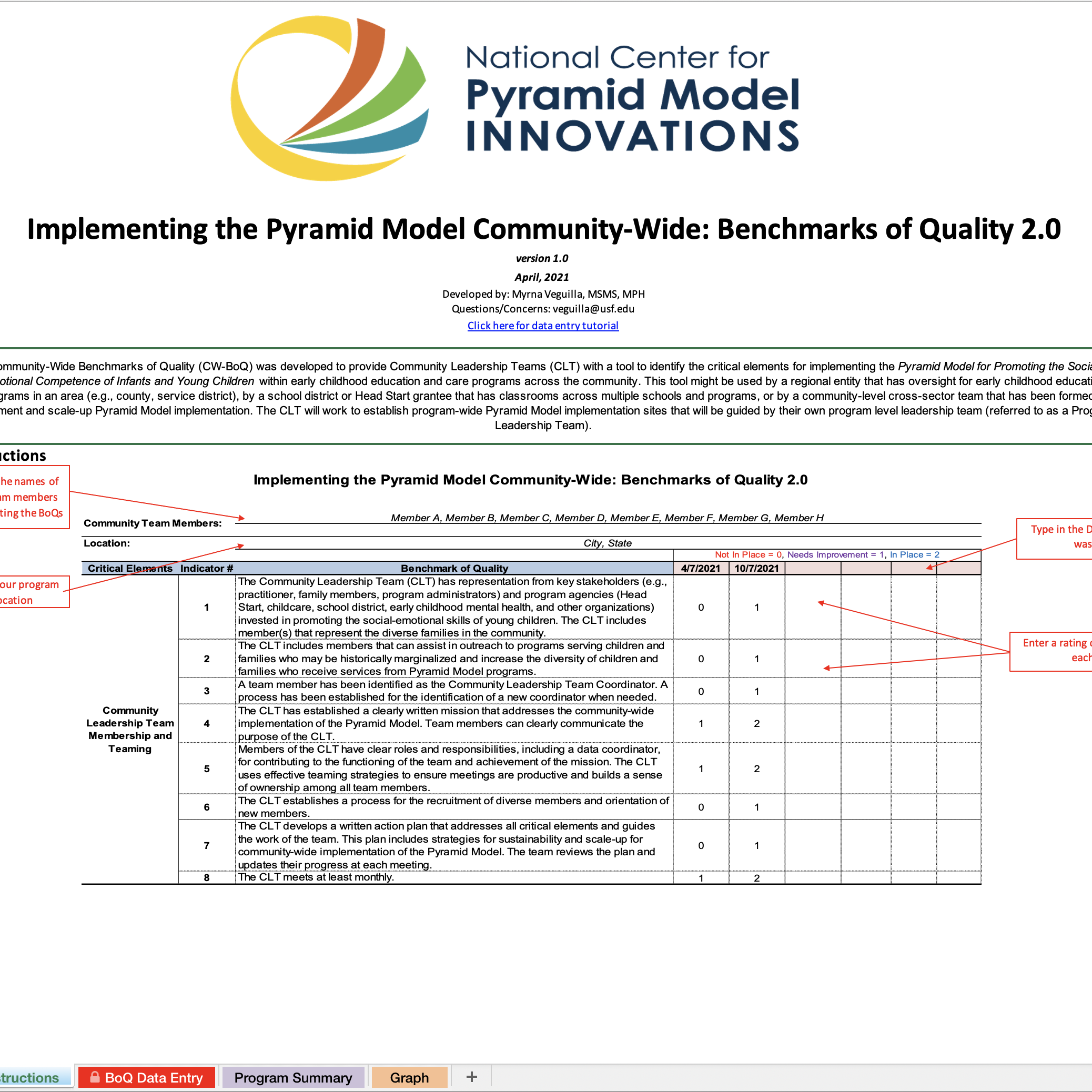
The Community-Wide Benchmarks of Quality (CW-BoQ) Excel workbook is used to enter and summarize CW-BoQ data.
The Community-Wide Benchmarks of Quality (CW-BoQ) was developed to provide Community Leadership Teams (CLT) with a tool to identify the critical elements for implementing the Pyramid Model for Promoting the Social and Emotional Competence of Infants and Young Children within early childhood education and care programs across the community. This tool might be used by a regional entity that has oversight for early childhood education programs in an area (e.g., county, service district), by a school district or Head Start grantee that has classrooms across multiple schools and programs, or by a community-level cross-sector team that has been formed to implement and scale-up Pyramid Model implementation.

An assigned person from the leadership team is asked to report, on a monthly basis, a frequency count of important actions taken in the program in response to serious challenging behavior, including: a) calls to families about problem behaviors, b) dismissal from program, c) transfer within program, d) requests for outside assistance, and e) scheduled family conferences around problem behavior. The form that can be used to track action and a spread sheet to generate graphs to display your data are provided below.

Use this card to record information around challenging behavior.
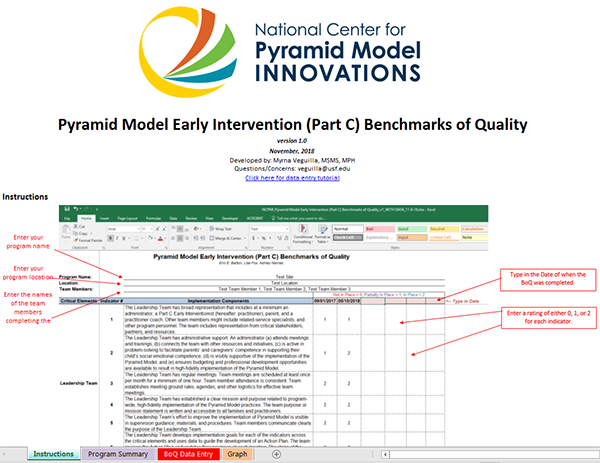
Data entry spreadsheet for the Pyramid Model Early Intervention (Part C) Benchmarks of Quality v1.0

Used to identify a routine where the child is most likely to have challenging behavior.
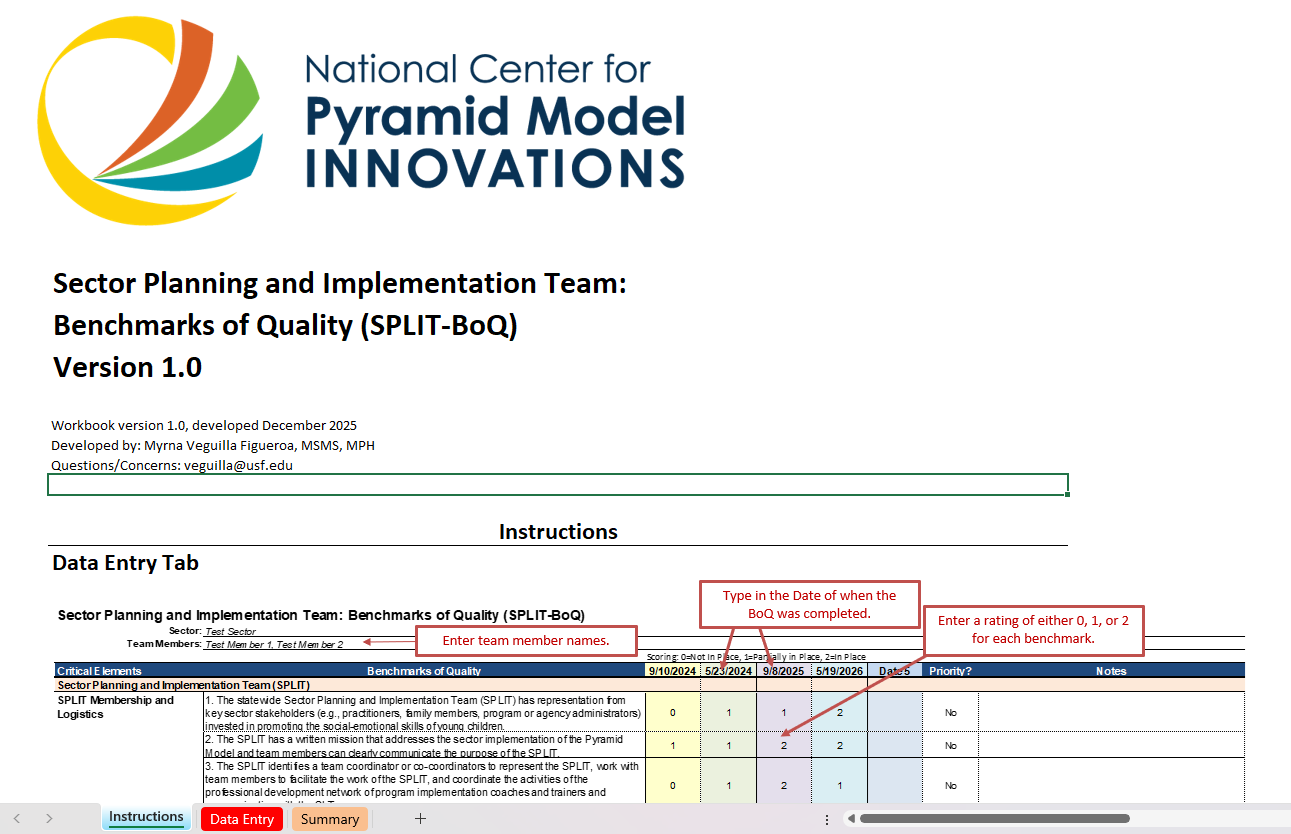
The Sector Planning and Implementation Team: Benchmarks of Quality (SPLIT-BoQ) is used by a collaborative Sector Planning Implementation Team (SPLIT) to identify the critical elements for implementing the Pyramid Model within an early childhood education sector. The SPLIT-BoQ Excel workbook is provided for the SPLIT to enter, summarize, and analyze their BoQ data.
This Excel template is for users to organize their unique IDs for programs, practitioner coaches, practitioners, and children.
This Excel template is for states to organize their unique IDs for programs implementation coaches, and programs.
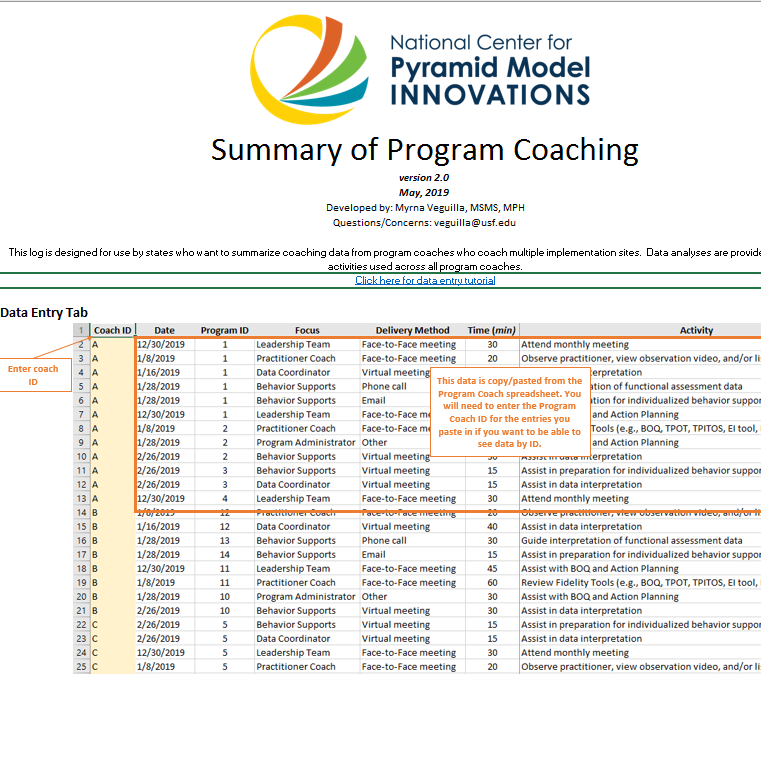
The State Summary of Program Coaching log is used by states to summarize coaching data from program coaches who coach multiple implementation sites.
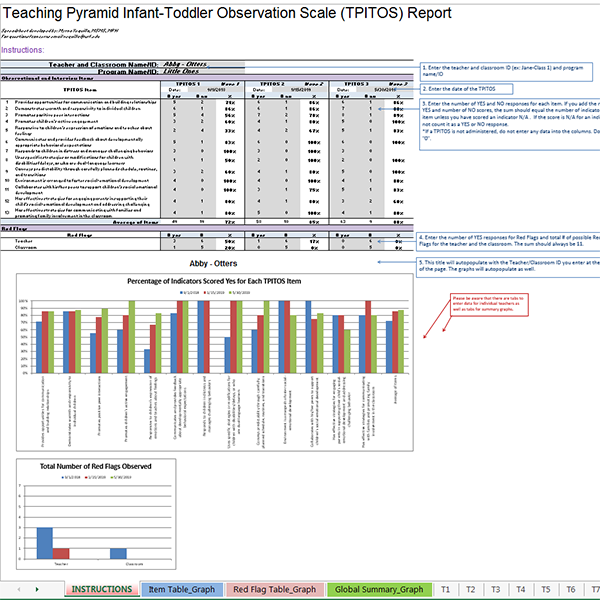
The Teaching Pyramid Infant-Toddler Observation Scale (TPITOS™) for Infant Toddler Classrooms Excel Scoring Spreadsheet is a tool for summarizing and graphing TPITOS data.
The Teaching Pyramid Infant-Toddler Observation Scale (TPITOS™) for Infant Toddler Classrooms Excel Scoring Spreadsheet is a tool for summarizing and graphing TPITOS data.
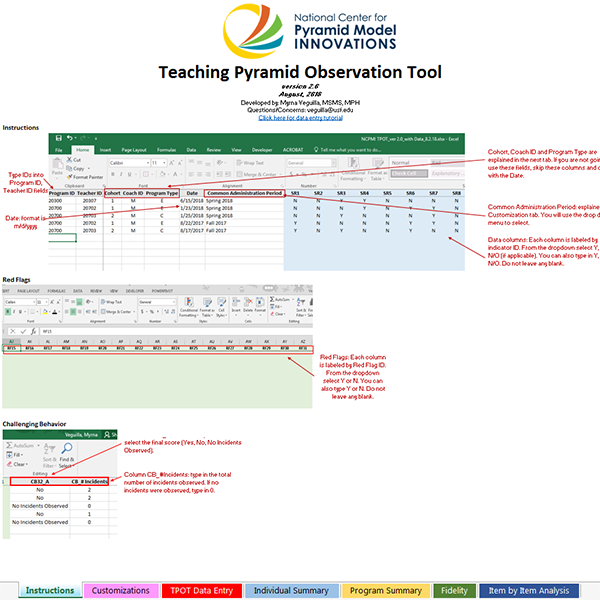
The TPOT™ Excel Scoring Spreadsheet is a tool for summarizing and graphing TPOT data. This spreadsheet allows you to enter data for an unlimited number of teachers and has the added functionality of looking at data by indicator.
The TPOT™ Excel Scoring Excel workbook version 3.0 is a tool for summarizing and graphing TPOT data.