Document Category: Fact Sheet
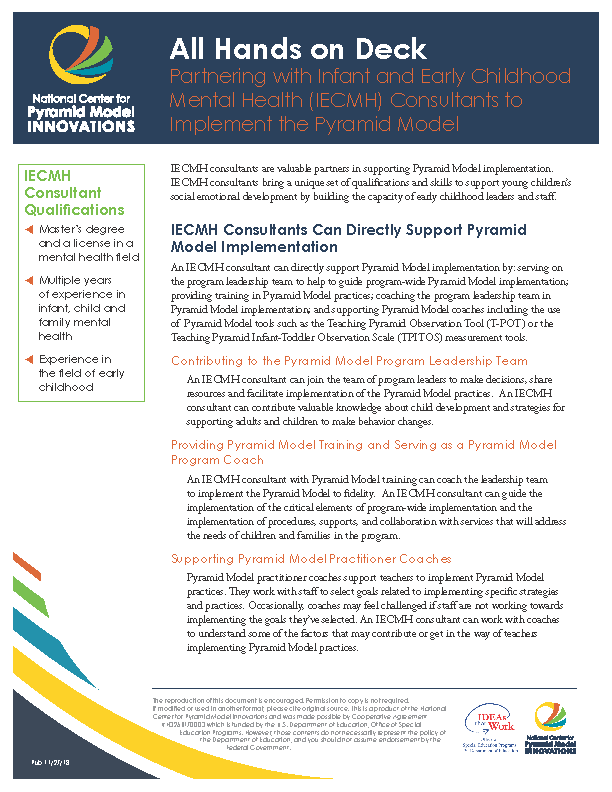
This fact sheet describes how programs might partner with IECMH consultants to implement the Pyramid Model. The fact sheet provides detailed information on how the IECMHC can contribute to leadership team and program activities.
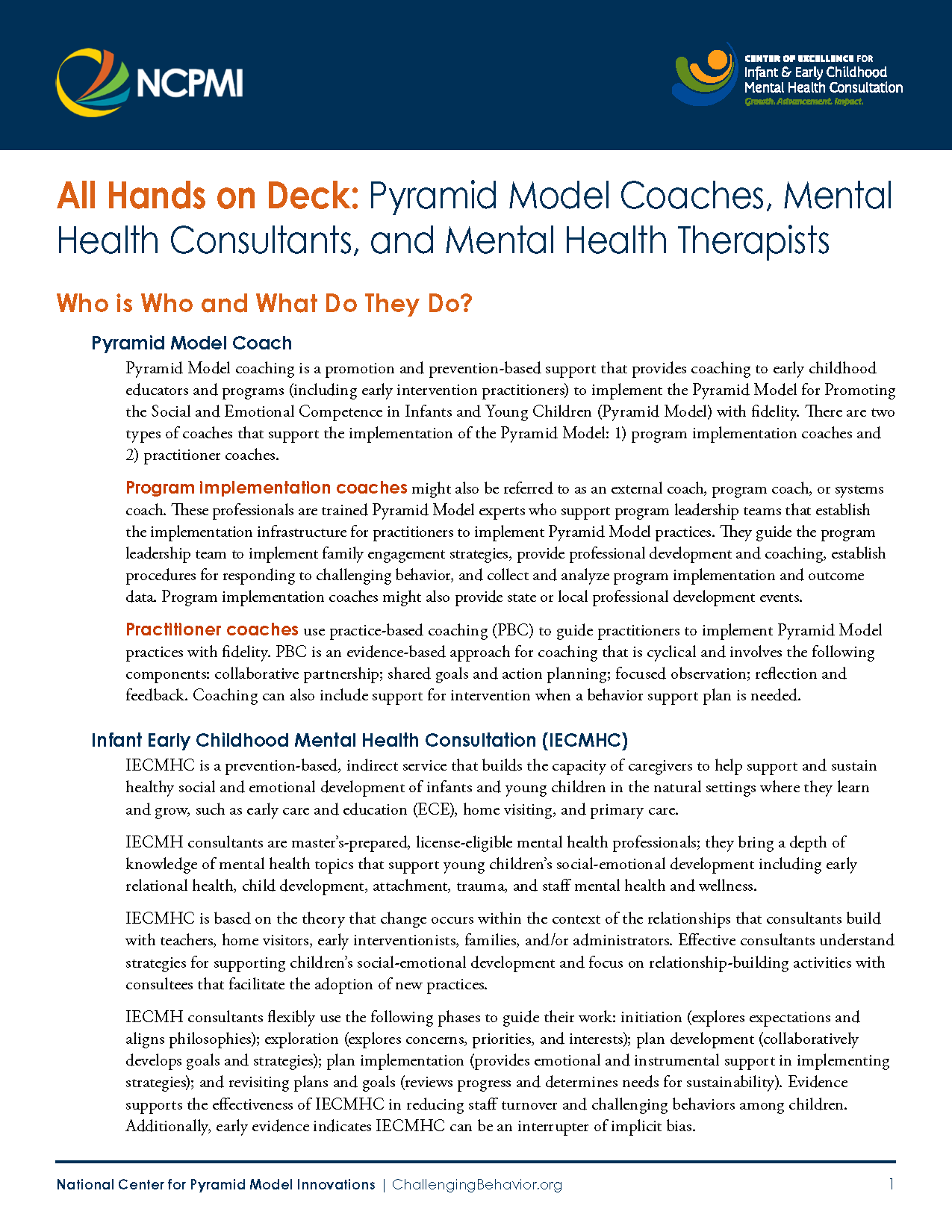
This fact sheet defines the roles of Pyramid Model coach, mental health consultant, and mental health therapist and answers frequently asked questions about these roles.
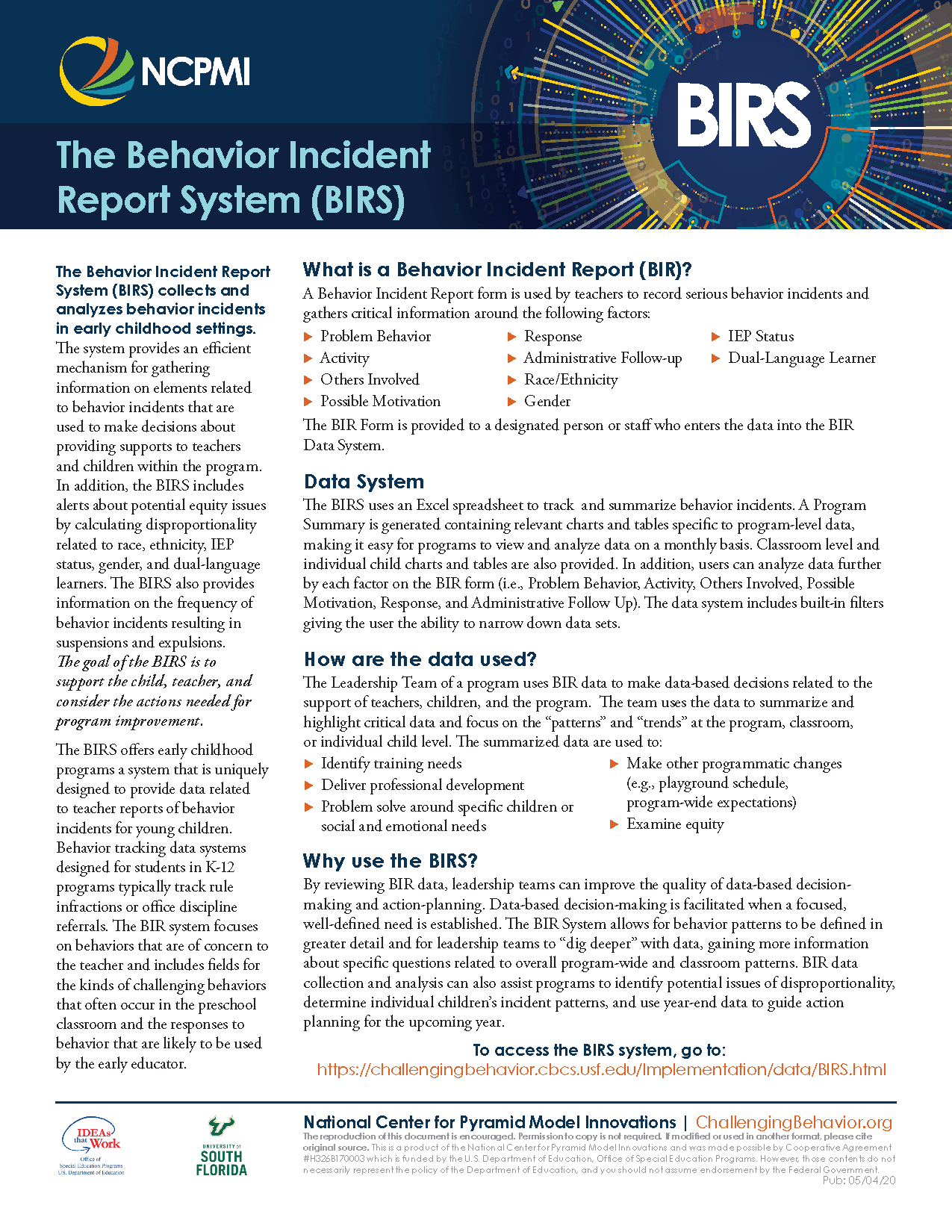
This fact sheet describes the BIR system, features, and value for an early childhood program.
A brief that describes the research supporting the implementation of Pyramid Model practices in preschool and kindergarten classrooms.
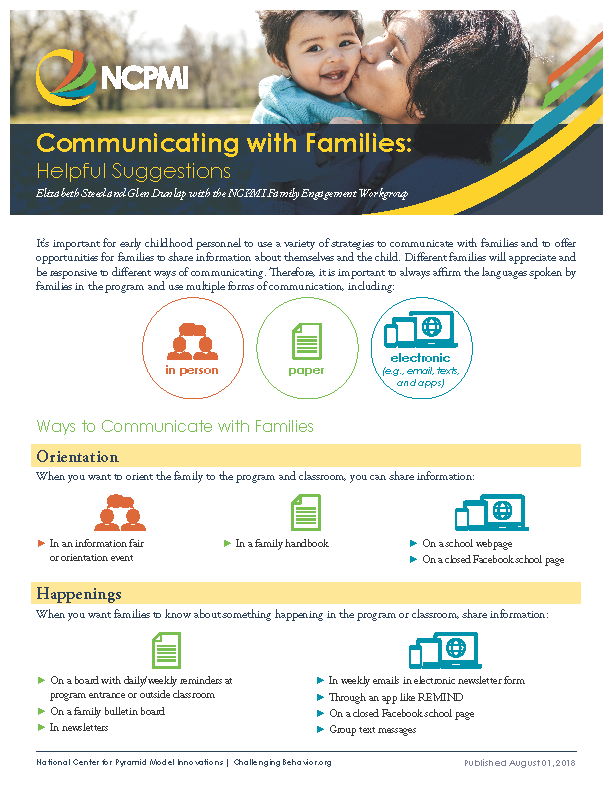
Infographic about various communication strategies for early childhood programs to communicate with families.
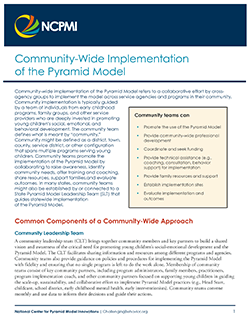
An overview of community-wide implementation, common components, and illustrations of community-wide implementation from Wisconsin and Oregon.
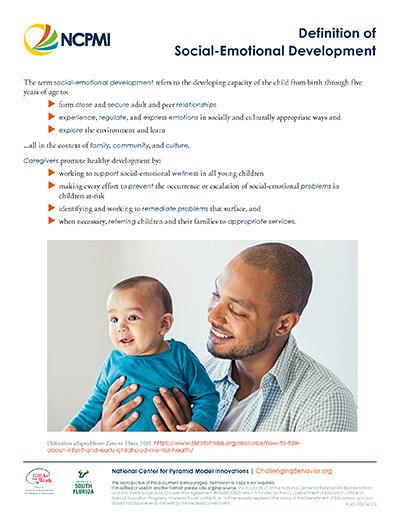
This fact sheet reviews the definition of social-emotional development.
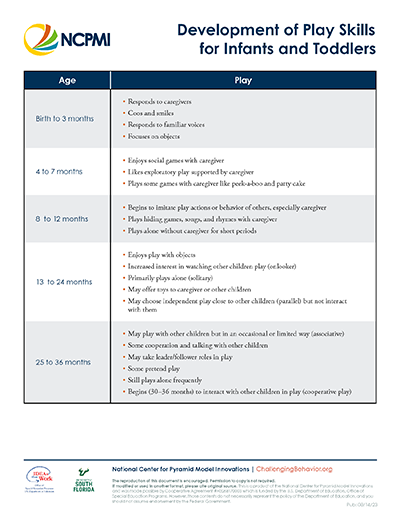
This handout provides the developmental milestones of play skills for infant and toddlers.
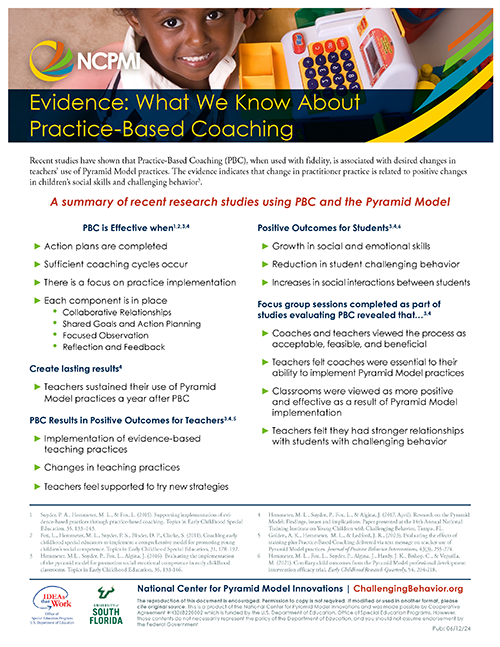
This factsheet provides a summary of recent research studies using PBC and the Pyramid Model.
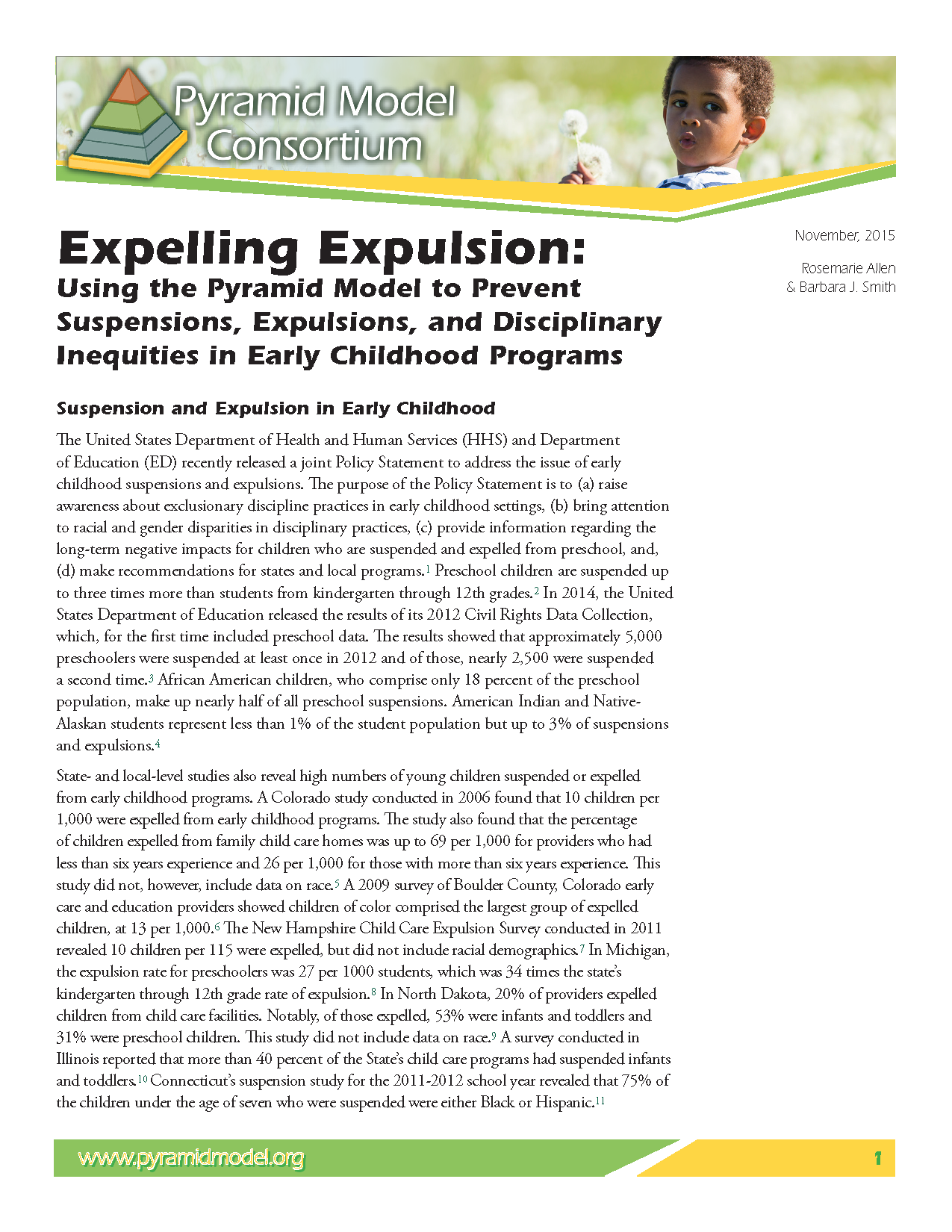
This fact sheet summarizes current research findings about suspension and expulsion of children—particularly children of color—from early childhood settings. Recommendations and suggestions are offered for using the Pyramid Model to address this national problem.
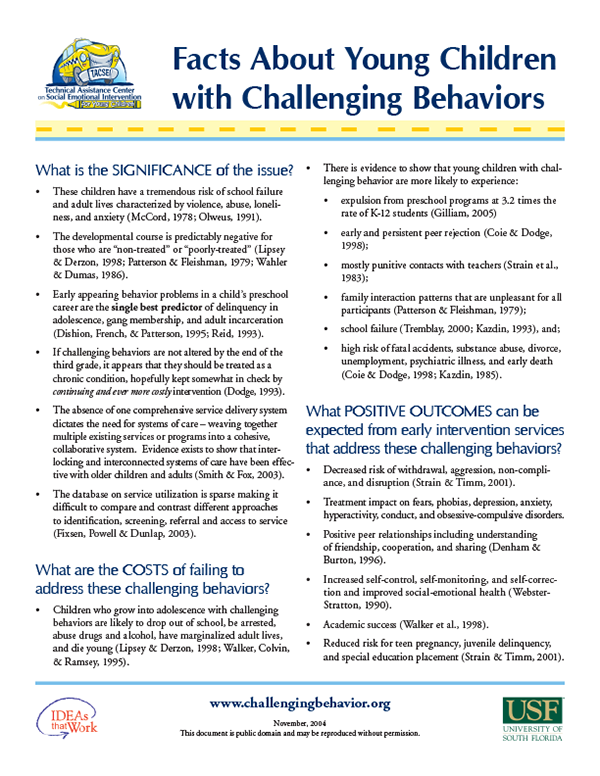
Young children with challenging behavior have a significant risk of continued problems, school failure, and social adjustment problems. This fact sheet provides a summary of the research on the significance of the issue, the social costs associated with young children who have challenging behavior, and the importance of early intervention.

This article offers tips ensuring that preschool classrooms are part of the implementation of SW-PBIS.
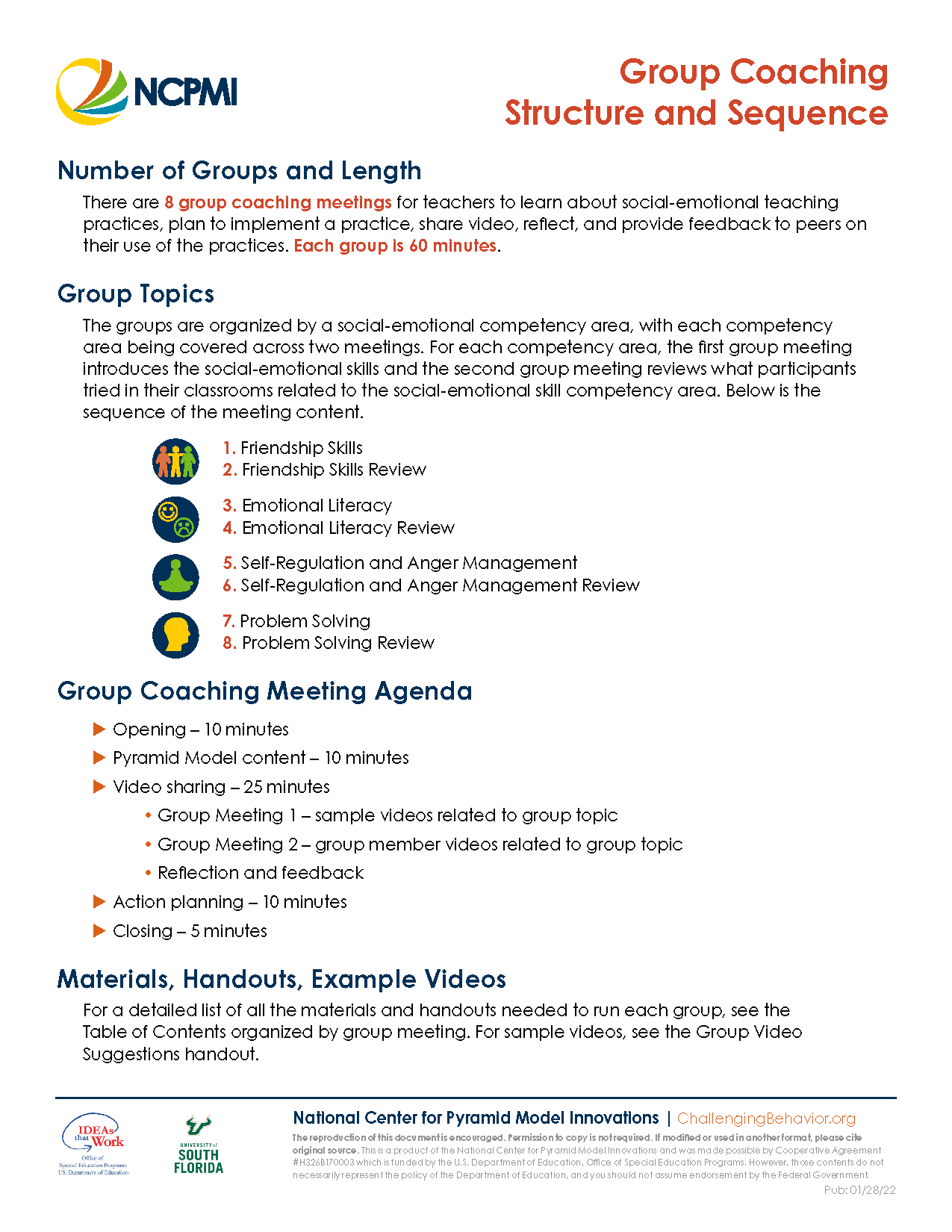
Reviews the group coaching topics and group caching meeting agenda.
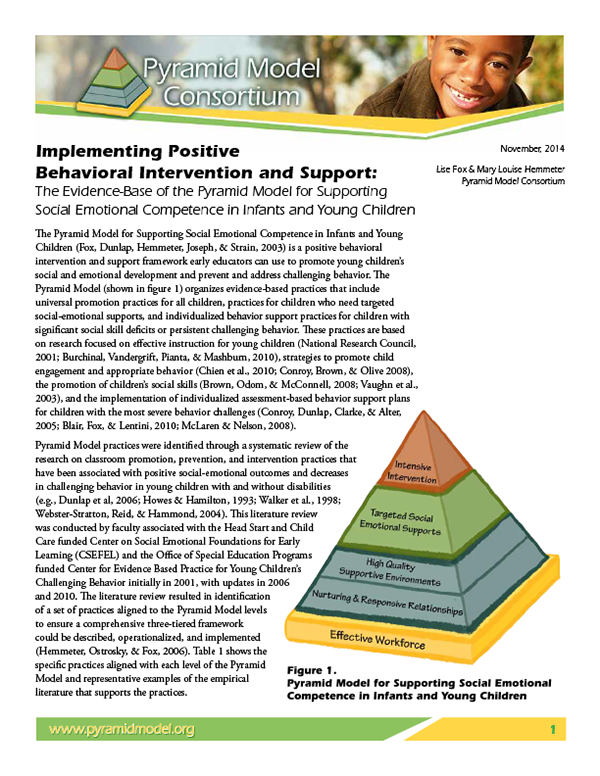
This document offers a brief overview on the development of the Pyramid Model and discusses the evidence for the Pyramid Model practices.
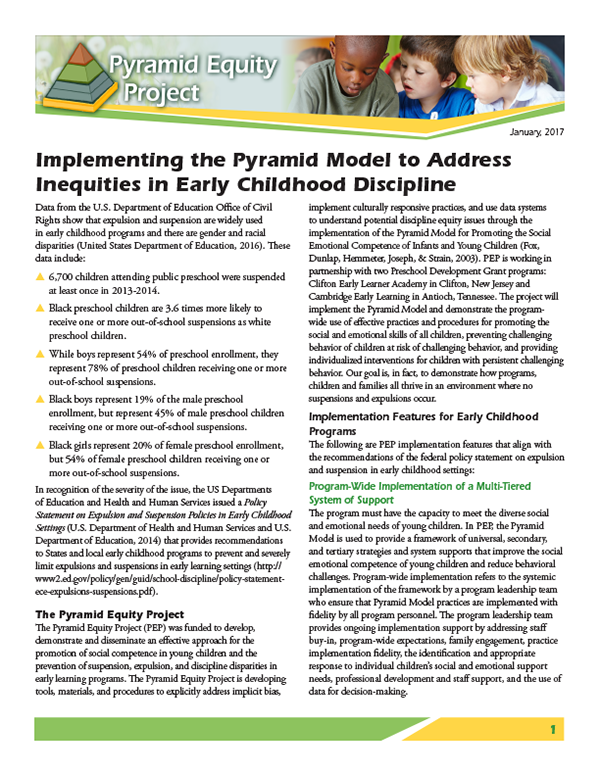
This fact sheet describes how the Pyramid Model is implemented to address equity issues.
Programs can share this handout with families to inform them of their Pyramid Model implementation efforts.
Programs can share this handout with families to inform them of their Pyramid Model implementation efforts.

This resource provides a strategic framework for program leadership teams to integrate Practice-Based Coaching (PBC) into professional development plans, supporting the implementation of the Pyramid Model. It outlines various coaching formats and offers guidance on selecting delivery methods based on practitioner needs and available program resources. Additionally, teams can utilize the Map It Out template to assist their program in planning, monitoring, and adapting their coaching efforts over time.
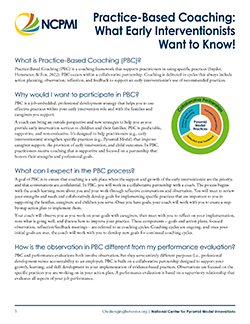
Handout to provide to early interventionist to explain what to expect from practice-based coaching.
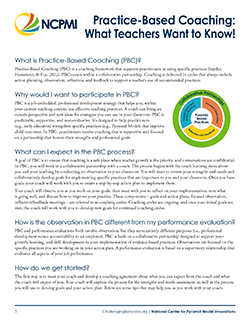
Handout to provide to early educators to explain what to expect from practice-based coaching.
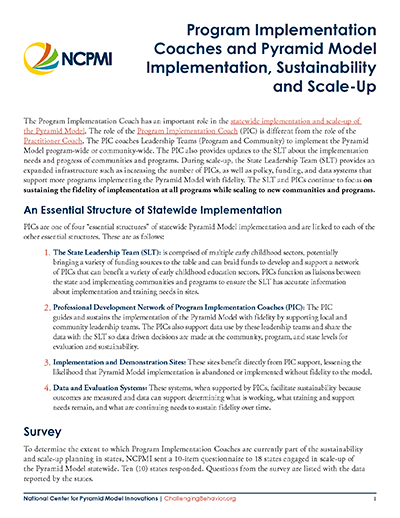
This fact sheet describes how states are implementing, funding, and planning for expansion and sustainability of their Program Implementation Coach cadre.
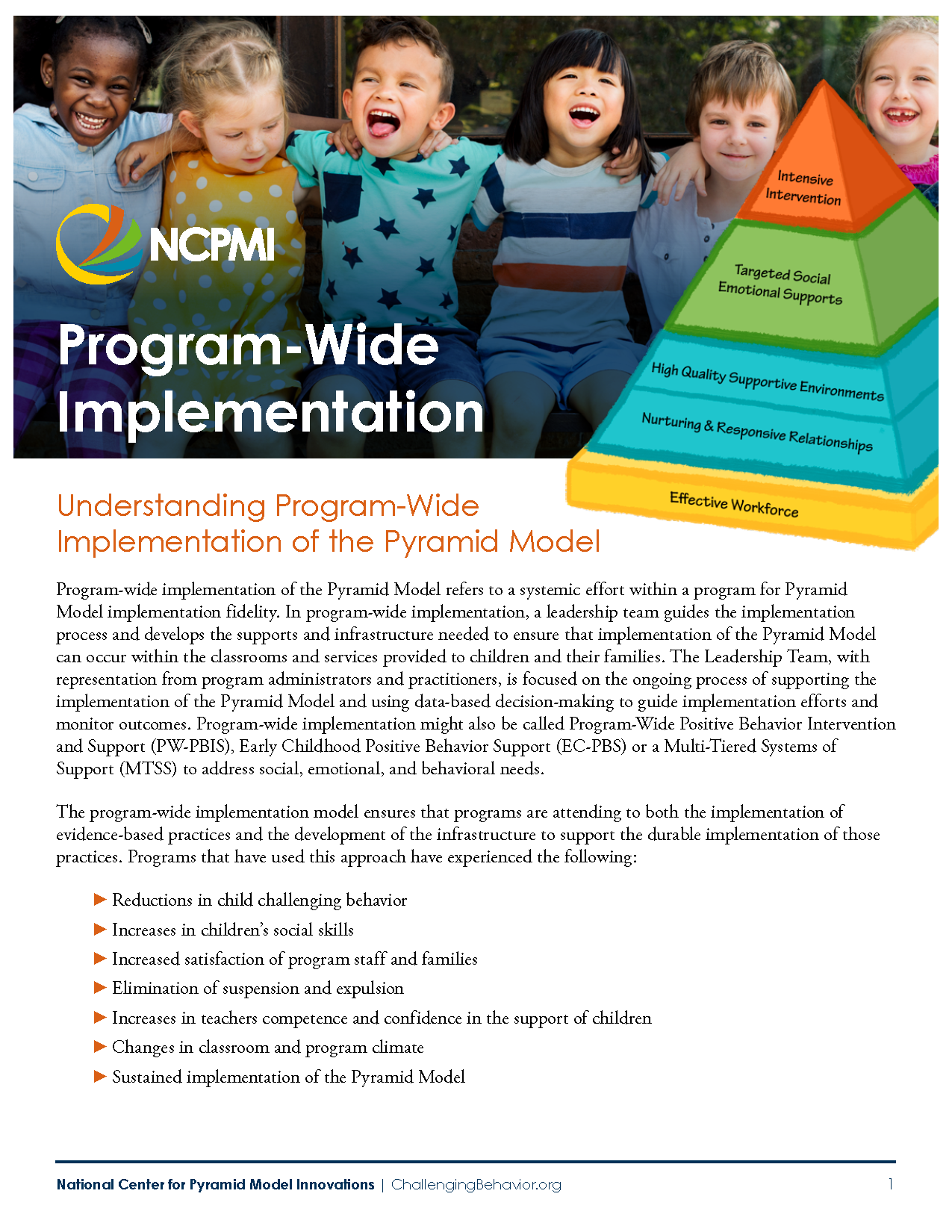
Overview of program-wide implementation to use in the recruitment of implementation sites. Describes components, considerations, and addresses frequently asked questions.
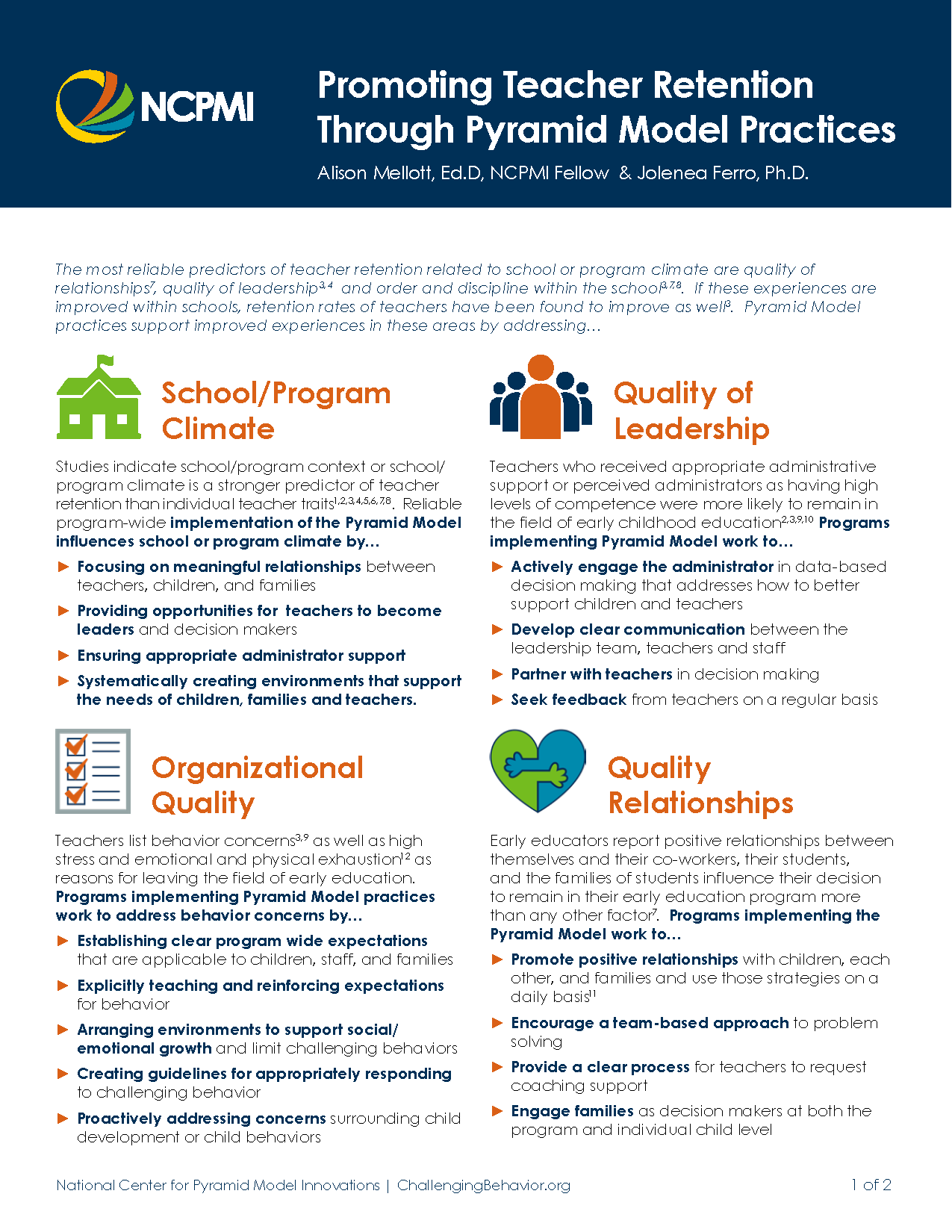
Early educator attrition is a significant challenge in many early learning programs. This guidance sheet outlines the link between Pyramid Model Practices and teacher retention research. Pyramid Model Practices can provide supports to encourage teachers to remain in the field.
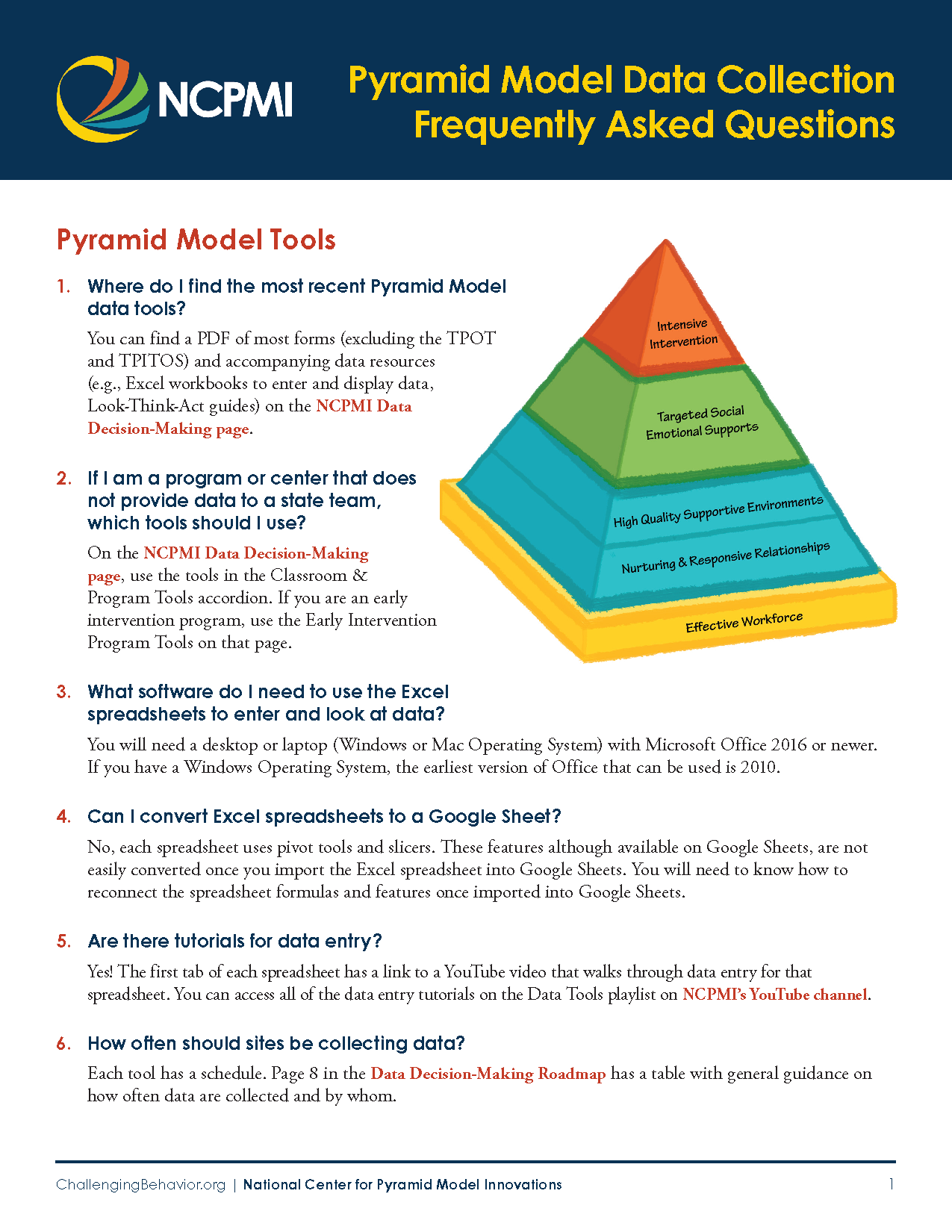
This resource answers some of the most frequently asked questions about the collection and summary of Pyramid Model data.

This fact sheet describes the various roles and responsibilities of Program Implementation Coaches and their work with state, community, and program leadership teams.
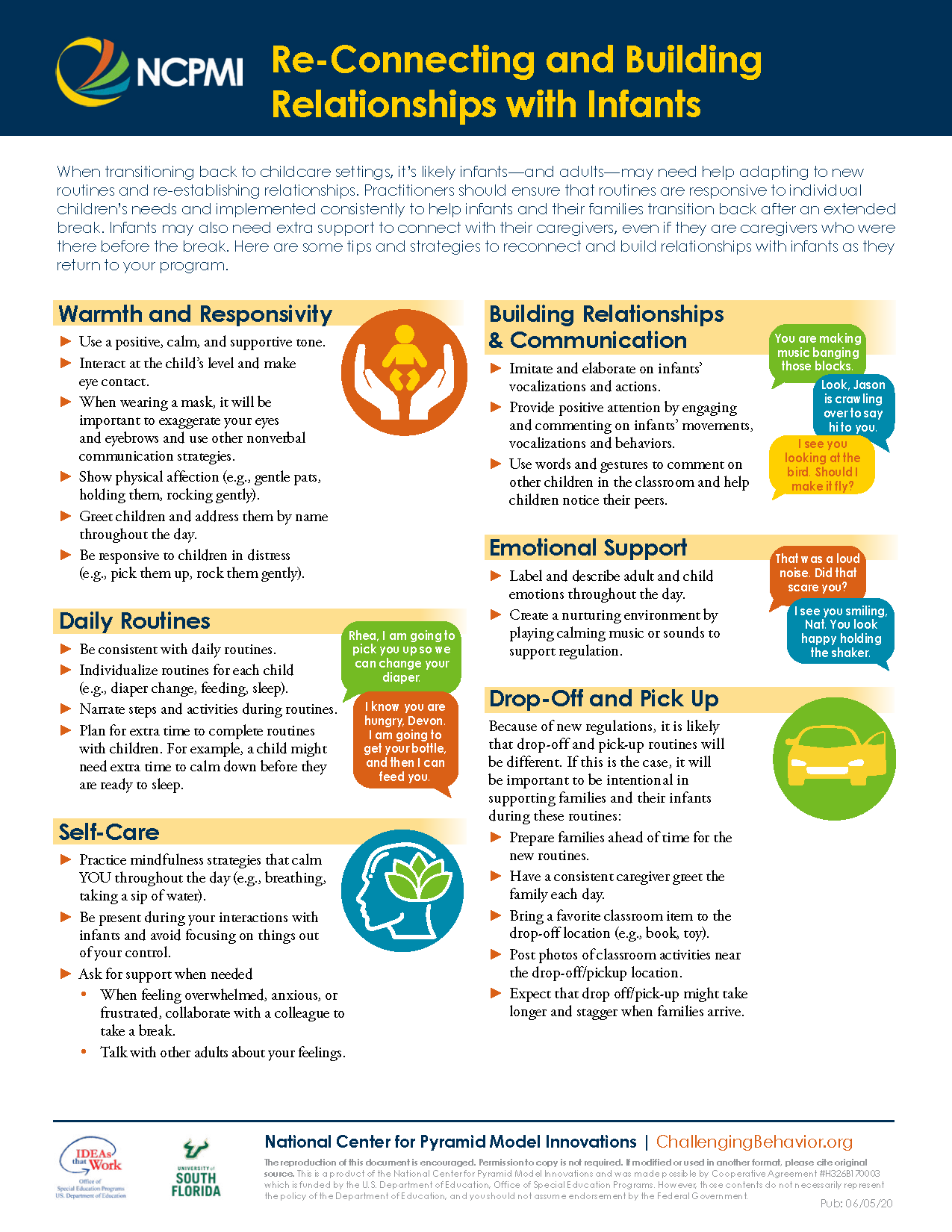
Use this tip sheet to help practitioners of infants and toddlers intentionally plan and think about how to reconnect, help children transition back to the classroom, and support children’s social and emotional development after being away from the program.

Use this tip sheet to help practitioners of infants and toddlers intentionally plan and think about how to reconnect, help children transition back to the classroom, and support children’s social and emotional development after being away from the program.

Rebuilding the Pyramid: Reconnecting After a Break is a one page tip sheet to help preschool practitioners intentionally plan and think about how to support children’s use of social and emotional skills that are important to re-teach or remind children after being away from a classroom. Areas to focus on include: schedules and routines, supportive conversations, expectations and rules, positive descriptive feedback and emotional support.
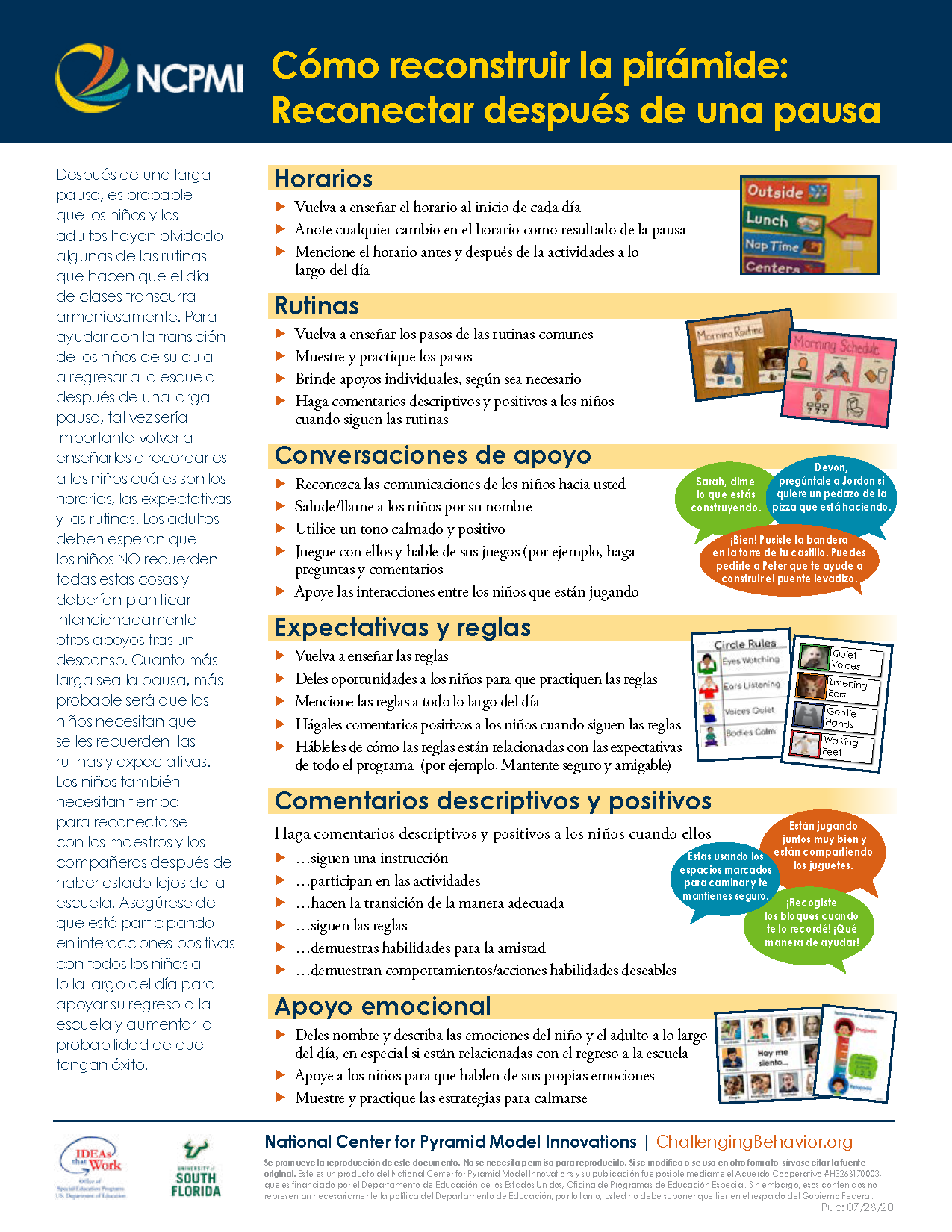
Rebuilding the Pyramid: Reconnecting After a Break is a one page tip sheet to help preschool practitioners intentionally plan and think about how to support children’s use of social and emotional skills that are important to re-teach or remind children after being away from a classroom. Areas to focus on include: schedules and routines, supportive conversations, expectations and rules, positive descriptive feedback and emotional support.
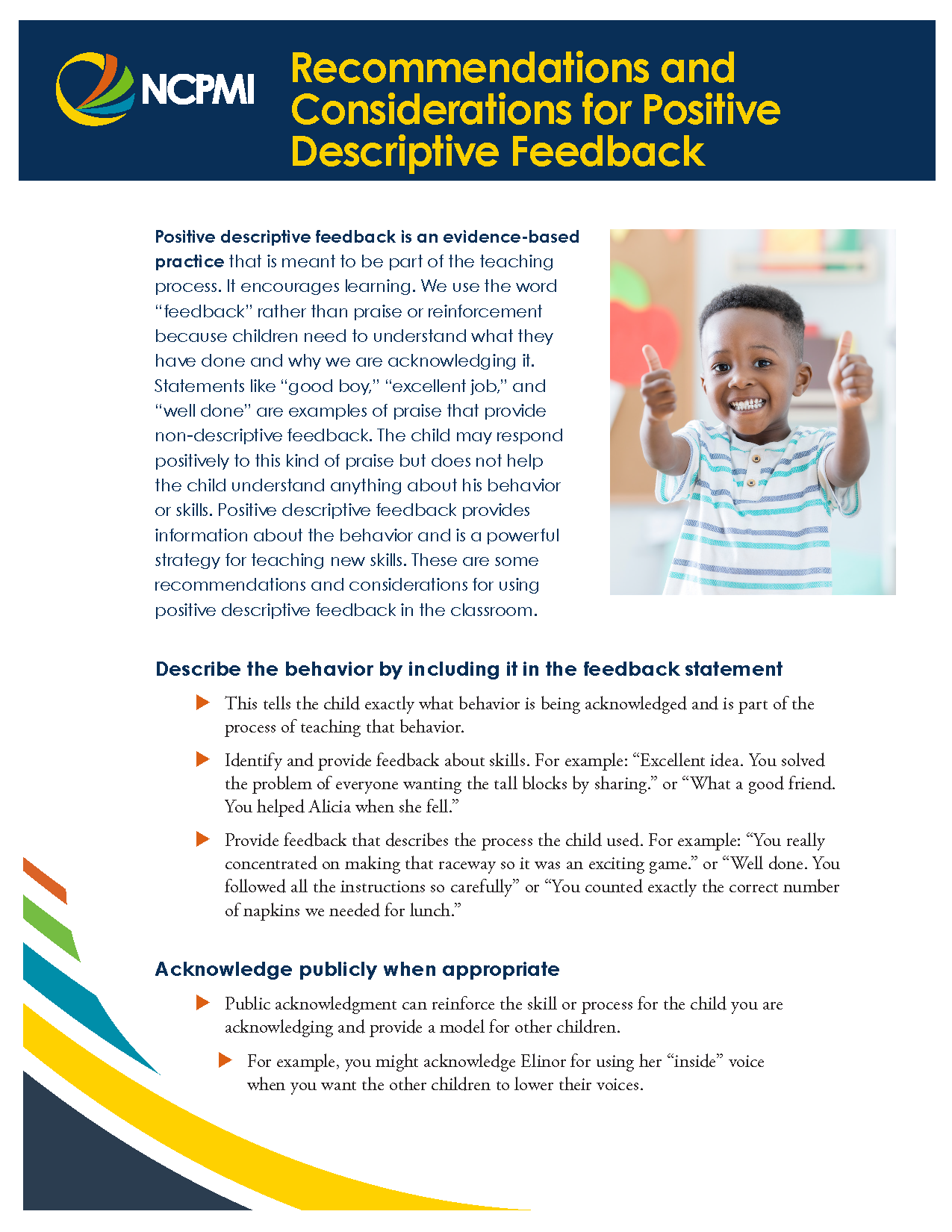
Positive descriptive feedback is a powerful strategy for teaching new skills and maintaining learned skills. By providing information about the child’s behavior as part of the feedback, the teacher helps the child understand what they have done and why it is being acknowledged.

Guidance on how to build wellness into the culture of the program.
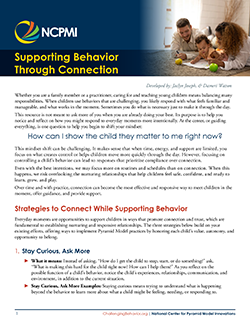
Supporting Behavior Through Connection is a practical resource for families and early childhood practitioners that shifts the focus from compliance to connection. It offers simple, relationship-centered strategies to respond to challenging behavior in ways that help children feel safe, valued, and supported. The resource describes three practices, including examples and prompts, that can be used in everyday routines to build trust and connection with children.
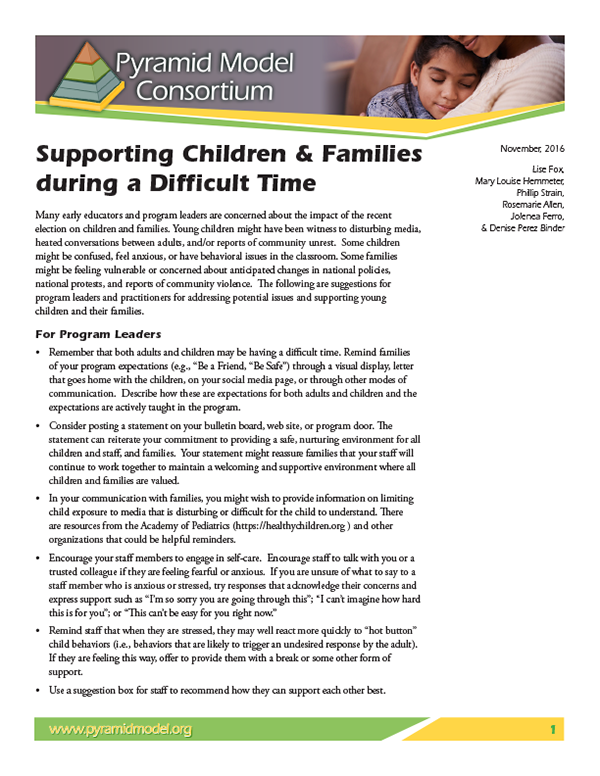
This fact sheet provides guidance for supporting children and families during difficult circumstances (e.g., national protests, community violence).
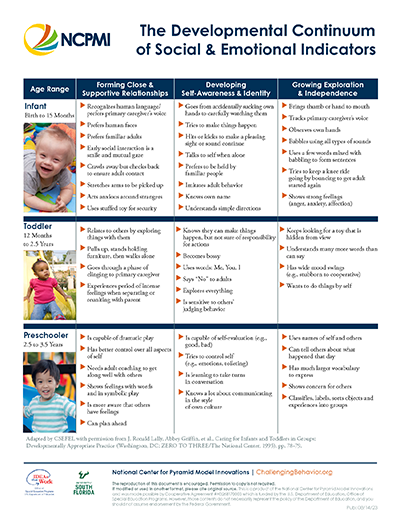
This one page fact sheet contains the developmental continuum of social and emotional indicators for infant, toddler, and preschool age children.
This fact sheet provides an overview of version 3.0 of the State Benchmarks of Quality (SBoQ), highlighting its updated and new Critical Elements and Benchmarks. Key terms relevant to these updates are also included.
This four-page fact sheet provides an overview of the Pyramid Model for Supporting Social-Emotional Competence in Infants and Young Children. Specifically, this fact sheet describes the three tiers of intervention practice: universal promotion for all children; secondary preventions to address the intervention needs for children at risk of social-emotional delays, and tertiary interventions needed for children with persistent challenges. Additionally, six key assumptions that were made during the design process about how the Pyramid Model would be implemented are outlined.
A brief article that defines and explains terms related to Positive Behavior Support (PBS), Positive Behavioral Interventions and Supports (PBIS), and the Pyramid Model and a discussion of the key areas of similarity and difference between preschool and school-age implementation of a PBS-based multi-tiered systems.
This factsheet outlines the recommended practices, developed by the National Child Traumatic Stress Network, for providing a trauma-informed educational program and how the Pyramid Model supports these.
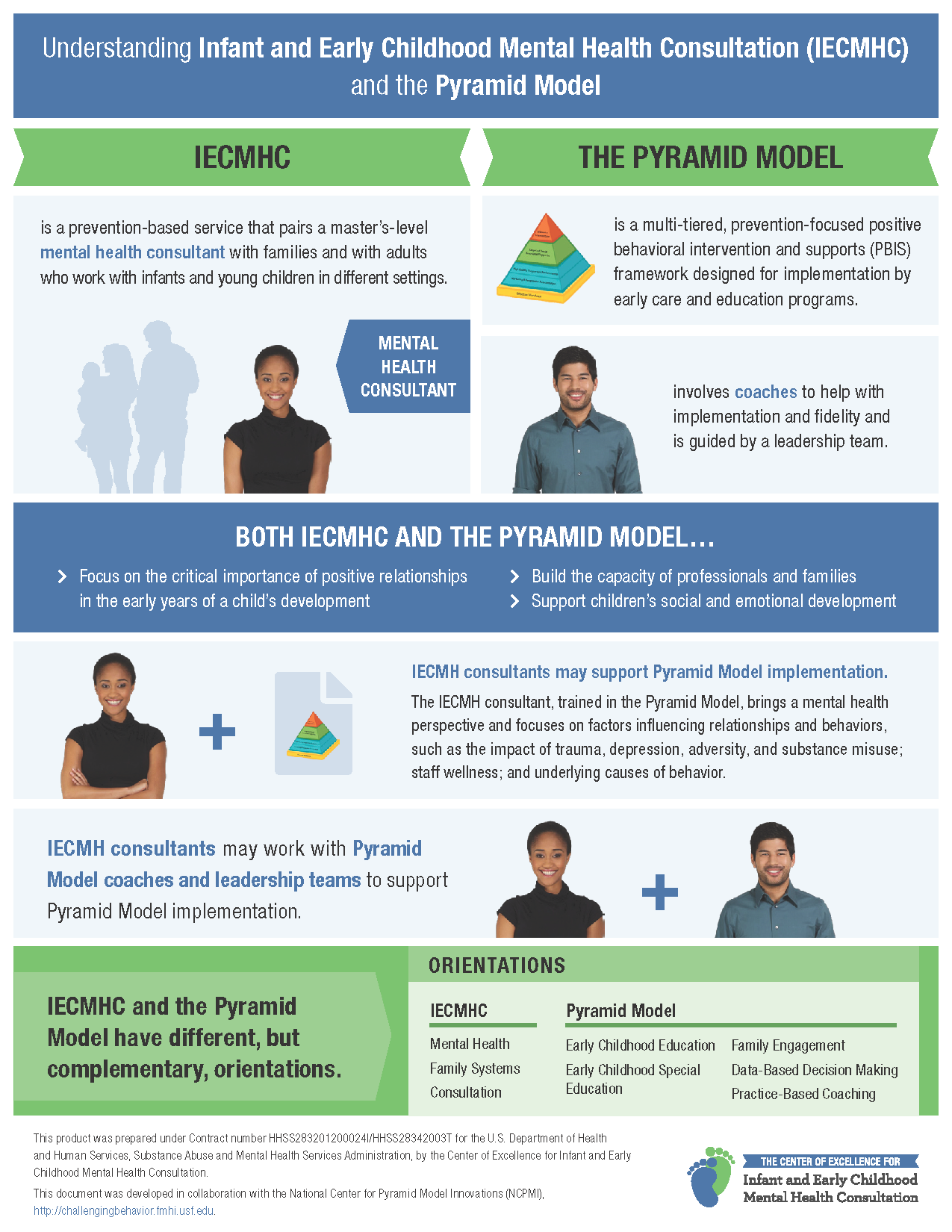
This fact sheet shows how Infant and Early Childhood Mental Health Consultation works together with the Pyramid Model.
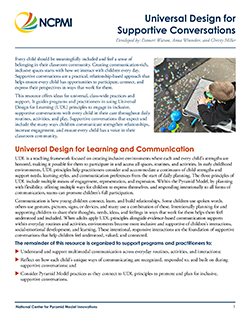
Universal Design for Supportive Conversations is a practical resource that offers ideas for universal, class-wide practices and support. It guides programs and practitioners in using Universal Design for Learning (UDL) principles to engage in inclusive, supportive conversations with every child in their care throughout daily routines, activities, and play.
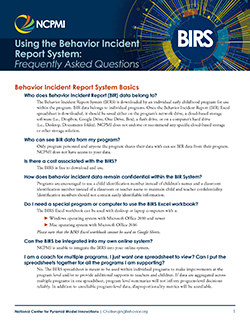
This resource answers frequently asked questions regarding the use of the Behavior Incident Reporting System.
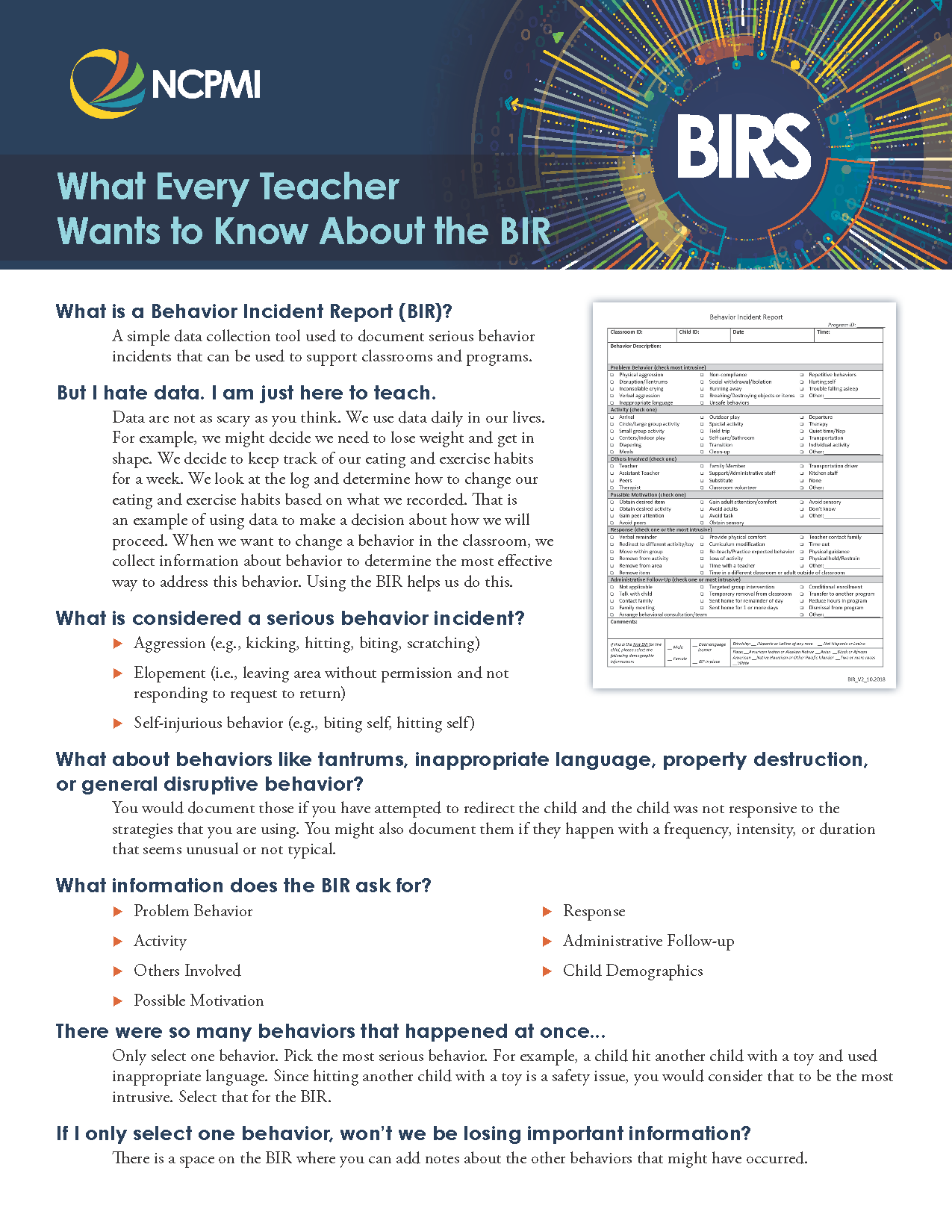
This handout provides teachers with information about the BIR and how they will collect data in the classroom.
What is Infant Early Childhood Mental Health Consultation and what services do they provide.

This document was designed for programs to use with families when the use of PTR-YC is being considered for a particular child. It outlines the PTR-YC process in family-friendly language and provides information regarding where the PTR-YC process fits within the Pyramid Model. It also discusses why a family’s child might benefit from individualized social emotional supports and how the family plays an important role as a member of the PTR-YC team.