Document Category: Guide
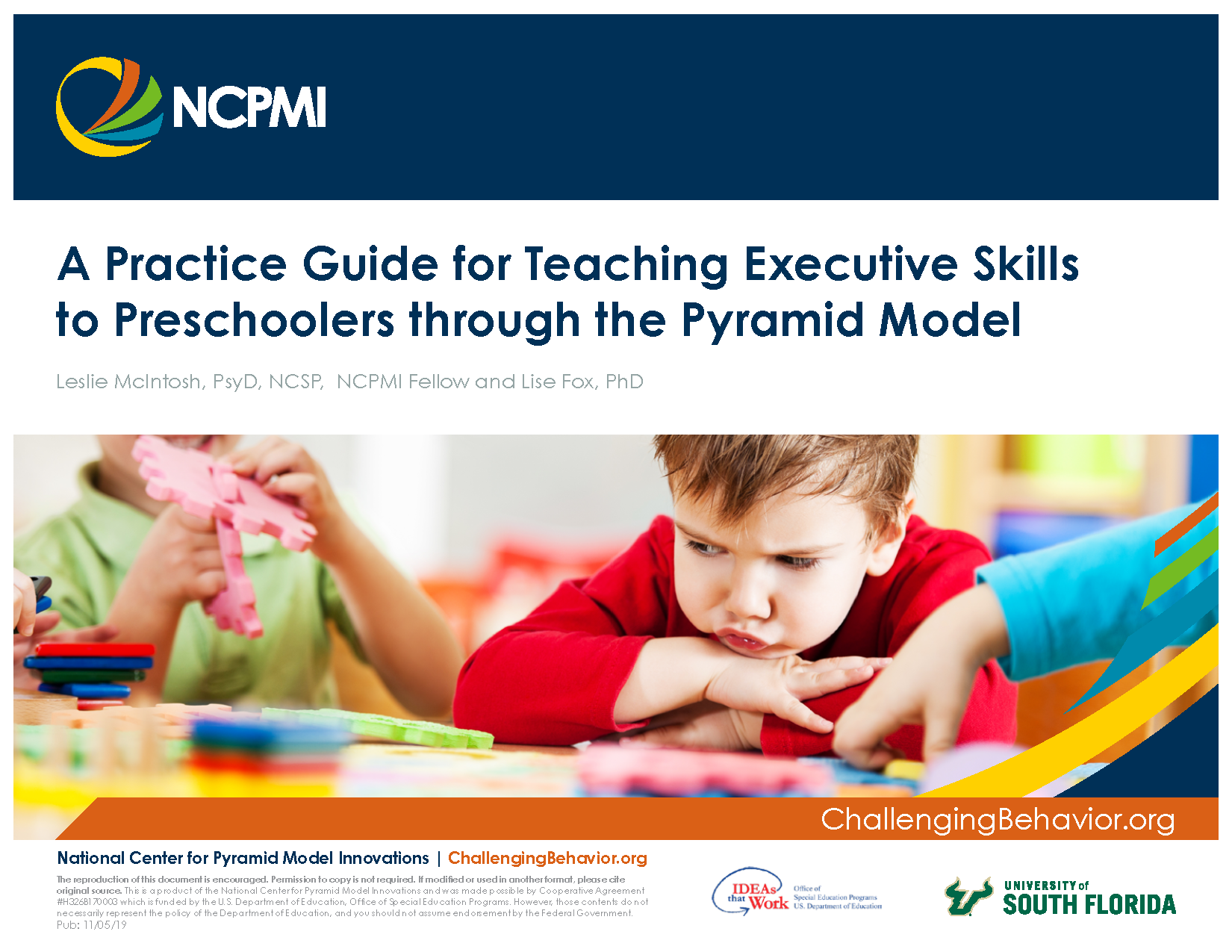
This guide reviews executive functions and skills as they relate to older toddlers and preschoolers, as well as the Pyramid Model practices that can be used to support these.

This manual provides a valuable resource that is full of tips and guidance for coaches as they implement practitioner coaching with classroom teachers.
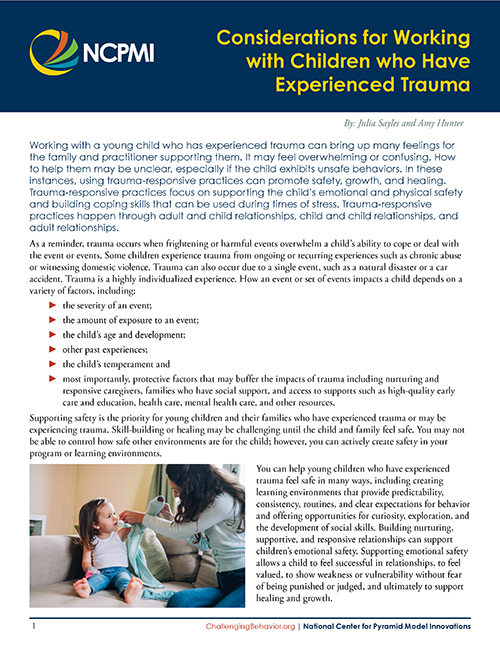
This practice brief provides prevention strategies to help children with challenging behavior who have been exposed to trauma and strategies for responding to children when they are trauma-activated.
Part guide and part planning tool, this resource, created in collaboration with the TIES Center, helps early childhood teams and families partner to build more inclusive programs and environments where every family feels a sense of belonging. Centered on the experiences of families, it outlines ten dimensions of belonging, offers prompts for shared reflection, and provides a planning tool to move from insight to action. Designed for practitioners, specialists, and program leaders supporting children and their families from birth to age eight, this tool can be used in family meetings, team discussions, and/or leadership planning to celebrate what’s working, identify areas for growth, and plan next steps together in partnership with families.
This guidance will help Pyramid Model (PM) leadership teams assess and improve their existing child guidance policies to effectively support each child in their program and reduce or eliminate the use of exclusionary discipline practices.
The resources included in this guide can help professionals at the state and local early childhood program levels determine what factors are related with the use of exclusionary discipline practices in early care and education settings and develop strategies to prevent such practices. These resources focus on collecting, analyzing, and using high-quality data to inform practice and policy decisions, including the equitable implementation of evidence-based and inclusive practices. This resource is part of the U.S. Department of Education Discipline/Behavior Guidance and Resources collection.
The resources included in this guide can help professionals at the State and local early childhood program levels prevent exclusionary discipline in early care and education settings and consider the impact of these practices on families. These resources focus on the equitable implementation of evidence-based and inclusive practices. This resource is part of the U.S. Department of Education Discipline/Behavior Guidance and Resources collection.
The resources included in this guide can help professionals at the State and local early childhood program levels prevent exclusionary discipline through strengthening and coordinating State and local early childhood systems; collecting, analyzing, and using high quality data to inform practice and policy decisions; and equitably implement evidence-based and inclusive practices. This resource is part of the U.S. Department of Education Discipline/Behavior Guidance and Resources collection.
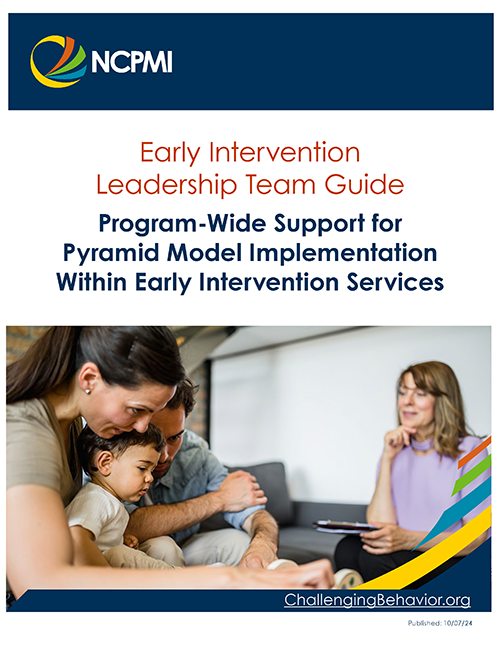
The Early Intervention Leadership Team Guide provides leadership teams with the resources, forms, and ideas to guide program-wide implementation of the Pyramid Model within early intervention services. Each section of the guide aligns to a critical element of the Pyramid Model Early Intervention (Part C) Benchmarks of Quality. The guide is ideally used by leadership teams in their initial training and monthly during leadership team meetings where they review and update their implementation action plans.
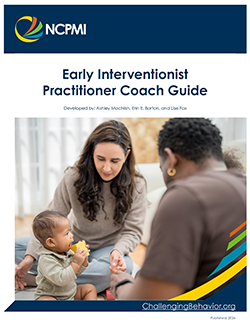
This manual provides a valuable resource full of tips and guidance for practitioners implementing coaching with early interventionists.
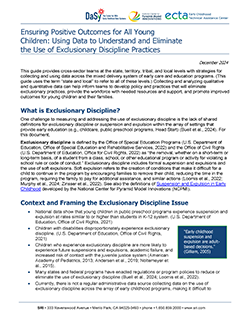
This guide provides cross-sector teams at the state, territory, tribal, and local levels with strategies for collecting and using data to understand exclusionary discipline across the mixed delivery system of early care and education programs.
Center for Early Childhood Mental Health Consultation. This guide is designed to assist the mental health consultant in guiding teachers, teams, and families in developing and implementing an individualized plan of support that results in a reduction of challenging behavior and the promotion of communication and social skills.
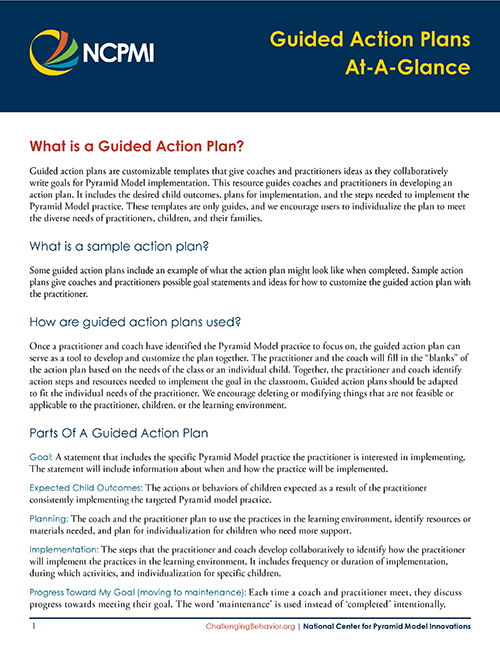
Provides an overview of the intended use of these templates, how this resource situates itself within the PBC model, answers frequently asked questions, and provides a menu of the templates that are available.
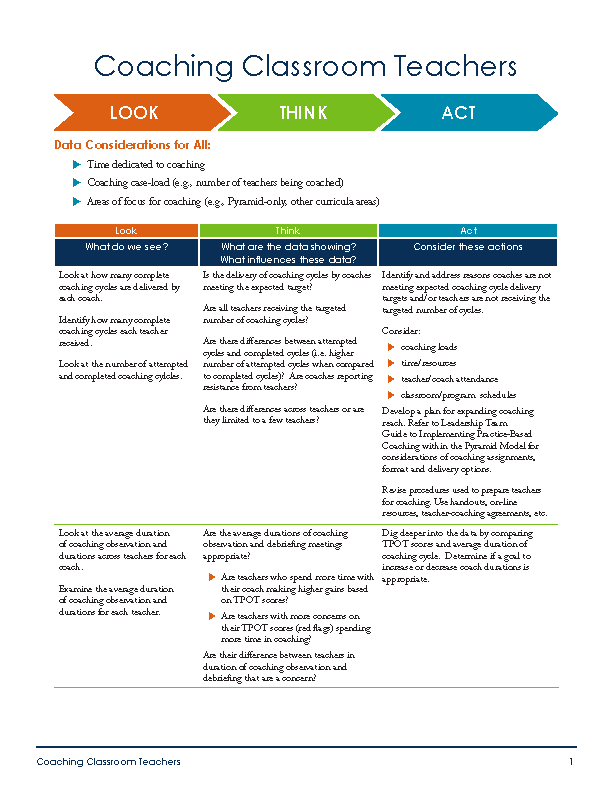
The Leadership Team can use this document to guide the three steps of data review and decision-making (Look-Think-Act). The guide provides the information on the data to review, the questions to consider, and potential actions. This guide is used to examine data from the individual classroom coaching log and program coaching data summary.
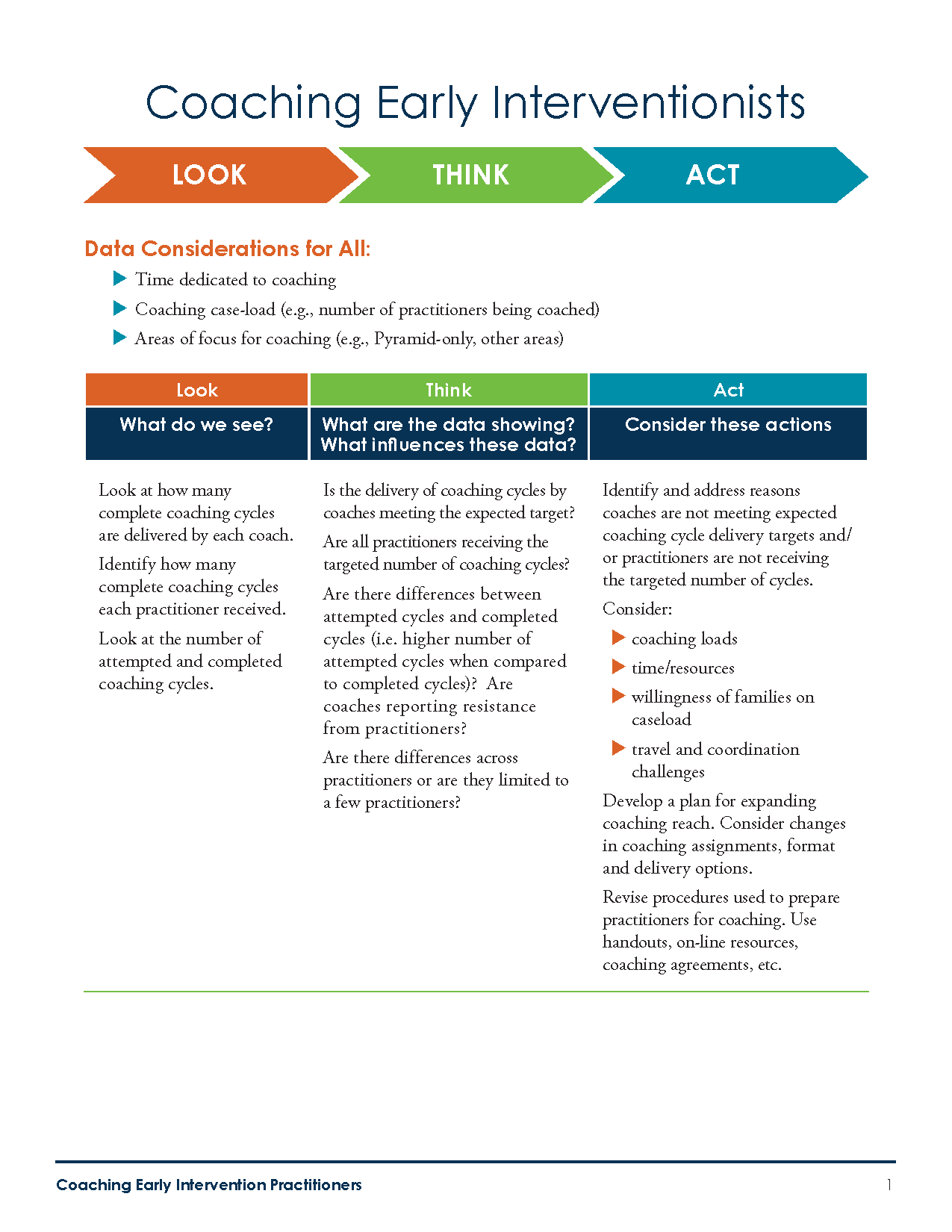
The Leadership Team can use this document to guide the three steps of data review and decision-making (Look-Think-Act). The guide provides the information on the data to review, the questions to consider, and potential actions. This guide is used to examine data from the Early Intervention Practitioner Coaching Log and the EIPPFI.
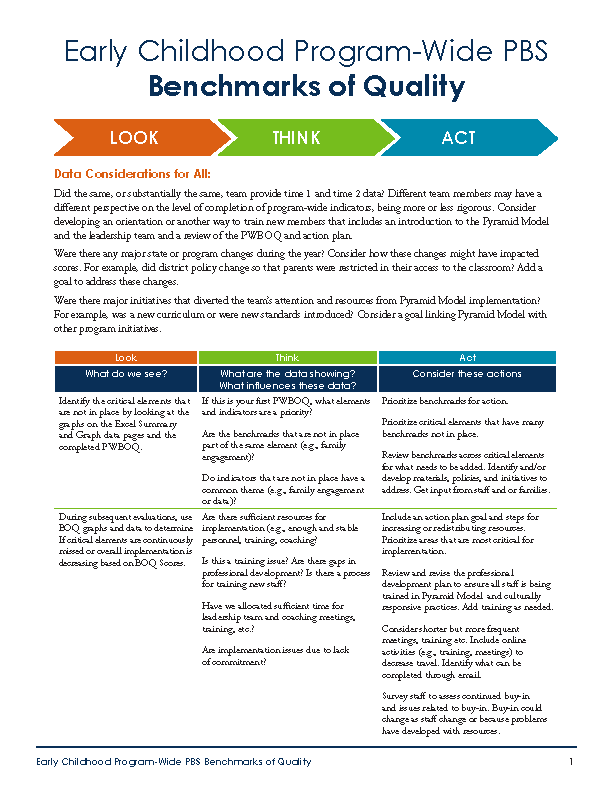
The Leadership Team can use this document to guide the three steps of data review and decision-making (Look-Think-Act). The guide provides the information on the data to review, the questions to consider, and potential actions. This guide t is used with the data summaries of the Program-Wide PBS Benchmarks of Quality.
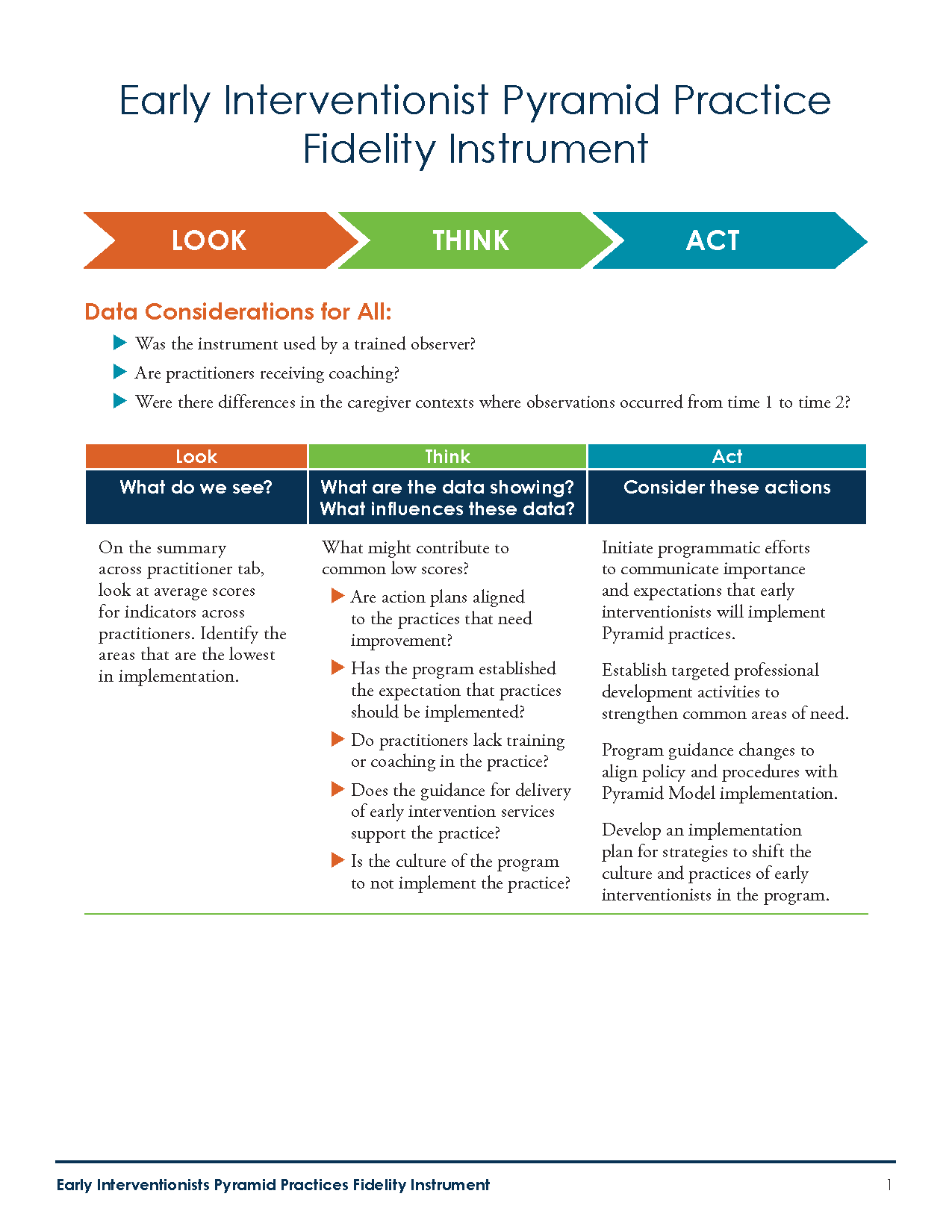
The Leadership Team can use this document to guide the three steps of data review and decision-making (Look-Think-Act). The guide provides the information on the data to review, the questions to consider, and potential actions. This guide is used to examine data from the Early Intervention Practitioner Pyramid Practice Fidelity Instrument (EIPPFI).
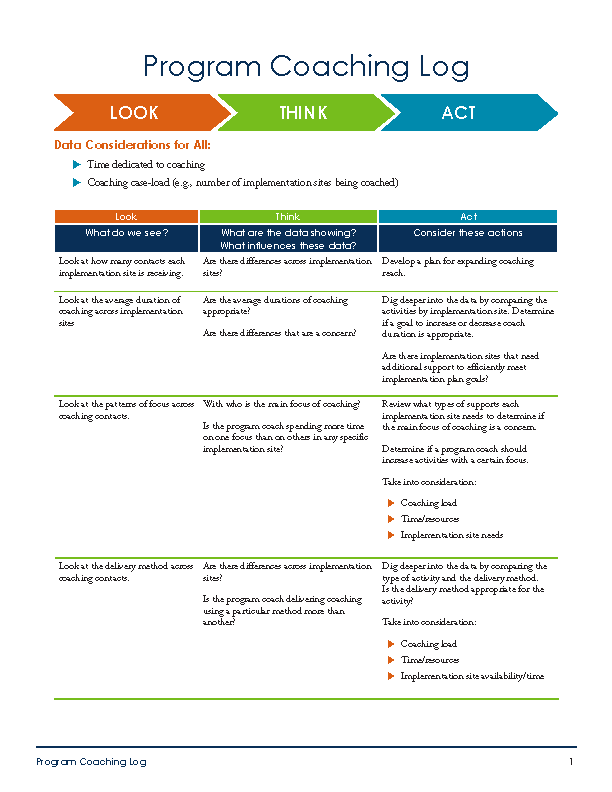
The Leadership Team can use this document to guide the three steps of data review and decision-making (Look-Think-Act). The guide provides the information on the data to review, the questions to consider, and potential actions. This guide is used with the data summaries of the Program Coaching Log.
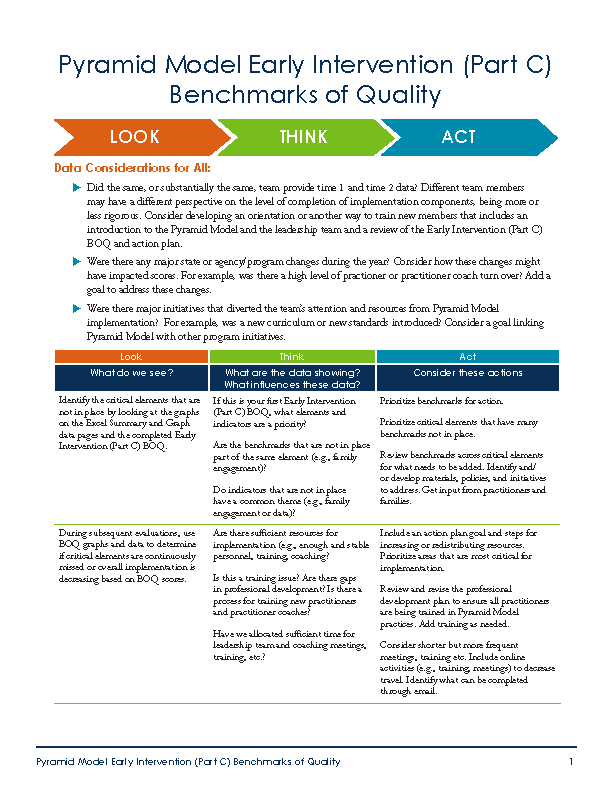
The Leadership Team can use this document to guide the three steps of data review and decision-making (Look-Think-Act). The guide provides the information on the data to review, the questions to consider, and potential actions. This guide is used with the data summaries of the Pyramid Model Early Intervention (Part C) Benchmarks of Quality.
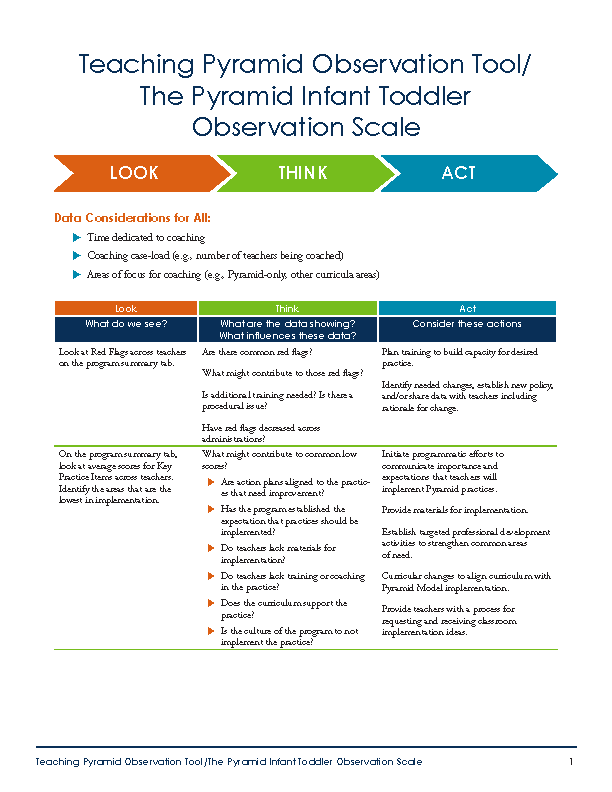
The Leadership Team can use this document to guide the three steps of data review and decision-making (Look-Think-Act). The guide provides the information on the data to review, the questions to consider, and potential actions. This guide is used with the data summaries of TPOT or TPITOS.
The Positive Solutions Family Routine Guide is used by parents and caregivers of children ages 2-5 years in developing an intervention plan for children who are using challenging behavior. The Guide gives suggestions for prevent, teach, and response strategies, organized by the function of the challenging behavior, within common family activities and routines. The guide is part of the Positive Solutions for Families workshop series.
The Positive Solutions Family Routine Guide is used by parents and caregivers of children ages 2-5 years in developing an intervention plan for children who are using challenging behavior. The Guide gives suggestions for prevent, teach, and response strategies, organized by the function of the challenging behavior, within common family activities and routines. The guide is part of the Positive Solutions for Families workshop series.
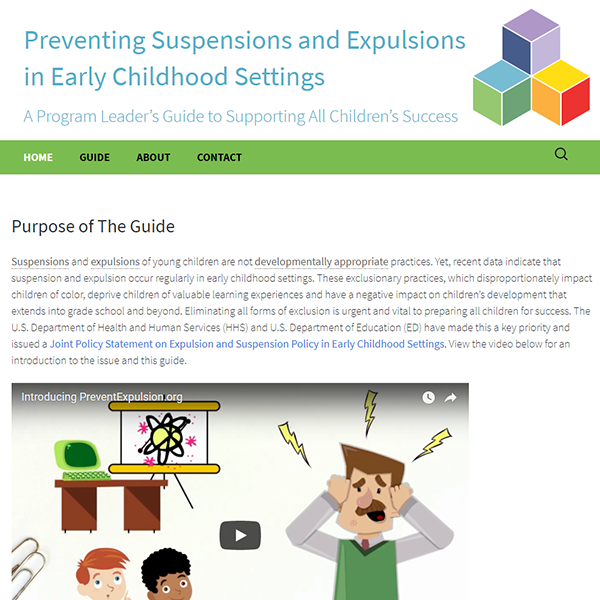
The purpose of this guide is to provide relevant, specific recommended policies and practices that are actionable and address the underlying root causes and provide effective alternatives. The recommended policies and practices are based on the most important research for eliminating suspensions and expulsions in early childhood settings and were developed with guidance from a panel of national experts.The purpose of this guide is to provide relevant, specific recommended policies and practices that are actionable and address the underlying root causes and provide effective alternatives. The recommended policies and practices are based on the most important research for eliminating suspensions and expulsions in early childhood settings and were developed with guidance from a panel of national experts. Using the interactive guide, program leaders can find resources on supporting social emotional development, reducing challenging behavior, recognizing the role of cultural differences and implicit biases, and more. The guide is intended for those most likely to make an impact and with a great need for resources: early education program leaders in center-based settings who implement policies and procedures and promote practices; however, anyone seeking to learn more about strategies for eliminating suspension and expulsion in early childhood settings can benefit from using the guide.
This resource provides Pyramid Model leadership teams with guidance for implementing Practice-Based Coaching within their programs and developing plans for three essential elements of coaching: 1) Getting Ready for Coaching; 2) Enacting Coaching; and 3) Evaluating Coaching.

This document provides program leadership teams with guidance to support their efforts to eliminate suspension and expulsion and promote equitable, inclusive and culturally responsive practice in all early childhood settings including public and private schools and child care centers.
This NCPMI Resource Collection provides resources for states, communities and early childhood programs aimed to prevent the use of exclusionary practices. The resources, predominantly found on the NCPMI website, provide information about exclusionary practices related to prevention, policies, data tools, equity and impact. Formats include guides, tip sheets, fact sheets, webinars, and video.
Last Updated: 10/01/2024 ADA updates
Created: 09/25/2023

This resource collection offers information and materials for programs to use as they authentically partner with families to implement the Pyramid Model. These resources ensure that each family’s “voice and choice” is considered in the planning, development, and evaluation of Pyramid Model activities, programs, and systems.
Last Updated: 10/01/2024 ADA updates
Created: 09/08/2023
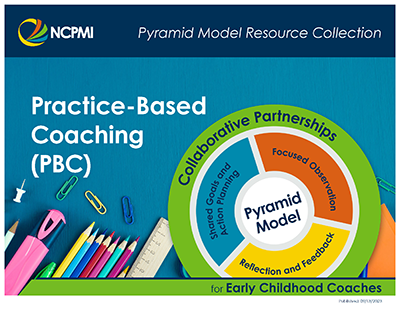
This NCPMI Practice-Based Coaching (PBC) Resource Collection provides coaches with selected tools to support their knowledge and use of PBC in early care and education settings. The resources, predominantly found on the NCPMI website, provide information about PBC as a coaching framework, delivery of PBC to support coaches, specific tools, resources about the PBC coaching cycle, and coaching data tools.
This NCPMI Program Implementation Coaches Resource Collection provides program implementation coaches with selected tools to support their work with state, community, and program-wide leadership teams.
This document provides state leadership teams with guidance on how to prevent suspension and expulsion by integrating with existing efforts including Pyramid Model, Multi-Tiered System of Supports (MTSS), Quality Rating Improvement System (QRIS), inclusion and State Systemic Improvement Plan (SSIP) efforts. This resource is organized around the Guiding Principles and Recommendations from the federal Joint Policy Statement on Expulsion and Suspension Policies in Early Childhood Settings (HHS/ED, 2014).
This resource collection offers information and materials for states, communities, and early childhood programs seeking further information on Infant and Early Childhood Mental Health Consultation (IECMHC) and the integration with the Pyramid Model.
Created: 7/15/2025
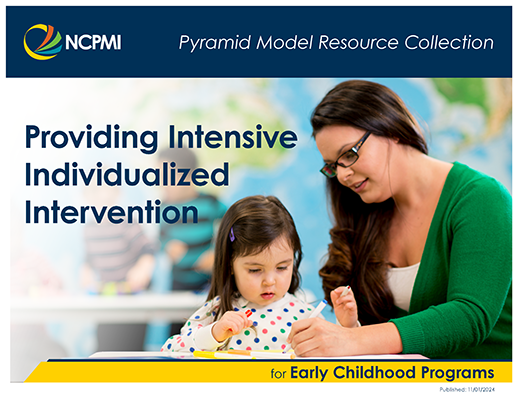
This resource provides teams and individuals with a wealth of resources and materials on Functional Behavioral Assessment (FBA) and the Individualized Positive Behavior Support (IPBS) process used for Intensive Individualized Interventions.
Created: 11/01/2024
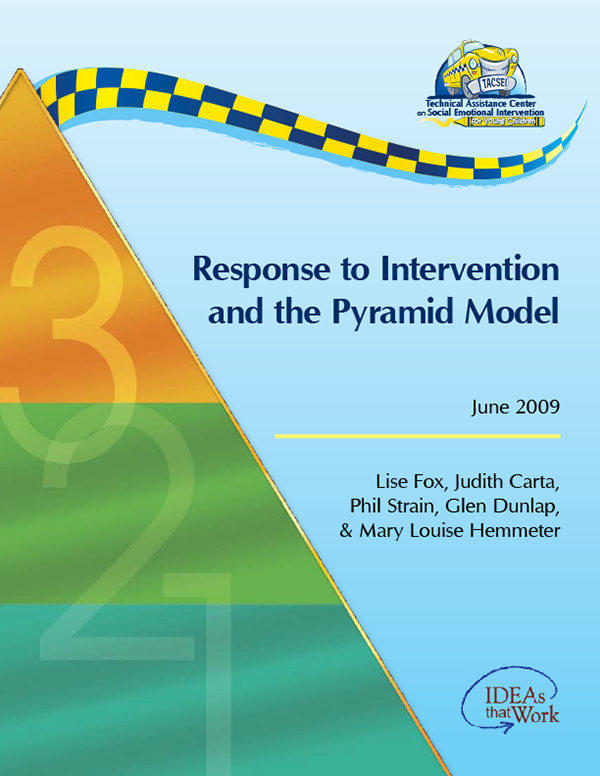
Response to Intervention (RtI) offers a comprehensive model for the prevention of delays in learning and behavior. While this problem-solving framework was initially designed for application within Kindergarten to 12th grade programs, there is substantial research that supports the value of the model for application within early childhood programs. This paper provides an overview of RtI and discusses the Pyramid Model (Fox, Dunlap, Hemmeter, Joseph, & Strain, 2003) and its application for promoting young children’s social competence and preventing behavior challenges (June 2009).
This Roadmap provides a brief overview of the use of screening and to help administrators and teachers choose appropriate instruments for implementing a screening program.
This Roadmap provides guidance on promoting healthy social-emotional development in all young children and intervening early with children who may be displaying problematic social-emotional behaviors.
This Roadmap shares practices for promoting adaptive social-emotional behavior of toddlers and preschoolers, with or at risk for disabilities and who have problems with behavior, in group settings.
This Roadmap describes the types of TA that are most beneficial for achieving positive outcomes. It highlights TA strategies to initiate, implement, and sustain effective practice and systems change.
This Roadmap discusses family-focused services and practices for promoting social-emotional development of children served in Part C.
This Roadmap is a guide to implementing widespread use of the Pyramid Model.
This Roadmap provides programs with guidance on how to collect and use data to ensure the implementation of the Pyramid Model with fidelity and decision-making that improves positive child outcomes.

This guide provides school leaders with important considerations as they implement coaching as a component of professional development in their Pyramid Model implementation.
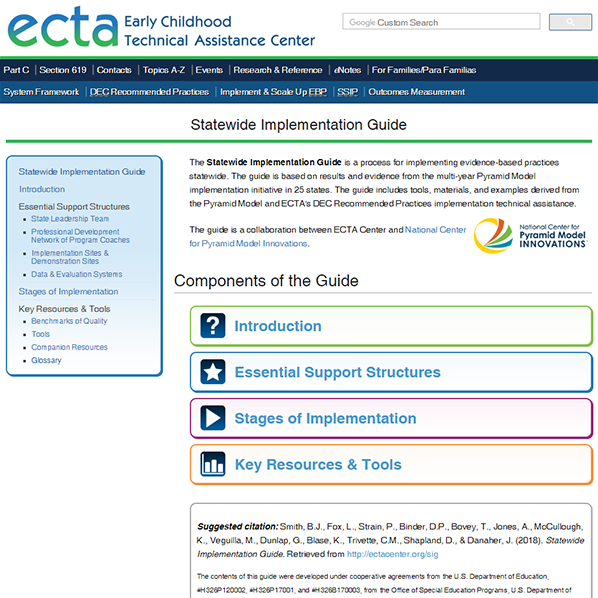
The Statewide Implementation Guide is an important resource for the use of this approach. The guide is based on results and evidence from the multi-year Pyramid Model implementation initiative in 25 states. It includes tools, materials, and examples derived from the Pyramid Model and ECTA’s DEC Recommended Practices implementation technical assistance (Smith et al., 2017).

Teaching Tools for Young Children (TTYC) offers a straightforward resource for practitioners and coaches to support children who struggle with challenging behavior in routines and activities. TTYC suggests specific step-by-step strategies for practitioners to consider when they know the function (or purpose) of a child’s challenging behavior.
Sometimes you know the meaning of the behavior, but you’re unsure what to do. We have a wonderful guide that can assist you – Using Function-Informed Support to Address Challenging Behavior within Routines. Join this call to learn how to use the updated guide to develop and implement a support plan for children exhibiting behavior that challenges adults in everyday routines and activities (e.g., snack time, large group activities, outdoor play, centers).
This resource outlines guidance for identifying, preparing, and supporting practitioners responsible for facilitating the development and implementation of individualized positive behavior support (IPBS) plans in early childhood Pyramid Model settings.

This document is designed to guide the Program Leadership Team around considerations for supporting children, families, and staff as they return to the program. The guidance includes Pyramid Model practices you know and encourages you to think about those strategies from a trauma-informed perspective. While the leadership team may not know who among children, families, and staff have or are experiencing trauma, a trauma-informed approach guides programs in providing a safe and nurturing environment where children, families, and staff can build resilience, feel safe, and recover.
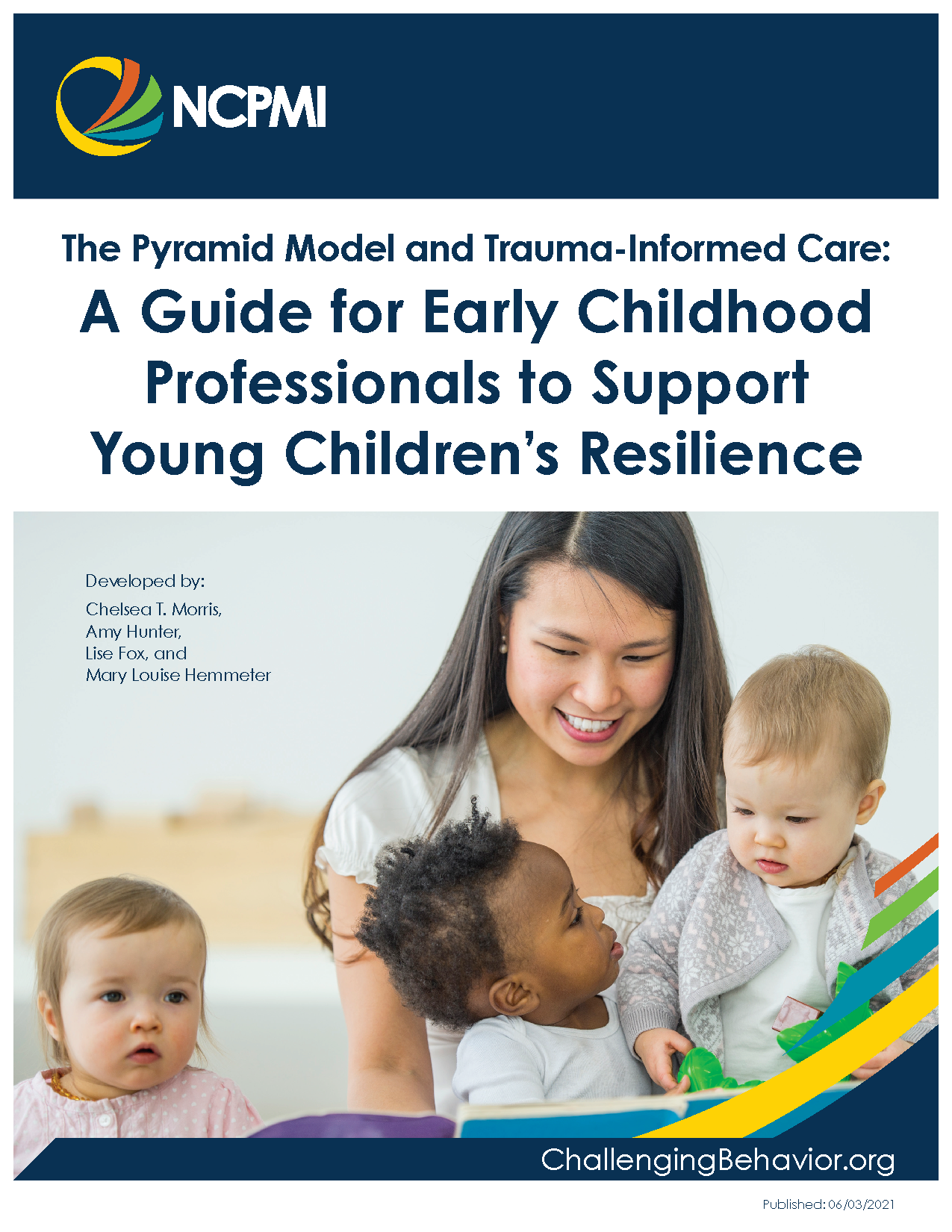
This guide provides resources that support early childhood professionals to integrate the Pyramid Model practices and trauma-informed care. The intended audience includes program leaders and administrators, educators, and staff in early intervention and early childhood classrooms. The purpose of this guide is to help early childhood professionals apply the principles of trauma-informed care in various settings to meet the diverse needs of young children and their families who have experienced trauma.

This guide provides Pyramid Model leadership teams and practitioners with guidance on developing and implementing Tier 2 within the Pyramid Model.
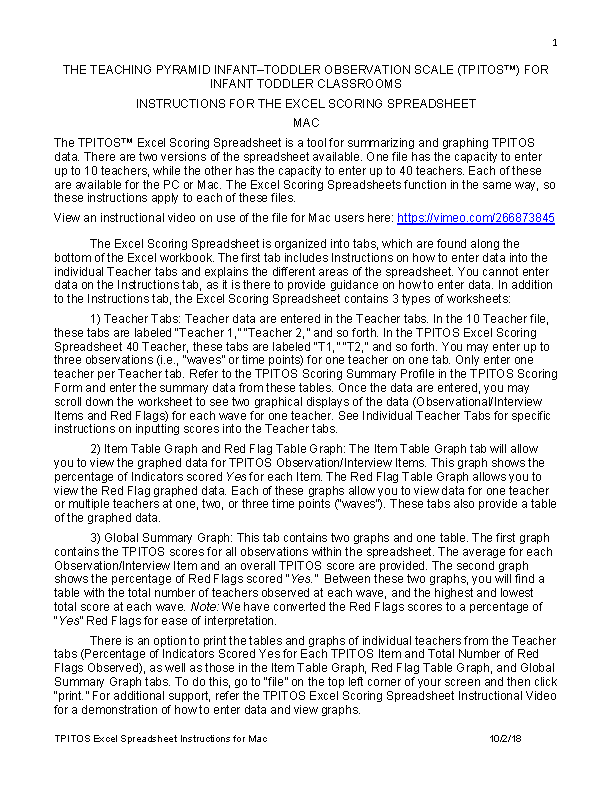
The TPITOS™ Excel Scoring Spreadsheet is a tool for summarizing and graphing TPITOS data.
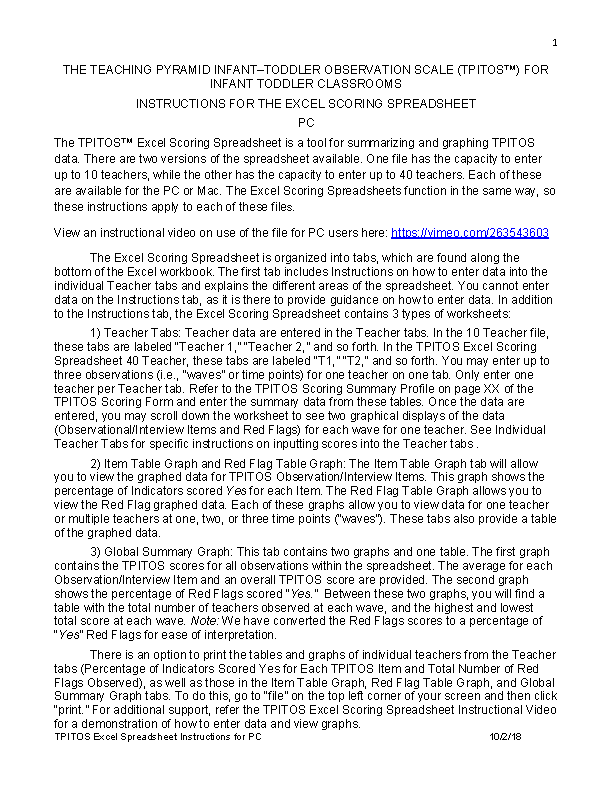
The TPITOS™ Excel Scoring Spreadsheet is a tool for summarizing and graphing TPITOS data.