Document Category: Infographic
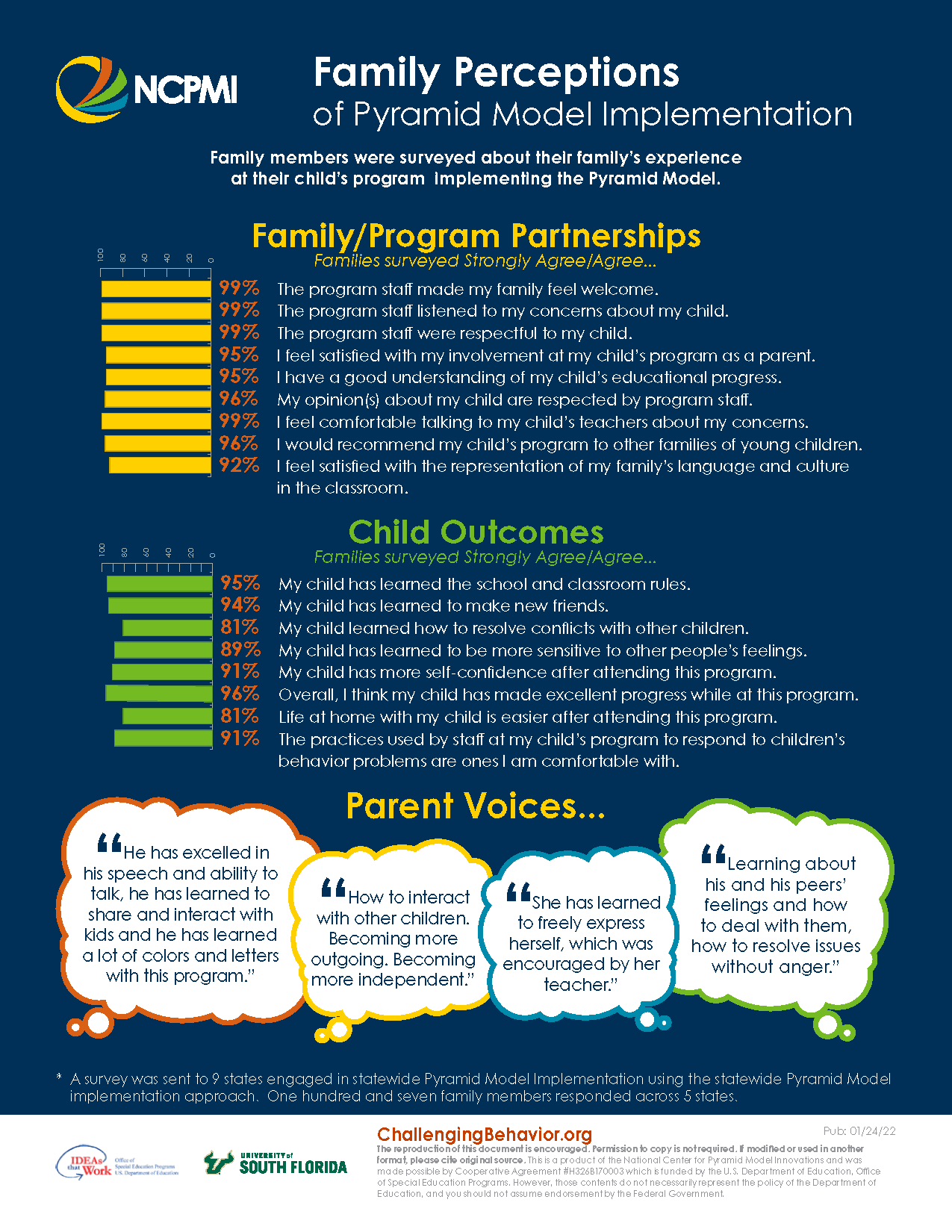
Family members were surveyed about their family’s experience at their child’s program implementing the Pyramid Model. This infographic shows the percent of families that agreed or strongly agreed with the statements reflecting family and program partnerships, and what their child has learned.
This infographic is the first in a series of tips for families. Early care and education and family support programs are encouraged to download the infographic to use in their social media to families or repost on their web site.
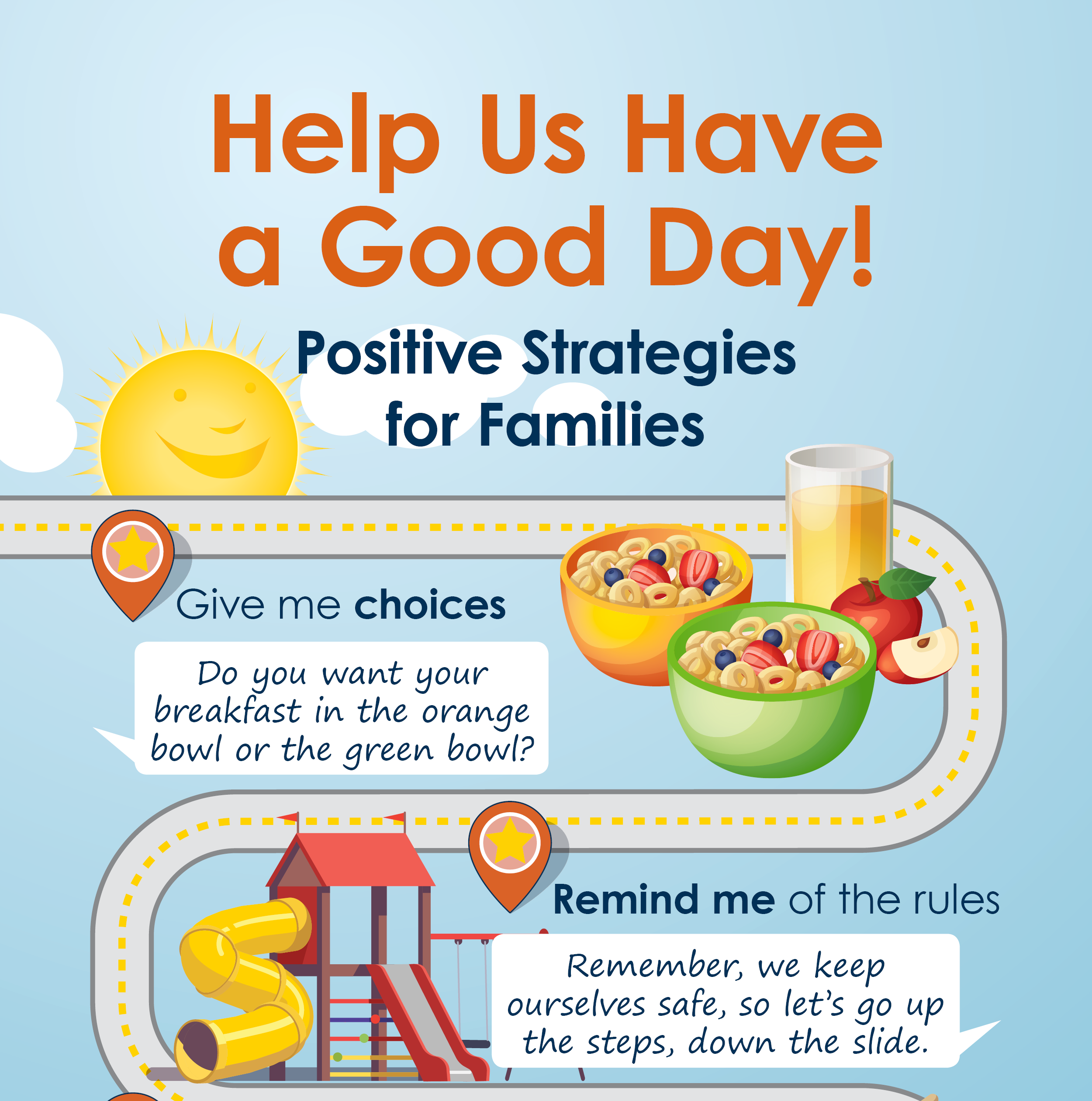
This infographic is the first in a series of tips for families. Early care and education and family support programs are encouraged to download the infographic to use in their social media to families or repost on their web site.
This infographic is the first in a series of tips for families. Early care and education and family support programs are encouraged to download the infographic to use in their social media to families or repost on their web site.
This infographic is the first in a series of tips for families. Early care and education and family support programs are encouraged to download the infographic to use in their social media to families or repost on their web site.
This infographic is the first in a series of tips for families. Early care and education and family support programs are encouraged to download the infographic to use in their social media to families or repost on their web site.
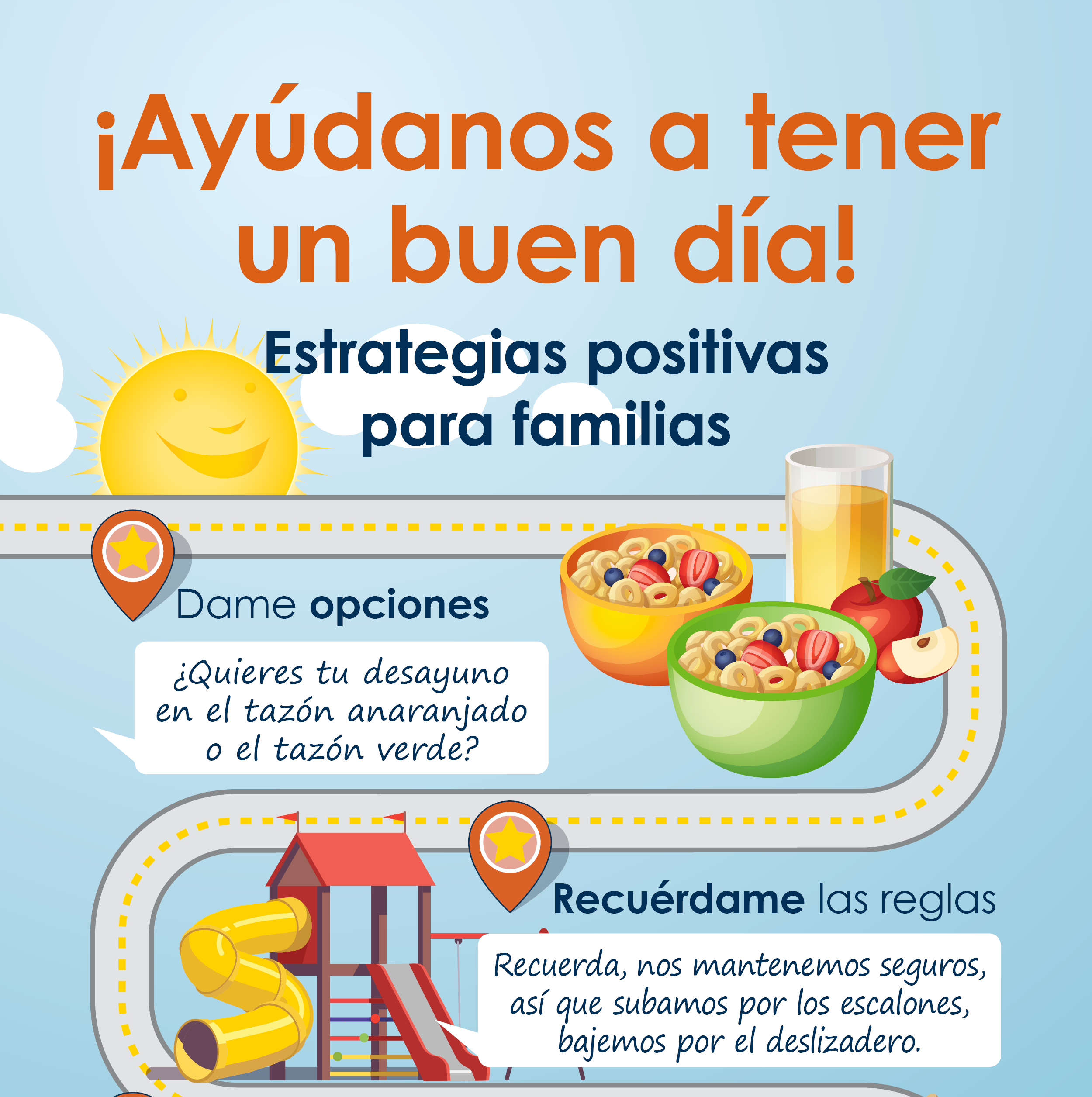
This infographic is the first in a series of tips for families. Early care and education and family support programs are encouraged to download the infographic to use in their social media to families or repost on their web site.
This infographic is the first in a series of tips for families. Early care and education and family support programs are encouraged to download the infographic to use in their social media to families or repost on their web site.
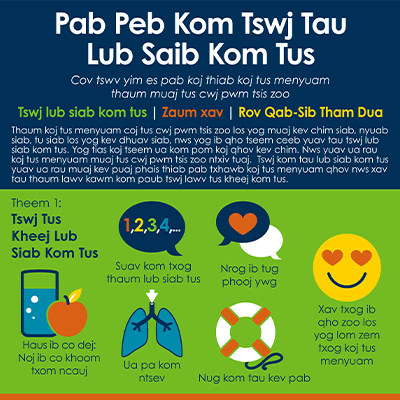
When a child is engaged in challenging behavior or experiencing anger, stress, sadness or frustration, it is important to stay calm. The strategies in this infographic help both caregiver and child stay calm during challenging behavior. Early care and education and family support programs are encouraged to download the infographic to use in their social media to families or repost on their web site.
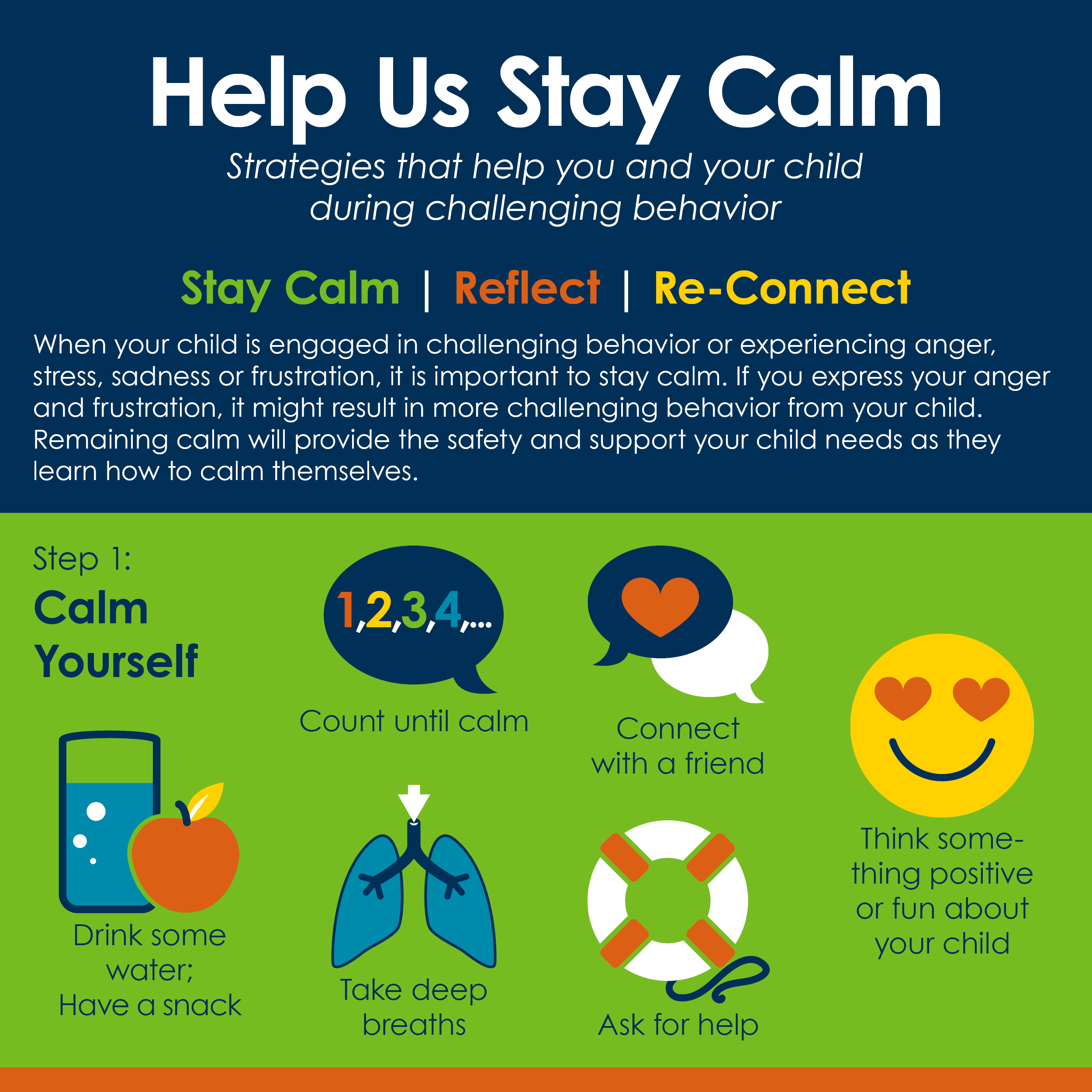
When a child is engaged in challenging behavior or experiencing anger, stress, sadness or frustration, it is important to stay calm. The strategies in this infographic help both caregiver and child stay calm during challenging behavior. Early care and education and family support programs are encouraged to download the infographic to use in their social media to families or repost on their web site.
When a child is engaged in challenging behavior or experiencing anger, stress, sadness or frustration, it is important to stay calm. The strategies in this infographic help both caregiver and child stay calm during challenging behavior. Early care and education and family support programs are encouraged to download the infographic to use in their social media to families or repost on their web site.
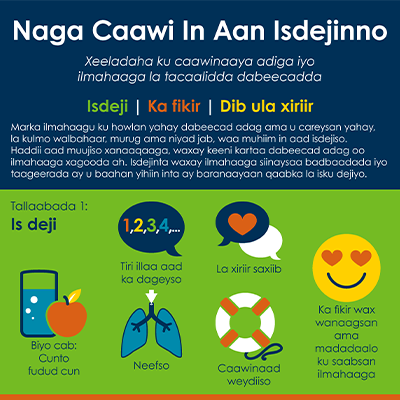
When a child is engaged in challenging behavior or experiencing anger, stress, sadness or frustration, it is important to stay calm. The strategies in this infographic help both caregiver and child stay calm during challenging behavior. Early care and education and family support programs are encouraged to download the infographic to use in their social media to families or repost on their web site.
When a child is engaged in challenging behavior or experiencing anger, stress, sadness or frustration, it is important to stay calm. The strategies in this infographic help both caregiver and child stay calm during challenging behavior. Early care and education and family support programs are encouraged to download the infographic to use in their social media to families or repost on their web site.
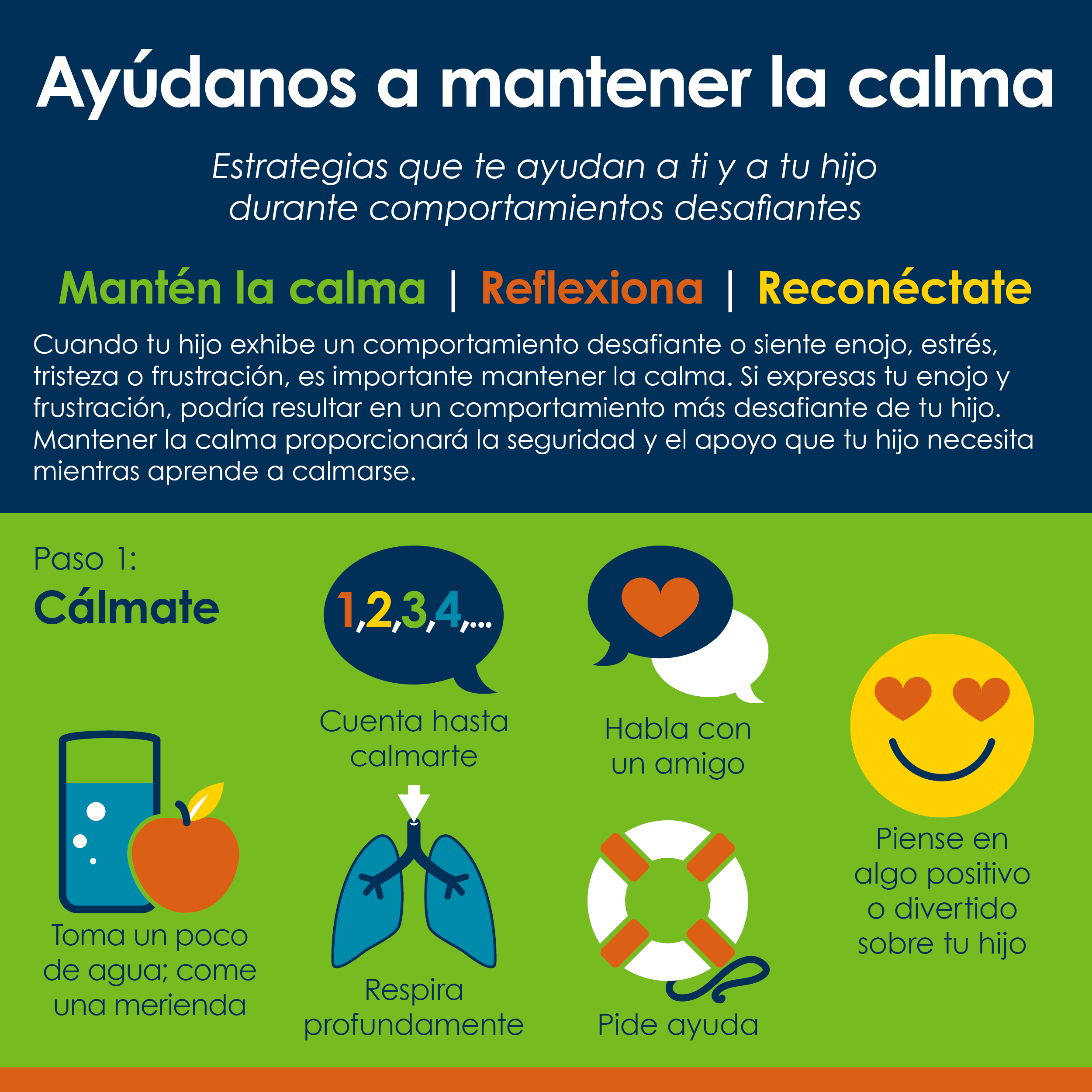
When a child is engaged in challenging behavior or experiencing anger, stress, sadness or frustration, it is important to stay calm. The strategies in this infographic help both caregiver and child stay calm during challenging behavior. Early care and education and family support programs are encouraged to download the infographic to use in their social media to families or repost on their web site.
When a child is engaged in challenging behavior or experiencing anger, stress, sadness or frustration, it is important to stay calm. The strategies in this infographic help both caregiver and child stay calm during challenging behavior. Early care and education and family support programs are encouraged to download the infographic to use in their social media to families or repost on their web site.
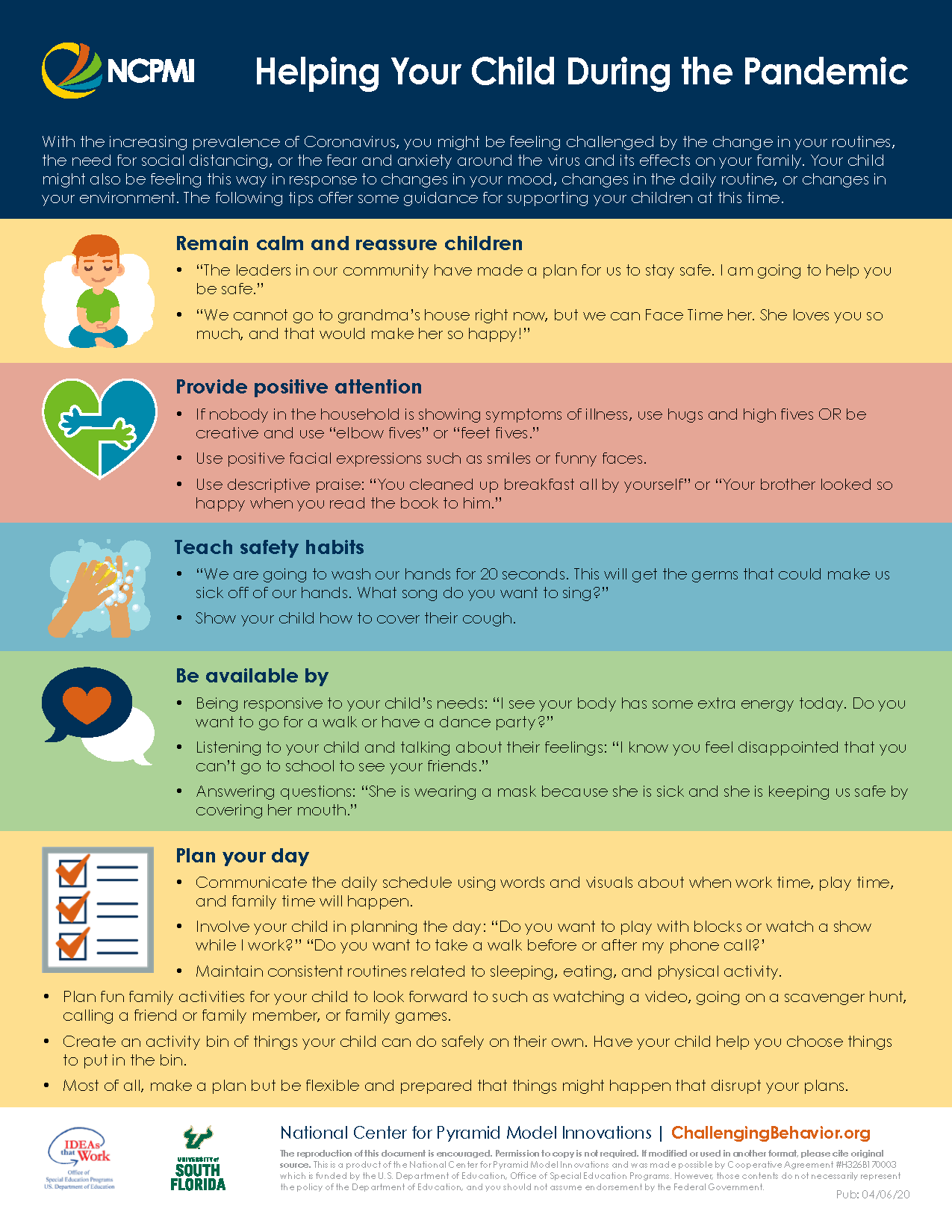
Helping your child during the pandemic provides families with a few strategies to help their child cope during the pandemic. Programs and professionals are encouraged to post this resource on their web sites or share through social media.
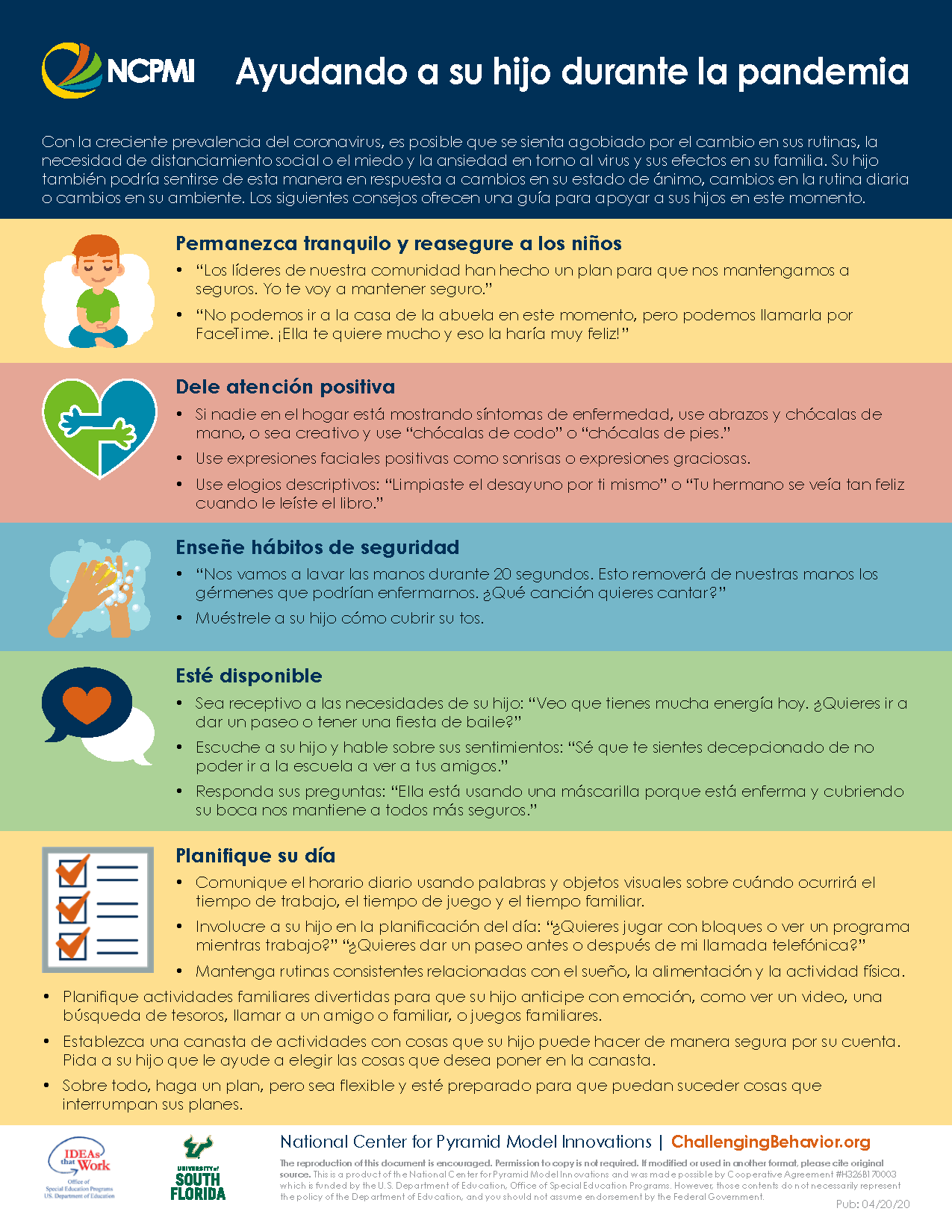
Helping your child during the pandemic provides families with a few strategies to help their child cope during the pandemic. Programs and professionals are encouraged to post this resource on their web sites or share through social media.
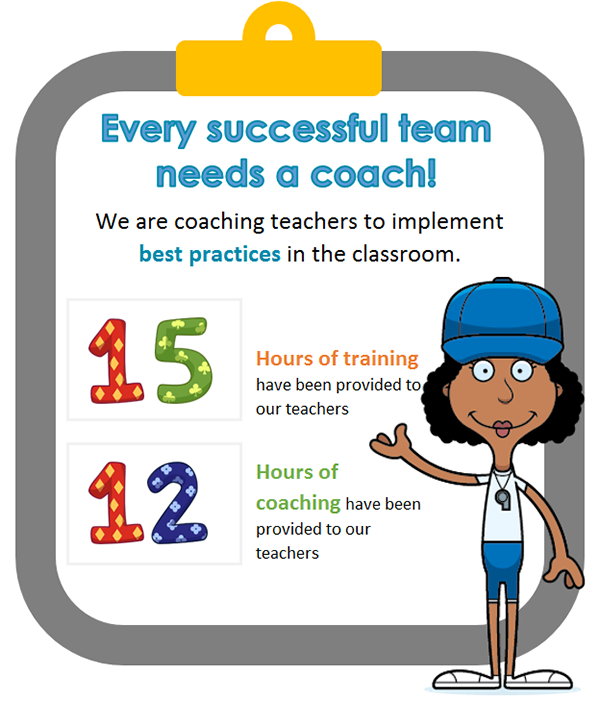
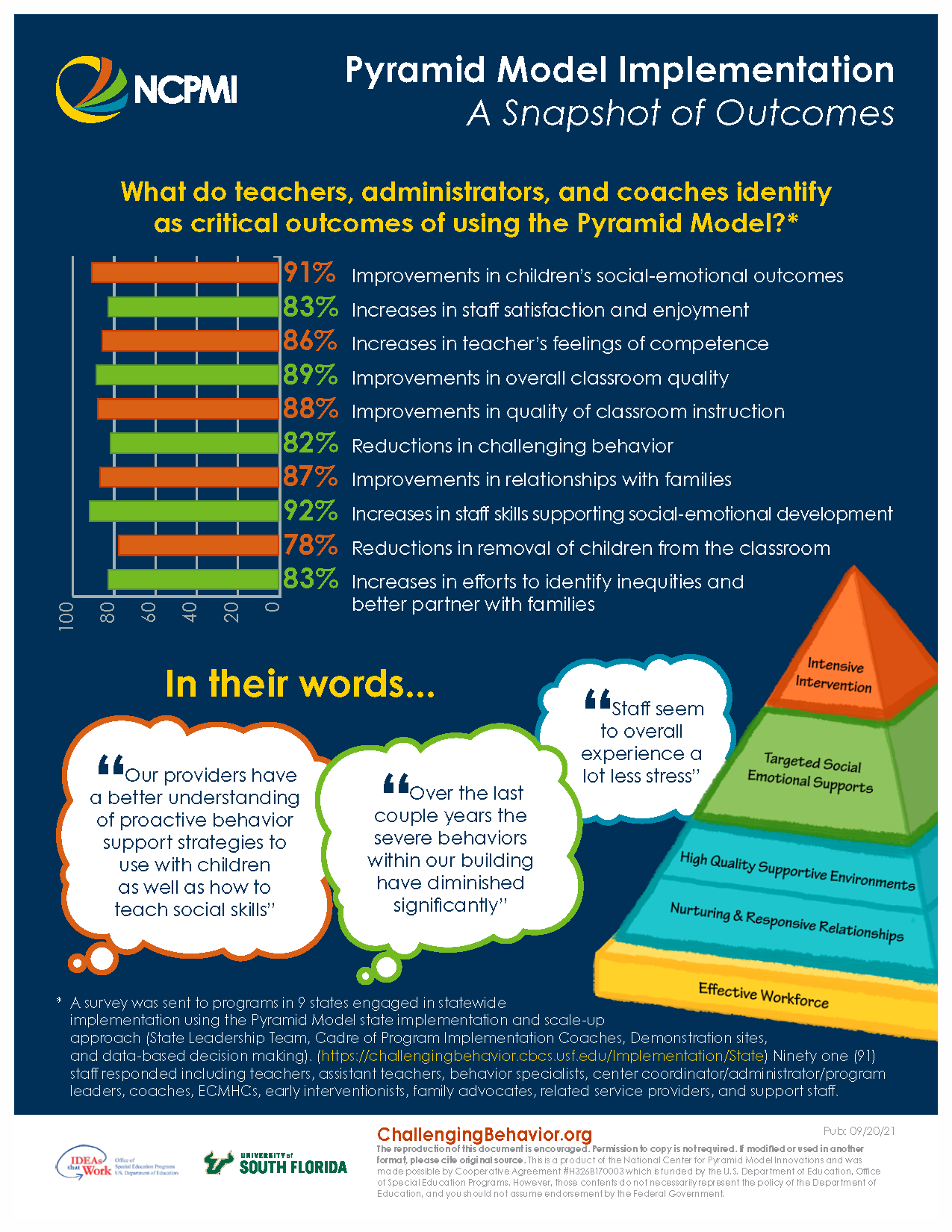
This infographic represents data compiled from a survey sent to programs in 9 states engaged in statewide implementation using the Pyramid Model state implementation and scale up plan. The resource can be used by state and program leaders wishing to implement the Pyramid Model as a tool for awareness, marketing and to solicit funding. It can also be used as a tool to share the benefits of Pyramid Model with families and community members.
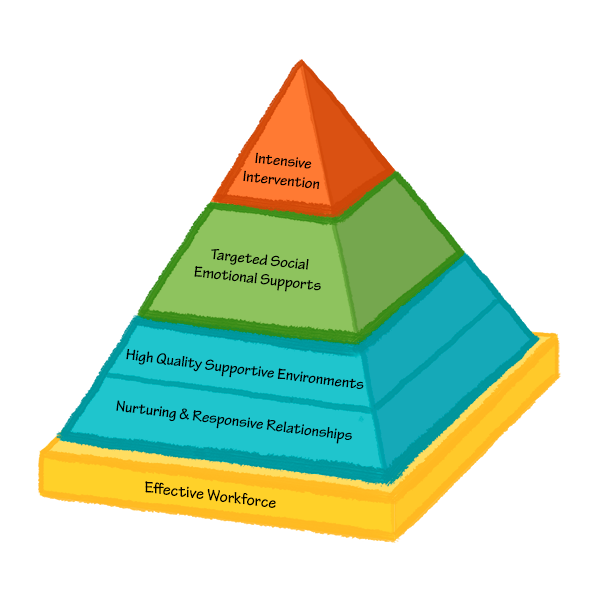
This image of the Pyramid Model framework can be used as a visual support, or incorporated into presentations, websites, and other materials for educational purposes.
Please cite the as follows:
Pyramid Model for Promoting Social and Emotional Competence in Infants and Young Children. From National Center for Pyramid Model Innovations at the University of South Florida, www.challengingbehavior.org. Reprinted with permission.
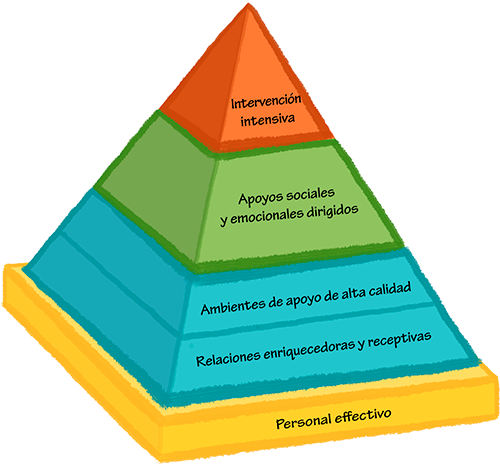
This image of the Pyramid Model framework can be used as a visual support, or incorporated into presentations, websites, and other materials for educational purposes.
Please cite the as follows:
Pyramid Model for Promoting Social and Emotional Competence in Infants and Young Children. From National Center for Pyramid Model Innovations at the University of South Florida, www.challengingbehavior.org. Reprinted with permission.

Caregivers can use the strategies in the infographic to provide infants with predictability in their day, and safety in relationships- all to support healthy attachment. Infants rely on the adults in their lives to read their cues, and help them to regulate as they adapt to their world. Responsive and positive interactions between infants and their caregivers help to build a strong attachment relationship. Positive attachment relationships support healthy brain development, and set babies up for success to learn about their emotions and build relationships as they grow into toddlers and preschoolers.
Caregivers can use the strategies in the infographic to provide infants with predictability in their day, and safety in relationships- all to support healthy attachment. Infants rely on the adults in their lives to read their cues, and help them to regulate as they adapt to their world. Responsive and positive interactions between infants and their caregivers help to build a strong attachment relationship. Positive attachment relationships support healthy brain development, and set babies up for success to learn about their emotions and build relationships as they grow into toddlers and preschoolers.
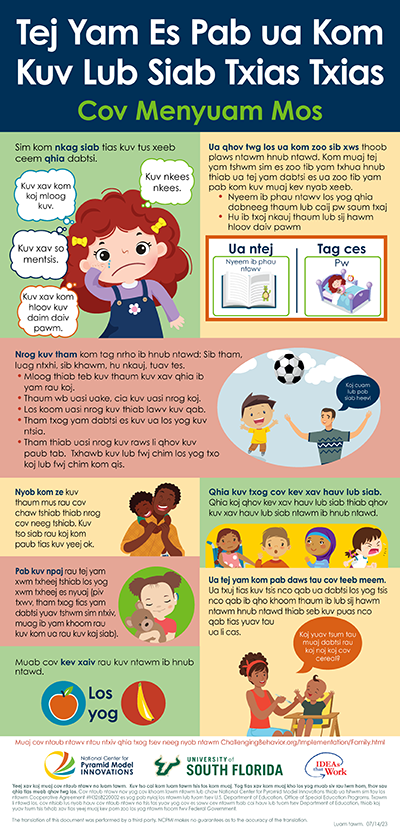
Toddlers experience big emotions as they learn to make meaning of their world and communicate their needs. Toddlers look to their primary caregivers to let them what they are experiencing is okay. Caregivers can use the strategies included in this infographic to provide toddlers with predictability in their day, safety in relationships, meaning to their experiences and emotions, and begin to build their problem-solving skills.
The translation of this document was performed by a third party. NCPMI makes no guarantees as to the accuracy of the translation.
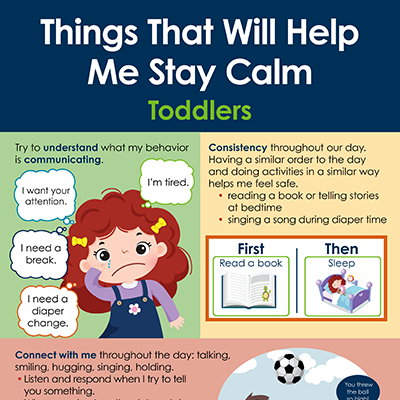
Toddlers experience big emotions as they learn to make meaning of their world and communicate their needs. Toddlers look to their primary caregivers to let them what they are experiencing is okay. Caregivers can use the strategies included in this infographic to provide toddlers with predictability in their day, safety in relationships, meaning to their experiences and emotions, and begin to build their problem-solving skills.
Toddlers experience big emotions as they learn to make meaning of their world and communicate their needs. Toddlers look to their primary caregivers to let them what they are experiencing is okay. Caregivers can use the strategies included in this infographic to provide toddlers with predictability in their day, safety in relationships, meaning to their experiences and emotions, and begin to build their problem-solving skills.
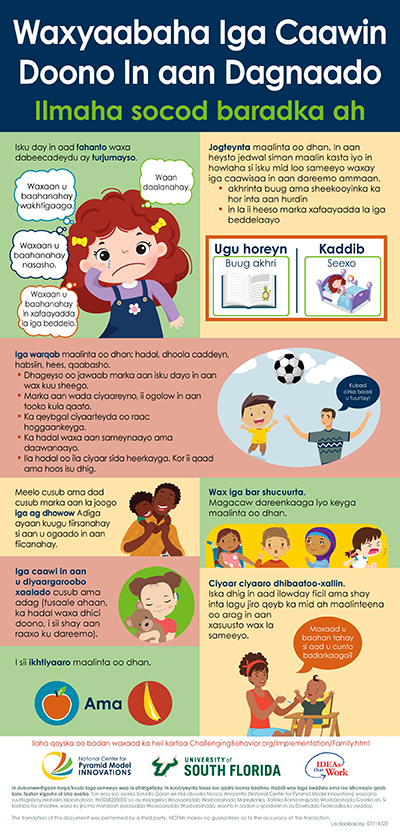
Toddlers experience big emotions as they learn to make meaning of their world and communicate their needs. Toddlers look to their primary caregivers to let them what they are experiencing is okay. Caregivers can use the strategies included in this infographic to provide toddlers with predictability in their day, safety in relationships, meaning to their experiences and emotions, and begin to build their problem-solving skills.
The translation of this document was performed by a third party. NCPMI makes no guarantees as to the accuracy of the translation.
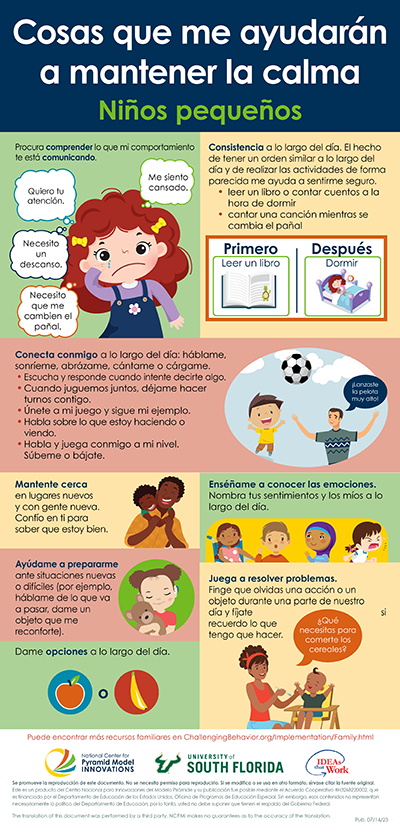
Toddlers experience big emotions as they learn to make meaning of their world and communicate their needs. Toddlers look to their primary caregivers to let them what they are experiencing is okay. Caregivers can use the strategies included in this infographic to provide toddlers with predictability in their day, safety in relationships, meaning to their experiences and emotions, and begin to build their problem-solving skills.
The translation of this document was performed by a third party. NCPMI makes no guarantees as to the accuracy of the translation.
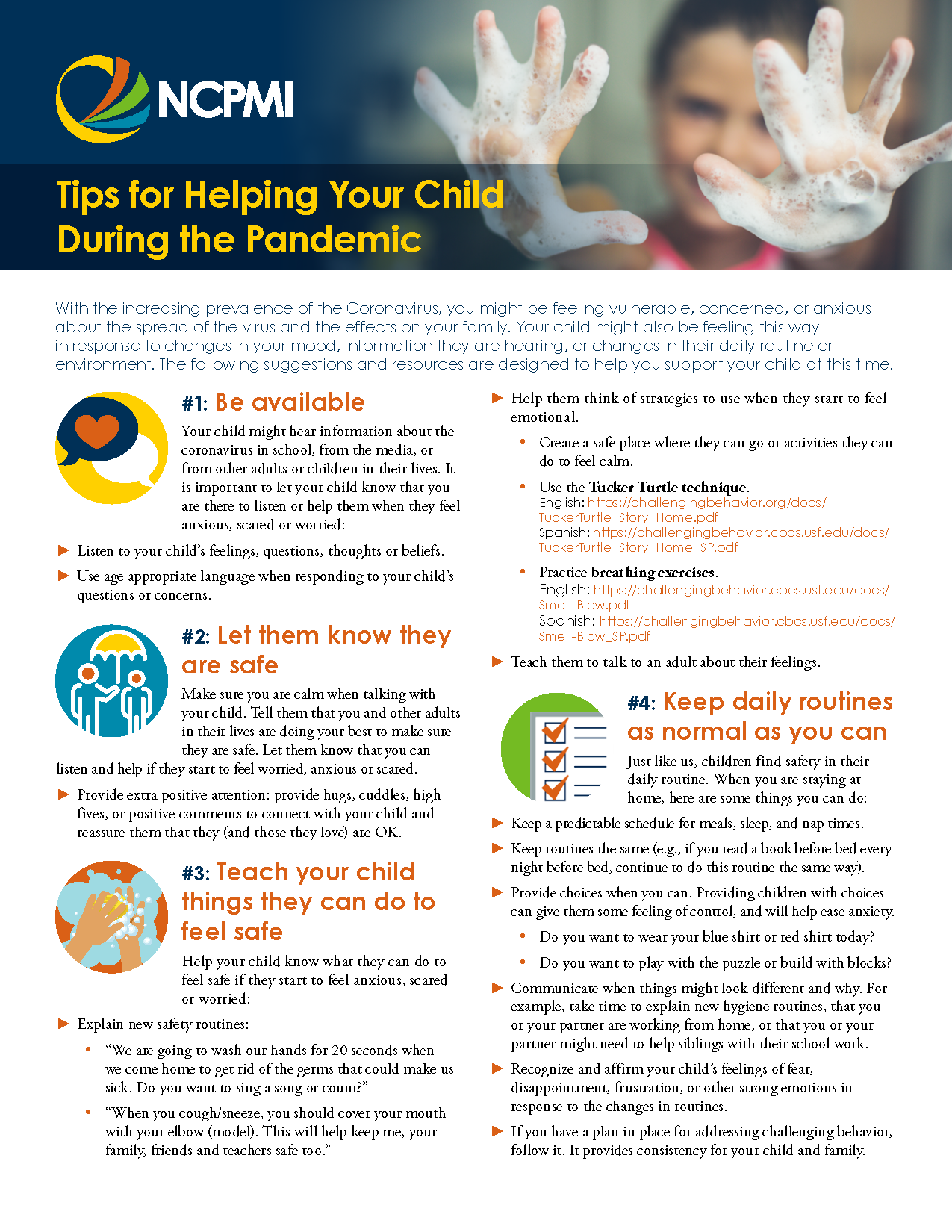
Tips for helping your child during the pandemic provides families with suggestions and resources for helping their child cope with stress, changes, and staying at home.