Document Category: Tip Sheet
The Backpack Connection Series was created by TACSEI to provide a way for teachers and parents/caregivers to work together to help young children develop social emotional skills and reduce challenging behavior. Teachers may choose to send a handout home in each child’s backpack when a new strategy or skill is introduced to the class.
The Backpack Connection Series was created by TACSEI to provide a way for teachers and parents/caregivers to work together to help young children develop social emotional skills and reduce challenging behavior. Teachers may choose to send a handout home in each child’s backpack when a new strategy or skill is introduced to the class.
The Backpack Connection Series was created by TACSEI to provide a way for teachers and parents/caregivers to work together to help young children develop social emotional skills and reduce challenging behavior. Teachers may choose to send a handout home in each child’s backpack when a new strategy or skill is introduced to the class.
The Backpack Connection Series was created by TACSEI to provide a way for teachers and parents/caregivers to work together to help young children develop social emotional skills and reduce challenging behavior. Teachers may choose to send a handout home in each child’s backpack when a new strategy or skill is introduced to the class.
The Backpack Connection Series was created by TACSEI to provide a way for teachers and parents/caregivers to work together to help young children develop social emotional skills and reduce challenging behavior. Teachers may choose to send a handout home in each child’s backpack when a new strategy or skill is introduced to the class.
The Backpack Connection Series was created by TACSEI to provide a way for teachers and parents/caregivers to work together to help young children develop social emotional skills and reduce challenging behavior. Teachers may choose to send a handout home in each child’s backpack when a new strategy or skill is introduced to the class.
The Backpack Connection Series was created by TACSEI to provide a way for teachers and parents/caregivers to work together to help young children develop social emotional skills and reduce challenging behavior. Teachers may choose to send a handout home in each child’s backpack when a new strategy or skill is introduced to the class.
The Backpack Connection Series was created by TACSEI to provide a way for teachers and parents/caregivers to work together to help young children develop social emotional skills and reduce challenging behavior. Teachers may choose to send a handout home in each child’s backpack when a new strategy or skill is introduced to the class.
The Backpack Connection Series was created by TACSEI to provide a way for teachers and parents/caregivers to work together to help young children develop social emotional skills and reduce challenging behavior. Teachers may choose to send a handout home in each child’s backpack when a new strategy or skill is introduced to the class.
The Backpack Connection Series was created by TACSEI to provide a way for teachers and parents/caregivers to work together to help young children develop social emotional skills and reduce challenging behavior. Teachers may choose to send a handout home in each child’s backpack when a new strategy or skill is introduced to the class.
The Backpack Connection Series was created by TACSEI to provide a way for teachers and parents/caregivers to work together to help young children develop social emotional skills and reduce challenging behavior. Teachers may choose to send a handout home in each child’s backpack when a new strategy or skill is introduced to the class.
The Backpack Connection Series was created by TACSEI to provide a way for teachers and parents/caregivers to work together to help young children develop social emotional skills and reduce challenging behavior. Teachers may choose to send a handout home in each child’s backpack when a new strategy or skill is introduced to the class.
The Backpack Connection Series was created by TACSEI to provide a way for teachers and parents/caregivers to work together to help young children develop social emotional skills and reduce challenging behavior. Teachers may choose to send a handout home in each child’s backpack when a new strategy or skill is introduced to the class.
The Backpack Connection Series was created by TACSEI to provide a way for teachers and parents/caregivers to work together to help young children develop social emotional skills and reduce challenging behavior. Teachers may choose to send a handout home in each child’s backpack when a new strategy or skill is introduced to the class.
The Backpack Connection Series was created by TACSEI to provide a way for teachers and parents/caregivers to work together to help young children develop social emotional skills and reduce challenging behavior. Teachers may choose to send a handout home in each child’s backpack when a new strategy or skill is introduced to the class.
The Backpack Connection Series was created by TACSEI to provide a way for teachers and parents/caregivers to work together to help young children develop social emotional skills and reduce challenging behavior. Teachers may choose to send a handout home in each child’s backpack when a new strategy or skill is introduced to the class.
The Backpack Connection Series was created by TACSEI to provide a way for teachers and parents/caregivers to work together to help young children develop social emotional skills and reduce challenging behavior. Teachers may choose to send a handout home in each child’s backpack when a new strategy or skill is introduced to the class.
The Backpack Connection Series was created by TACSEI to provide a way for teachers and parents/caregivers to work together to help young children develop social emotional skills and reduce challenging behavior. Teachers may choose to send a handout home in each child’s backpack when a new strategy or skill is introduced to the class.
The Backpack Connection Series was created by TACSEI to provide a way for teachers and parents/caregivers to work together to help young children develop social emotional skills and reduce challenging behavior. Teachers may choose to send a handout home in each child’s backpack when a new strategy or skill is introduced to the class.
Banking Time is a strategy that focuses on improving the relationship between an individual child and their teacher. Learn the strategies to implement the intervention and use the reflective companion to support your implementation.
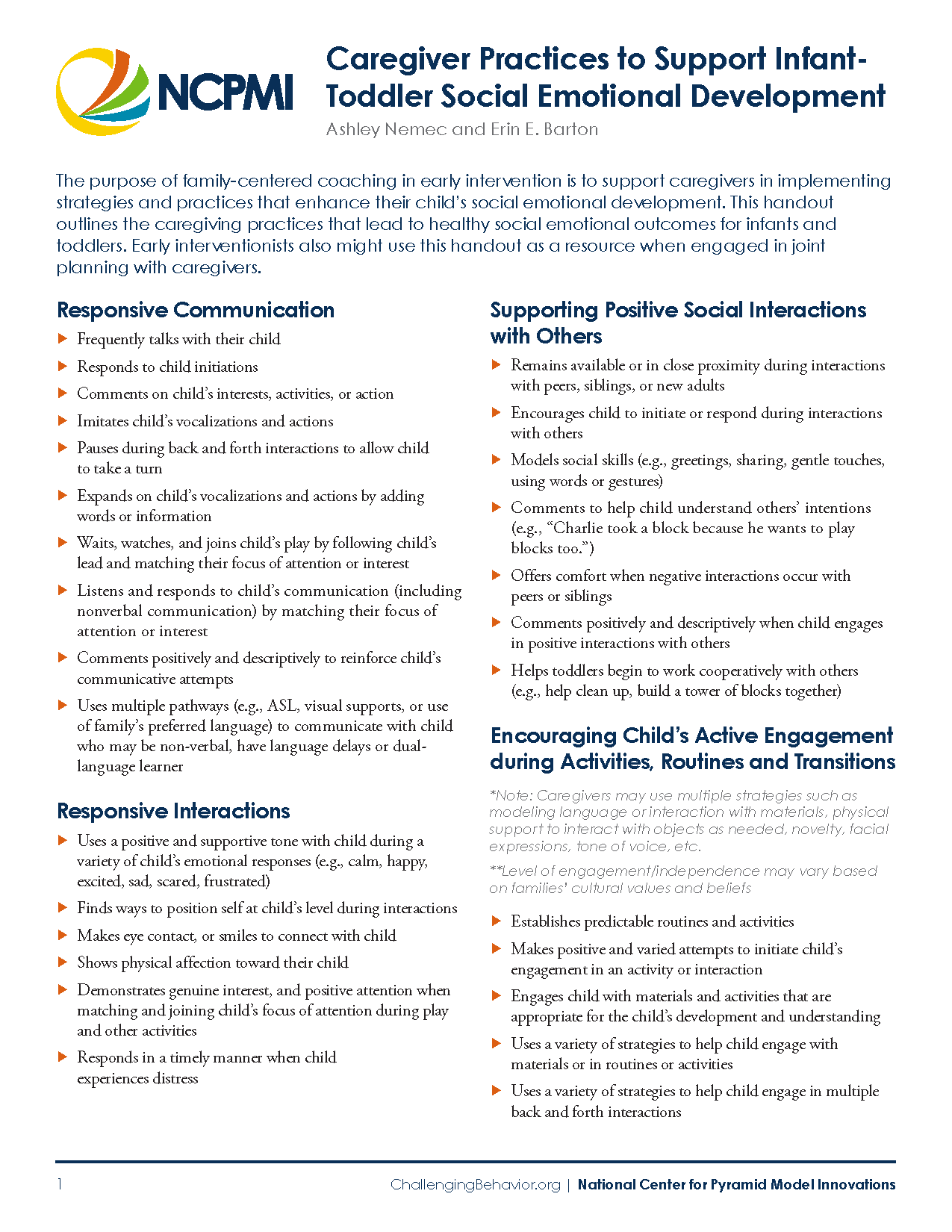
This handout outlines the caregiving practices that lead to healthy social-emotional outcomes for infants and toddlers. Early interventionists might use this handout as a resource when engaged in joint planning with caregivers.
This handout outlines the caregiving practices that lead to healthy social-emotional outcomes for infants and toddlers. Early interventionists might use this handout as a resource when engaged in joint planning with caregivers.
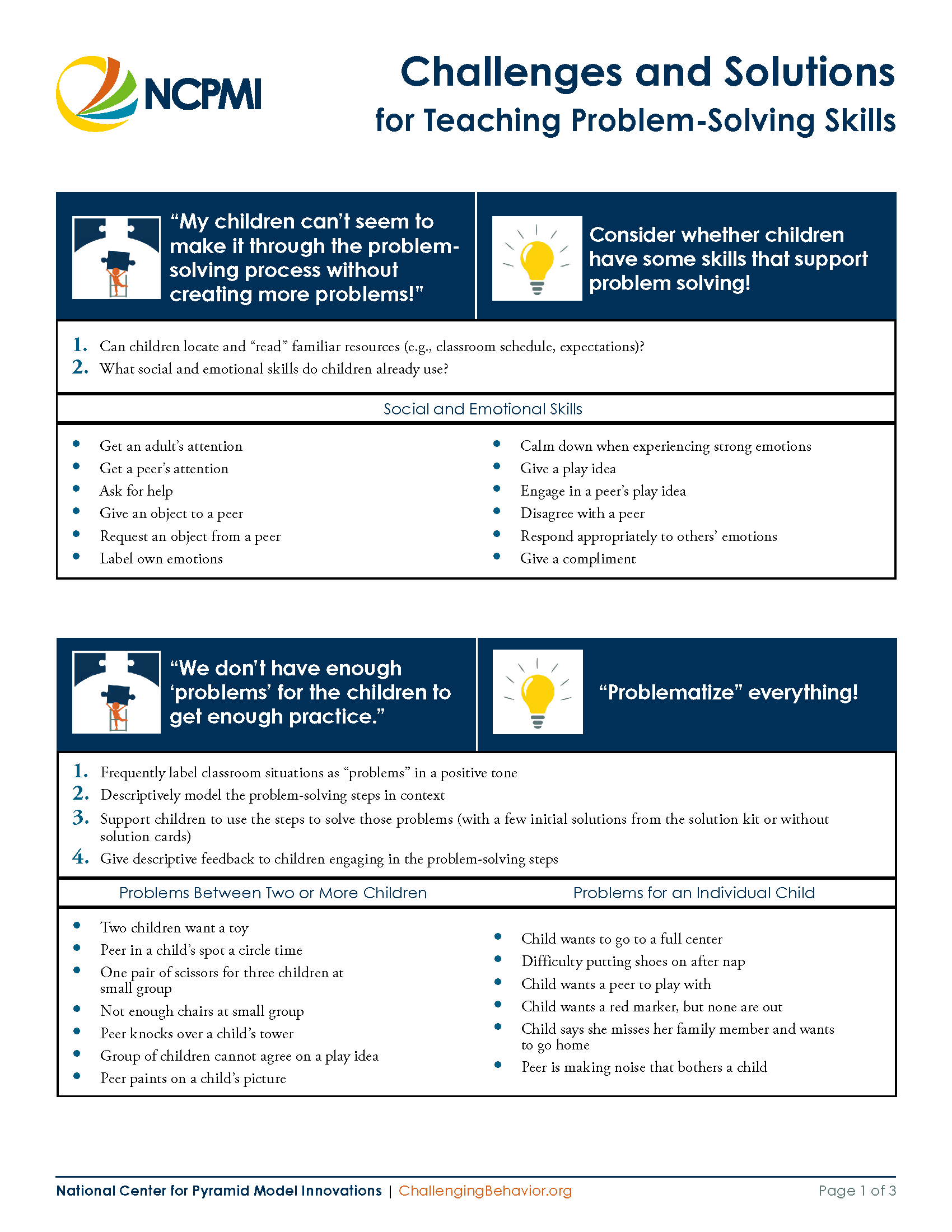
This resource provides common challenges children experience when learning the problem solving process along with implementation strategies for improving the problem solving process and supporting children through the problem solving challenges.
This tip sheet explains the “motivation” category on the BIR. It includes a table of examples and tips for teachers to complete that section of the form when they’re unsure of the motivation.
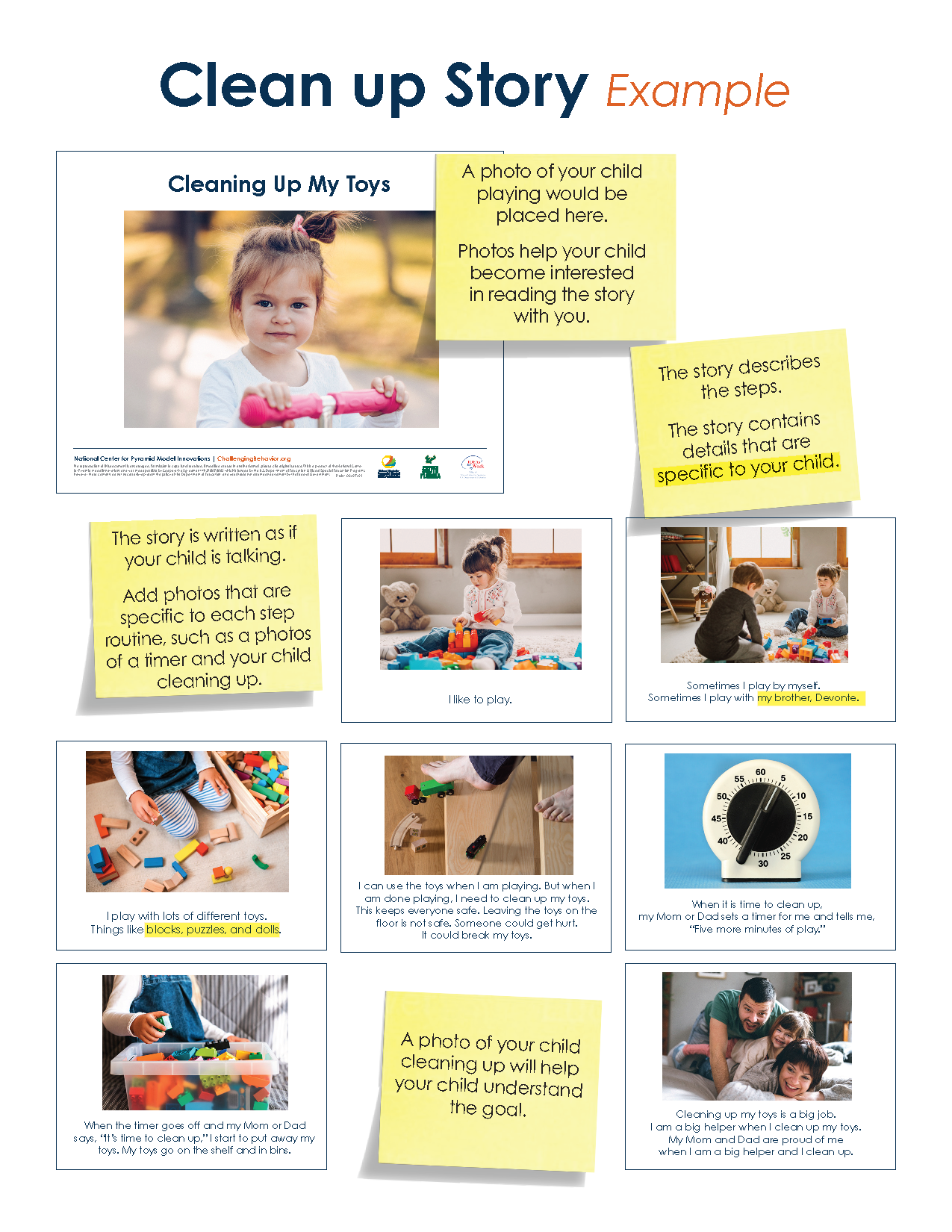
This tip sheet highlights the important considerations for making a scripted story about cleaning up toys.
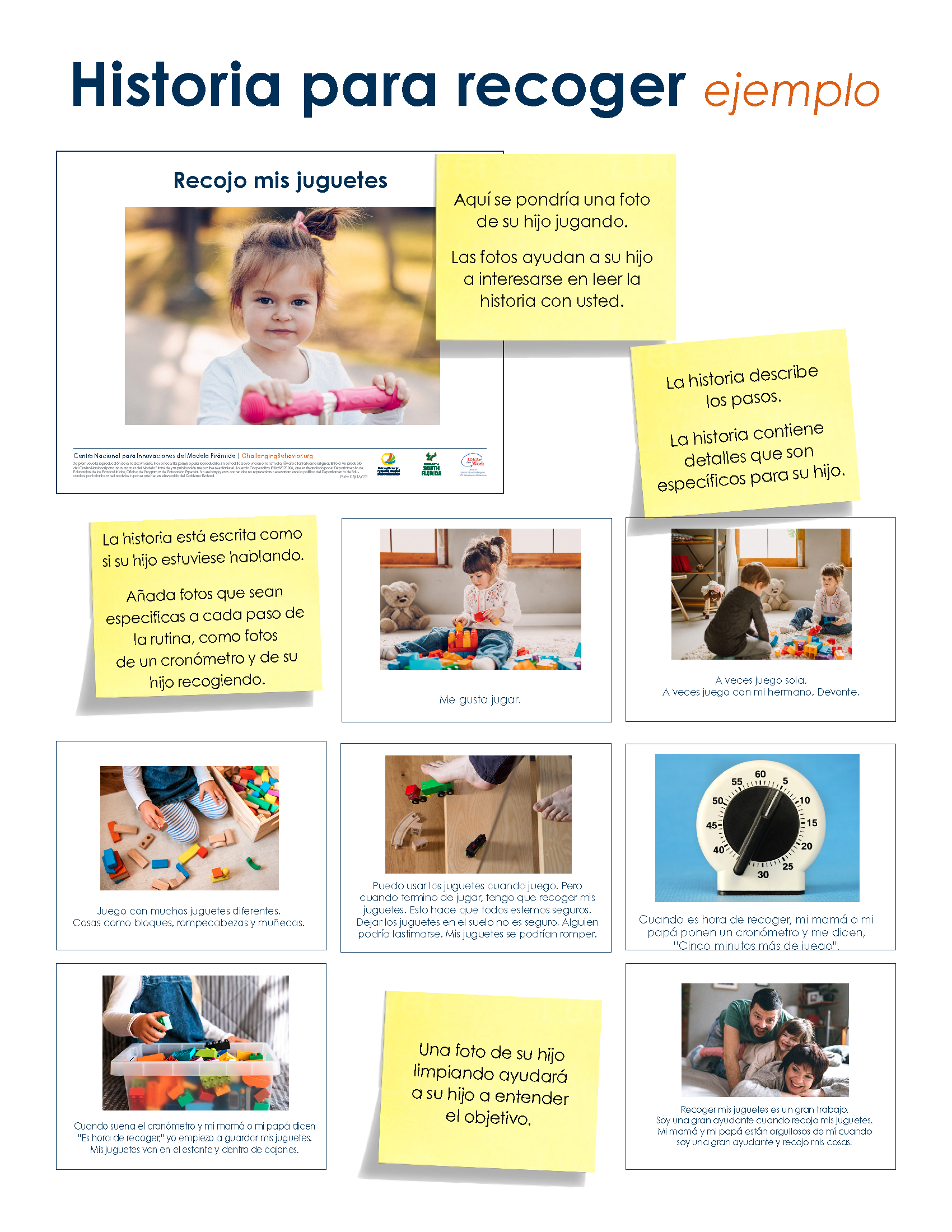
This tip sheet highlights the important considerations for making a scripted story about cleaning up toys.
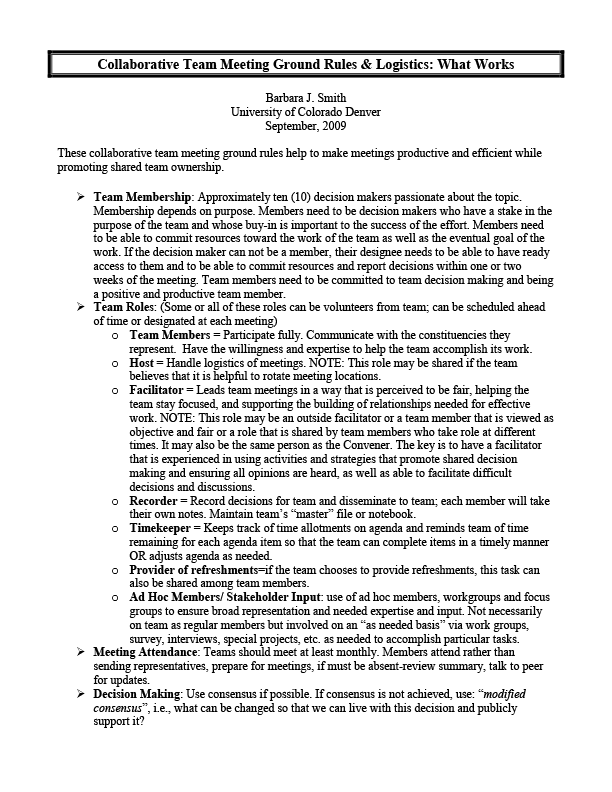
These collaborative team meeting ground rules help to make meetings productive and efficient while promoting shared team ownership.
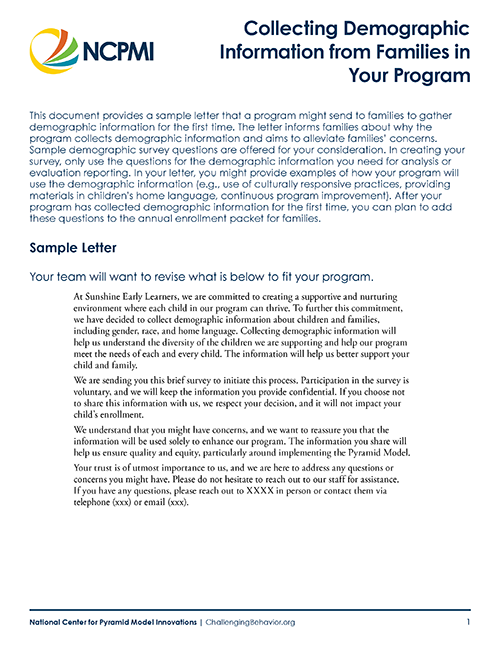
This document provides programs with guidance and sample questions for to collect demographic information for children enrolled in the program.
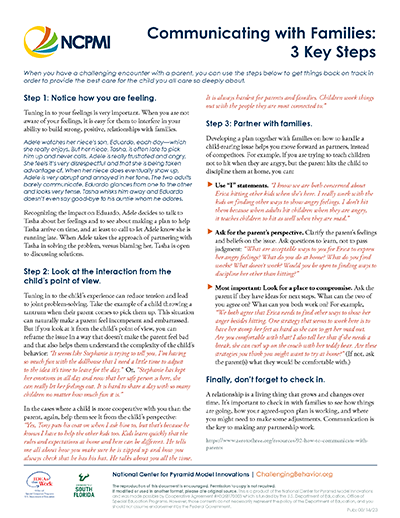
This resource provides three steps for teachers to follow when they have a challenging encounter with a family to get things back on track in order to provide the best care for the child and the family.
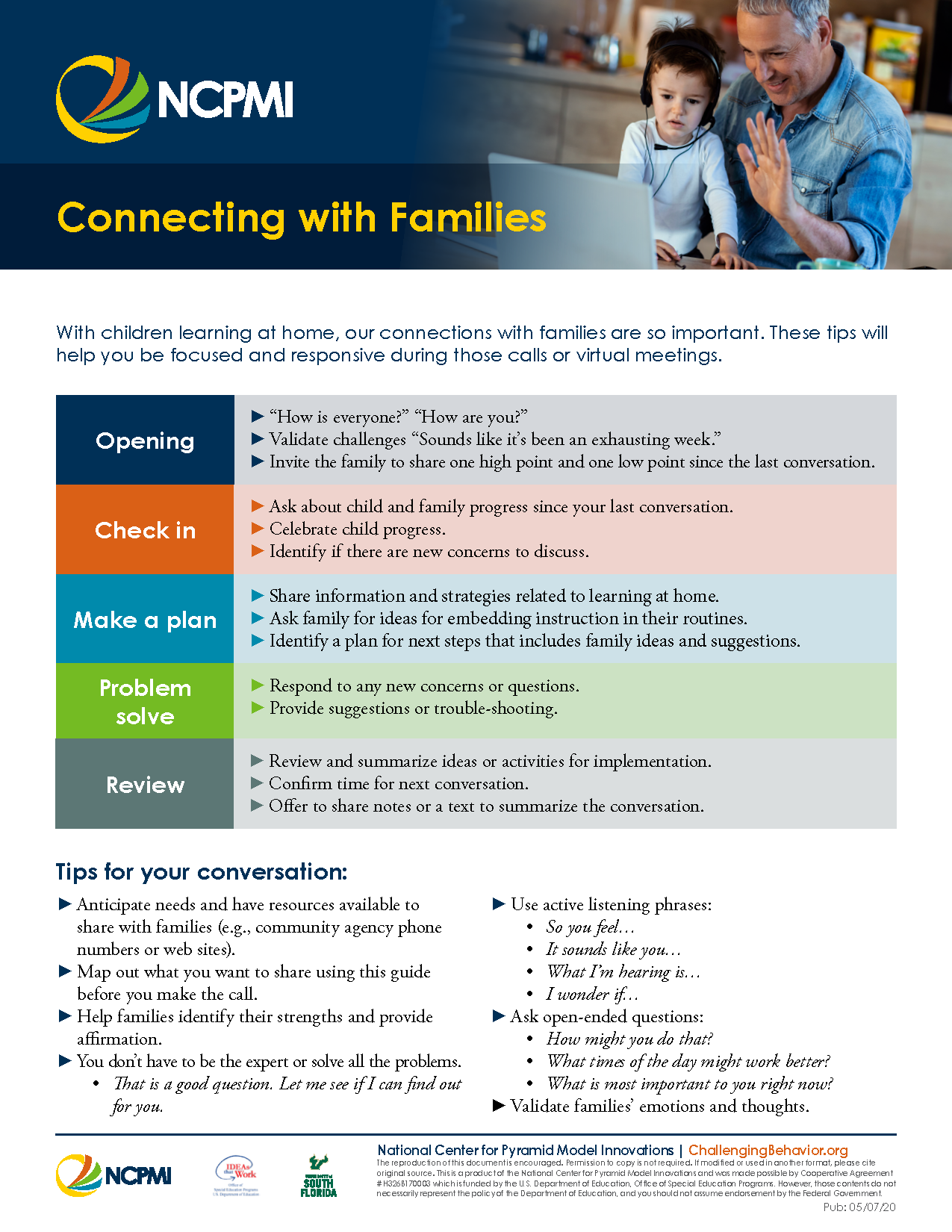
With children learning at home, our connections with families are so important. These tips will
help you be focused and responsive during those calls or virtual meetings.

Guidance on how adults can use neutralizing routines to stay calm when guiding a child whose behavior is challenging.
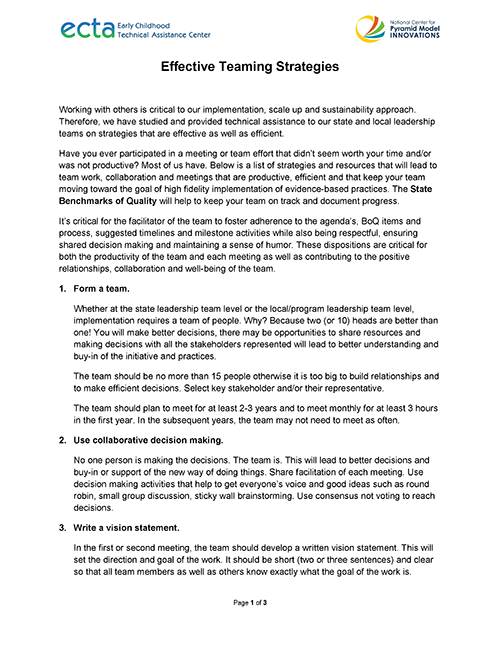
Conducting effective, productive and relational meetings is foundational to Pyramid Model implementation. This set of guidelines for facilitating meetings is evidence and practice based and, when implemented, will result in meetings where people feel their voices were heard and that produced outcomes.
The Backpack Connection Series was created by TACSEI to provide a way for teachers and parents/caregivers to work together to help young children develop social emotional skills and reduce challenging behavior. Teachers may choose to send a handout home in each child’s backpack when a new strategy or skill is introduced to the class.
The Backpack Connection Series was created by TACSEI to provide a way for teachers and parents/caregivers to work together to help young children develop social emotional skills and reduce challenging behavior. Teachers may choose to send a handout home in each child’s backpack when a new strategy or skill is introduced to the class.
The Backpack Connection Series was created by TACSEI to provide a way for teachers and parents/caregivers to work together to help young children develop social emotional skills and reduce challenging behavior. Teachers may choose to send a handout home in each child’s backpack when a new strategy or skill is introduced to the class.
The Backpack Connection Series was created by TACSEI to provide a way for teachers and parents/caregivers to work together to help young children develop social emotional skills and reduce challenging behavior. Teachers may choose to send a handout home in each child’s backpack when a new strategy or skill is introduced to the class.
The Backpack Connection Series was created by TACSEI to provide a way for teachers and parents/caregivers to work together to help young children develop social emotional skills and reduce challenging behavior. Teachers may choose to send a handout home in each child’s backpack when a new strategy or skill is introduced to the class.
The Backpack Connection Series was created by TACSEI to provide a way for teachers and parents/caregivers to work together to help young children develop social emotional skills and reduce challenging behavior. Teachers may choose to send a handout home in each child’s backpack when a new strategy or skill is introduced to the class.
The Backpack Connection Series was created by TACSEI to provide a way for teachers and parents/caregivers to work together to help young children develop social emotional skills and reduce challenging behavior. Teachers may choose to send a handout home in each child’s backpack when a new strategy or skill is introduced to the class.
The Backpack Connection Series was created by TACSEI to provide a way for teachers and parents/caregivers to work together to help young children develop social emotional skills and reduce challenging behavior. Teachers may choose to send a handout home in each child’s backpack when a new strategy or skill is introduced to the class.
The Backpack Connection Series was created by TACSEI to provide a way for teachers and parents/caregivers to work together to help young children develop social emotional skills and reduce challenging behavior. Teachers may choose to send a handout home in each child’s backpack when a new strategy or skill is introduced to the class.
The Backpack Connection Series was created by TACSEI to provide a way for teachers and parents/caregivers to work together to help young children develop social emotional skills and reduce challenging behavior. Teachers may choose to send a handout home in each child’s backpack when a new strategy or skill is introduced to the class.
The Backpack Connection Series was created by TACSEI to provide a way for teachers and parents/caregivers to work together to help young children develop social emotional skills and reduce challenging behavior. Teachers may choose to send a handout home in each child’s backpack when a new strategy or skill is introduced to the class.
The Backpack Connection Series was created by TACSEI to provide a way for teachers and parents/caregivers to work together to help young children develop social emotional skills and reduce challenging behavior. Teachers may choose to send a handout home in each child’s backpack when a new strategy or skill is introduced to the class.
The Backpack Connection Series was created by TACSEI to provide a way for teachers and parents/caregivers to work together to help young children develop social emotional skills and reduce challenging behavior. Teachers may choose to send a handout home in each child’s backpack when a new strategy or skill is introduced to the class.
The Backpack Connection Series was created by TACSEI to provide a way for teachers and parents/caregivers to work together to help young children develop social emotional skills and reduce challenging behavior. Teachers may choose to send a handout home in each child’s backpack when a new strategy or skill is introduced to the class.
The Backpack Connection Series was created by TACSEI to provide a way for teachers and parents/caregivers to work together to help young children develop social emotional skills and reduce challenging behavior. Teachers may choose to send a handout home in each child’s backpack when a new strategy or skill is introduced to the class.
The Backpack Connection Series was created by TACSEI to provide a way for teachers and parents/caregivers to work together to help young children develop social emotional skills and reduce challenging behavior. Teachers may choose to send a handout home in each child’s backpack when a new strategy or skill is introduced to the class.
The Backpack Connection Series was created by TACSEI to provide a way for teachers and parents/caregivers to work together to help young children develop social emotional skills and reduce challenging behavior. Teachers may choose to send a handout home in each child’s backpack when a new strategy or skill is introduced to the class.
The Backpack Connection Series was created by TACSEI to provide a way for teachers and parents/caregivers to work together to help young children develop social emotional skills and reduce challenging behavior. Teachers may choose to send a handout home in each child’s backpack when a new strategy or skill is introduced to the class.
The Backpack Connection Series was created by TACSEI to provide a way for teachers and parents/caregivers to work together to help young children develop social emotional skills and reduce challenging behavior. Teachers may choose to send a handout home in each child’s backpack when a new strategy or skill is introduced to the class.
The Backpack Connection Series was created by TACSEI to provide a way for teachers and parents/caregivers to work together to help young children develop social emotional skills and reduce challenging behavior. Teachers may choose to send a handout home in each child’s backpack when a new strategy or skill is introduced to the class.
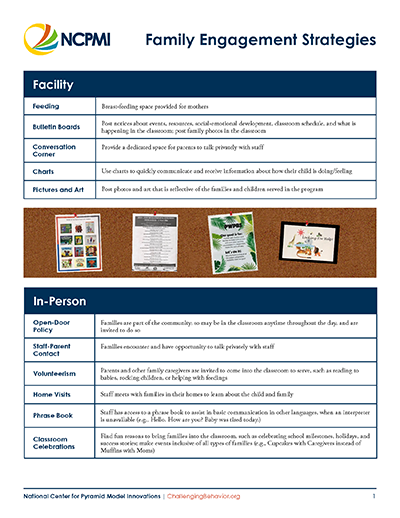
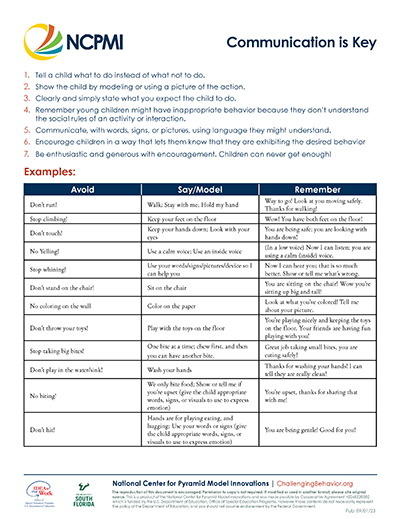
Tip Sheet on various communication strategies for early childhood programs and teachers to communicate with families.

Empowering families to be active and valued participants in the Individualized Positive Behavior Support Plan (IPBS) is foundational to Pyramid Model implementation. This set of tips and strategies helps families ensure their values, assets, perspectives, and preferences are included in individualized support for their children.
Last Updated: 10/01/2024 ADA updates
Created: 01/11/2024
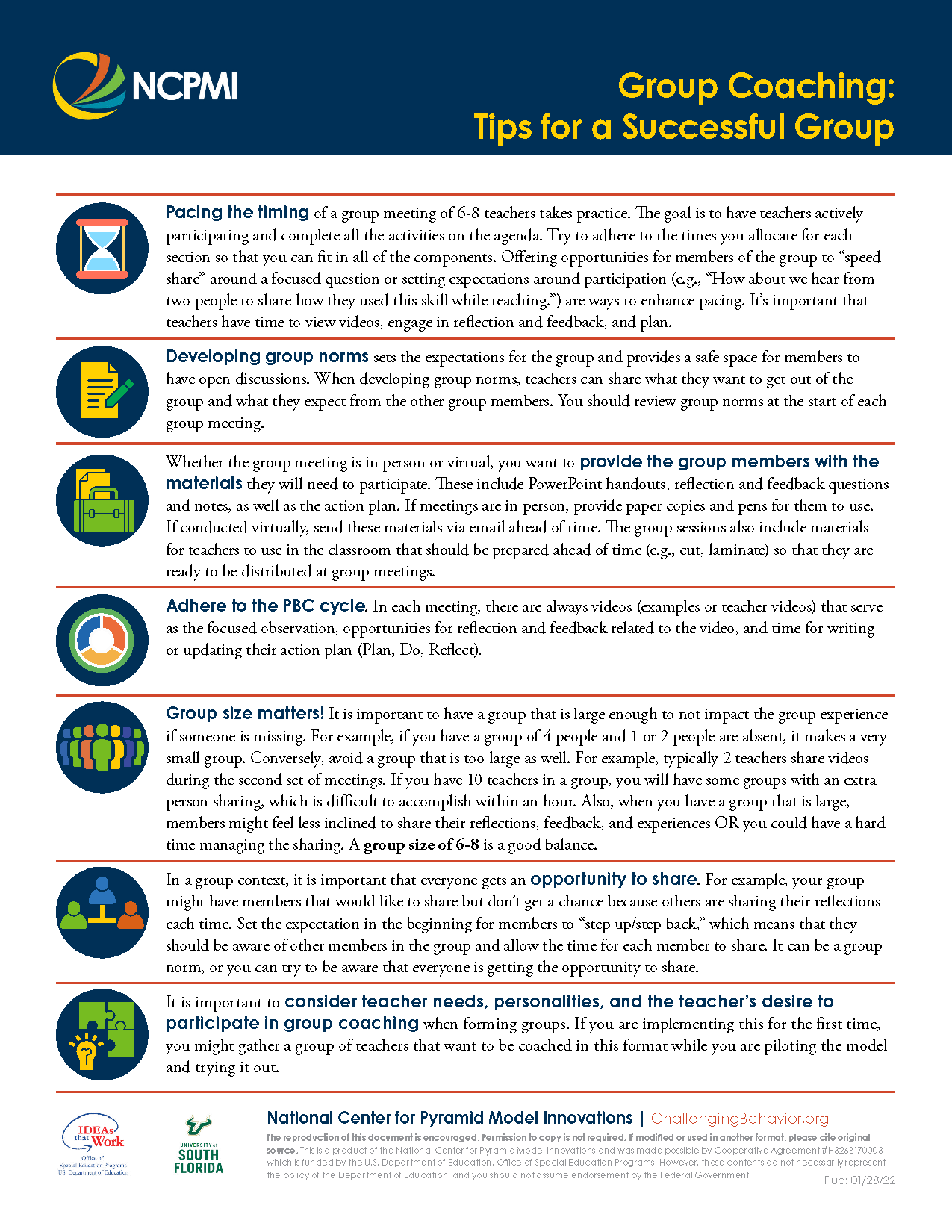
Provides helpful tips about timing, pacing, providing opportunities for group members to share, and other considerations related to the size and make up of a group.
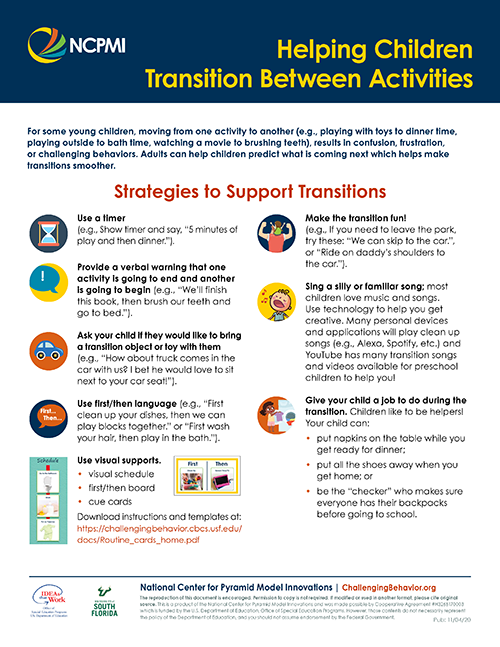
This tip sheet provides families with strategies to help children predict what is coming next which helps make
transitions smoother.
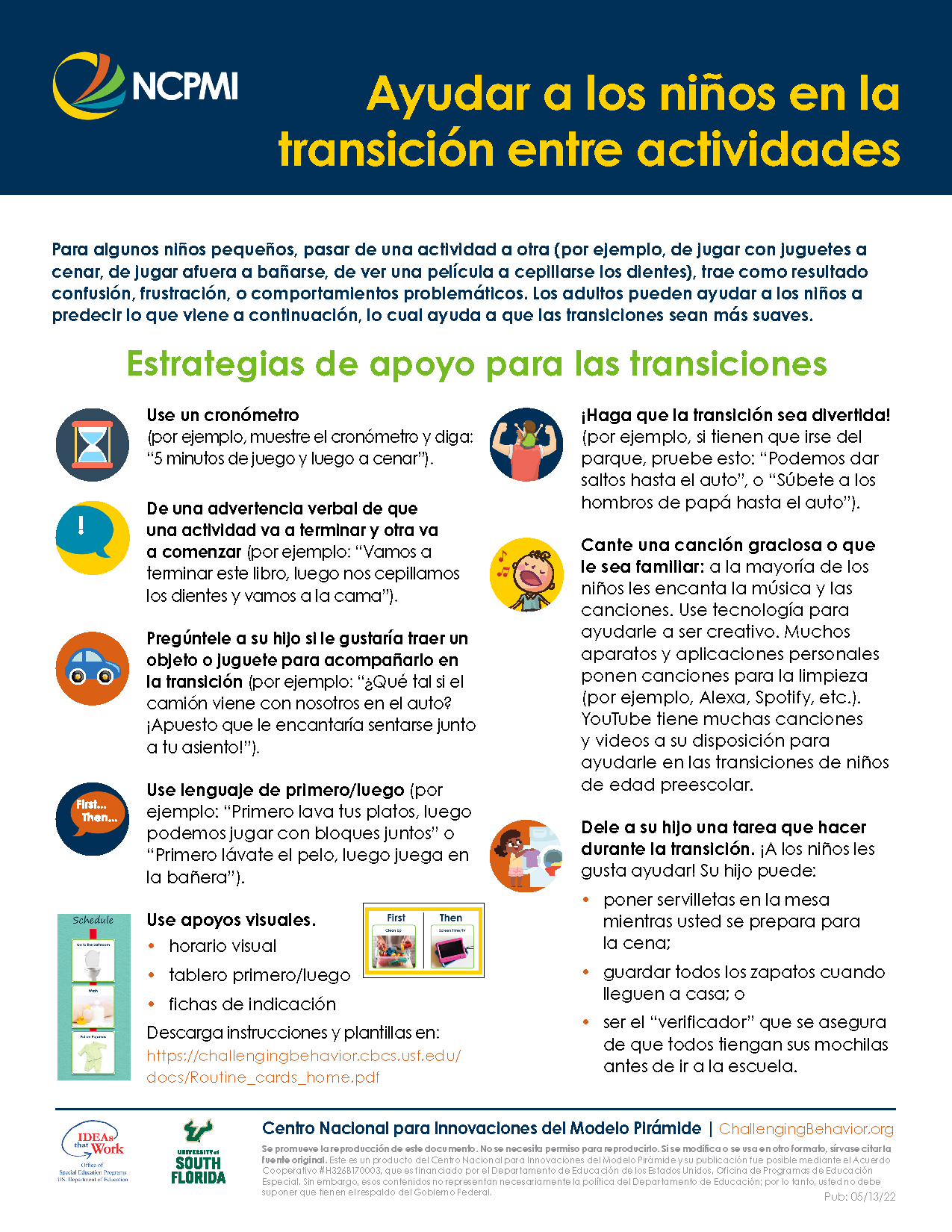
This tip sheet provides families with strategies to help children predict what is coming next which helps make transitions smoother.
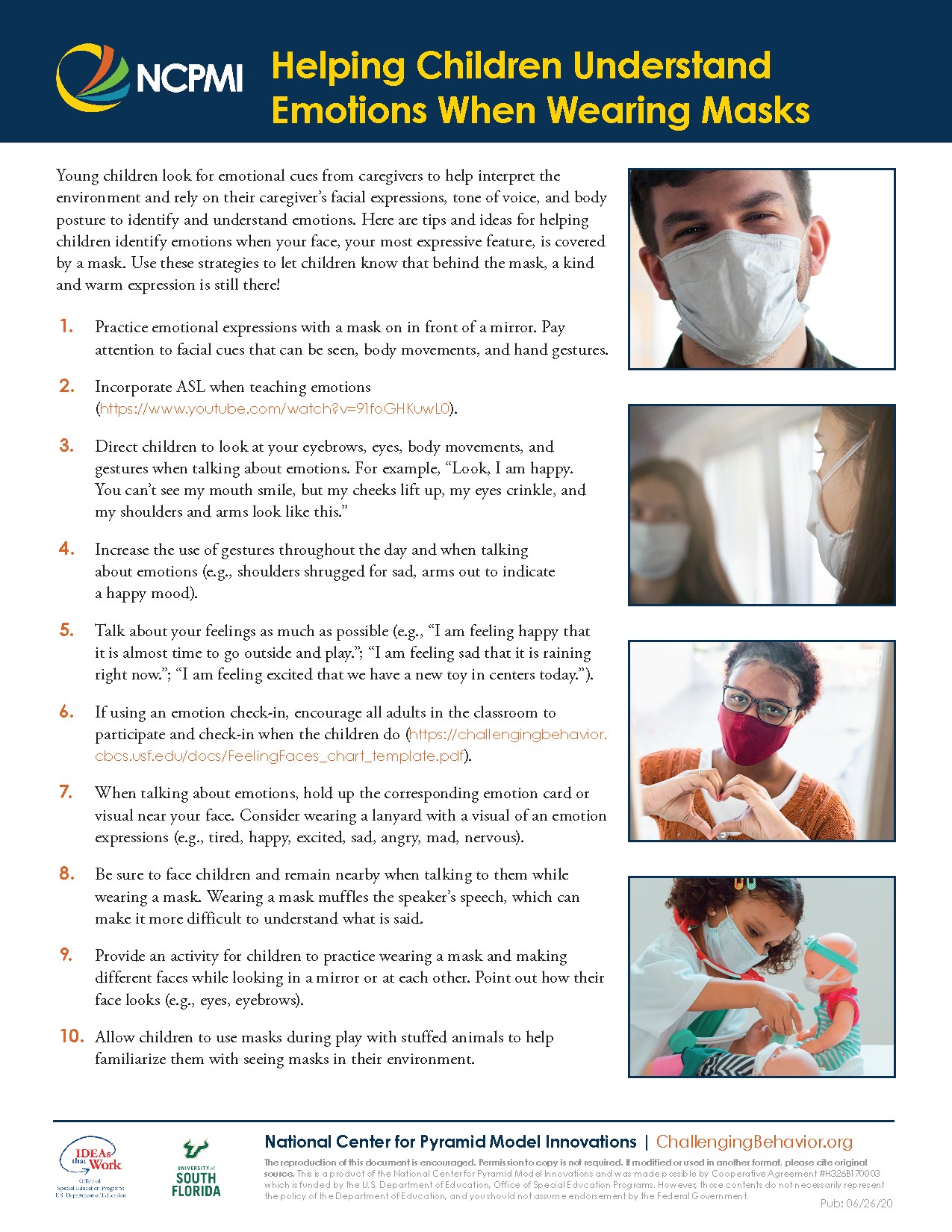
Here are tips and ideas for helping children identify emotions when your face, your most expressive feature, is covered by a mask. Use these strategies to let children know that behind the mask, a kind and warm expression is still there!
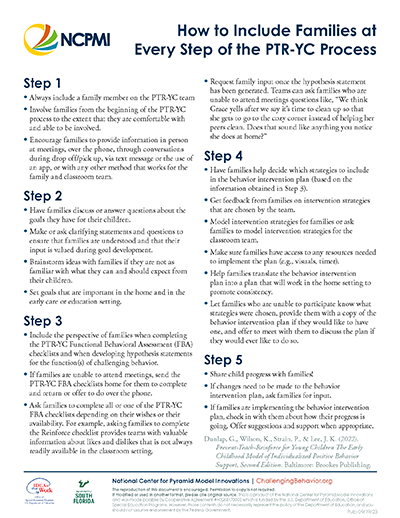
This handout includes important considerations for including families at every step of the PTR-YC process.
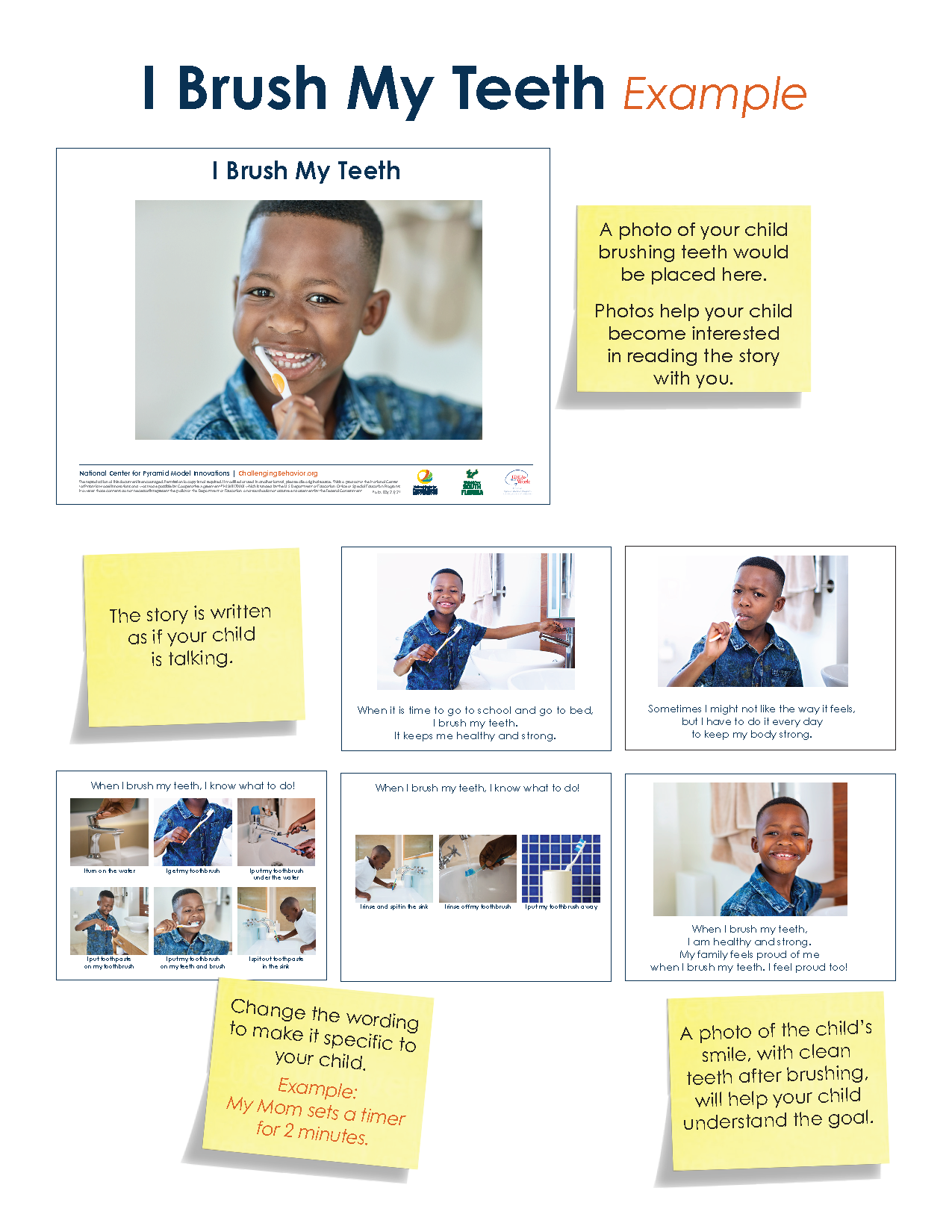
This tip sheet highlights the important considerations for making a scripted story about brushing teeth.
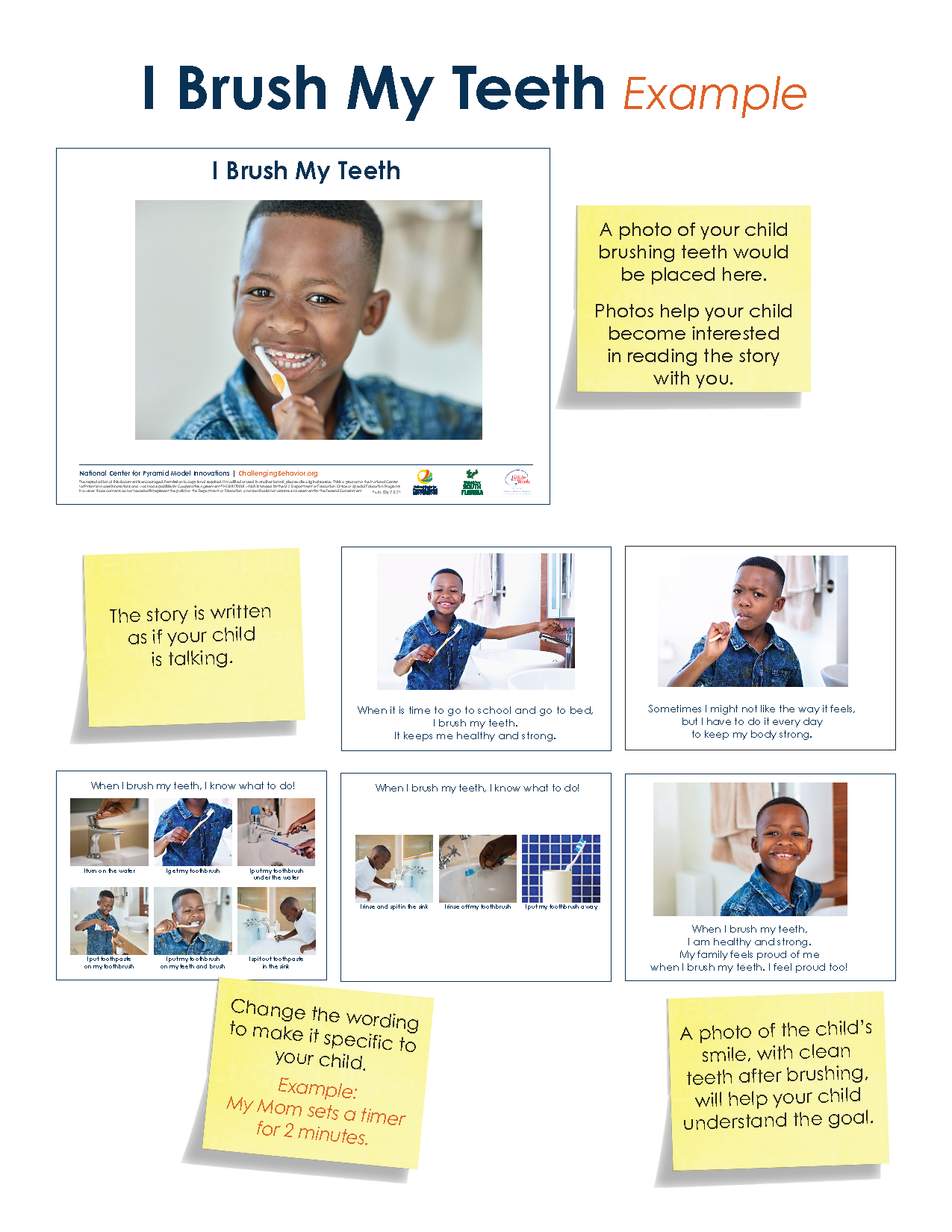
This tip sheet highlights the important considerations for making a scripted story about brushing teeth.
A tip sheet providing guidance on data that should be gathered and used by school leaders for decisions related to implementing the Pyramid Model.
Leadership practices for creating systems and relationships that support staff, families, and children.
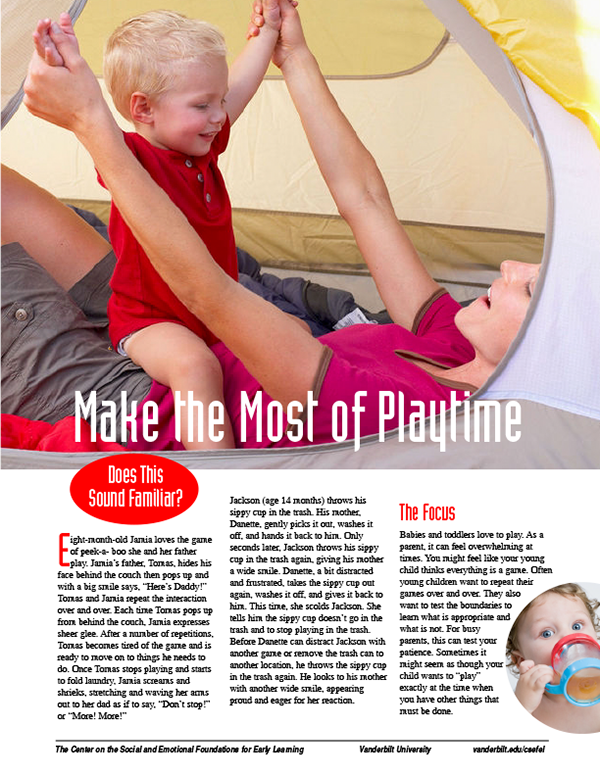
Playtime is special. Playing together with your child is not only fun, but a critical time to support your baby or toddler’s healthy development. Making time for play, especially active play, can also help in reducing your child’s challenging behavior. So what can you do to make the most of your child’s playtime? To answer this question, check out the many tips and ideas for children of varying ages in this fun and useful six-page resource.
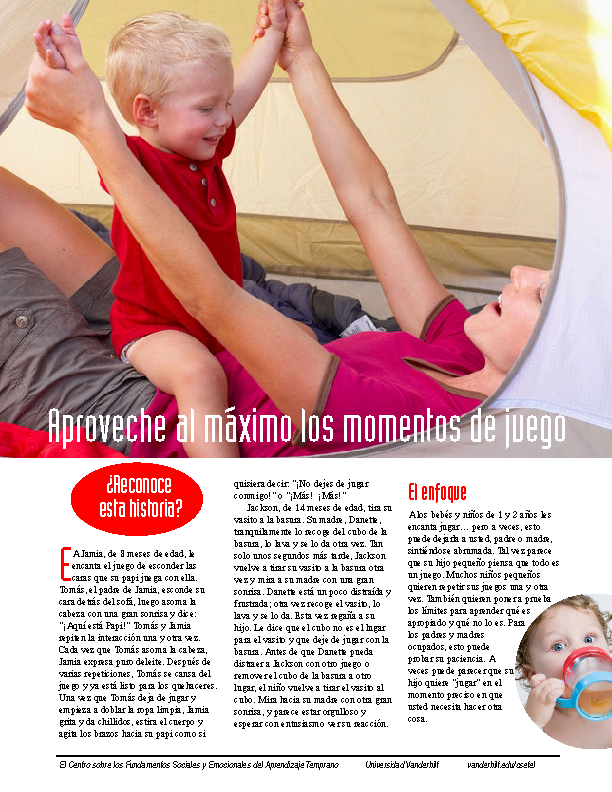
Playtime is special. Playing together with your child is not only fun, but a critical time to support your baby or toddler’s healthy development. Making time for play, especially active play, can also help in reducing your child’s challenging behavior. So what can you do to make the most of your child’s playtime? To answer this question, check out the many tips and ideas for children of varying ages in this fun and useful six-page resource.
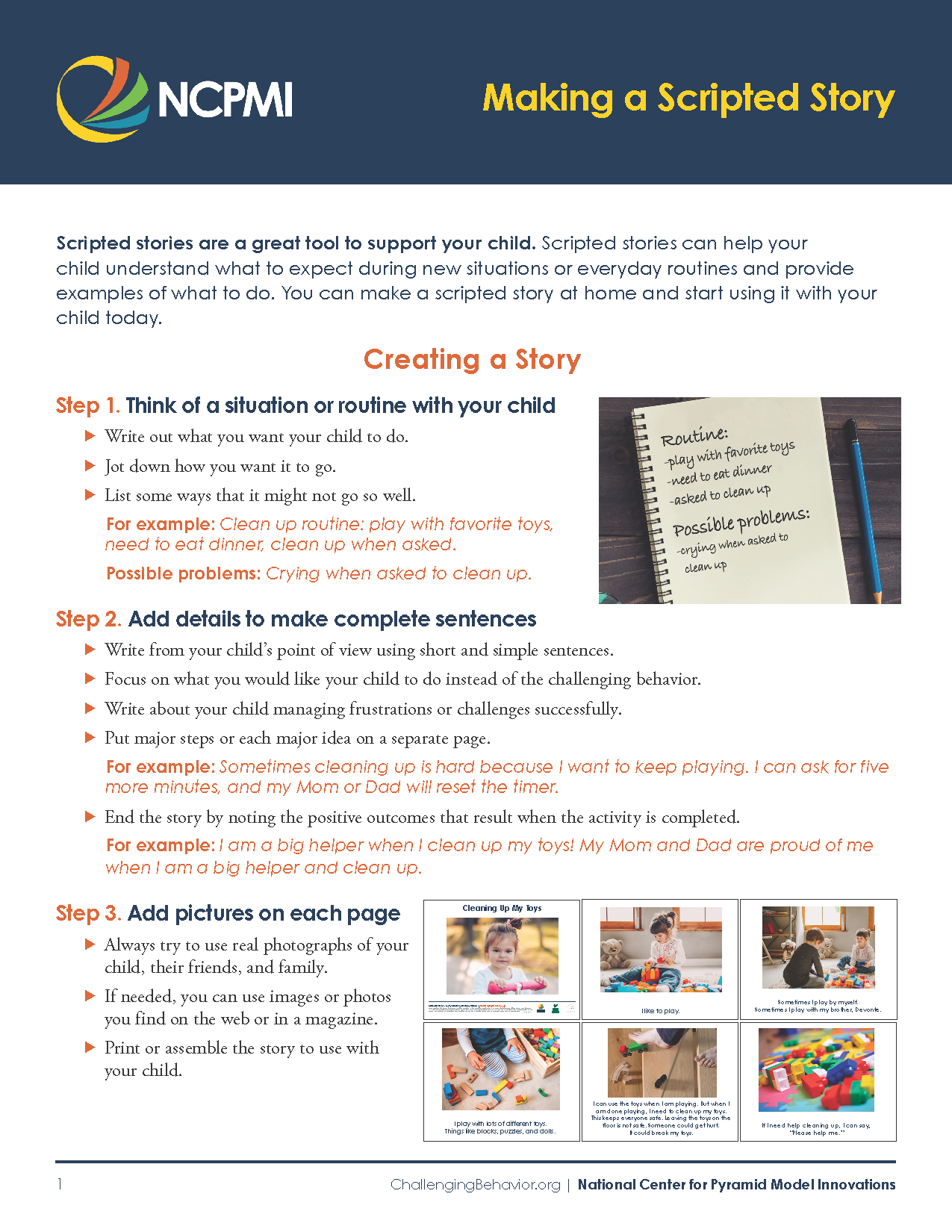
This tipsheet contains suggestions on how to develop and use scripted stories at home.
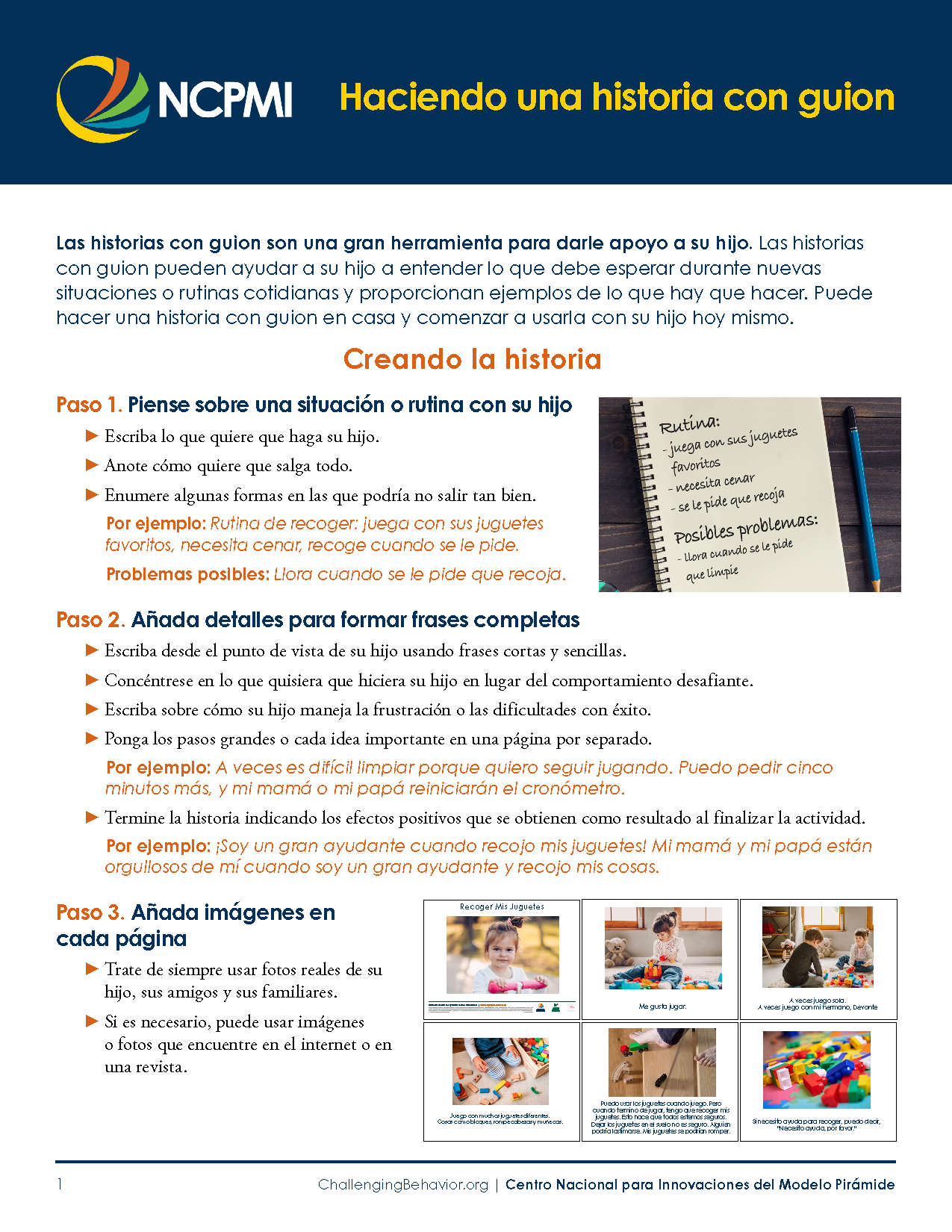
This tipsheet contains suggestions on how to develop and use scripted stories at home.
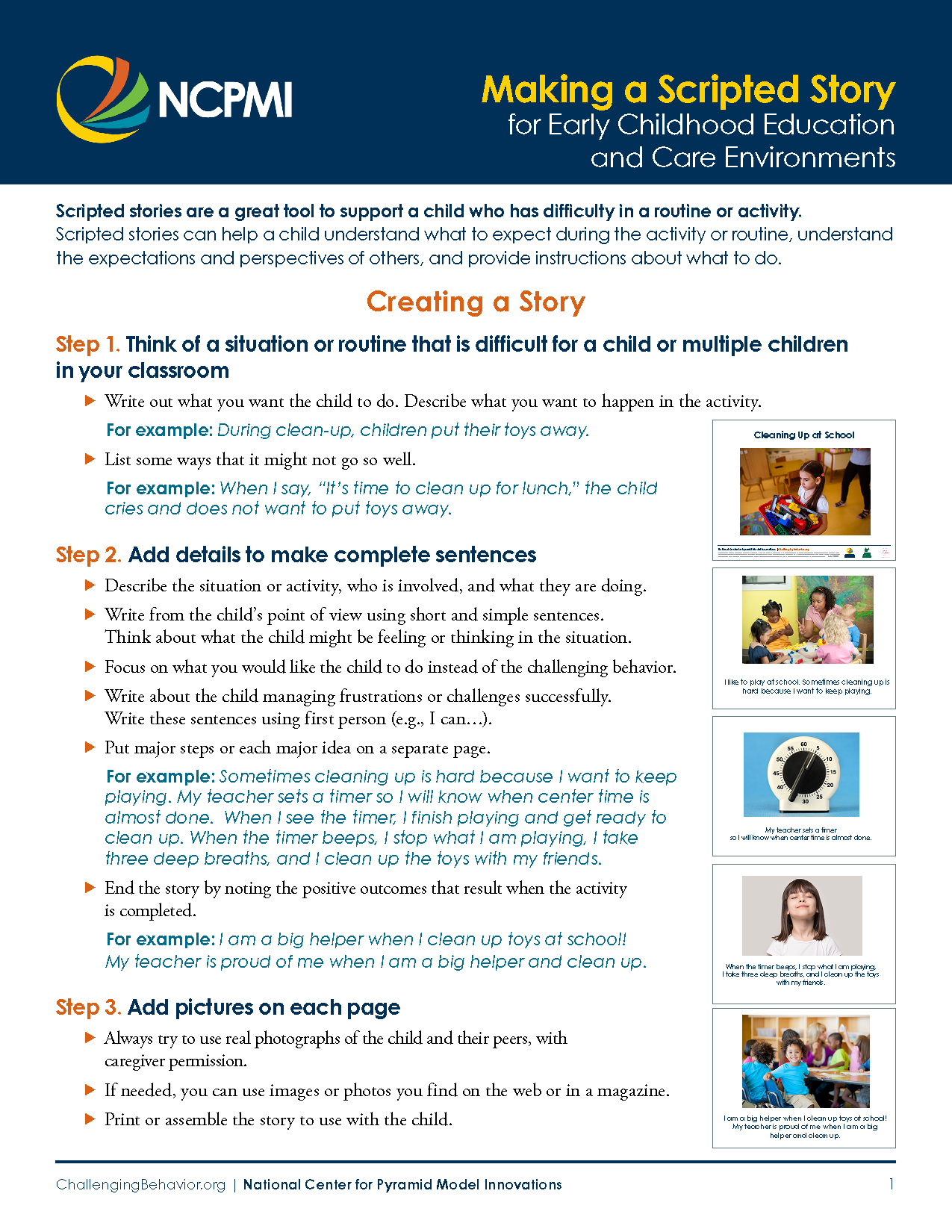
This tipsheet contains suggestions on how to develop and use scripted stories.
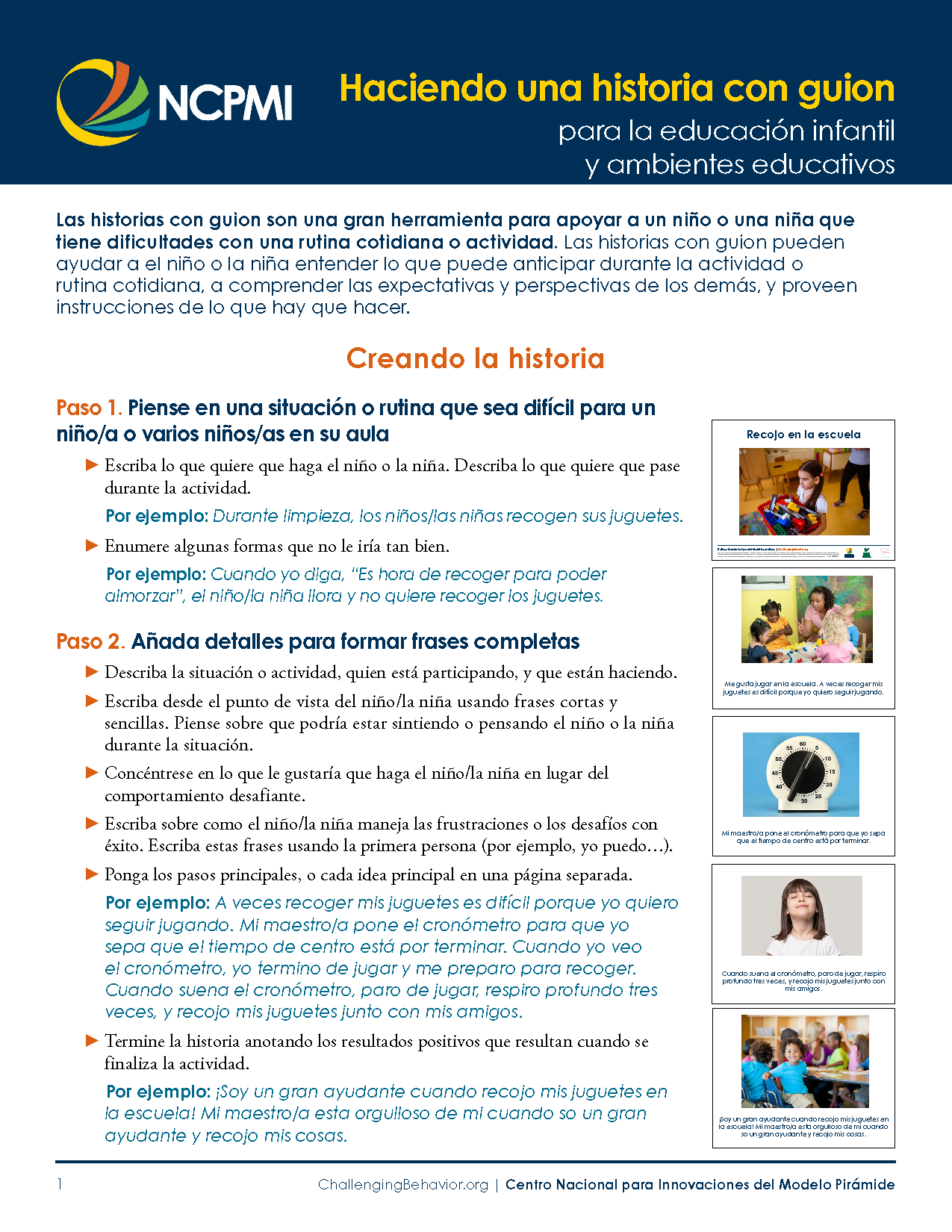
This tipsheet contains suggestions on how to develop and use scripted stories.
Many families find bedtime and naptime to be a challenge for them and their children. Sleep problems can make infants and young children moody, short tempered and unable to engage well in interactions with others. Sleep problems can also impact learning. Parents also need to feel rested in order to be nurturing and responsive to their growing and active young children. This first installment of the?Making Life Easier’series provides a few proven tips for making bedtimes and naptimes easier for both parents and children. Also includes a handy tip card for quick reference.

Many families find bedtime and naptime to be a challenge for them and their children. Sleep problems can make infants and young children moody, short tempered and unable to engage well in interactions with others. Sleep problems can also impact learning. Parents also need to feel rested in order to be nurturing and responsive to their growing and active young children. This first installment of the?Making Life Easier’series provides a few proven tips for making bedtimes and naptimes easier for both parents and children. Also includes a handy tip card for quick reference. Translation provided by WestEd (https://cainclusion.org).
Many families find bedtime and naptime to be a challenge for them and their children. Sleep problems can make infants and young children moody, short tempered and unable to engage well in interactions with others. Sleep problems can also impact learning. Parents also need to feel rested in order to be nurturing and responsive to their growing and active young children. This first installment of the?Making Life Easier’series provides a few proven tips for making bedtimes and naptimes easier for both parents and children. Also includes a handy tip card for quick reference. Translation provided by WestEd (https://cainclusion.org).
For many families, changing a child’s diaper can be a major battle. This routine is usually not as predictable as other activities, is often unpleasant for adults and not an event that the young child enjoys. While it can be challenging, it is also an opportunity to build a positive, nurturing and responsive relationship with your child. This installment of the Making Life Easier series provides several proven strategies to help make diapering a positive and relationship building experience for you both. Also includes a handy tip card for quick reference.
For many families, changing a child’s diaper can be a major battle. This routine is usually not as predictable as other activities, is often unpleasant for adults and not an event that the young child enjoys. While it can be challenging, it is also an opportunity to build a positive, nurturing and responsive relationship with your child. This installment of the Making Life Easier series provides several proven strategies to help make diapering a positive and relationship building experience for you both. Also includes a handy tip card for quick reference. Translation provided by WestEd (https://cainclusion.org).
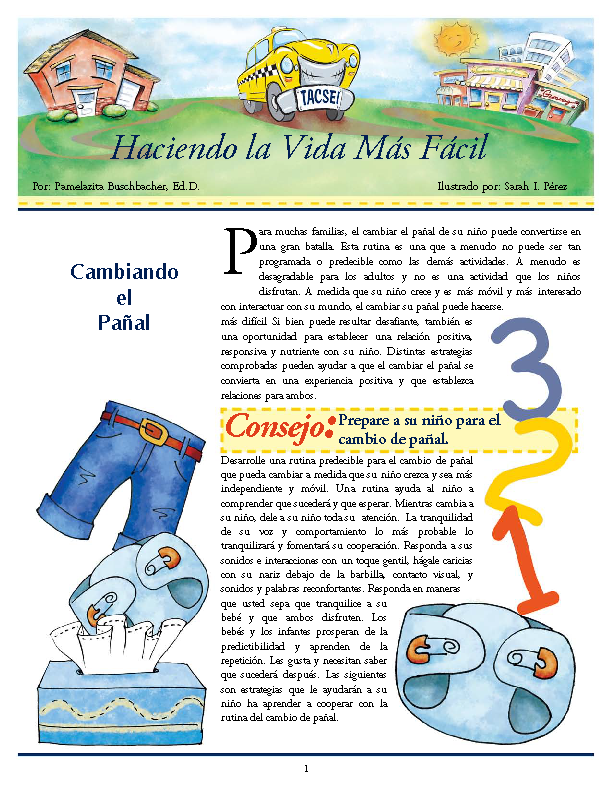
For many families, changing a child’s diaper can be a major battle. This routine is usually not as predictable as other activities, is often unpleasant for adults and not an event that the young child enjoys. While it can be challenging, it is also an opportunity to build a positive, nurturing and responsive relationship with your child. This installment of the Making Life Easier series provides several proven strategies to help make diapering a positive and relationship building experience for you both. Also includes a handy tip card for quick reference. Translation provided by WestEd (https://cainclusion.org).
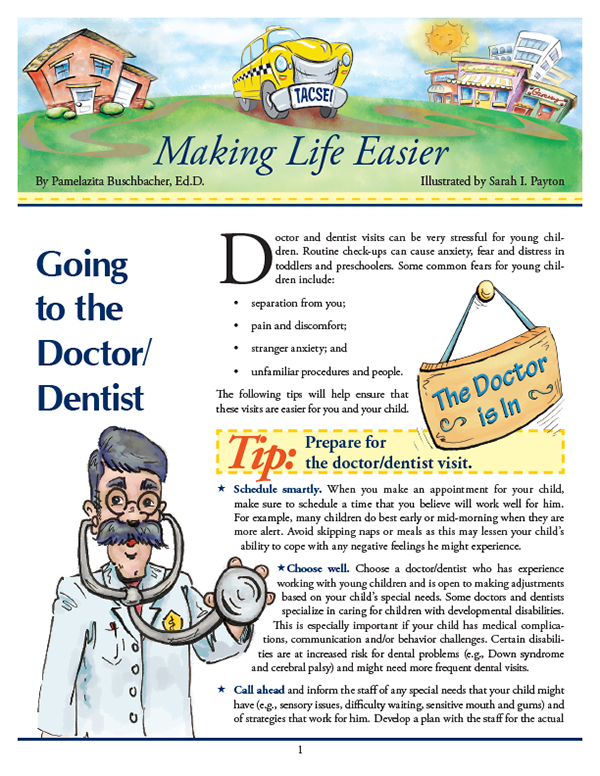
Doctor and dentist visits can be very stressful for young children. Routine check-ups can cause anxiety, fear and distress in toddlers and preschoolers. In this Making Life Easier issue, adults are provided with tips to prepare the child for these appointments and make visits to the doctor or dentist less stressful for everyone.

While the holiday season is filled with enjoyable activities, events and traditions, it can also be a hectic and stressful time. Travel, shopping, loud music, bright lights, unfamiliar food, and busy schedules can turn typical routines upside down! The disruption to routine can be particularly difficult for children who depend on routine and predictability to engage in appropriate behavior.
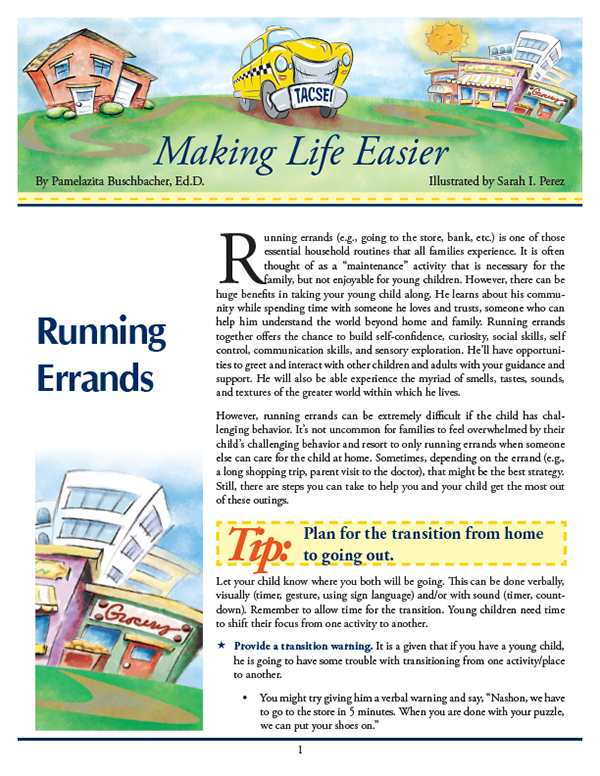
Running errands (e.g., going to the store, bank, etc.) is one of those essential household routines that all families experience. It is often thought of as a ?maintenance? activity that is necessary for the family, but not enjoyable for young children. While there can be huge benefits in taking your young child along, running errands can be extremely difficult if the child has challenging behavior. Still, there are several steps you can take to help you and your child get the most out of these outings. Also includes a handy tip card for quick reference.

Running errands (e.g., going to the store, bank, etc.) is one of those essential household routines that all families experience. It is often thought of as a ?maintenance? activity that is necessary for the family, but not enjoyable for young children. While there can be huge benefits in taking your young child along, running errands can be extremely difficult if the child has challenging behavior. Still, there are several steps you can take to help you and your child get the most out of these outings. Also includes a handy tip card for quick reference. Translation provided by WestEd (https://cainclusion.org).
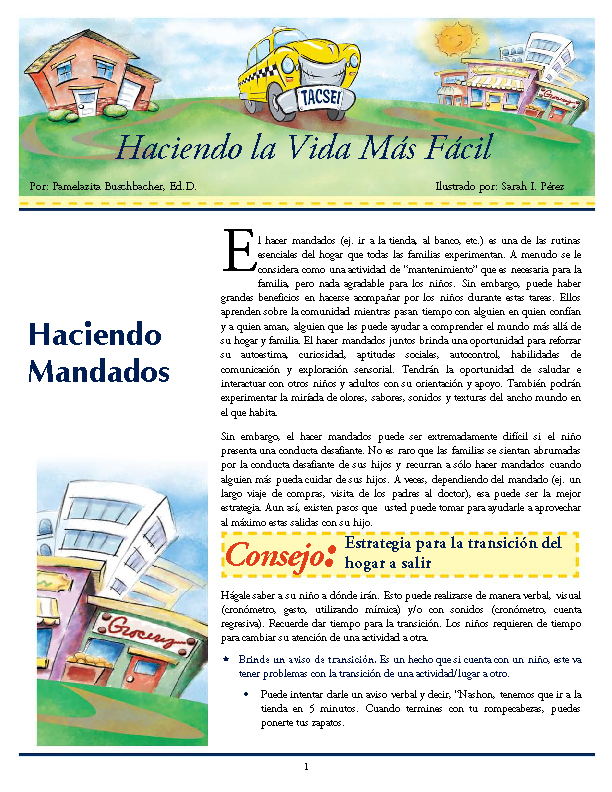
Running errands (e.g., going to the store, bank, etc.) is one of those essential household routines that all families experience. It is often thought of as a ?maintenance? activity that is necessary for the family, but not enjoyable for young children. While there can be huge benefits in taking your young child along, running errands can be extremely difficult if the child has challenging behavior. Still, there are several steps you can take to help you and your child get the most out of these outings. Also includes a handy tip card for quick reference. Translation provided by WestEd (https://cainclusion.org).
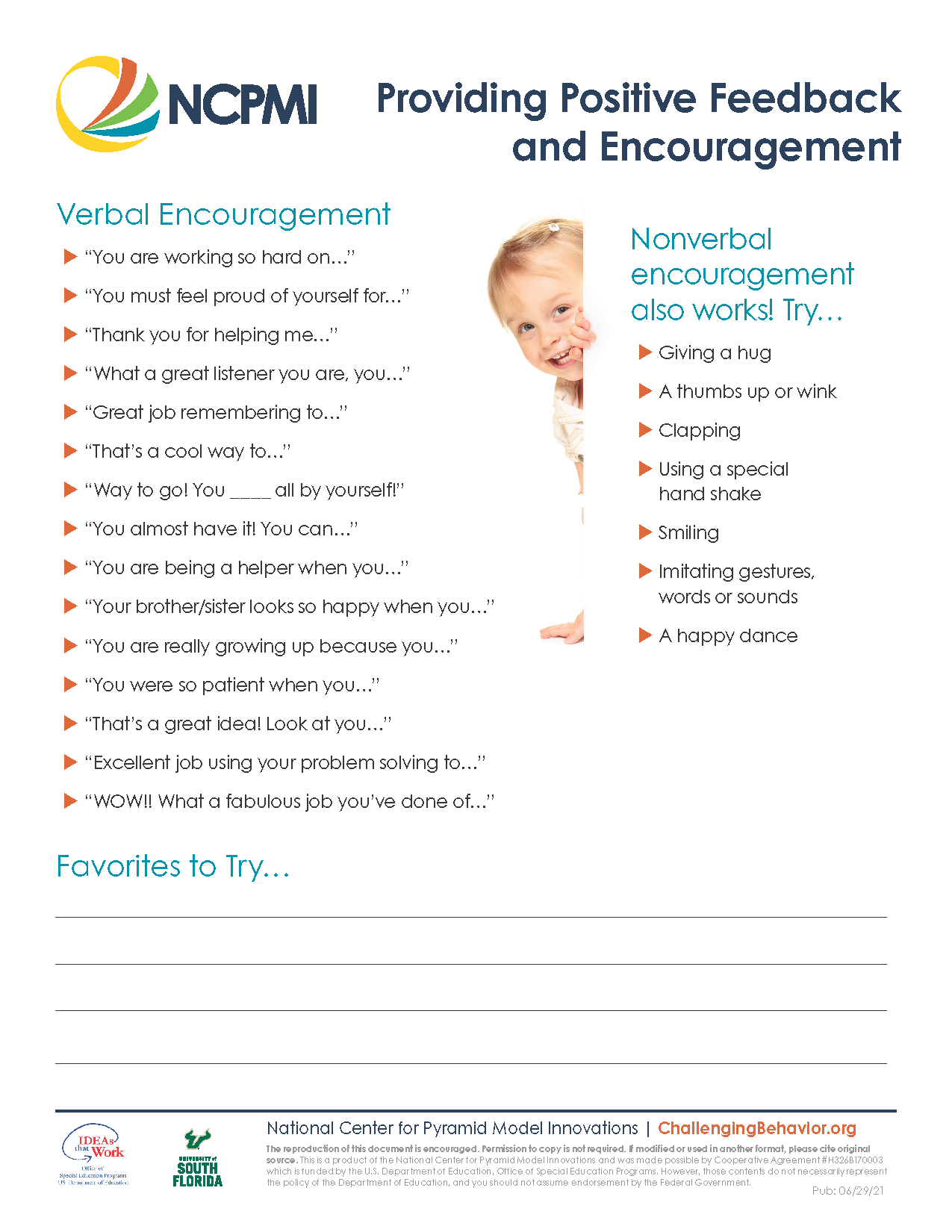
Providing positive encouragement is a powerful practice for helping children meet behavior expectations. This fact sheet provides ideas for how caregivers can deliver positive encouragement.
Providing positive encouragement is a powerful practice for helping children meet behavior expectations. This fact sheet provides ideas for how caregivers can deliver positive encouragement.
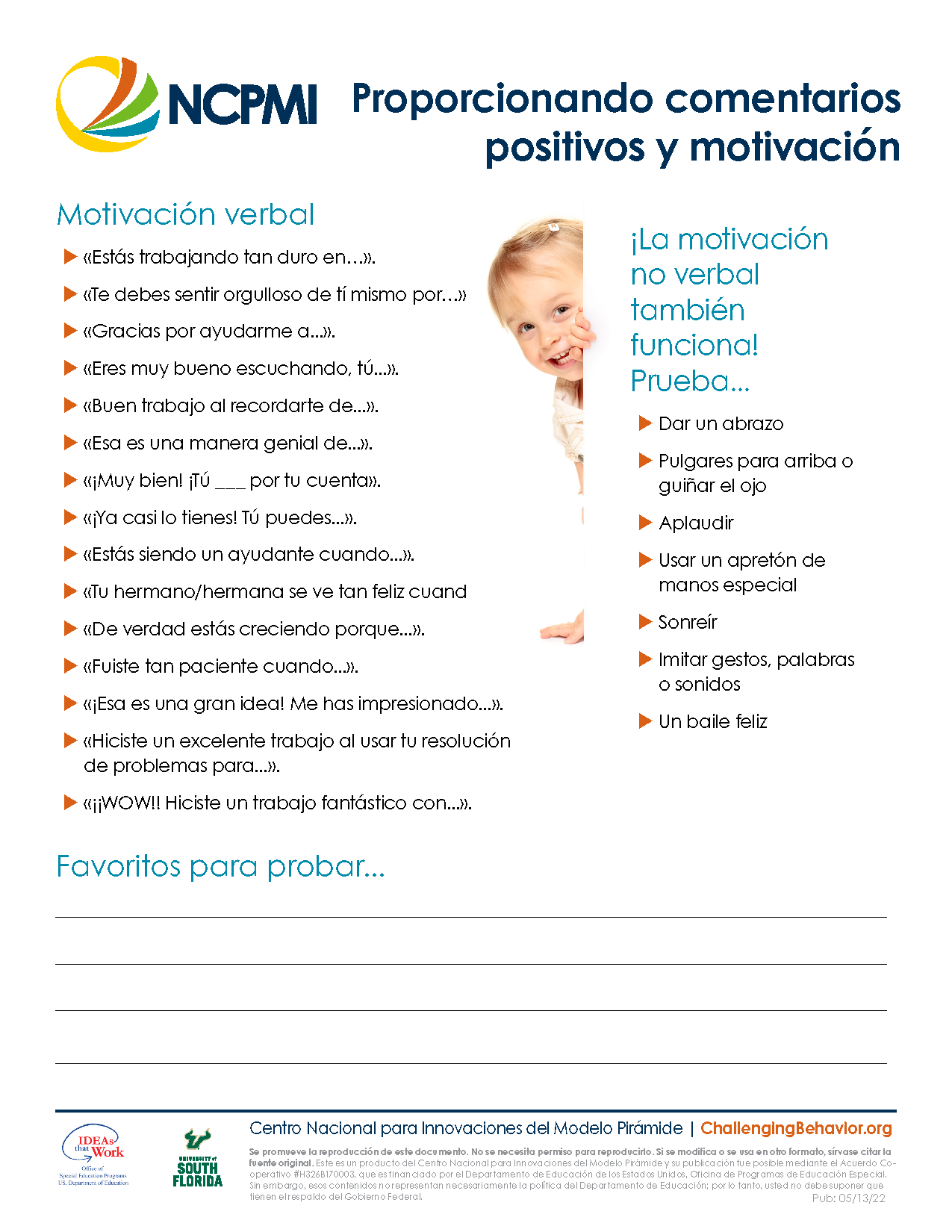
Providing positive encouragement is a powerful practice for helping children meet behavior expectations. This fact sheet provides ideas for how caregivers can deliver positive encouragement.
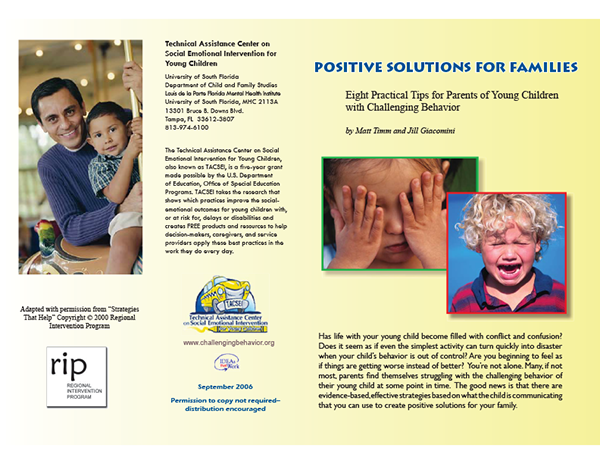
Family brochure on positive solution strategies.
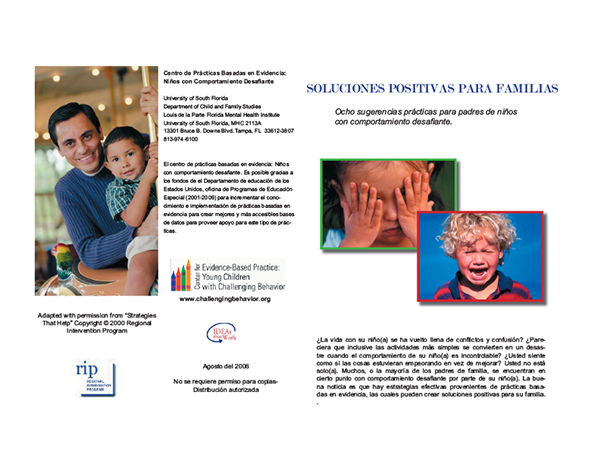
Family brochure on positive solution strategies in Spanish
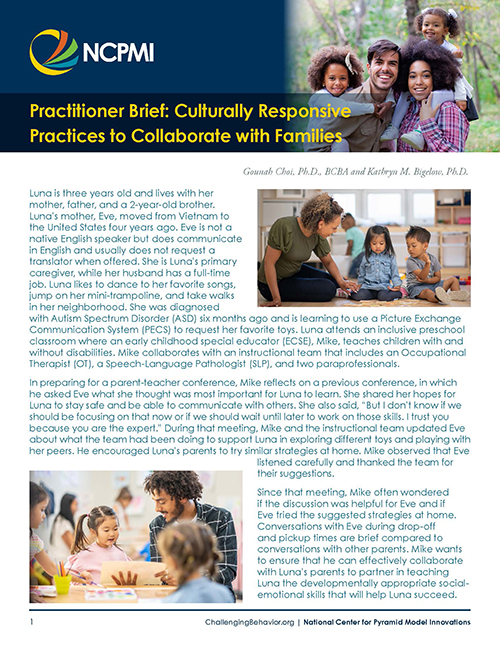
This brief provides practitioners with practical strategies for building relationships and collaborating with families from racially and ethnically diverse cultural backgrounds. It identifies common challenges and offers strategies for addressing them.
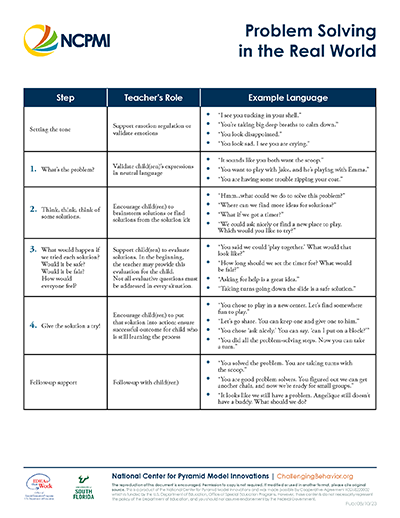
This handout walks preschool practitioners through the steps to teaching problem solving, along with clearly defining the teacher’s role and example language.
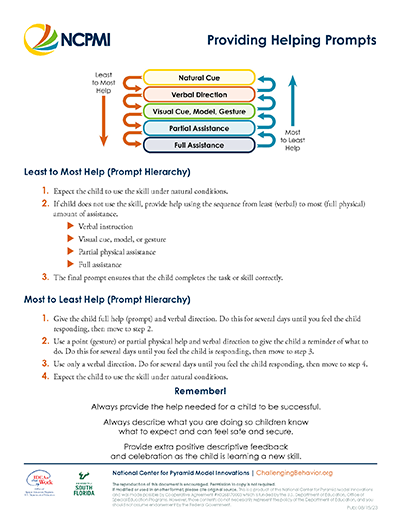
This resource providers teachers with visual reminders and helpful tips for providing helping prompts in the classroom when supporting infant and toddler children learn new skills.
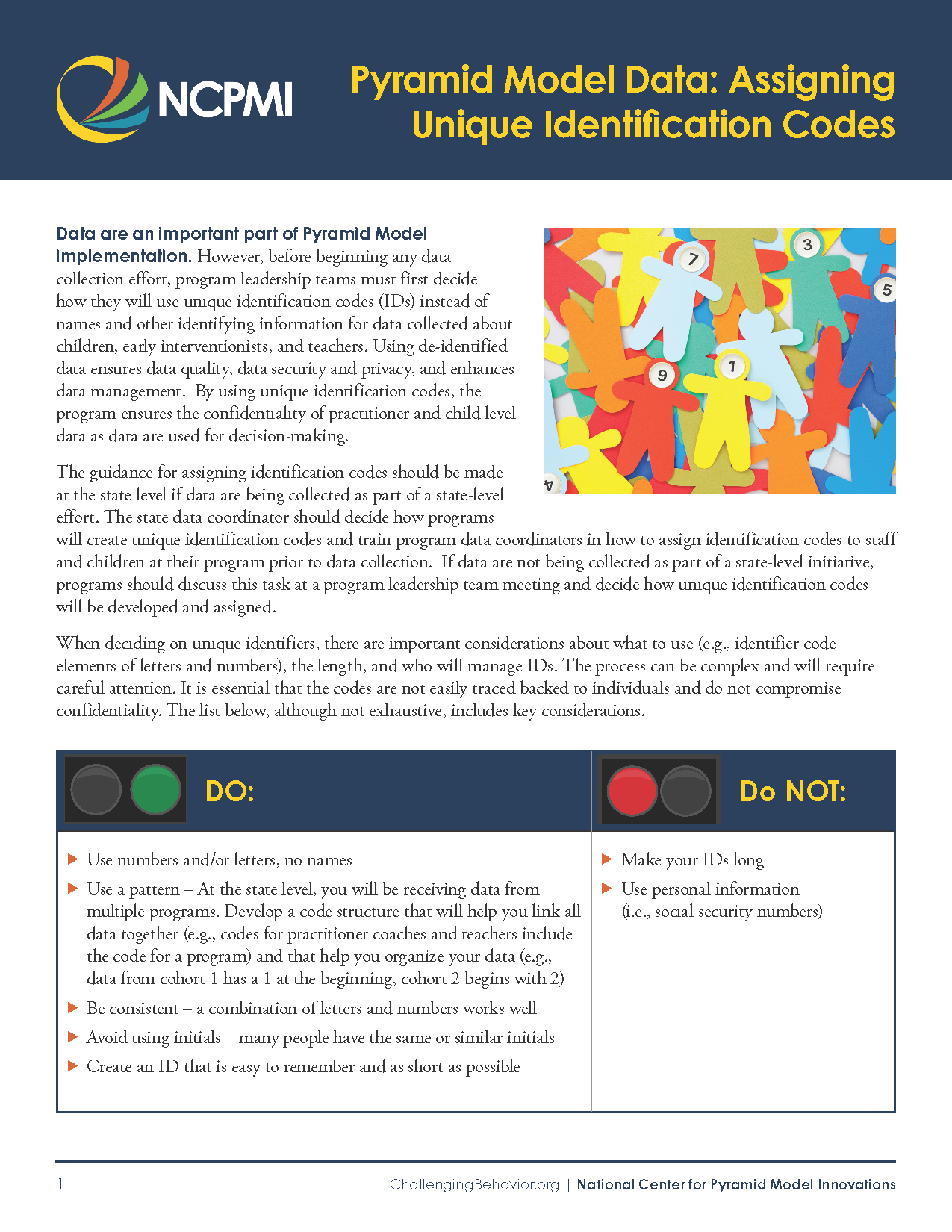
This tip sheet provides guidance for program leadership teams on establishing unique identification codes (IDs) instead of using names and other identifying information for data collected about children, early interventionists, and teachers.
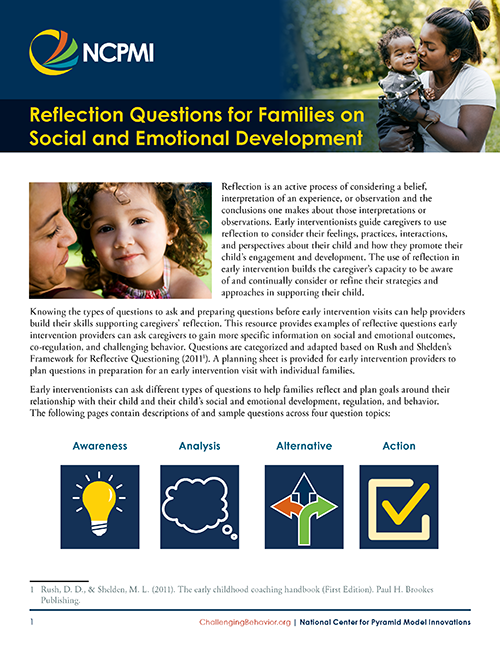
This resource provides tips and examples of reflective questions early providers can ask caregivers to gain more specific information on social and emotional outcomes, co-regulation, and challenging behavior.
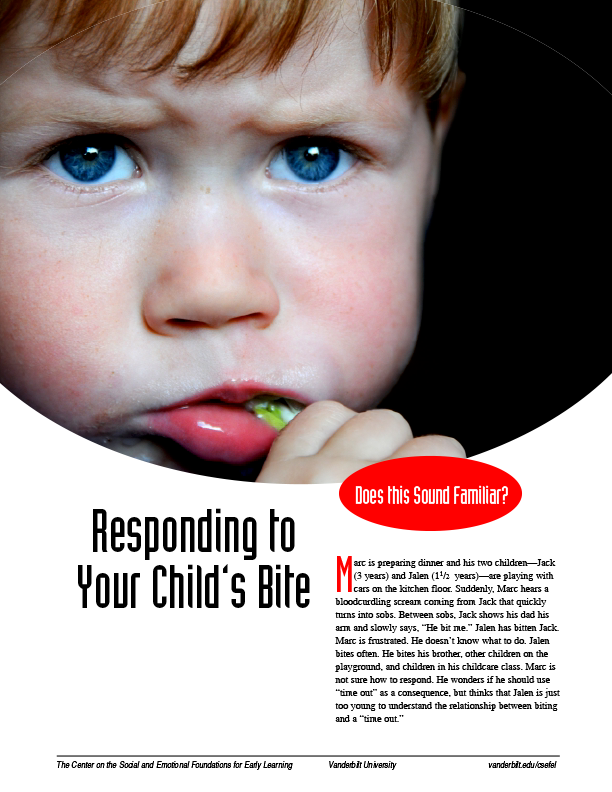
Many toddlers and young children bite. Developmentally, most toddlers don?t have enough words to express how they are feeling. They primarily rely on sounds and actions to communicate what they are thinking and feeling. Biting is one of the ways toddlers express their needs, desires, or feelings. This handout provides information on why children bite, what to do and what not to do, and when to seek professional help.
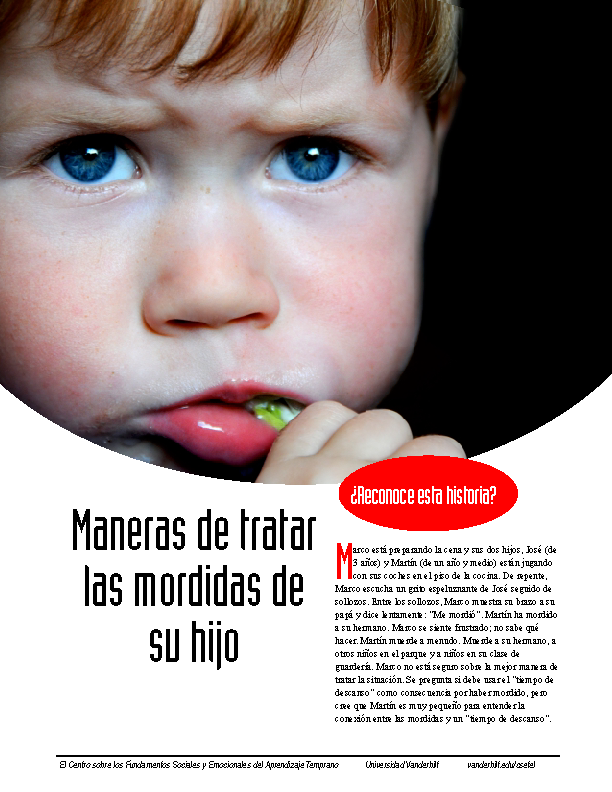
Many toddlers and young children bite. Developmentally, most toddlers don?t have enough words to express how they are feeling. They primarily rely on sounds and actions to communicate what they are thinking and feeling. Biting is one of the ways toddlers express their needs, desires, or feelings. This handout provides information on why children bite, what to do and what not to do, and when to seek professional help.
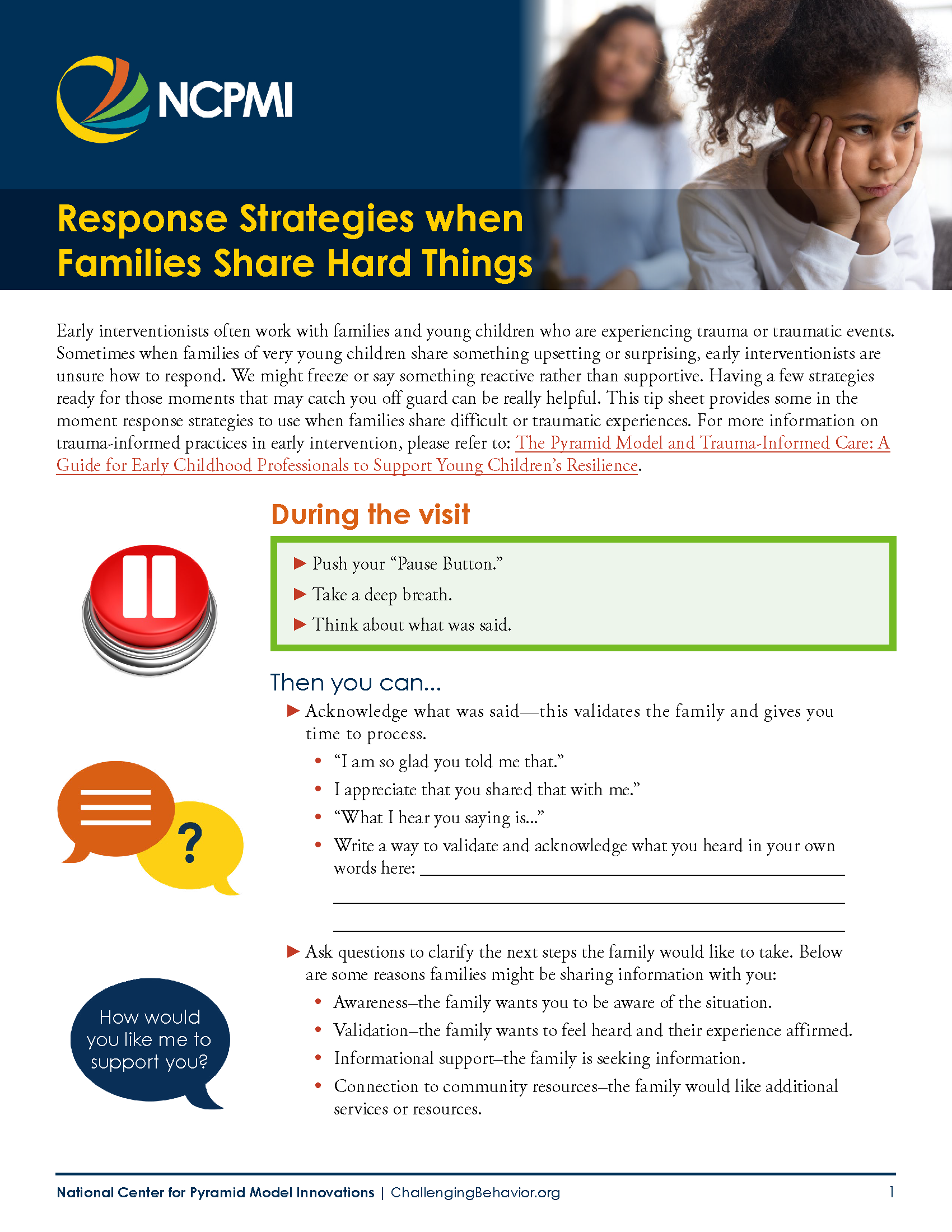
This tip sheet provides some “in the moment” and “after the visit” response strategies and reflection early intervention providers can use when families share difficult or traumatic experiences.
The Backpack Connection Series was created by TACSEI to provide a way for teachers and parents/caregivers to work together to help young children develop social emotional skills and reduce challenging behavior. Teachers may choose to send a handout home in each child’s backpack when a new strategy or skill is introduced to the class.
The Backpack Connection Series was created by TACSEI to provide a way for teachers and parents/caregivers to work together to help young children develop social emotional skills and reduce challenging behavior. Teachers may choose to send a handout home in each child’s backpack when a new strategy or skill is introduced to the class.
The Backpack Connection Series was created by TACSEI to provide a way for teachers and parents/caregivers to work together to help young children develop social emotional skills and reduce challenging behavior. Teachers may choose to send a handout home in each child’s backpack when a new strategy or skill is introduced to the class.
The Backpack Connection Series was created by TACSEI to provide a way for teachers and parents/caregivers to work together to help young children develop social emotional skills and reduce challenging behavior. Teachers may choose to send a handout home in each child’s backpack when a new strategy or skill is introduced to the class.
The Backpack Connection Series was created by TACSEI to provide a way for teachers and parents/caregivers to work together to help young children develop social emotional skills and reduce challenging behavior. Teachers may choose to send a handout home in each child’s backpack when a new strategy or skill is introduced to the class.
The Backpack Connection Series was created by TACSEI to provide a way for teachers and parents/caregivers to work together to help young children develop social emotional skills and reduce challenging behavior. Teachers may choose to send a handout home in each child’s backpack when a new strategy or skill is introduced to the class.
The Backpack Connection Series was created by TACSEI to provide a way for teachers and parents/caregivers to work together to help young children develop social emotional skills and reduce challenging behavior. Teachers may choose to send a handout home in each child’s backpack when a new strategy or skill is introduced to the class.
The Backpack Connection Series was created by TACSEI to provide a way for teachers and parents/caregivers to work together to help young children develop social emotional skills and reduce challenging behavior. Teachers may choose to send a handout home in each child’s backpack when a new strategy or skill is introduced to the class.
The Backpack Connection Series was created by TACSEI to provide a way for teachers and parents/caregivers to work together to help young children develop social emotional skills and reduce challenging behavior. Teachers may choose to send a handout home in each child’s backpack when a new strategy or skill is introduced to the class.
The Backpack Connection Series was created by TACSEI to provide a way for teachers and parents/caregivers to work together to help young children develop social emotional skills and reduce challenging behavior. Teachers may choose to send a handout home in each child’s backpack when a new strategy or skill is introduced to the class.
The Backpack Connection Series was created by TACSEI to provide a way for teachers and parents/caregivers to work together to help young children develop social emotional skills and reduce challenging behavior. Teachers may choose to send a handout home in each child’s backpack when a new strategy or skill is introduced to the class.
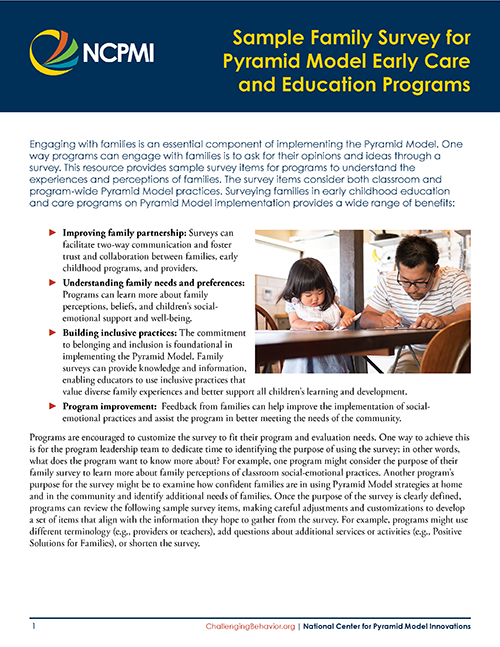
This resource provides sample survey items for programs to understand the experiences and perceptions of families. The survey items consider both classroom and program-wide Pyramid Model practices.

When children engage in behavior that pushes your buttons, it is important to be intentional in how you respond. This resource provides strategies that you might use when a child’s behavior pushes your buttons to help you respond in a way that is supportive of the child.
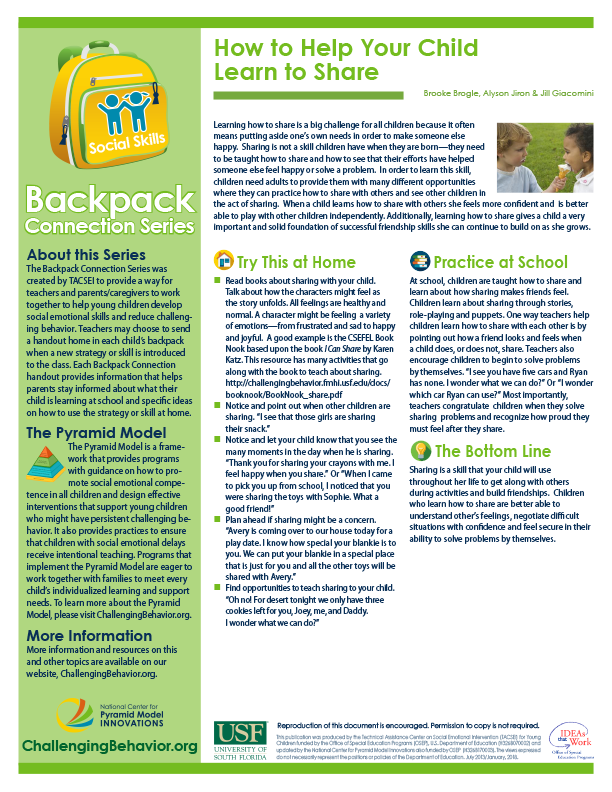
The Backpack Connection Series was created by TACSEI to provide a way for teachers and parents/caregivers to work together to help young children develop social emotional skills and reduce challenging behavior. Teachers may choose to send a handout home in each child’s backpack when a new strategy or skill is introduced to the class.
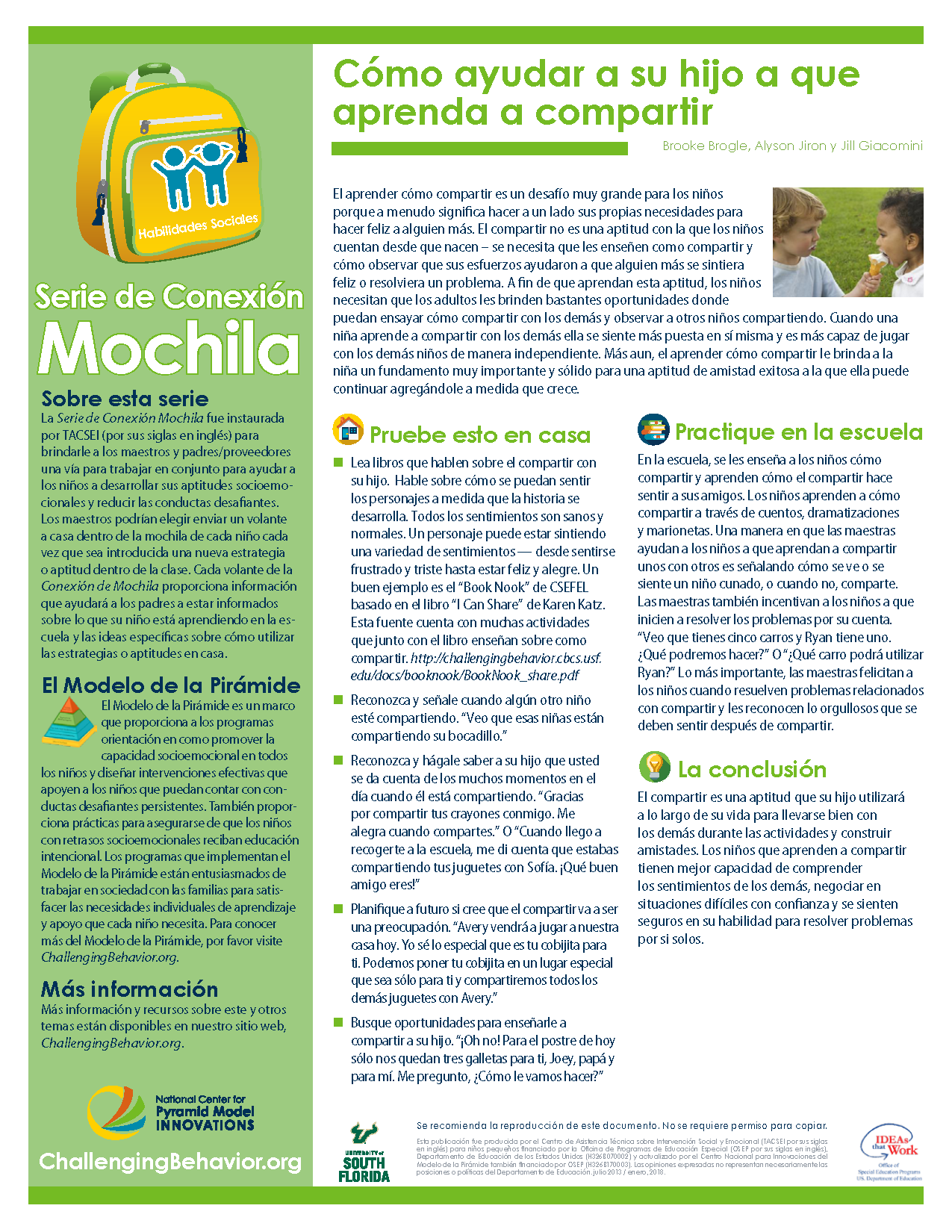
The Backpack Connection Series was created by TACSEI to provide a way for teachers and parents/caregivers to work together to help young children develop social emotional skills and reduce challenging behavior. Teachers may choose to send a handout home in each child’s backpack when a new strategy or skill is introduced to the class.
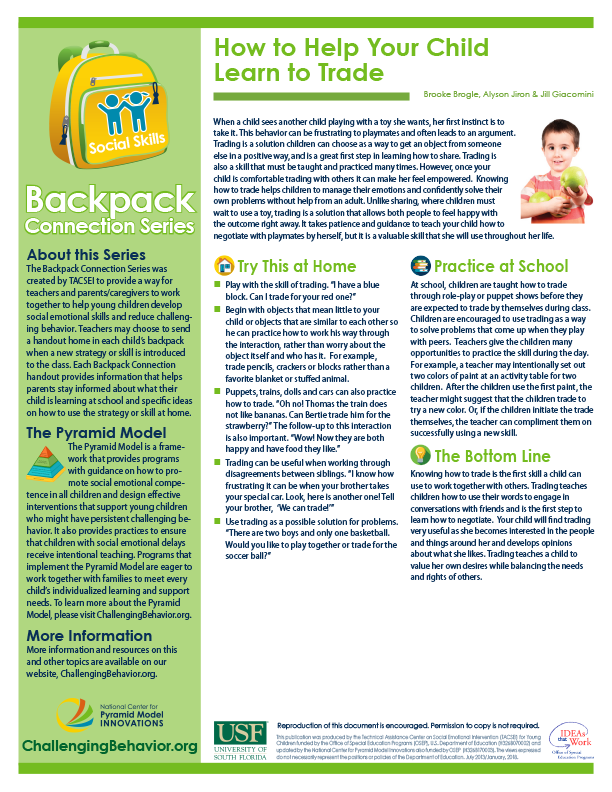
The Backpack Connection Series was created by TACSEI to provide a way for teachers and parents/caregivers to work together to help young children develop social emotional skills and reduce challenging behavior. Teachers may choose to send a handout home in each child’s backpack when a new strategy or skill is introduced to the class.
The Backpack Connection Series was created by TACSEI to provide a way for teachers and parents/caregivers to work together to help young children develop social emotional skills and reduce challenging behavior. Teachers may choose to send a handout home in each child’s backpack when a new strategy or skill is introduced to the class.
The Backpack Connection Series was created by TACSEI to provide a way for teachers and parents/caregivers to work together to help young children develop social emotional skills and reduce challenging behavior. Teachers may choose to send a handout home in each child’s backpack when a new strategy or skill is introduced to the class.
The Backpack Connection Series was created by TACSEI to provide a way for teachers and parents/caregivers to work together to help young children develop social emotional skills and reduce challenging behavior. Teachers may choose to send a handout home in each child’s backpack when a new strategy or skill is introduced to the class.
The Backpack Connection Series was created by TACSEI to provide a way for teachers and parents/caregivers to work together to help young children develop social emotional skills and reduce challenging behavior. Teachers may choose to send a handout home in each child’s backpack when a new strategy or skill is introduced to the class.
The Backpack Connection Series was created by TACSEI to provide a way for teachers and parents/caregivers to work together to help young children develop social emotional skills and reduce challenging behavior. Teachers may choose to send a handout home in each child’s backpack when a new strategy or skill is introduced to the class.
The Backpack Connection Series was created by TACSEI to provide a way for teachers and parents/caregivers to work together to help young children develop social emotional skills and reduce challenging behavior. Teachers may choose to send a handout home in each child’s backpack when a new strategy or skill is introduced to the class.
The Backpack Connection Series was created by TACSEI to provide a way for teachers and parents/caregivers to work together to help young children develop social emotional skills and reduce challenging behavior. Teachers may choose to send a handout home in each child’s backpack when a new strategy or skill is introduced to the class.
Tips for descriptive feedback
This resource provides supportive strategies for the development of friendship skills of infant and toddler-age children.
This set of tips and strategies helps practitioners navigate sensitive or difficult conversations with families. Guidance includes ideas for strengthening relationships with families using the 4Rs: Recognize, Reflect, Regulate, and Repair.
Many early childhood educators and families of young children have been launched into the world of online learning in 2020. This resource provides a few tips from parents for parents on how to support children and yourself during online learning experiences.
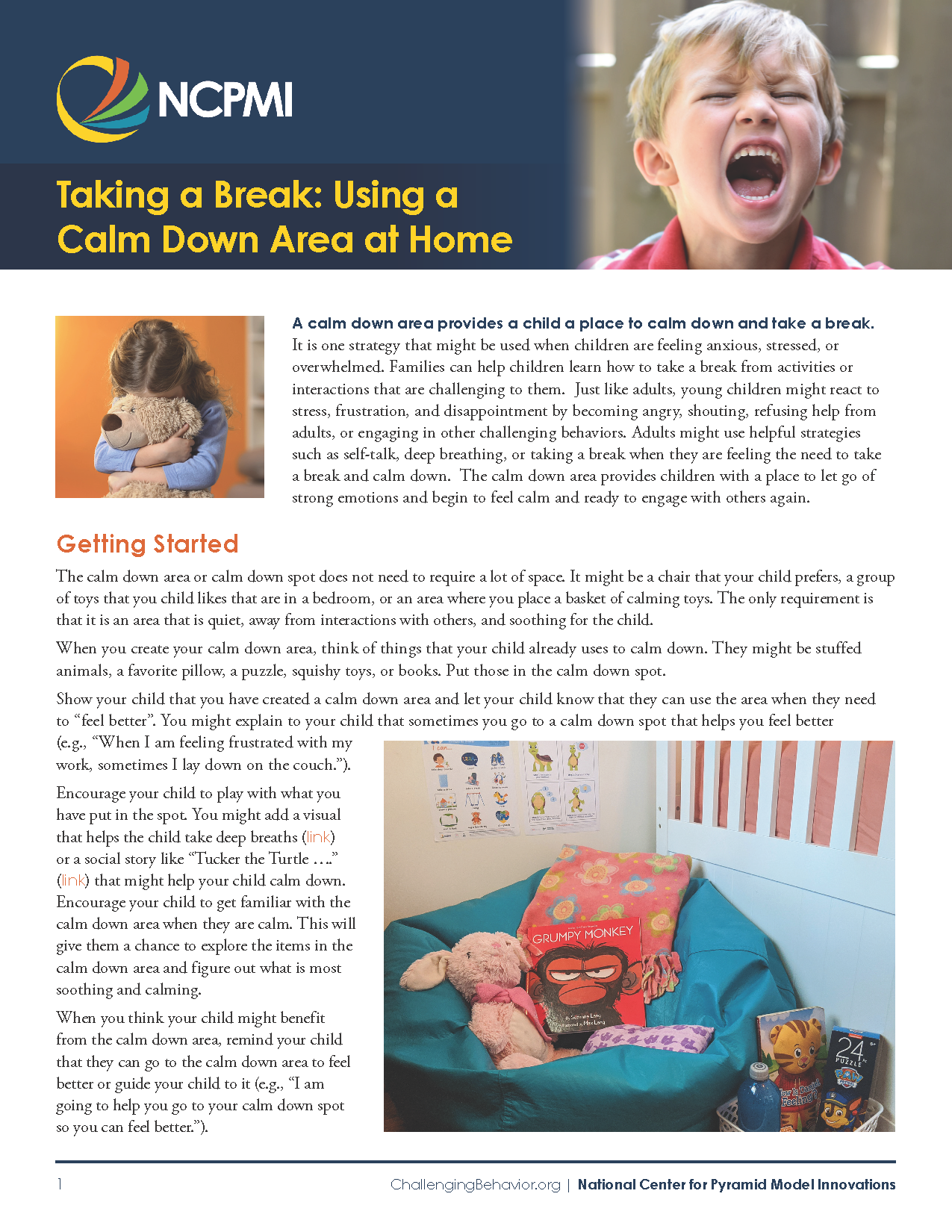
This resource includes instructions and tips for families on how to create a calm down area at home.
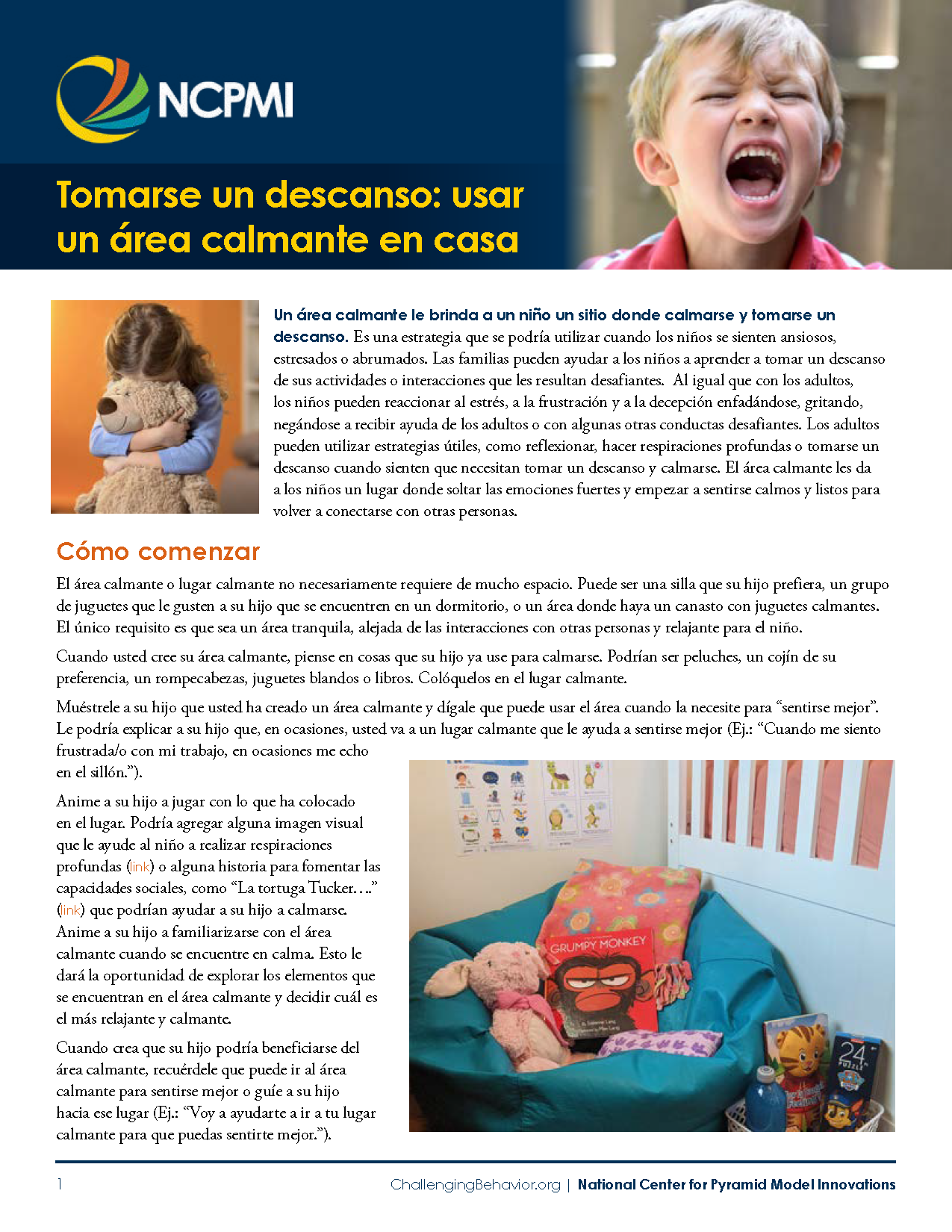
This resource includes instructions and tips for families on how to create a calm down area at home.
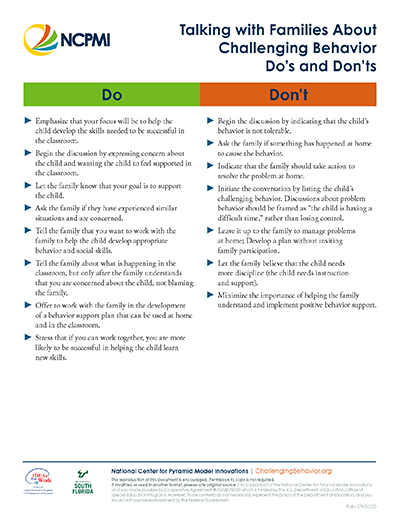
Dos and Don?ts for talking with families about their child’s problem behavior. This is a one-page handout.
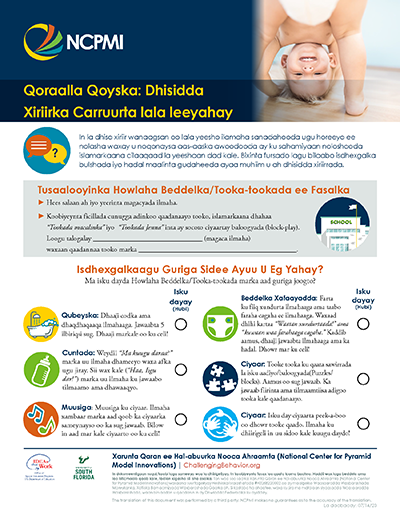
This resource provides teachers tools to promote families to build relationships with infants and toddlers. It includes a teacher’s guide for using the tool, a family handout, and an activity idea that teacher can use to communicate with families about building relationships with children.
The translation of this document was performed by a third party. NCPMI makes no guarantees as to the accuracy of the translation.
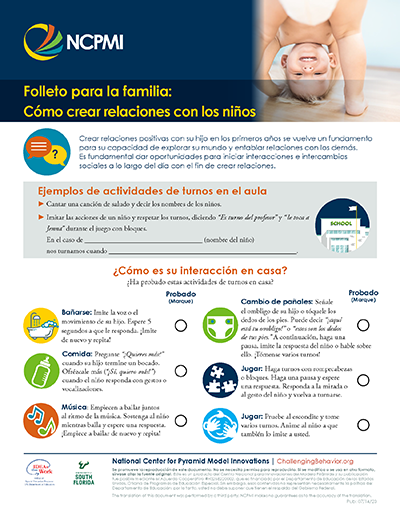
This resource provides teachers tools to promote families to build relationships with infants and toddlers. It includes a teacher’s guide for using the tool, a family handout, and an activity idea that teacher can use to communicate with families about building relationships with children.
The translation of this document was performed by a third party. NCPMI makes no guarantees as to the accuracy of the translation.
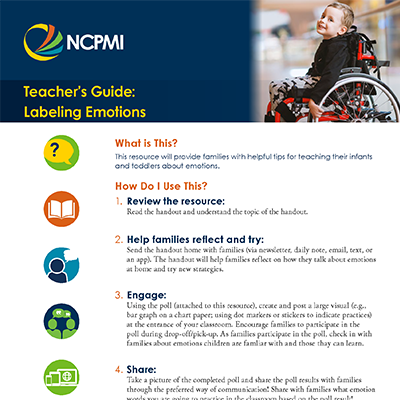
This resource provides teachers tools to engage families in teaching infants and toddlers about emotions. It includes a teacher’s guide for using the tool, a family handout, and an activity idea that teacher can use to communicate with families about teaching emotions.
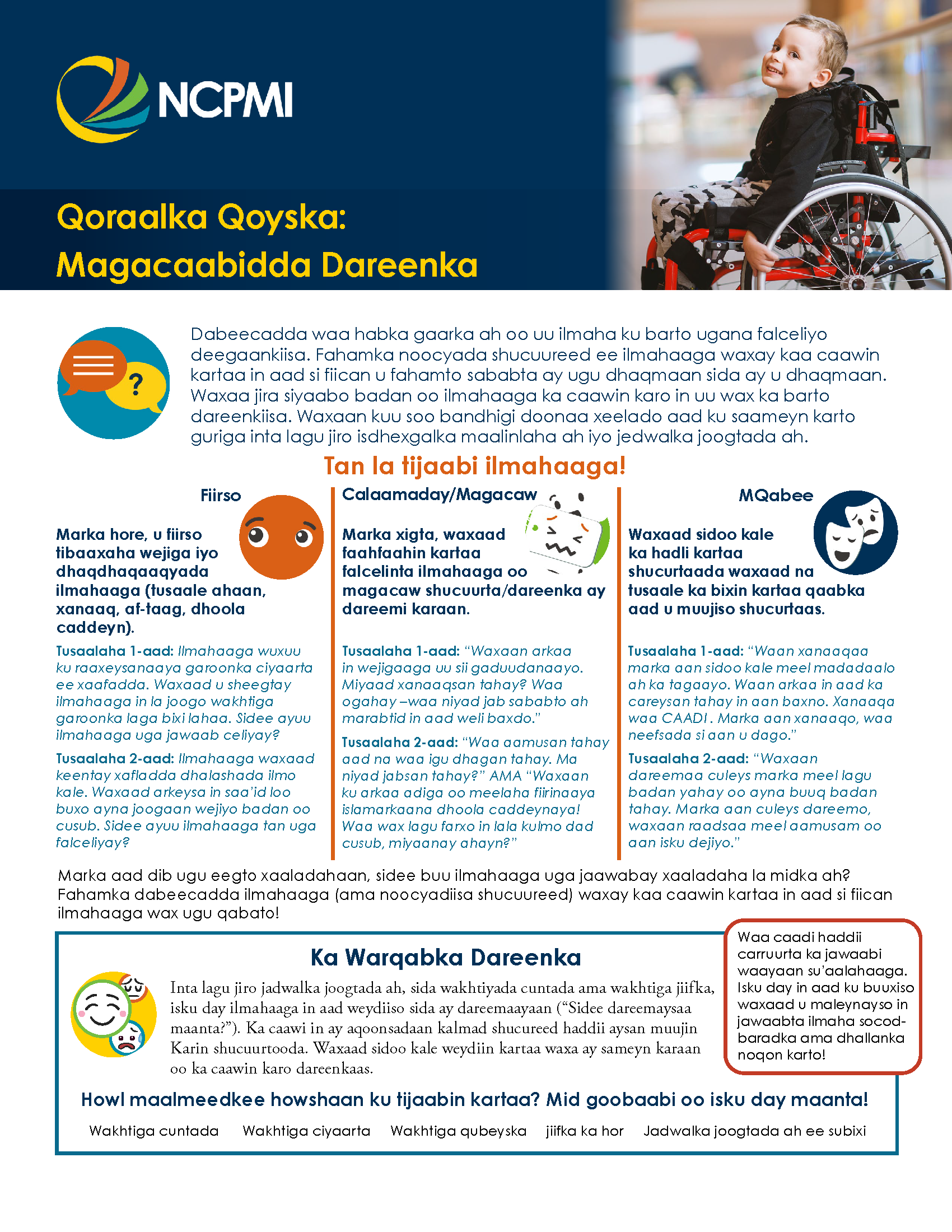
This resource provides teachers tools to engage families in teaching infants and toddlers about emotions. It includes a teacher’s guide for using the tool, a family handout, and an activity idea that teacher can use to communicate with families about teaching emotions.
The translation of this document was performed by a third party. NCPMI makes no guarantees as to the accuracy of the translation.
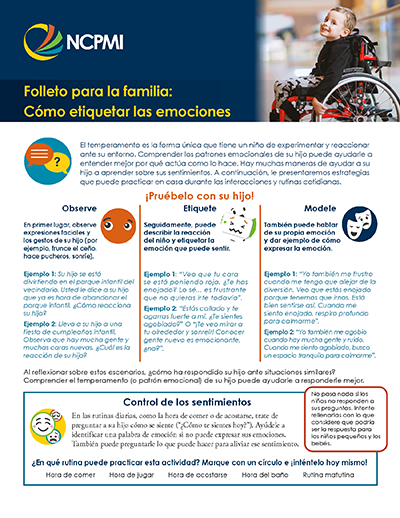
This resource provides teachers tools to engage families in teaching infants and toddlers about emotions. It includes a teacher’s guide for using the tool, a family handout, and an activity idea that teacher can use to communicate with families about teaching emotions.
The translation of this document was performed by a third party. NCPMI makes no guarantees as to the accuracy of the translation.
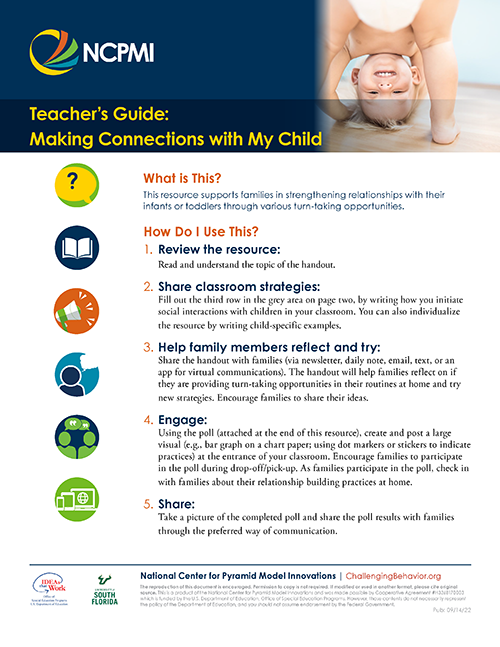
This resource provides teachers tools to promote families to build relationships with infants and toddlers. It includes a teacher’s guide for using the tool, a family handout, and an activity idea that teacher can use to communicate with families about building relationships with children.
This resource provides teachers tools to engage families in promoting positive interactions between toddlers and their friends (or siblings). It includes a teacher’s guide for using the tool, a family handout, and an activity idea that teacher can use to communicate with families about their children’s play activities at home.

This resource provides teachers tools to engage families in promoting positive interactions between toddlers and their friends (or siblings). It includes a teacher’s guide for using the tool, a family handout, and an activity idea that teacher can use to communicate with families about their children’s play activities at home.
The translation of this document was performed by a third party. NCPMI makes no guarantees as to the accuracy of the translation.
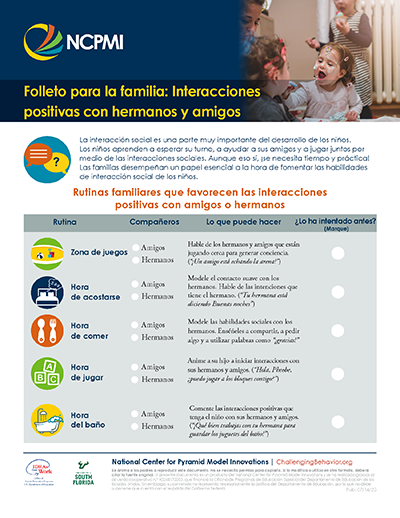
This resource provides teachers tools to engage families in promoting positive interactions between toddlers and their friends (or siblings). It includes a teacher’s guide for using the tool, a family handout, and an activity idea that teacher can use to communicate with families about their children’s play activities at home.
The translation of this document was performed by a third party. NCPMI makes no guarantees as to the accuracy of the translation.
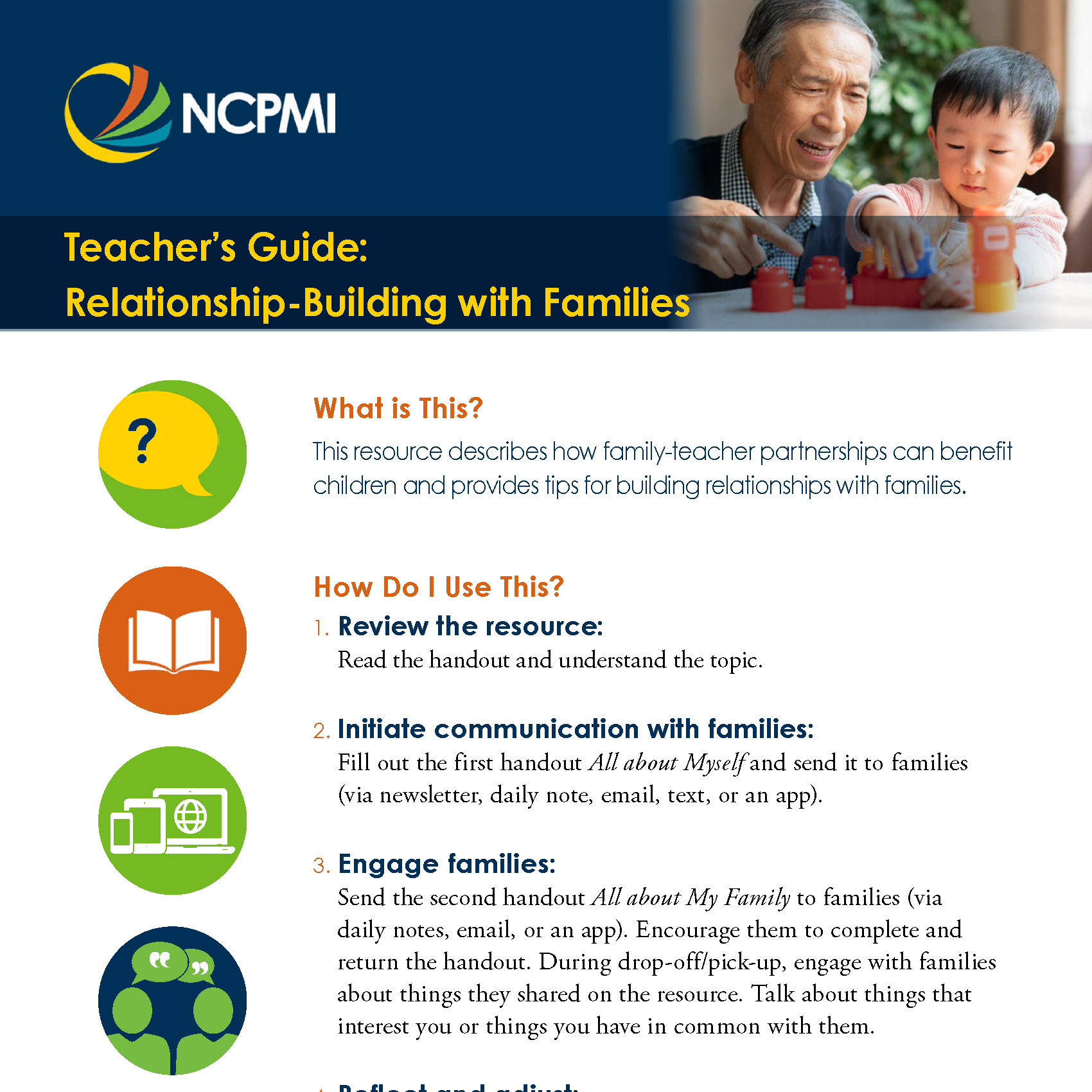
This resource provides teachers tools to build relationships with families. It includes a teacher’s guide for using the tool and two fill-in handouts for the teacher and families.
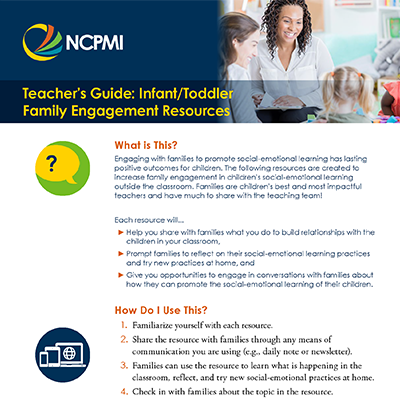
This guide introduces four resources that promote family engagement in infants’ and toddlers’ social-emotional learning outside the classroom. Included are a teacher’s guide for using the resources and links to the four family engagement resources.
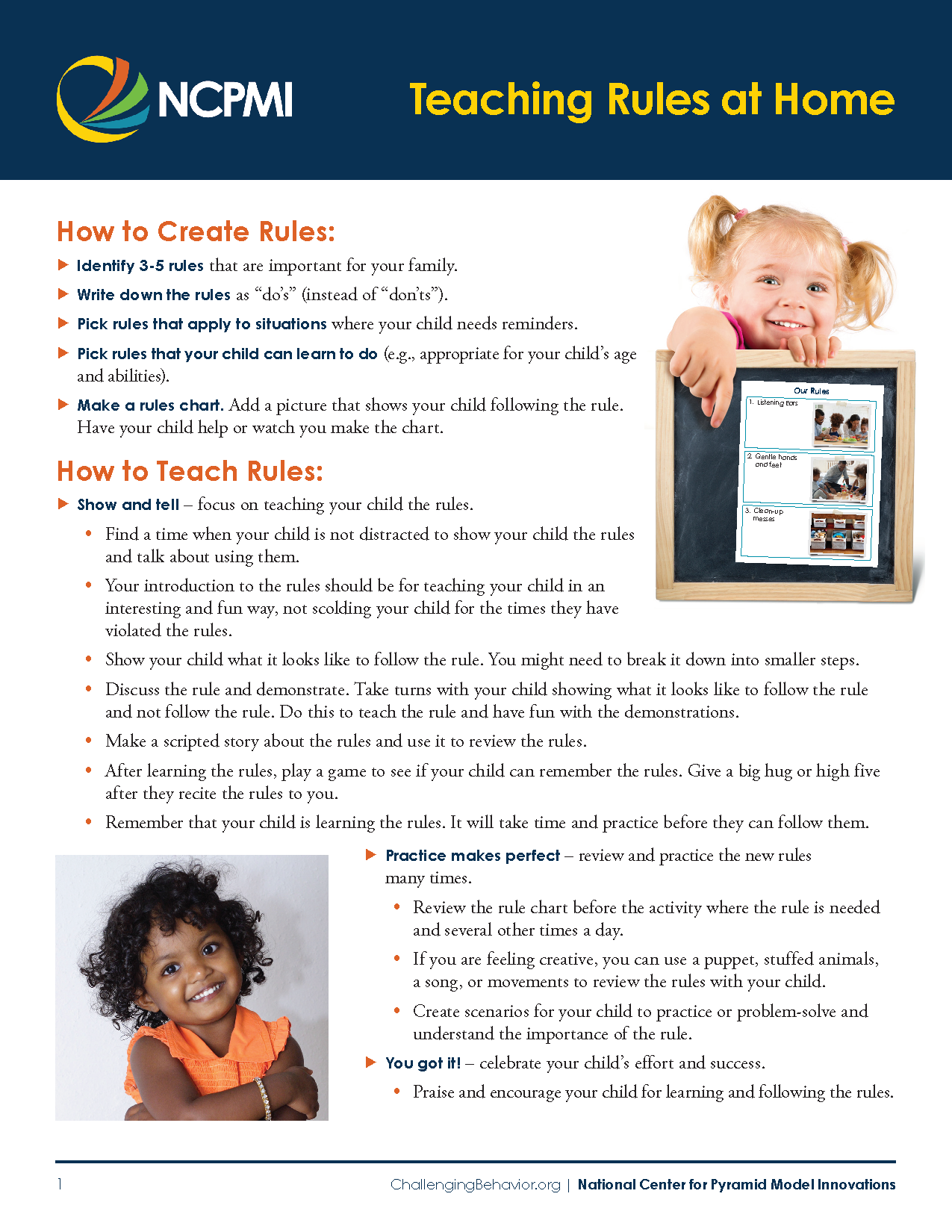
This tipsheet includes suggestions on how to develop and teach family rules. A template is included for families to create a rules poster with their child.
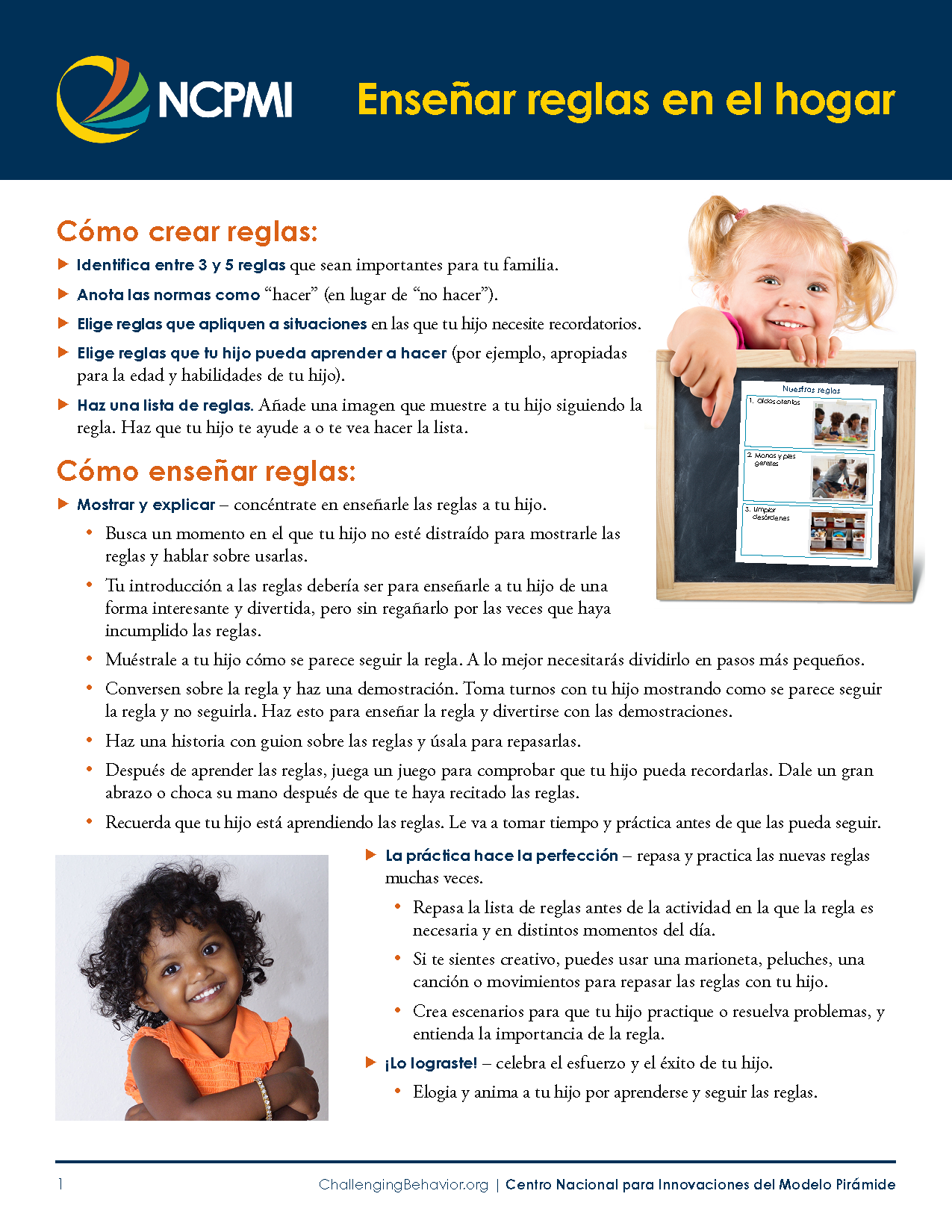
This tipsheet includes suggestions on how to develop and teach family rules. A template is included for families to create a rules poster with their child.
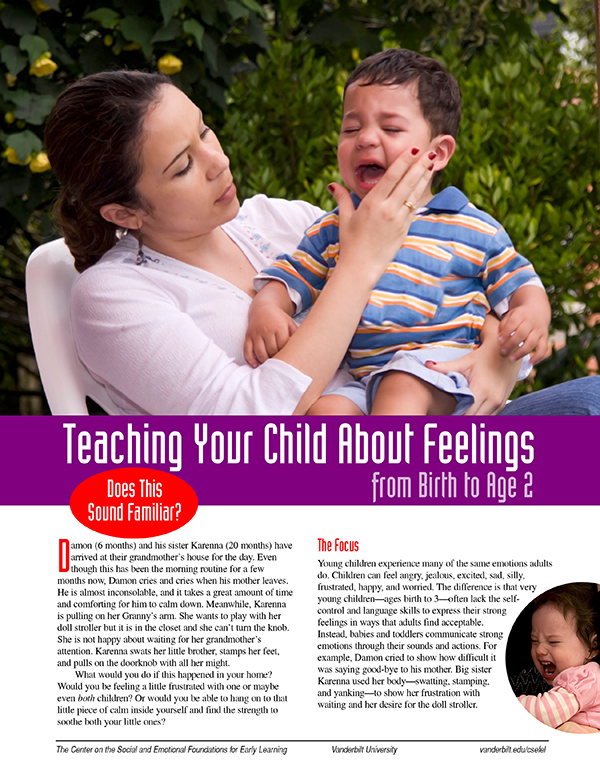
Understanding feelings is an important part of a child’s social emotional development. Babies and toddlers experience feelings just like you do, and know when you are feeling happy or down as well. When you use words to describe emotions, share in their good feelings, and comfort them when they feel sad or overwhelmed, young children are learning important social emotional skills.
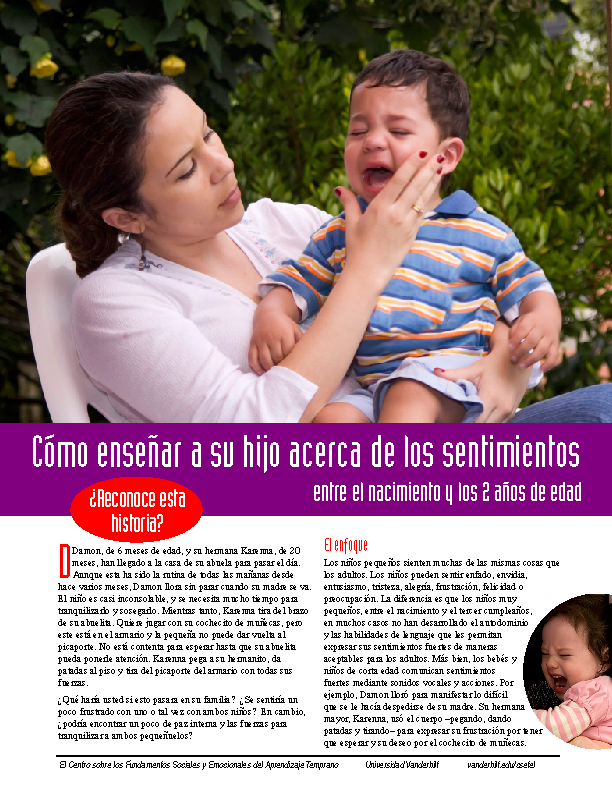
Understanding feelings is an important part of a child’s social emotional development. Babies and toddlers experience feelings just like you do, and know when you are feeling happy or down as well. When you use words to describe emotions, share in their good feelings, and comfort them when they feel sad or overwhelmed, young children are learning important social emotional skills.
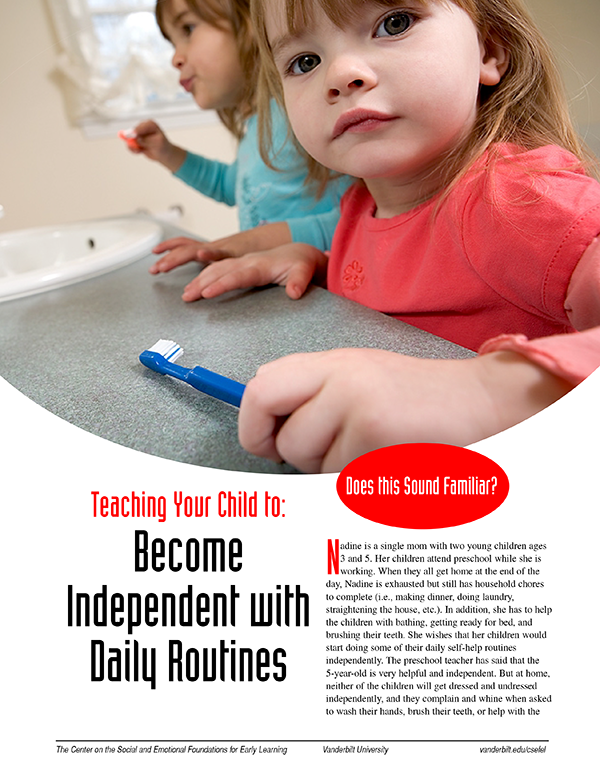
Young children can learn how to do simple daily self-help activities—they just need to be taught what to do. When teaching a child to do self-care skills, you first need to know what you can typically expect of a young child, your child’s skill level, and how to provide clear and simple instructions about how to do a task. In addition, providing children with ample encouragement that is both positive and specific will help promote their success. The information in this handout will help you understand what you can expect from your preschooler and provides tips for helping your child learn how to become more independent with daily routines.
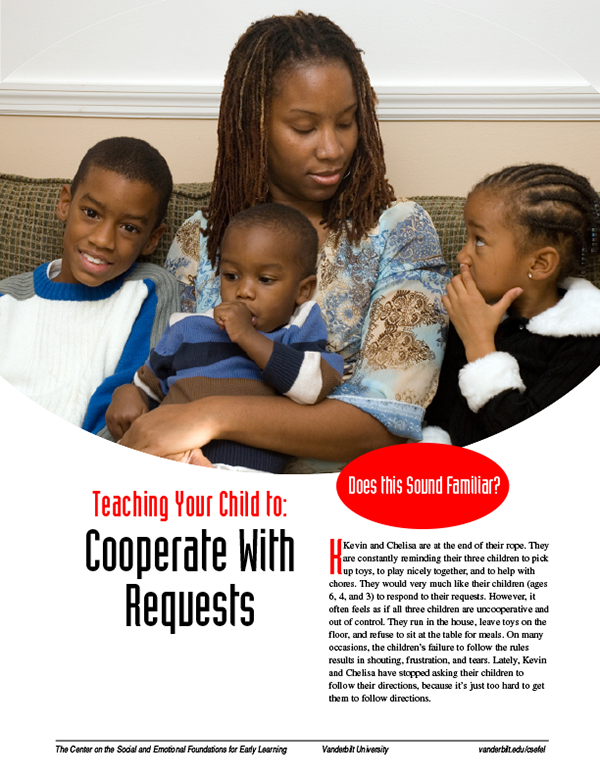
Young children can learn to follow adult expectations, including performing simple chores, if the expectations are developmentally appropriate (meaning they match what can be expected for children at that age) and are taught to the child. This four-page handout provides information on what you might expect from your preschooler and some tips for helping your child learn and follow your requests.
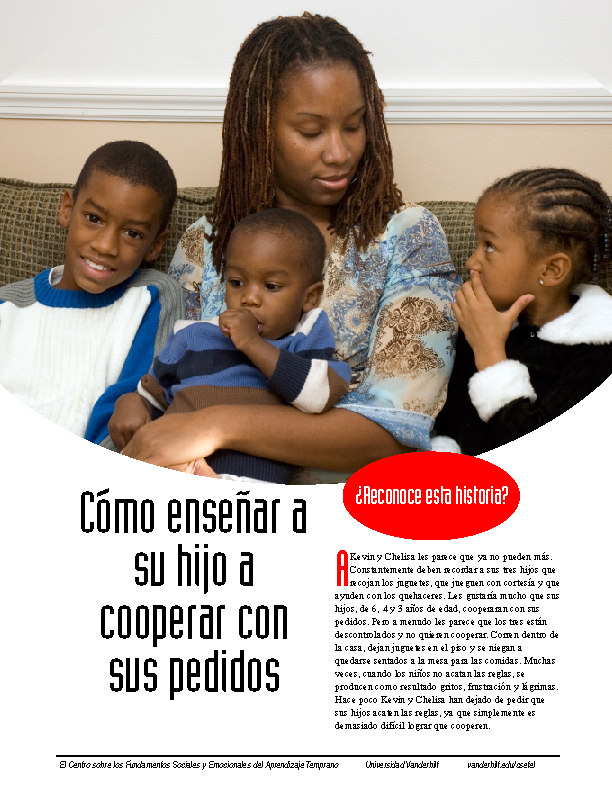
Young children can learn to follow adult expectations, including performing simple chores, if the expectations are developmentally appropriate (meaning they match what can be expected for children at that age) and are taught to the child. This four-page handout provides information on what you might expect from your preschooler and some tips for helping your child learn and follow your requests.
Young children deal with many of the same emotions adults do. Children get angry, sad, frustrated, nervous, happy, or embarrassed, but they often do not have the words to talk about how they are feeling. Instead, they sometimes act out these emotions in very physical and inappropriate ways. This four-page handout describes specific steps and strategies adults can use to help children express themselves in ways that are appropriate.
Young children deal with many of the same emotions adults do. Children get angry, sad, frustrated, nervous, happy, or embarrassed, but they often do not have the words to talk about how they are feeling. Instead, they sometimes act out these emotions in very physical and inappropriate ways. This four-page handout describes specific steps and strategies adults can use to help children express themselves in ways that are appropriate.
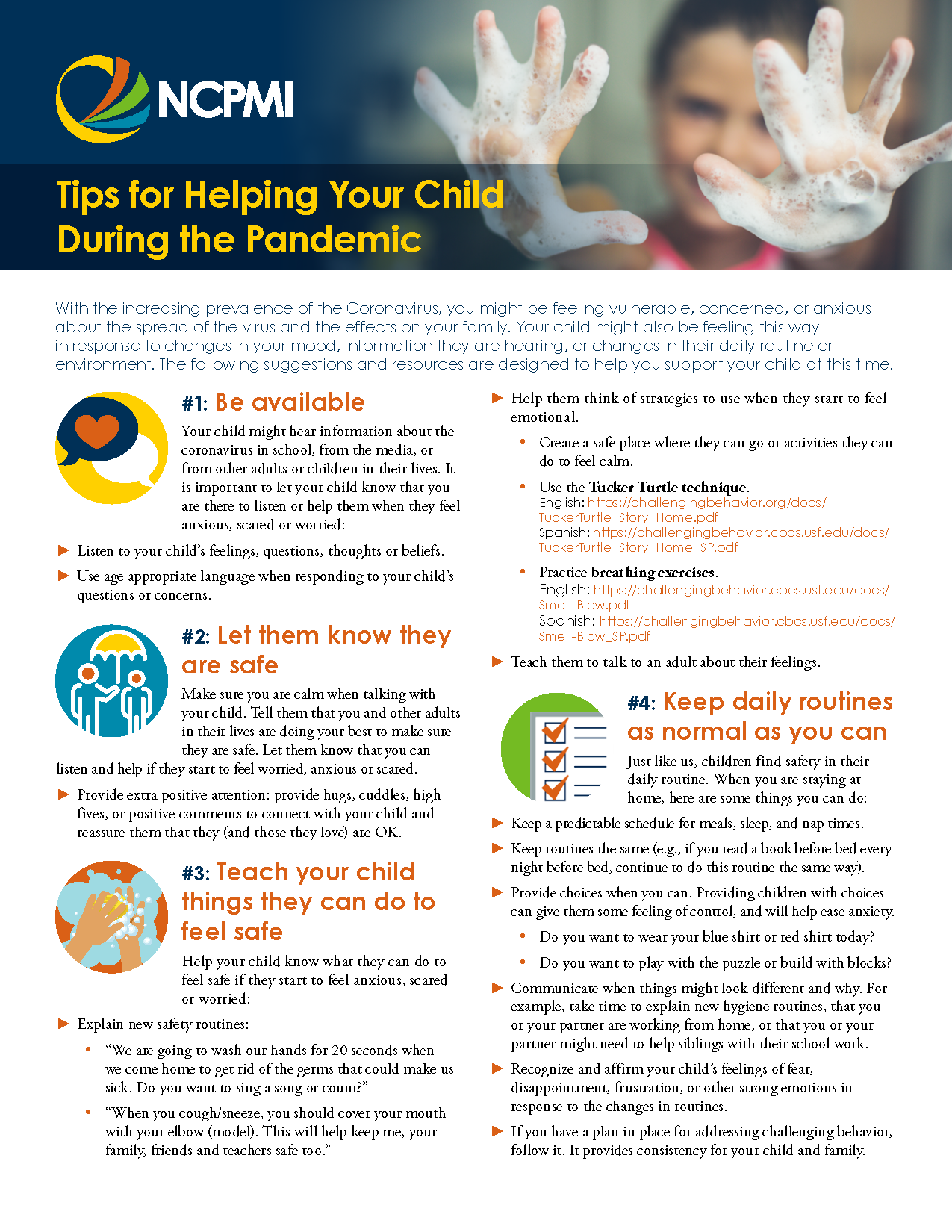
Tips for helping your child during the pandemic provides families with suggestions and resources for helping their child cope with stress, changes, and staying at home.
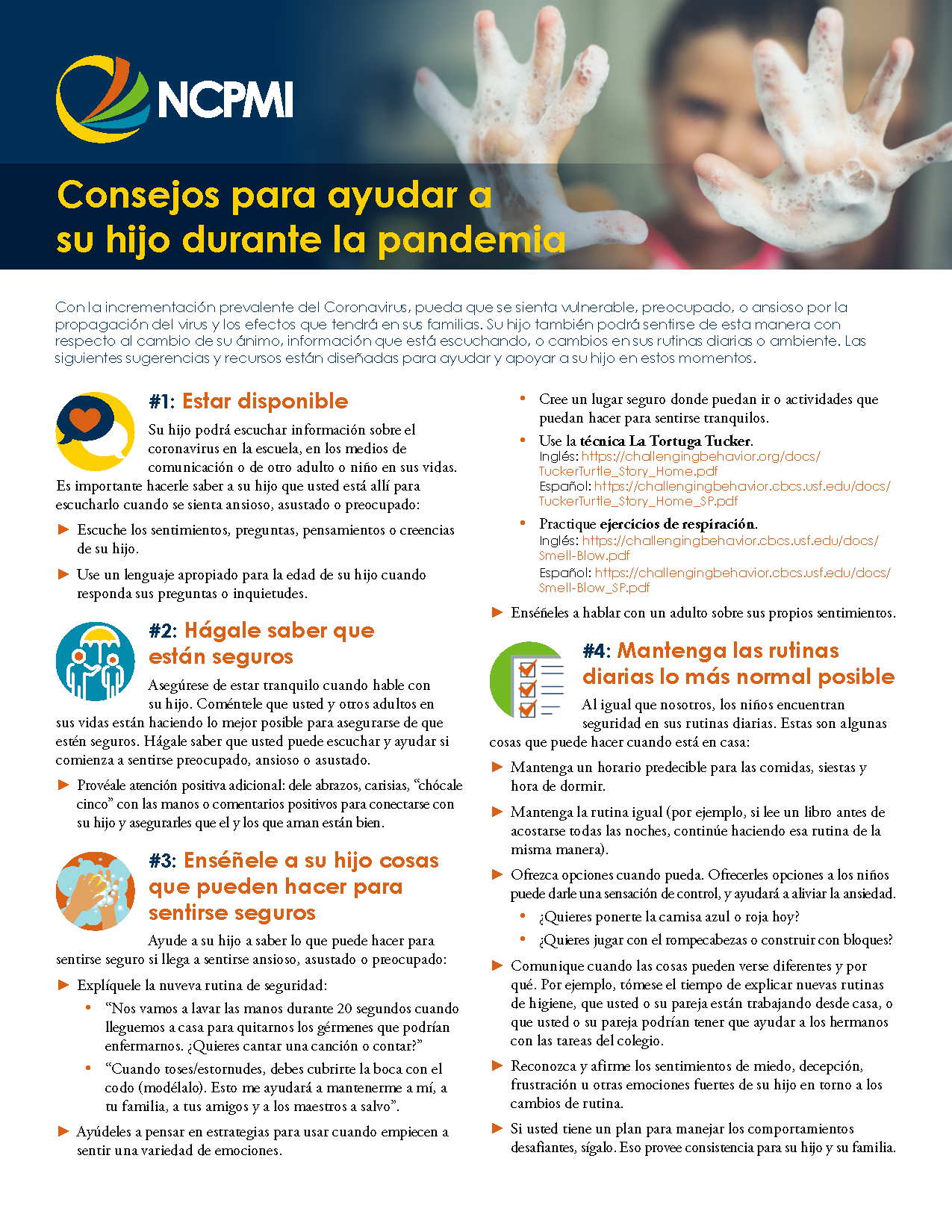
Tips for helping your child during the pandemic provides families with suggestions and resources for helping their child cope with stress, changes, and staying at home.
Tips for how to respond to challenging behavior when it occurs in the classroom.
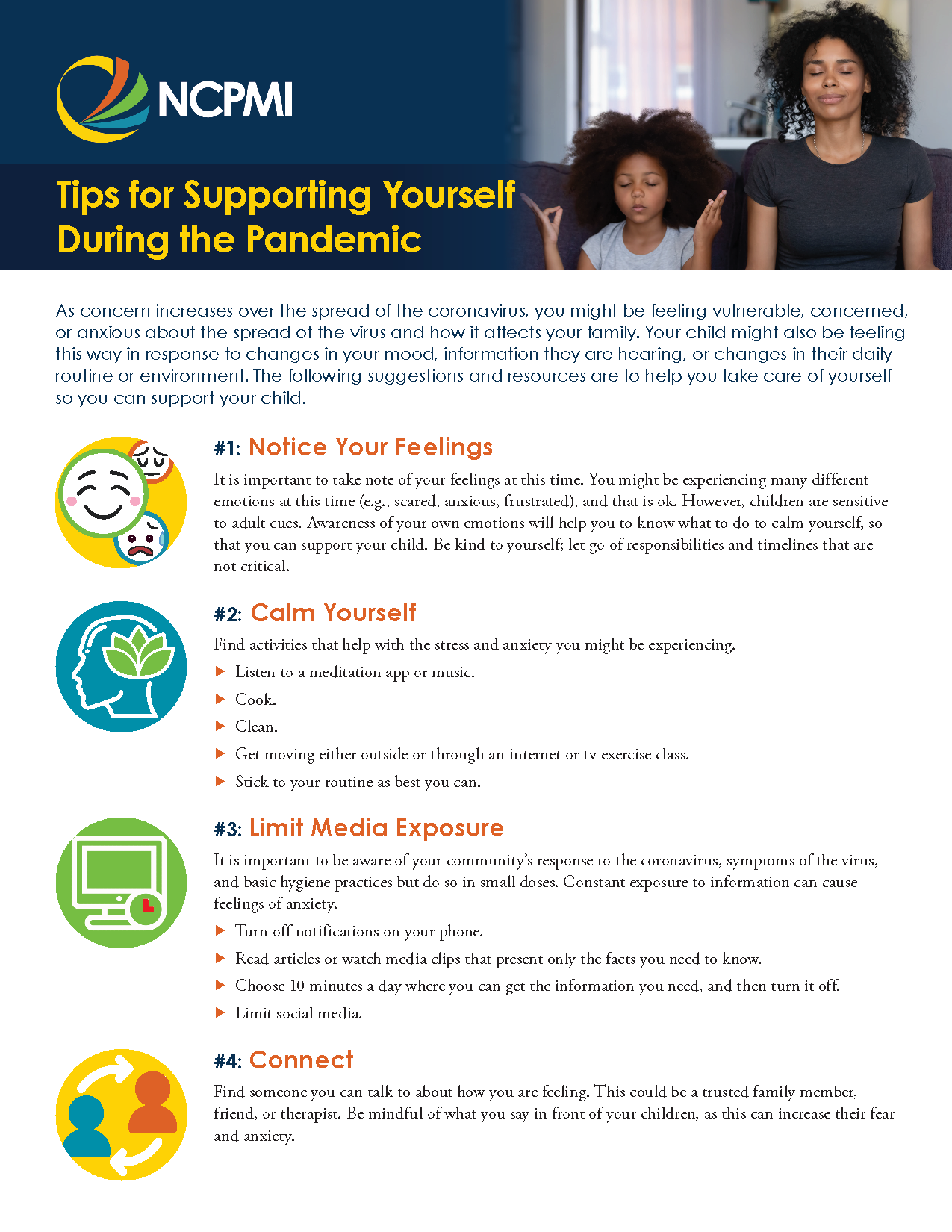
This tipsheet includes suggestions and resources to help you take care of yourself so you can support your child.
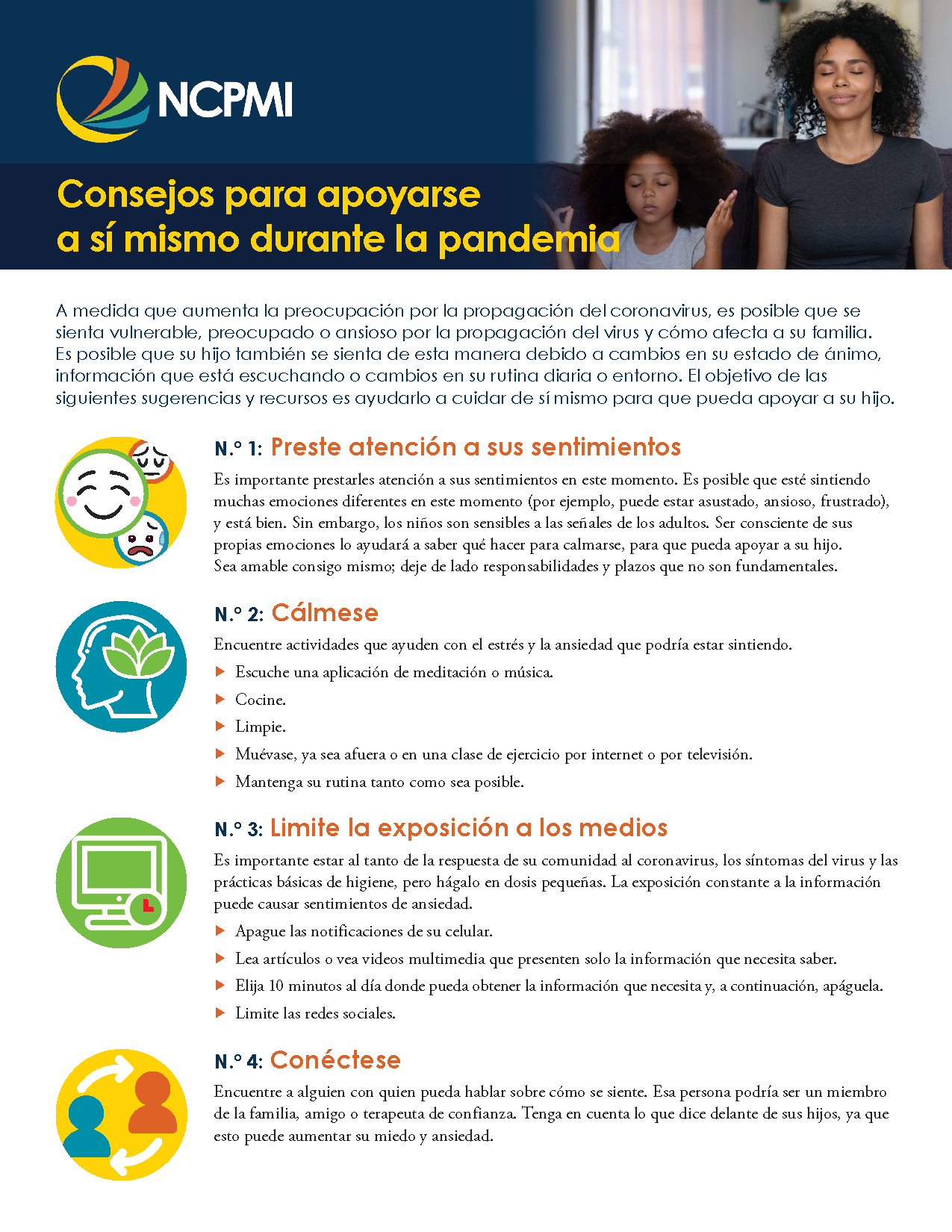
This tipsheet includes suggestions and resources to help you take care of yourself so you can support your child.
As early childhood programs work on re-opening after a long closure, they can use these online communication and phone scripts to help guide your conversations with families.
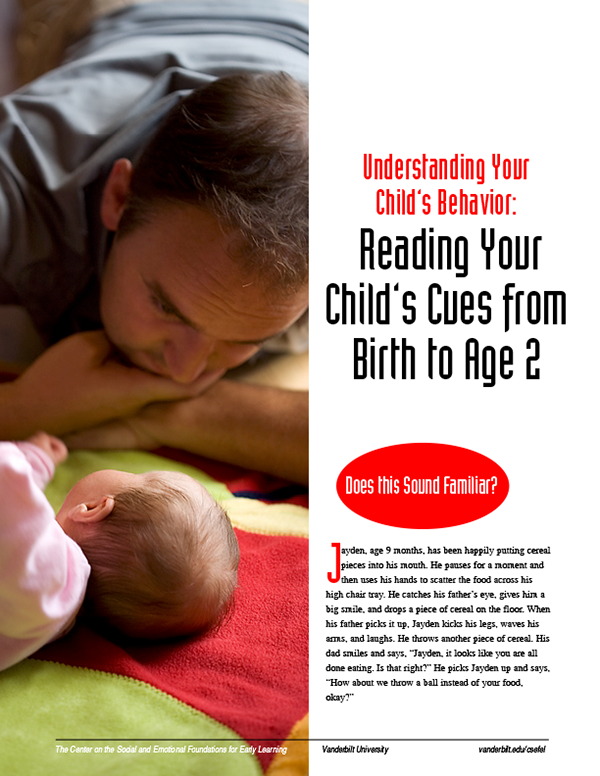
Babies and toddlers experience and express thoughts and feelings. Often they communicate their strong feelings through behaviors that adults understand right away. Other times, very young children’s behavior can be confusing or even frustrating to the adults who care for them. Being able to stay calm, make a good guess at what the behavior might mean, and then respond helps children understand that they are powerful communicators. Over the long-term, this helps children learn how to connect with others in ways that are healthy and respectful?a skill they?ll use for life.
This resource describes Motivational Interviewing and offers strategies that can be used in Pyramid Model coaching.
Guide to using visuals and schedules for supporting children. Includes templates for visual cards and first/then boards.