Program-Wide PBS and School-Wide PBIS Crosswalk
The purpose of this document is to provide a brief description of the similarities and differences between two variations of multi-tiered positive behavior support systems.
The purpose of this document is to provide a brief description of the similarities and differences between two variations of multi-tiered positive behavior support systems.
Implementing the Pyramid Model with fidelity and achieving positive outcomes for children and their families requires that administrators understand their roles in the implementation process. Every administrative decision impacts program quality and sustainability. This issue brief underscores the importance of facilitative administrative practices that provide sustained commitment, timely training, competent coaching, the use of process and outcome data for decision-making, and the development of policies and procedures that are aligned with high-fidelity implementation (July, 2009).
By Fox, L., & Hemmeter, M. L. (2009). In W. Sailor, G. Dunlap, G. Sugai, and R. Horner (Eds.), Handbook of Positive Behavior Support (pp.177-202). New York: Springer. (This book is available for purchase from the Springer website).
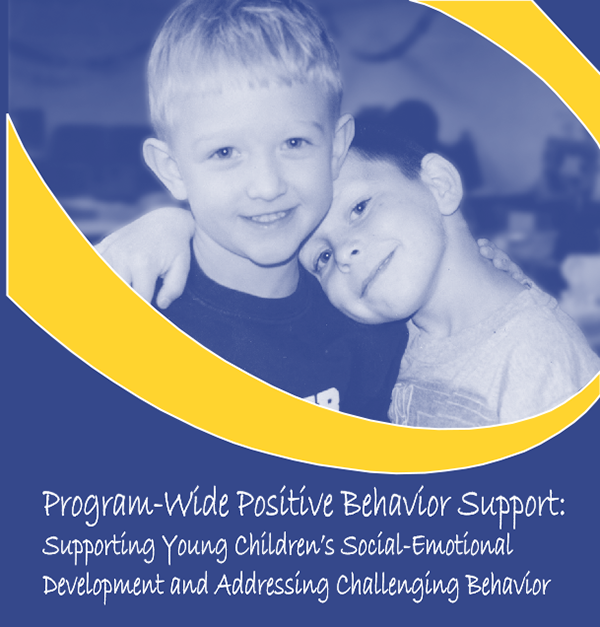
This booklet provides a report on the program-wide implementation of the “Teaching Pyramid” within a Head Start Program. The Southeast Kansas Community Action Program (SEK-CAP) provides information on the implementation of the model and the outcomes for the children, families, teachers, and program.



This website was made possible by Cooperative Agreement #H326B220002 which is funded by the U.S. Department of Education, Office of Special Education Programs. However, those contents do not necessarily represent the policy of the Department of Education, and you should not assume endorsement by the Federal Government. This website is maintained by the University of South Florida. Contact webmaster.