Group Coaching to Support Pyramid Model Implementation: A Virtual Tour of Materials
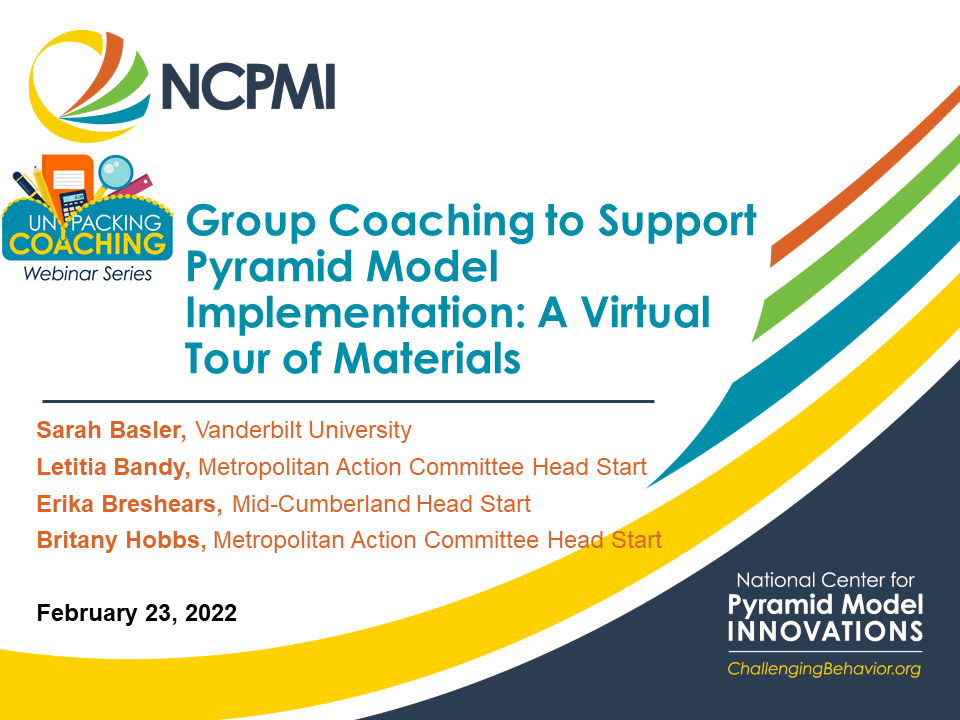
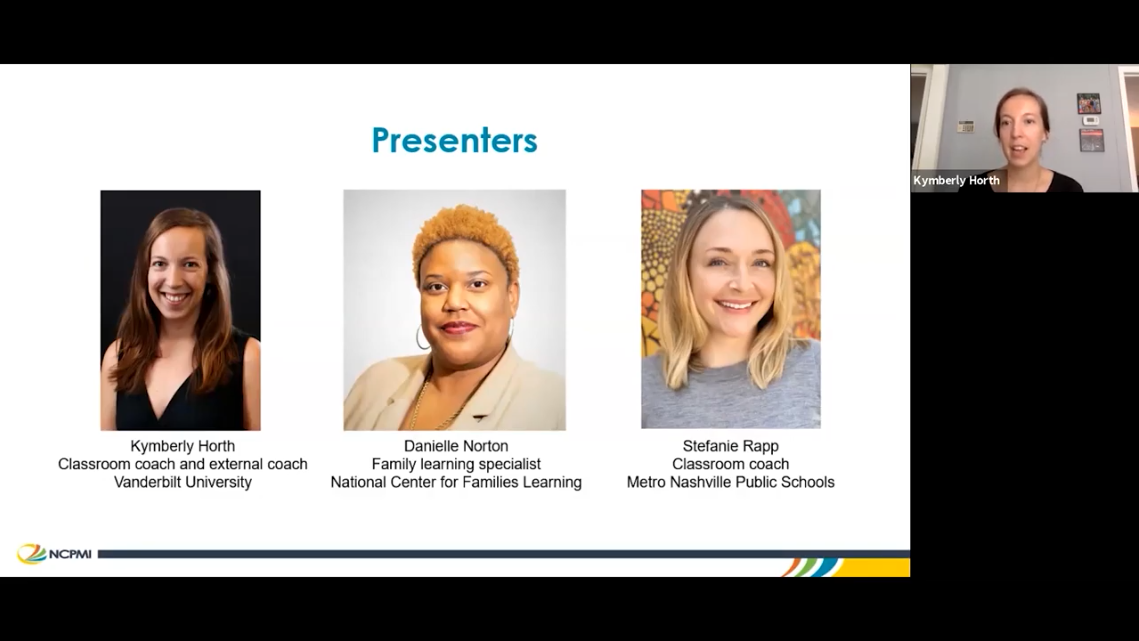
This webinar will highlight the newly released group coaching materials available through the National Center for Pyramid Innovations. Presenters will provide a virtual tour of the package. Materials are included for 8 group coaching meetings for practitioners to learn about: social-emotional teaching practices, planning to implement a practice, sharing video, reflection, and providing feedback to peers on their use of the practices. Presenters will review the structure and sequence of the group coaching meetings and provide helpful tips for getting organized with the group coaching materials.
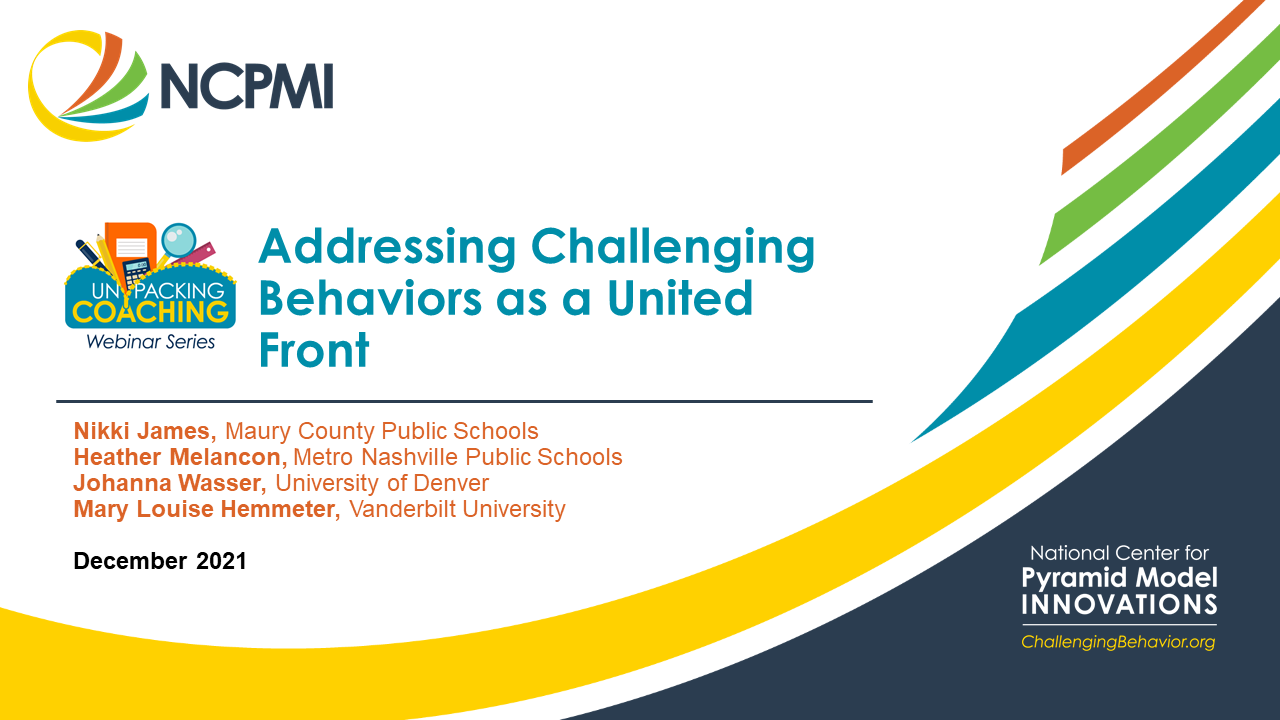

Addressing Challenging Behaviors in the Classroom (in person or virtual) as a United Team

Coaching teachers to use universal Pyramid Model practices can have a positive impact on both teachers? and young children’s daily experiences in early childhood classrooms. What if there are children in the classroom who need a little more help to follow routines, understand expectations, regulate their emotions, or connect to their peers? Join our panelists as they discuss their experiences and processes for working with teachers to individualize Pyramid Model practices in their classrooms.

Coaching Conversations: Sharing the Teacher’s Perspective

In this webinar, ML Hemmeter will lead a discussion with a panel of teachers who have been coached using the Practice-Based Coaching framework. Join us as they share their perspectives implementing the Pyramid Model in early childhood settings and insights on how coaching supported their teaching practice.

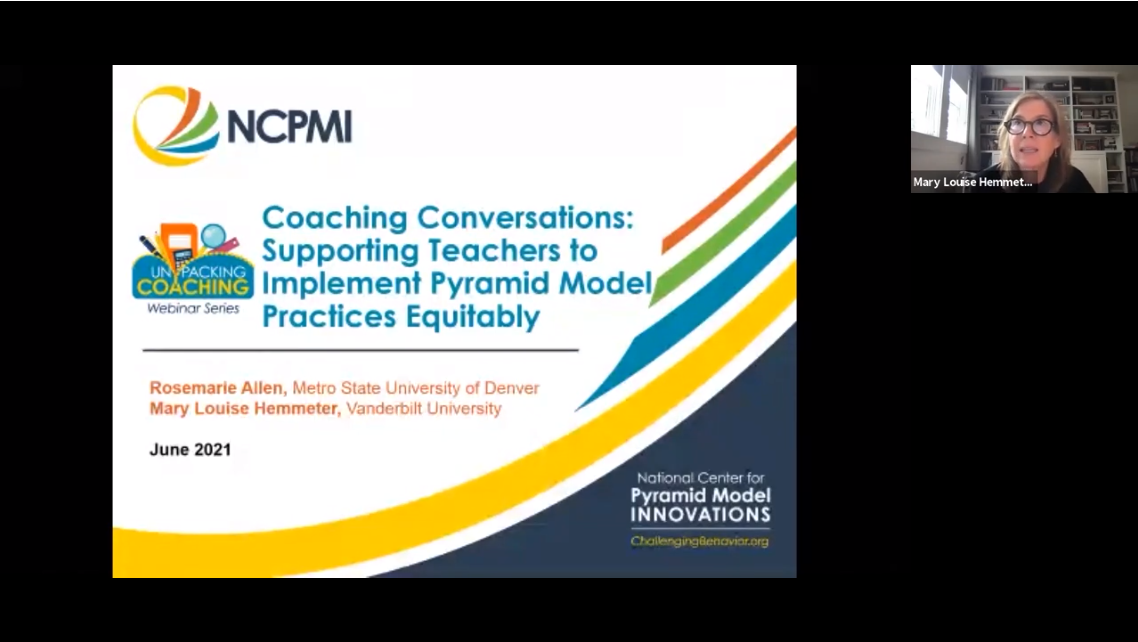
Coaching Conversations: Supporting Teachers to Implement Pyramid Model Practices Equitably

Coaches work collaboratively with teachers to support them in implementing Pyramid Model practices. Pyramid Model practices are designed to support young children’s development of social-emotional competence including emotional literacy, problem-solving, communicate their wants and needs, and peer relationship skills and to decrease the likelihood they will engage in challenging behavior. How do coaches support teachers to ensure they are using Pyramid Model practices to address the individual needs of each and every child in their classroom? In this webinar, panelists will discuss ways coaches can support teachers to implement Pyramid Model practices equitably.

Using Practice-Based Coaching in a Group Coaching Format

Practice Based Coaching (PBC) can be delivered in a variety of ways to build teachers? capacity to implement Pyramid Model practices in their classroom. In past webinars, we discussed how PBC is delivered individually. In this webinar, we invite a coach with experience using PBC in a group format. Panelists will discuss the benefits, the structure and process, and share teacher perspectives to using this approach.

Using PBC to Coach Early Interventionists

Practice-Based Coaching (PBC) is an evidence-based coaching approach that supports practitioners to use effective teaching practices to promote positive child outcomes. PBC can be implemented in a variety of settings, including classrooms and center-based programs, family childcare homes, and early intervention and home-based programs. This webinar will outline the components of PBC and describe how to use PBC to coach early interventionists who are working with families in homes. The panelists will focus on using PBC to coach early interventionists to support families in enhancing their child’s social emotional competence. Panelists will share their experiences using PBC to coach early interventionists.

Coaching in a Virtual World

Due to the COVID pandemic, coaches and coachees have needed to adapt their coaching delivery and social-emotional teaching practices to a virtual format. Some of these practices are easier to adapt than others, leaving coaches and coachees wondering what to do. This webinar discusses how Pyramid Model practices can be used in virtual learning and strategies for implementing coaching of teachers virtually, including how to conduct observations and collect information on coachee practices.

Coaching With Intention: Making the Most of the PBC Cycle

When using PBC, coaches use strategies to build collaborative partnerships with coachees, conduct focused observations, guide reflection and provide feedback to guide coachees in meeting their professional goals. For coaching to work, there are specific evidence-based practices coaches use. In addition, coaches must learn to provide different levels of support based on individual coachees? needs. Fidelity, or the ability to use these evidence-based coaching practices the way they are meant to be used, is essential to delivering coaching effectively. For coaching to be effective, it must be delivered with fidelity. In this webinar, panelists will discuss the tools you can use to ensure you are using PBC with fidelity.

Delivering Coaching from A Distance

Distance coaching has been an option to address challenges in finding time and opportunities to meet. These challenges are especially evident in family childcare and rural settings. Due to our country’s recent events, many coaches are finding ways to do their coaching from a distance. We discuss distance coaching as one way to address this issue. We also discuss the successes and challenges of distance coaching through our panelists? experiences, and how program leadership teams and coaches can implement specific supports to make distance coaching successful.

All Hands on Deck: Defining the Role of Mental Health Consultation and Supports Within the Coaching Context

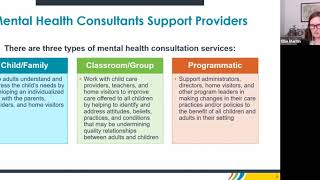
Infant and Early Childhood Mental Health Consultation (IECMHC) is emerging as an evidence-based intervention for supporting young children’s social and emotional development and addressing challenging behaviors. IECMHC aims to improve the ability of staff, families, programs, and systems to prevent, identify, treat and reduce the impact of mental health problems among children from birth to age 6 and their families. IECMHC occurs within the context of a collaborative relationship between a consultant with mental health expertise and early care and education provider, and/or a family member (Cohen & Kaufmann, 2000). In this webinar, we explain the relationship and role between IECMH consultants and Pyramid Model coaches. We also discuss how coaches can identify when they might need the support of a mental health consultant, and how to locate resources when the staff, families, or children they are working with require access to mental health supports.