Classroom Practitioner Coaching Guide

This manual provides a valuable resource that is full of tips and guidance for coaches as they implement practitioner coaching with classroom teachers.
This manual provides a valuable resource that is full of tips and guidance for coaches as they implement practitioner coaching with classroom teachers.
The Community-Wide Benchmarks of Quality (CW-BoQ) was developed to provide Community Leadership Teams (CLT) with a tool to identify the critical elements for implementing the Pyramid Model for Promoting the Social and Emotional Competence of Infants and Young Children within early childhood education and care programs across the community. This tool might be used by a regional entity that has oversight for early childhood education programs in an area (e.g., county, service district), by a school district or Head Start grantee that has classrooms across multiple schools and programs, or by a community-level cross-sector team that has been formed to implement and scale-up Pyramid Model implementation.
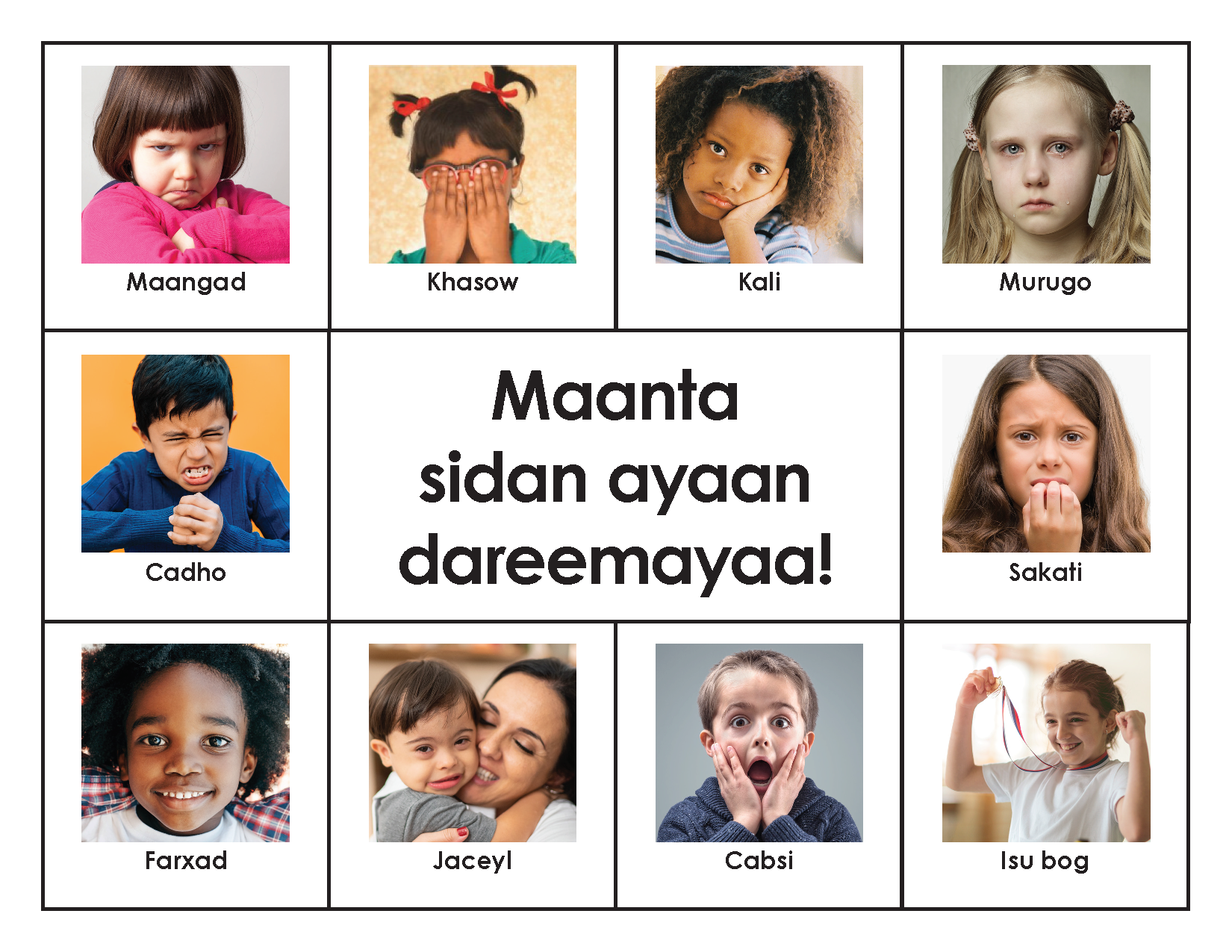
The Feeling Faces assist children with understanding their feelings and the feelings of others. It is important to teach children words to use to express feelings in replace of the use of challenging behavior. The feeling faces that follow can be used in a variety of ways to help children learn social emotional skills around use of emotional literacy and vocabulary.
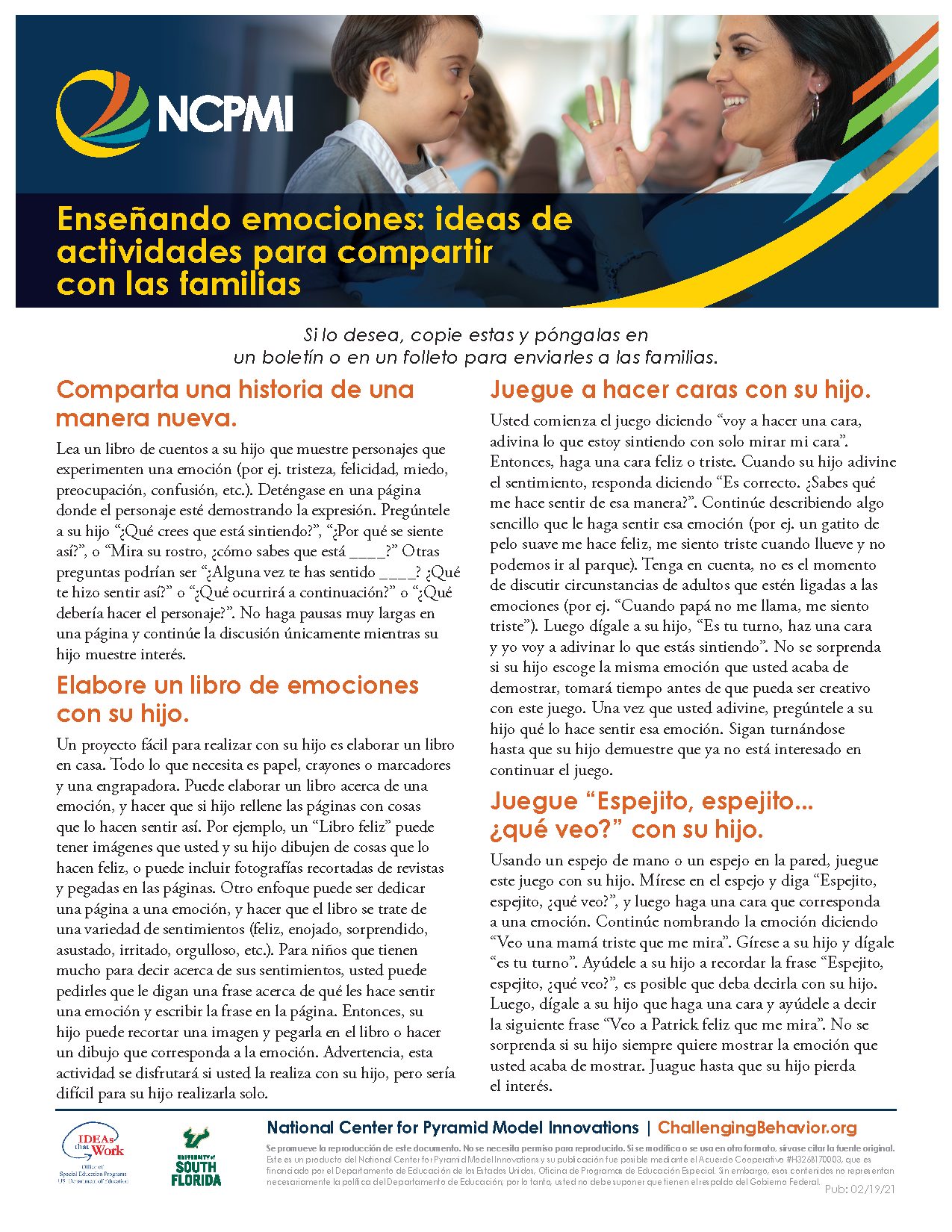
Handout with ideas for teaching emotional literacy at home.

Handout with ideas for teaching emotional literacy at home.
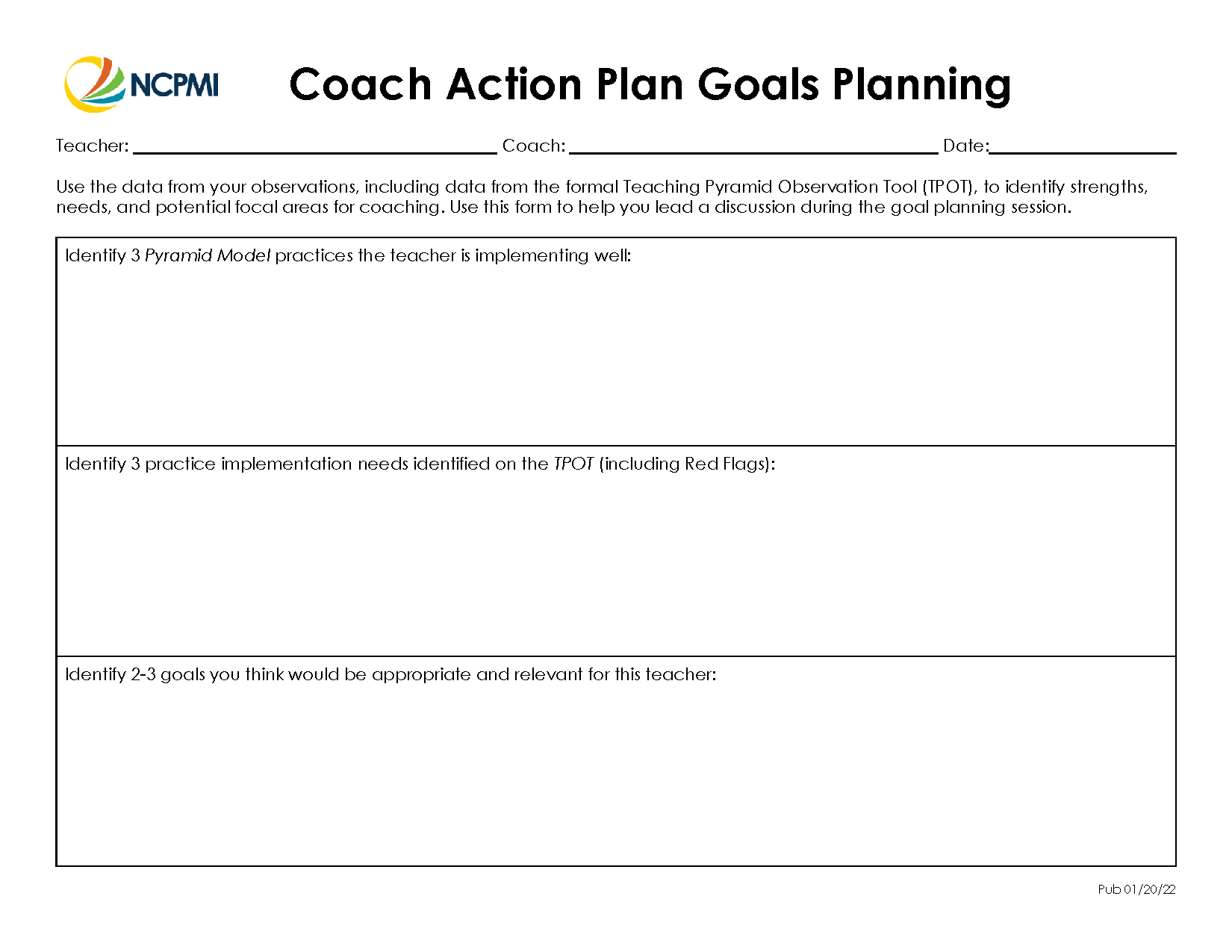
Used by the coach to reflect on TPOT observation and what goals might be suggested to the coachee during the goal plannning session.
This Roadmap is a guide to implementing widespread use of the Pyramid Model.
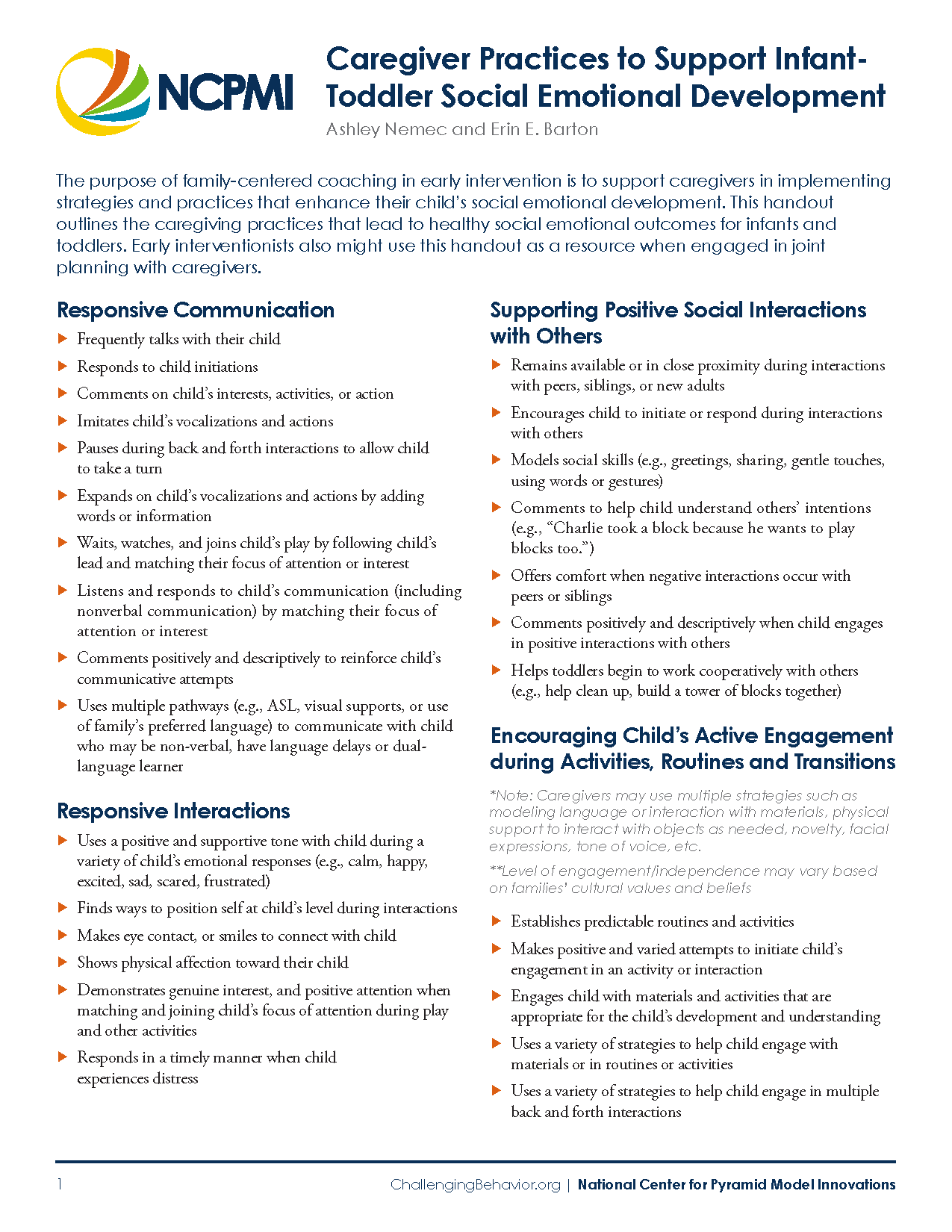
This handout outlines the caregiving practices that lead to healthy social-emotional outcomes for infants and toddlers. Early interventionists might use this handout as a resource when engaged in joint planning with caregivers.
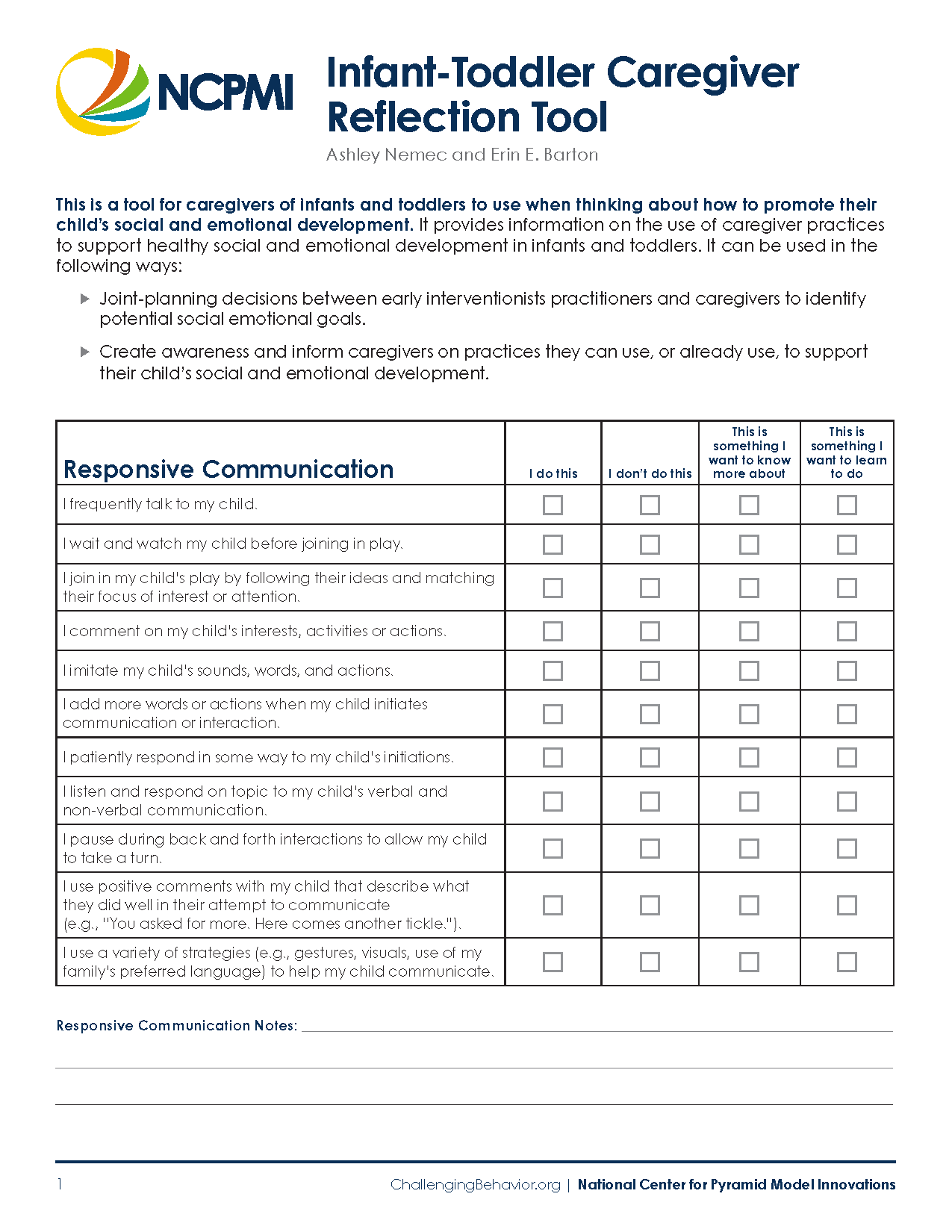
This tool provides information on the use of caregiver practices to support healthy social emotional development in infants and toddlers. Early interventionists and caregivers can use this tool to build awareness and inform caregivers about what practices they currently use or can use to support their child’s healthy social emotional development. This tool might also be used to aid joint planning decisions when identifying social emotional goals with caregivers.
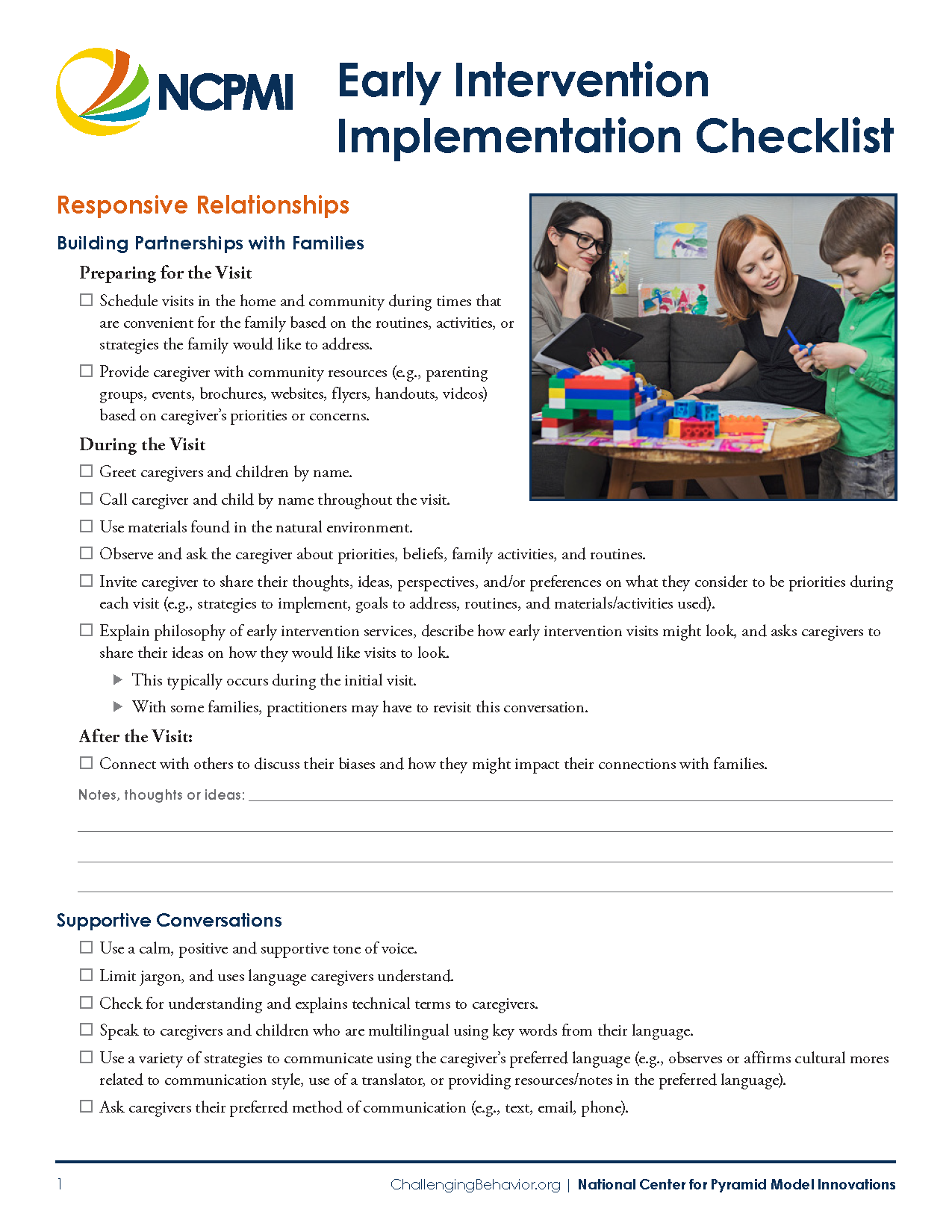
The Early Intervention Implementation Checklist is designed to align with the Early Intervention Pyramid Practices Fidelity Instrument (EIPPFI). Coaches and early interventionists can use this tool to support early interventionists’ self-reflection of the implementation of Pyramid practices, and prepare for shared goals and action planning.



This website was made possible by Cooperative Agreement #H326B220002 which is funded by the U.S. Department of Education, Office of Special Education Programs. However, those contents do not necessarily represent the policy of the Department of Education, and you should not assume endorsement by the Federal Government. This website is maintained by the University of South Florida. Contact webmaster.