Action Plan Quality Checklist
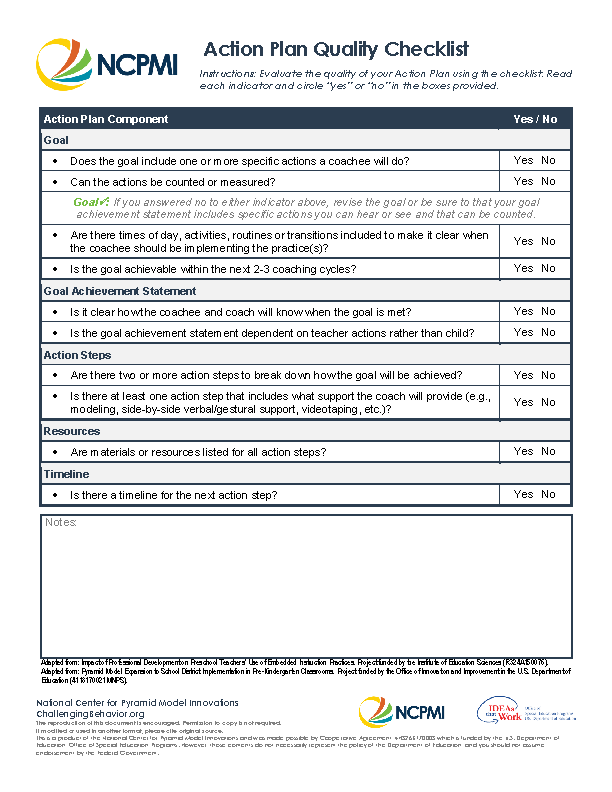
This checklist can be used by practitioner coaches and practitioners as a tool to write a high quality action plan.
This checklist can be used by practitioner coaches and practitioners as a tool to write a high quality action plan.
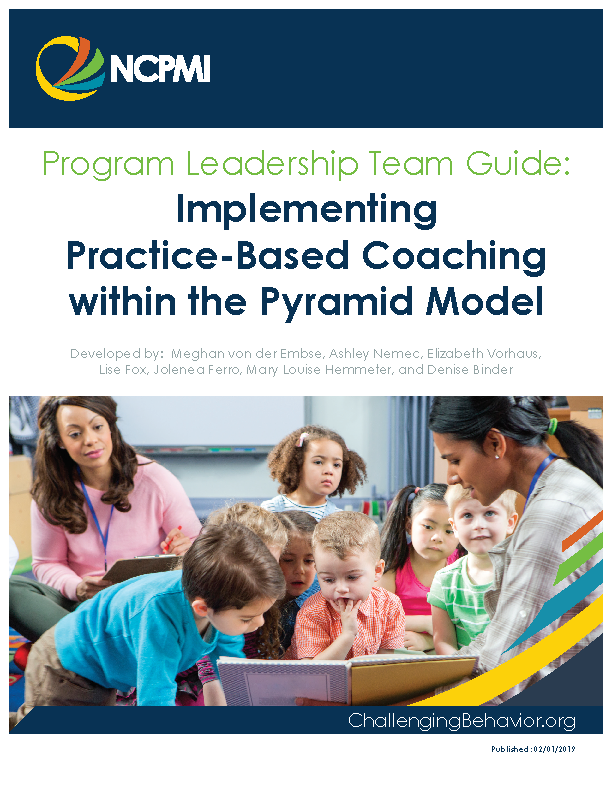
This resource provides Pyramid Model leadership teams with guidance for implementing Practice-Based Coaching within their programs and developing plans for three essential elements of coaching: 1) Getting Ready for Coaching; 2) Enacting Coaching; and 3) Evaluating Coaching.
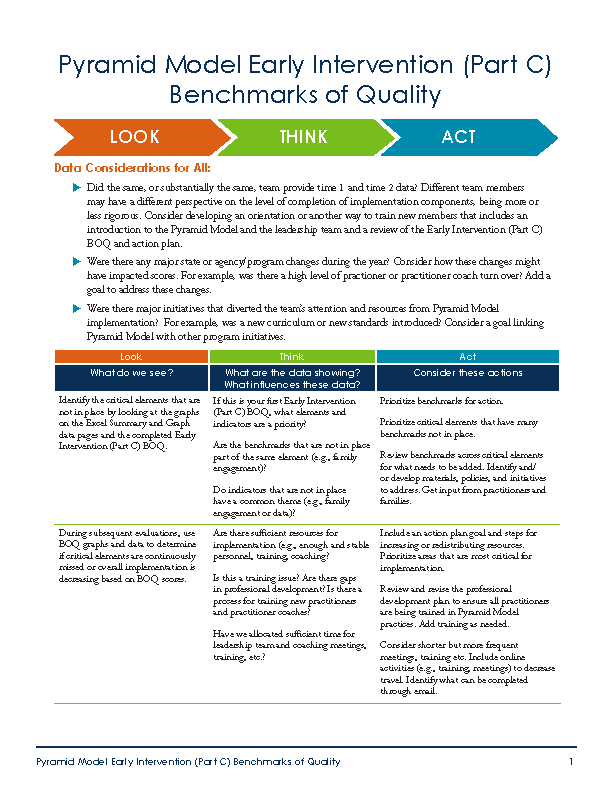
The Leadership Team can use this document to guide the three steps of data review and decision-making (Look-Think-Act). The guide provides the information on the data to review, the questions to consider, and potential actions. This guide is used with the data summaries of the Pyramid Model Early Intervention (Part C) Benchmarks of Quality.
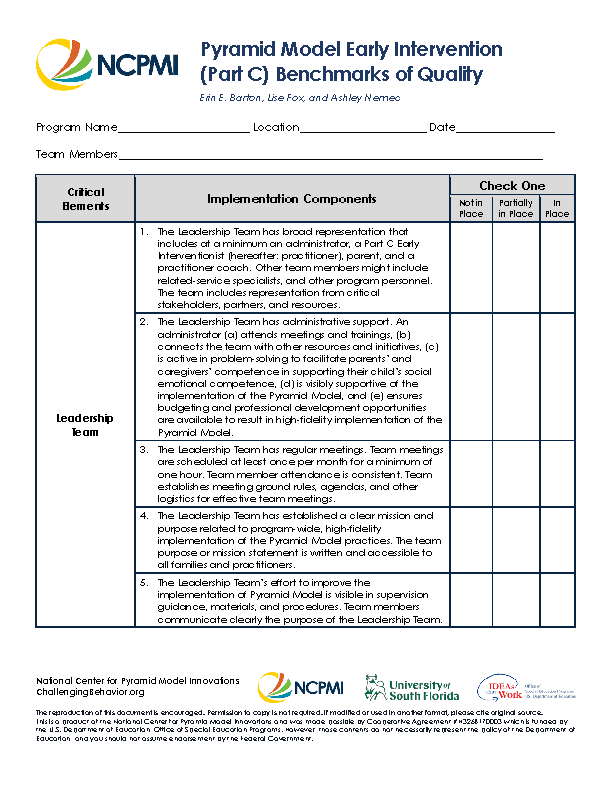
Authors: Erin E. Barton, Lise Fox, and Ashley Nemec (2018). The Pyramid Model Early Intervention (Part C) Benchmarks of Quality (EI BoQ) is designed to help agencies/programs evaluate their progress toward implementing the Pyramid Model program-wide. The tool was revised in 2018.
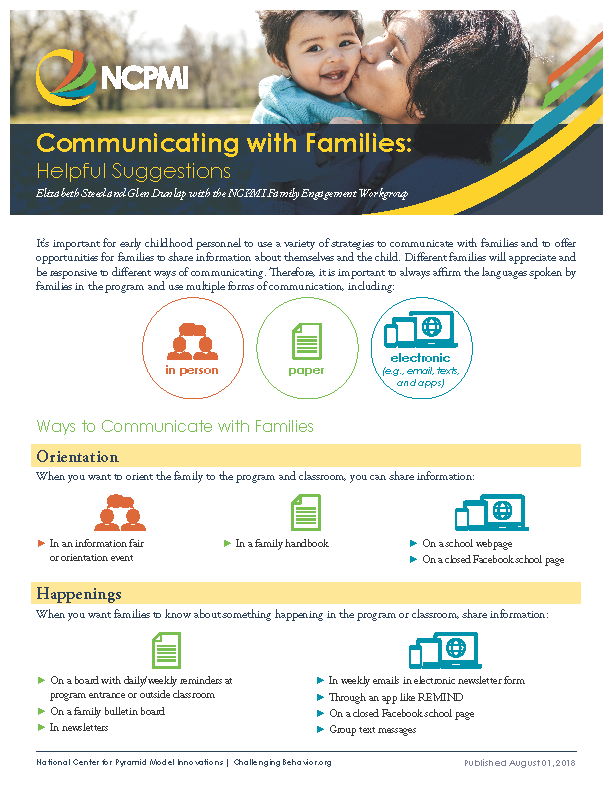
Infographic about various communication strategies for early childhood programs to communicate with families.
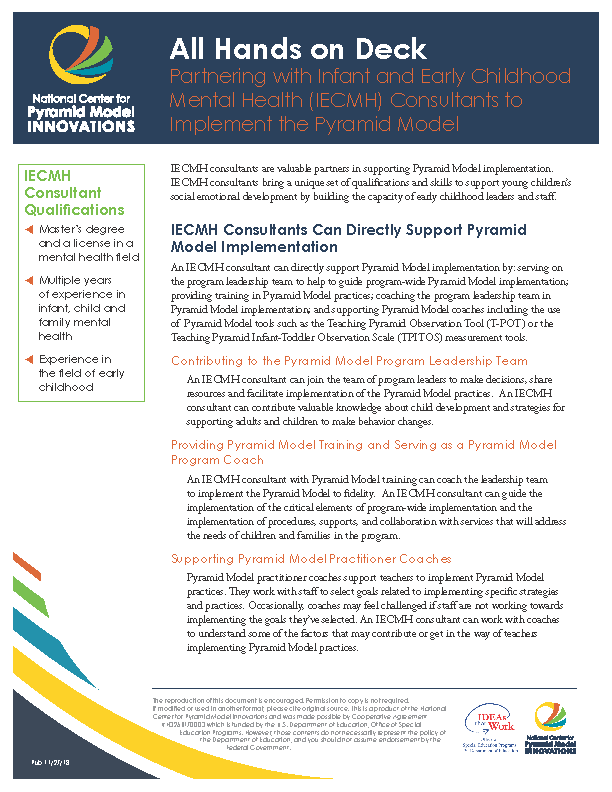
This fact sheet describes how programs might partner with IECMH consultants to implement the Pyramid Model. The fact sheet provides detailed information on how the IECMHC can contribute to leadership team and program activities.
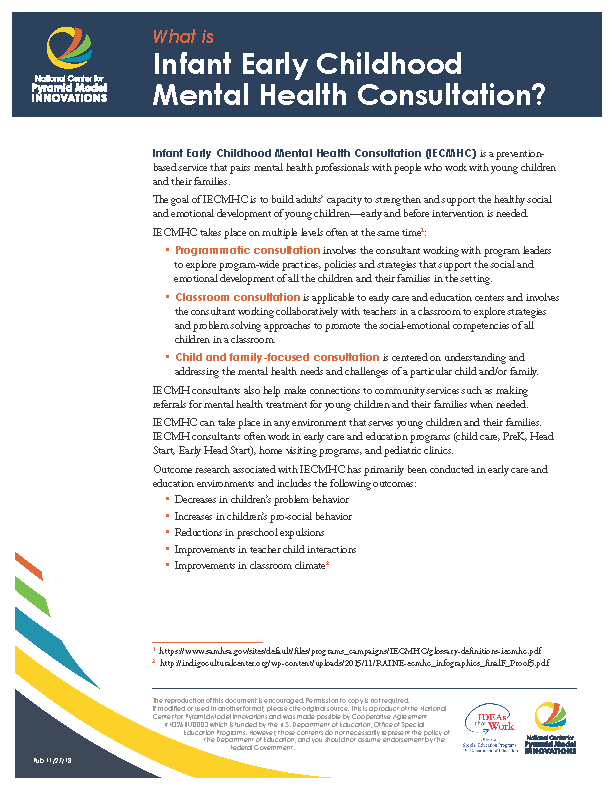
What is Infant Early Childhood Mental Health Consultation and what services do they provide.
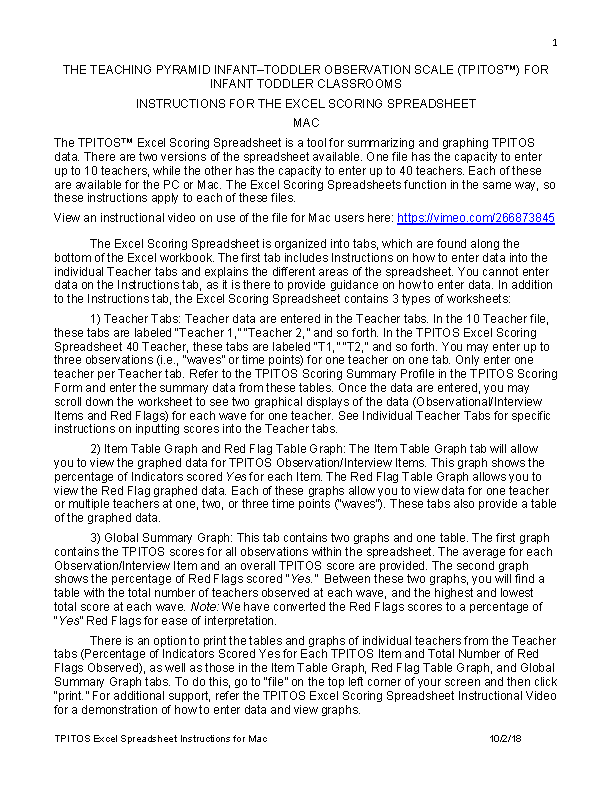
The TPITOS™ Excel Scoring Spreadsheet is a tool for summarizing and graphing TPITOS data.
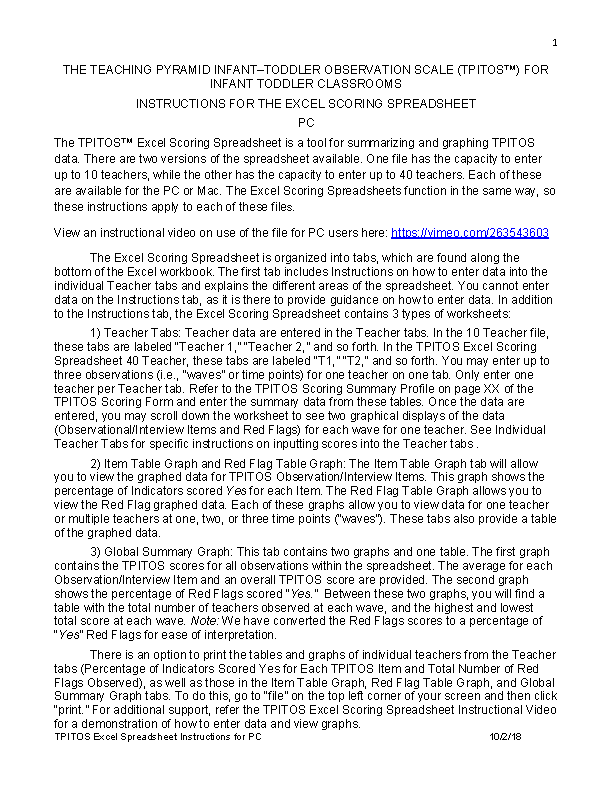
The TPITOS™ Excel Scoring Spreadsheet is a tool for summarizing and graphing TPITOS data.

This document was designed for programs to use with families when the use of PTR-YC is being considered for a particular child. It outlines the PTR-YC process in family-friendly language and provides information regarding where the PTR-YC process fits within the Pyramid Model. It also discusses why a family’s child might benefit from individualized social emotional supports and how the family plays an important role as a member of the PTR-YC team.



This website was made possible by Cooperative Agreement #H326B220002 which is funded by the U.S. Department of Education, Office of Special Education Programs. However, those contents do not necessarily represent the policy of the Department of Education, and you should not assume endorsement by the Federal Government. This website is maintained by the University of South Florida. Contact webmaster.