Preventing Suspensions and Expulsions in Early Childhood Settings: A Program Leader’s Guide to Supporting All Children’s Success
The purpose of this guide is to provide relevant, specific recommended policies and practices that are actionable and address the underlying root causes and provide effective alternatives. The recommended policies and practices are based on the most important research for eliminating suspensions and expulsions in early childhood settings and were developed with guidance from a panel of national experts.The purpose of this guide is to provide relevant, specific recommended policies and practices that are actionable and address the underlying root causes and provide effective alternatives. The recommended policies and practices are based on the most important research for eliminating suspensions and expulsions in early childhood settings and were developed with guidance from a panel of national experts. Using the interactive guide, program leaders can find resources on supporting social emotional development, reducing challenging behavior, recognizing the role of cultural differences and implicit biases, and more. The guide is intended for those most likely to make an impact and with a great need for resources: early education program leaders in center-based settings who implement policies and procedures and promote practices; however, anyone seeking to learn more about strategies for eliminating suspension and expulsion in early childhood settings can benefit from using the guide.
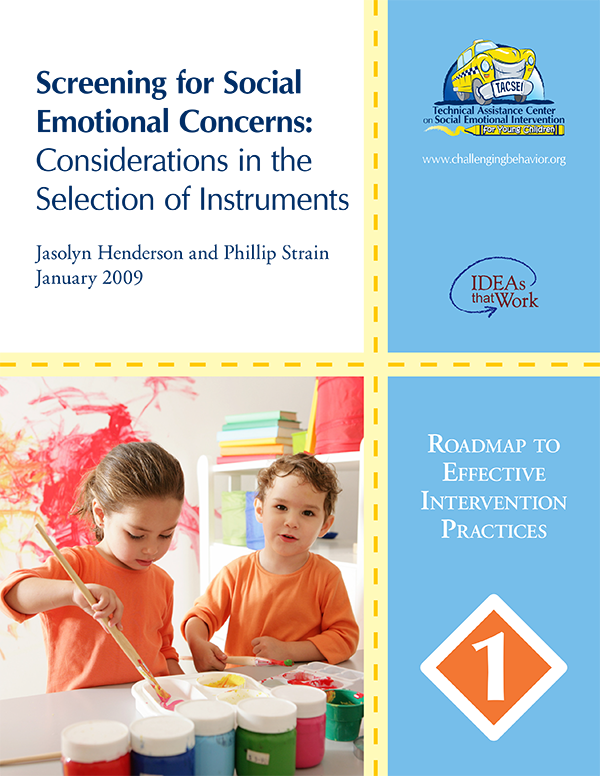
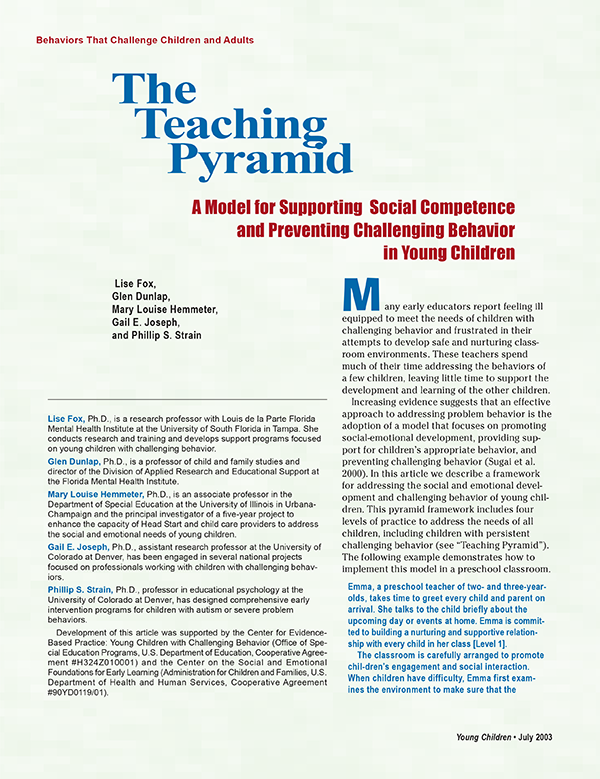
Administrator Strategies that Support High-Fidelity Implementation of the Pyramid Model for Promoting Social-Emotional Competence & Addressing Challenging Behavior

Implementing the Pyramid Model with fidelity and achieving positive outcomes for children and their families requires that administrators understand their roles in the implementation process. Every administrative decision impacts program quality and sustainability. This issue brief underscores the importance of facilitative administrative practices that provide sustained commitment, timely training, competent coaching, the use of process and outcome data for decision-making, and the development of policies and procedures that are aligned with high-fidelity implementation (July, 2009).

Promoting Social-Emotional Competence (Downloadable)

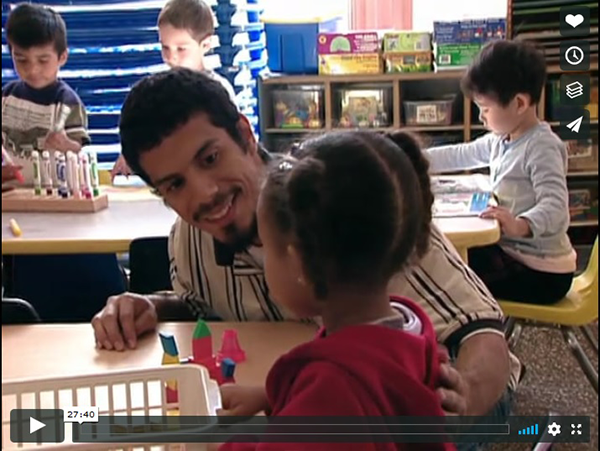
This video was designed to provide a foundation for understanding the Pyramid Model as a framework for promoting young children?s social and emotional development and preventing and addressing challenging behavior. This video is a perfect way to be introduced to and become familiar with the Pyramid Model framework and is available with both English and Spanish open captioning. (26 min)

Promoting Social-Emotional Competence

This video was designed to provide a foundation for understanding the Pyramid Model as a framework for promoting young children?s social and emotional development and preventing and addressing challenging behavior. This video is a perfect way to be introduced to and become familiar with the Pyramid Model framework and is available with both English and Spanish open captioning. (26 min)

Practical Strategies for Teaching Social-Emotional Skills (Downloadable, Captioned)

This 28-minute video highlights strategies and approaches that early childhood personnel and families can use to systematically target social-emotional supports that build young children’s skills in a variety of areas including making friends, problem solving, asking an adult for help, talking about feelings, and managing their emotions. The strategies rely on a 3-stage approach to supporting young children’s social-emotional development by (1) introducing and practicing a skill, (2) building fluency and competency with a skill, and (3) ensuring there is maintenance of a skill. The video provides multiple examples of early childhood personnel demonstrating how to introduce a skill using a variety of tools, practice a skill through planned and unscripted activities, and maintain the skill by recognizing children for using the skill on their own.

Practical Strategies for Teaching Social-Emotional Skills

This 28-minute video highlights strategies and approaches that early childhood personnel and families can use to systematically target social-emotional supports that build young children?s skills in a variety of areas including making friends, problem solving, asking an adult for help, talking about feelings, and managing their emotions. The strategies rely on a 3-stage approach to supporting young children’s social-emotional development by (1) introducing and practicing a skill, (2) building fluency and competency with a skill, and (3) ensuring there is maintenance of a skill. The video provides multiple examples of early childhood personnel demonstrating how to introduce a skill using a variety of tools, practice a skill through planned and unscripted activities, and maintain the skill by recognizing children for using the skill on their own.?

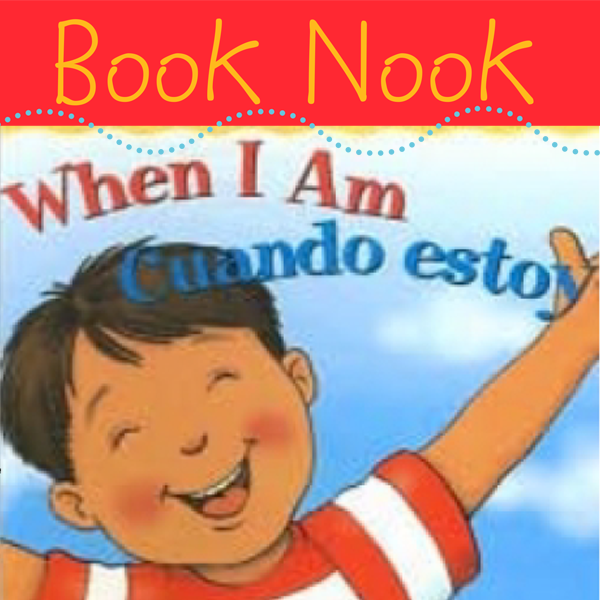
When I Am/Cuando estoy

These easy-to-use guides were created especially for teachers/caregivers and parents to provide hands-on ways to embed social emotional skill building activities into everyday routines. Each book nook is comprised of ideas and activities designed around popular children’s books