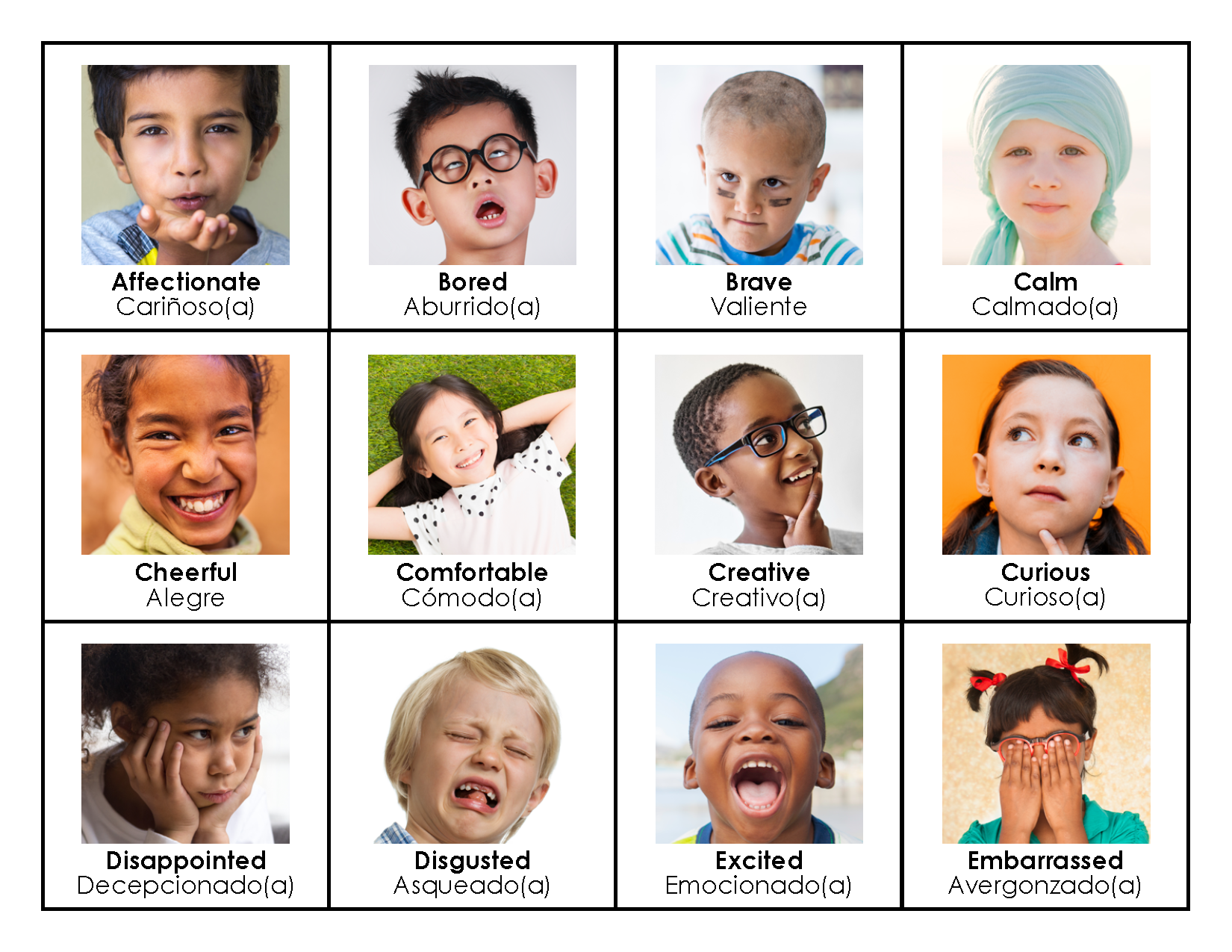
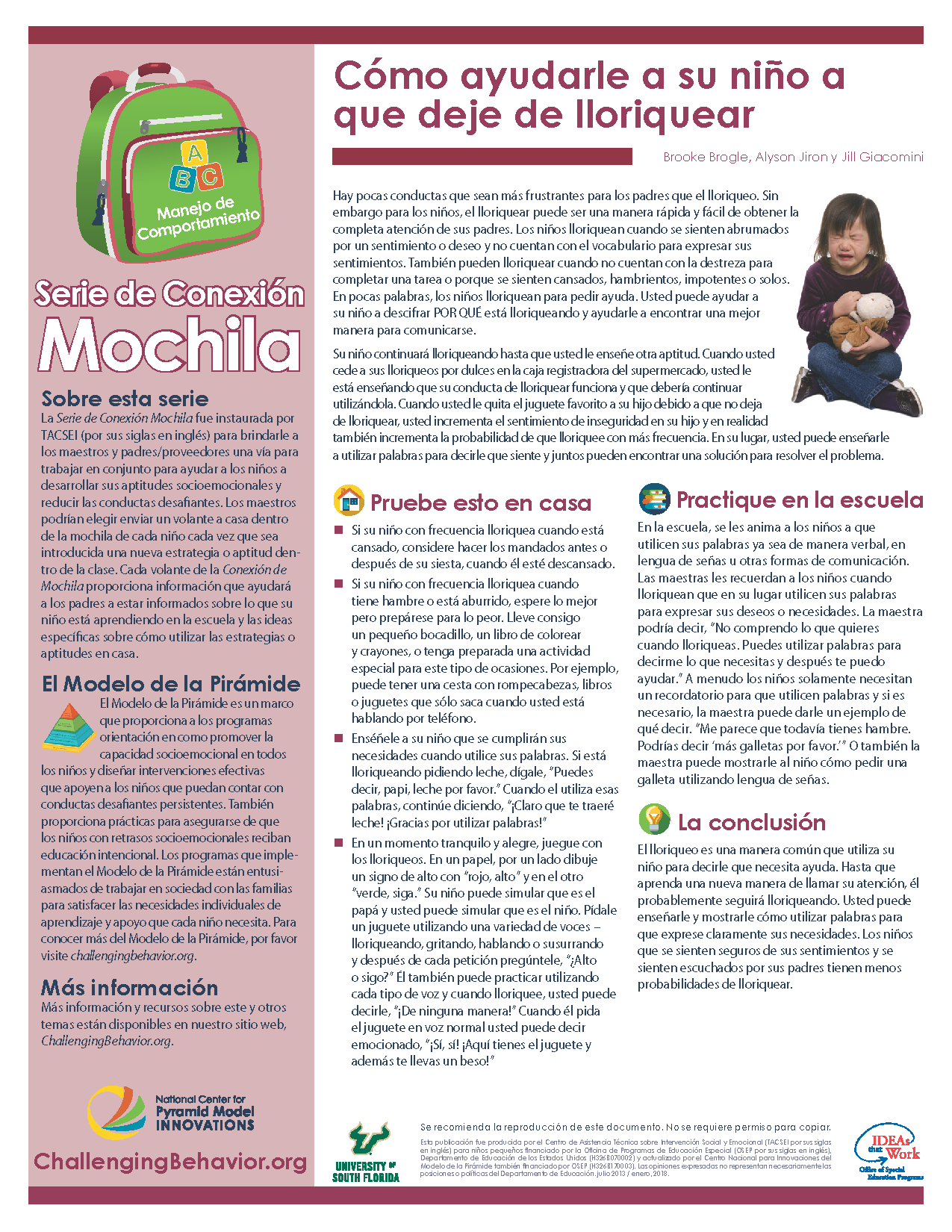
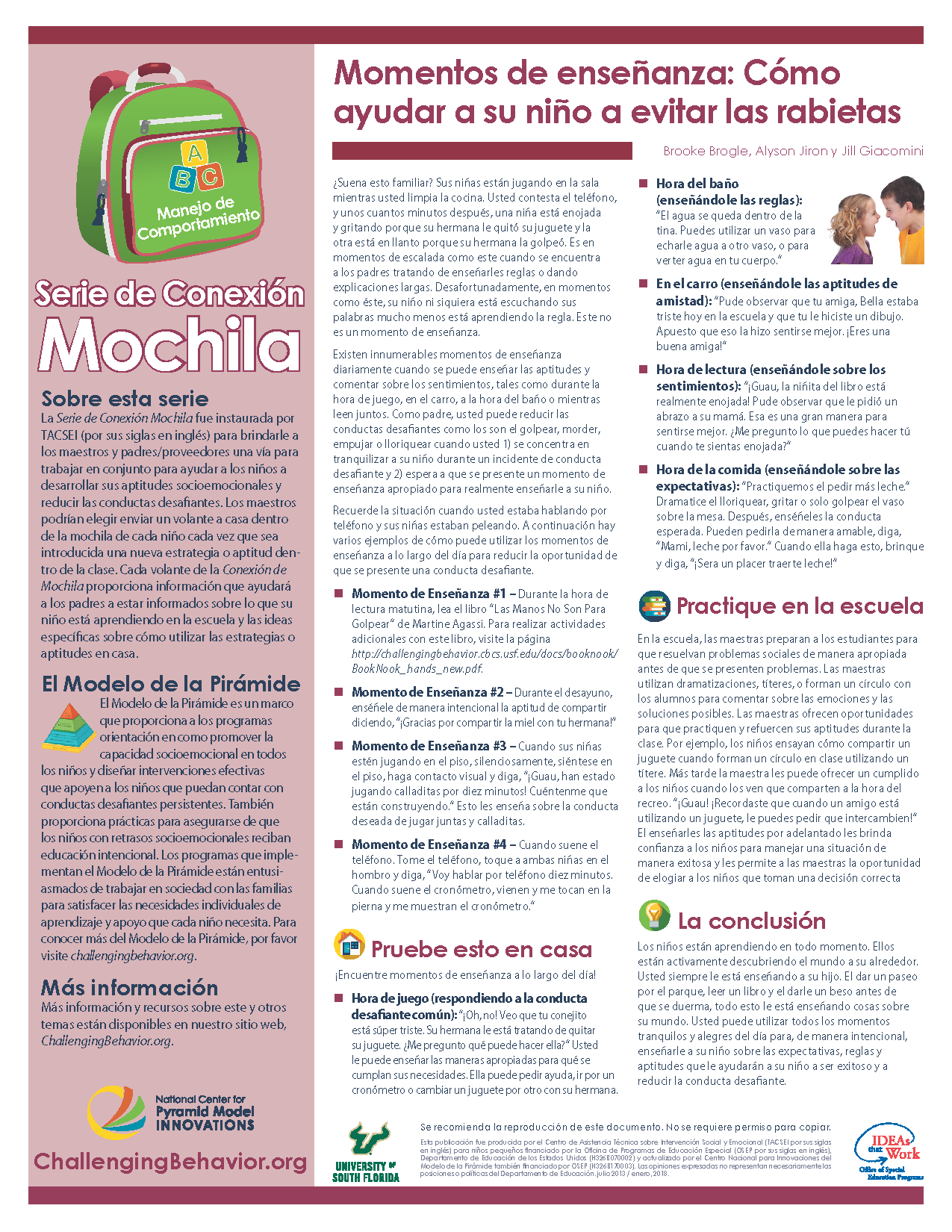
Feeling Wheel (English-Spanish)

The Feeling Faces assist children with understanding their feelings and the feelings of others. It is important to teach children words to use to express feelings in replace of the use of challenging behavior. The feeling faces that follow can be used in a variety of ways to help children learn social emotional skills around use of emotional literacy and vocabulary.

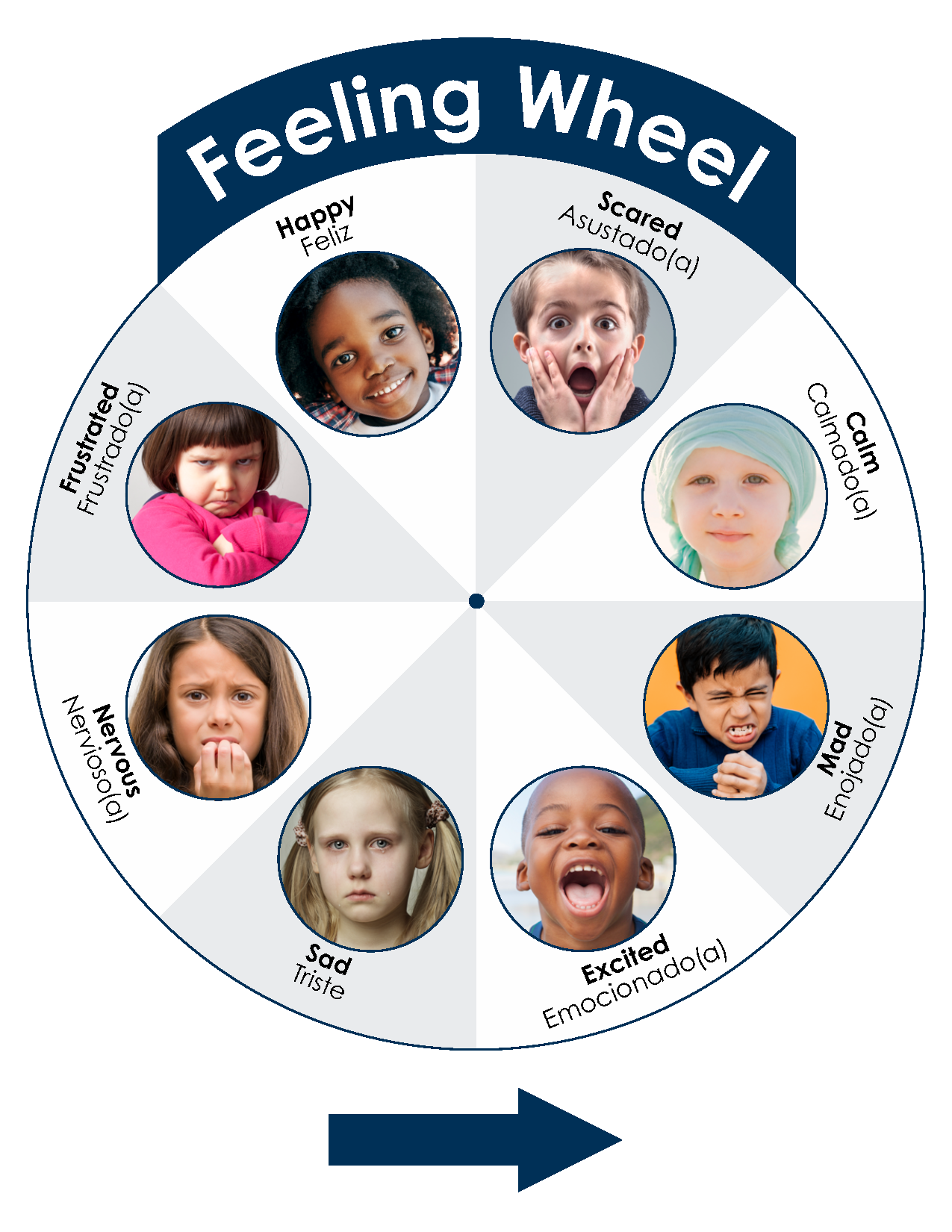
Feeling Faces: Large Cards (English-Spanish, English Intro)

Feeling Faces Large Cards thumbnail

The Feeling Faces assist children with understanding their feelings and the feelings of others. It is important to teach children words to use to express feelings in replace of the use of challenging behavior. The feeling faces that follow can be used in a variety of ways to help children learn social emotional skills around use of emotional literacy and vocabulary.

Feeling Faces: Cards (English-Spanish, English Intro)

The Feeling Faces assist children with understanding their feelings and the feelings of others. It is important to teach children words to use to express feelings in replace of the use of challenging behavior. The feeling faces that follow can be used in a variety of ways to help children learn social emotional skills around use of emotional literacy and vocabulary.

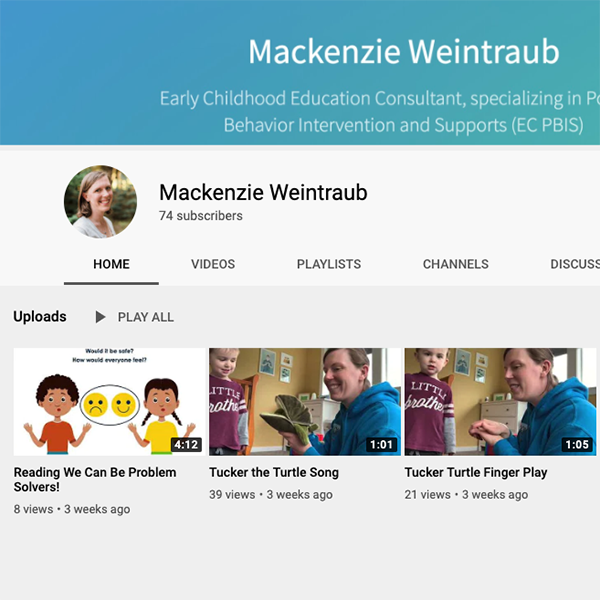
Mackenzie Weintraub’s YouTube Channel

The YouTube channel is a collection of videos for supporting young children’s social/emotional development. The videos explain or show how to use a variety of Pyramid Model practices and tools from NCPMI.

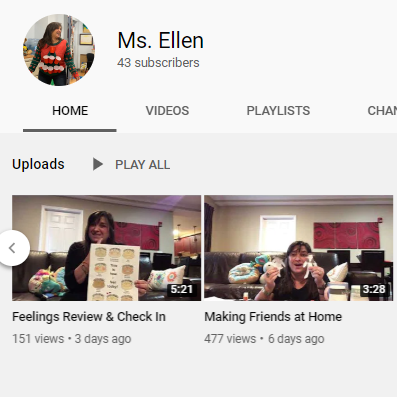
Ms. Ellen’s YouTube Channel

This Youtube Channel features Ms. Ellen, a coach supporting Pyramid Model Implementation at HOPES Community Action Partnership, Incorporated (HOPES CAP, Inc.). These videos highlight the ways we can connect with children and families via distance technology, and help families and children access social emotional supports and skills at home.

Program-Wide Implementation of Pyramid Model Practices in Early Intervention/Part C

Early Intervention thumbnail

The National Center for Pyramid Model Innovations has developed a framework, practices and tools to support implementation of the Pyramid Model by Part C, Early Intervention programs. This webinar describes the framework, critical elements, practices, and fidelity tools that can be used to support program-wide implementation and early interventionists? practices. The program-wide implementation framework and critical elements were designed to be implemented within the multiple types of service delivery models used across Early Intervention Programs and states. The early interventionists? practices are focused on building families? confidence and competence in supporting their child’s social emotional development. This webinar may be helpful for Part C state leaders, program leaders, and early interventionists to identify which program wide elements are already in place, which Pyramid Model practices their staff are already using well, and next steps for their programs or individual goals.
Program-Wide Implementation of Pyramid Model Practices in Early Intervention/Part C

Early Intervention thumbnail

The National Center for Pyramid Model Innovations has developed a framework, practices and tools to support implementation of the Pyramid Model by Part C, Early Intervention programs. This webinar describes the framework, critical elements, practices, and fidelity tools that can be used to support program-wide implementation and early interventionists’ practices. The program-wide implementation framework and … Read more

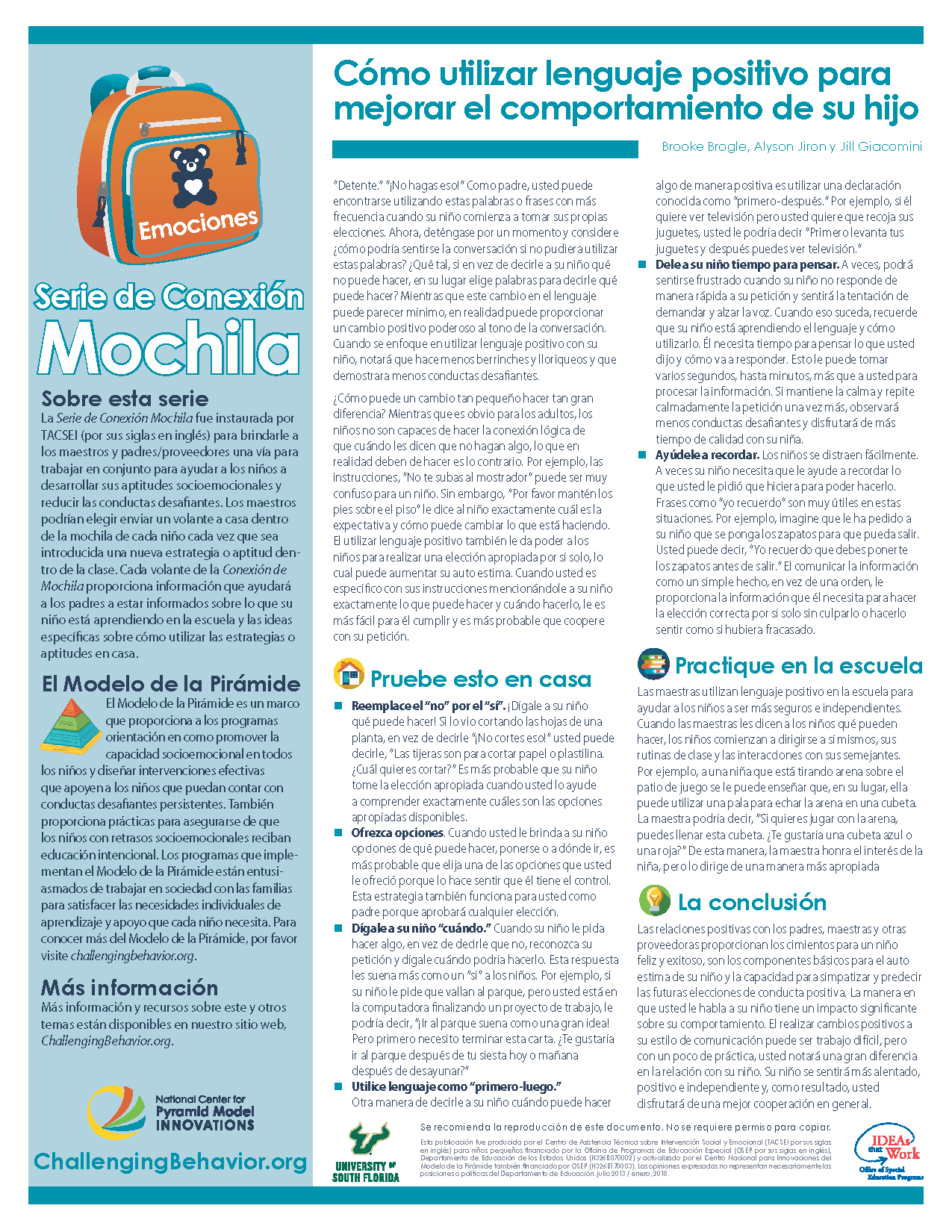
Addressing Behavior – How to Help Your Child Stop Whining (Spanish)

The Backpack Connection Series was created by TACSEI to provide a way for teachers and parents/caregivers to work together to help young children develop social emotional skills and reduce challenging behavior. Teachers may choose to send a handout home in each child’s backpack when a new strategy or skill is introduced to the class.