Response Strategies when Families Share Hard Things
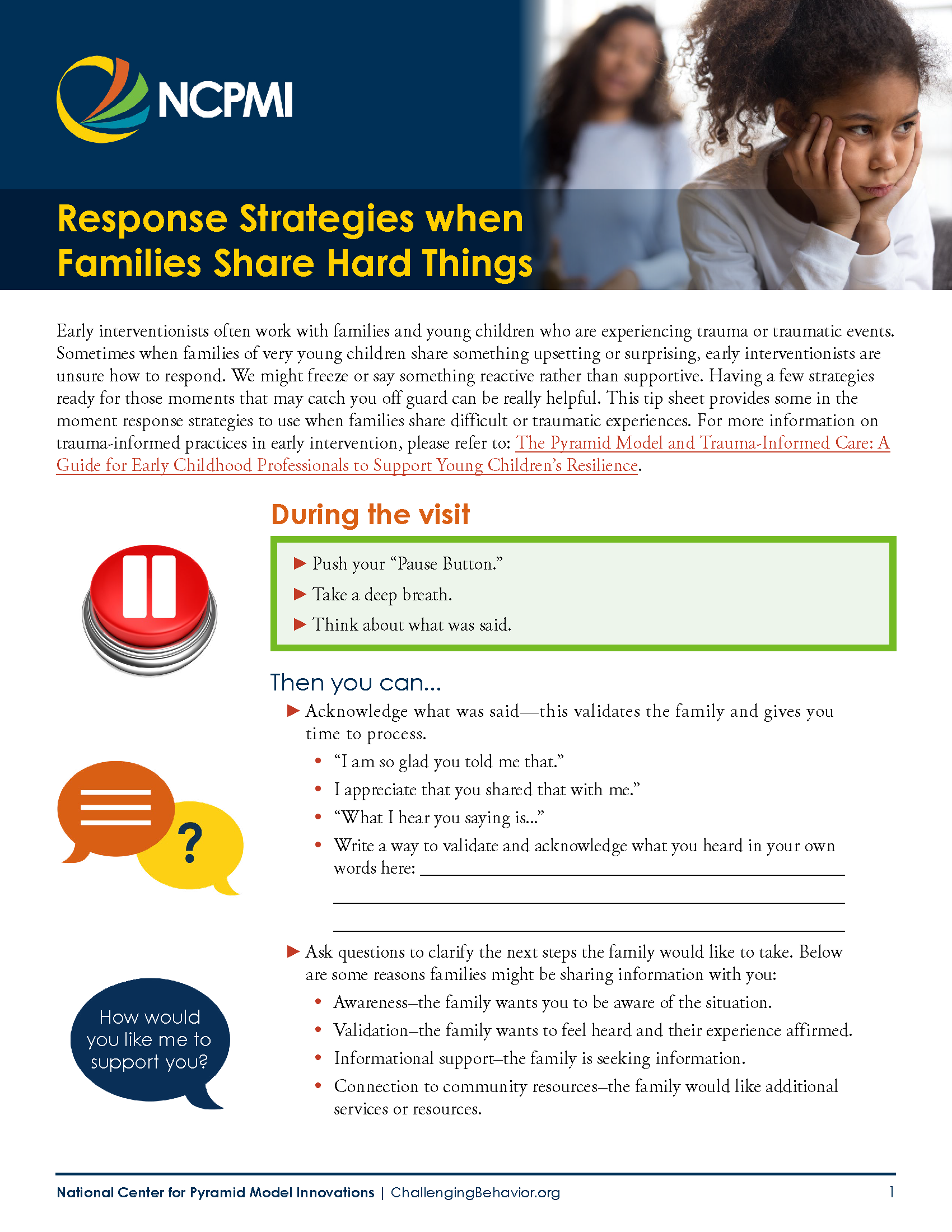
This tip sheet provides some “in the moment” and “after the visit” response strategies and reflection early intervention providers can use when families share difficult or traumatic experiences.
Childhood trauma may be more common than you think. Roughly 26 percent of children in the United States have witnessed or experienced a trauma before the age of 4 (Briggs-Gowan et al. 2010). It is highly likely that each provider in Early Intervention has worked with children and their families who have experienced trauma. Providers … Read more
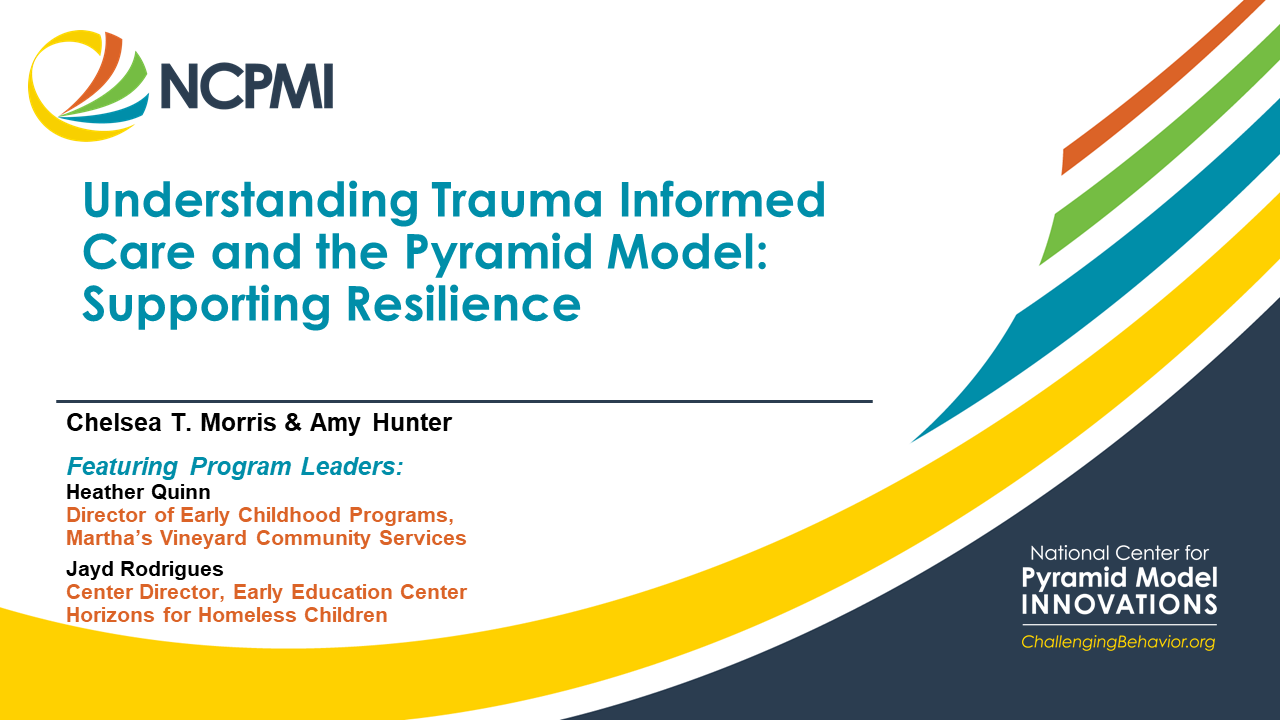
Childhood trauma may be more common than you think. Roughly 26 percent of children in the United States witness or experience a trauma before the age of 4 (Briggs-Gowan et al. 2010). It is highly likely that there are children who have experienced trauma in every early childhood classroom. Often early educators are not aware of what children have experienced in their early lives. Join this webinar to hear more about trauma informed care, the Pyramid Model and how these approaches support resilience for all children including those who have experienced trauma. This webinar will highlight how two early childhood programs use the Pyramid and trauma informed care to support children in their care. This webinar will also share resources you can use in your own programs.
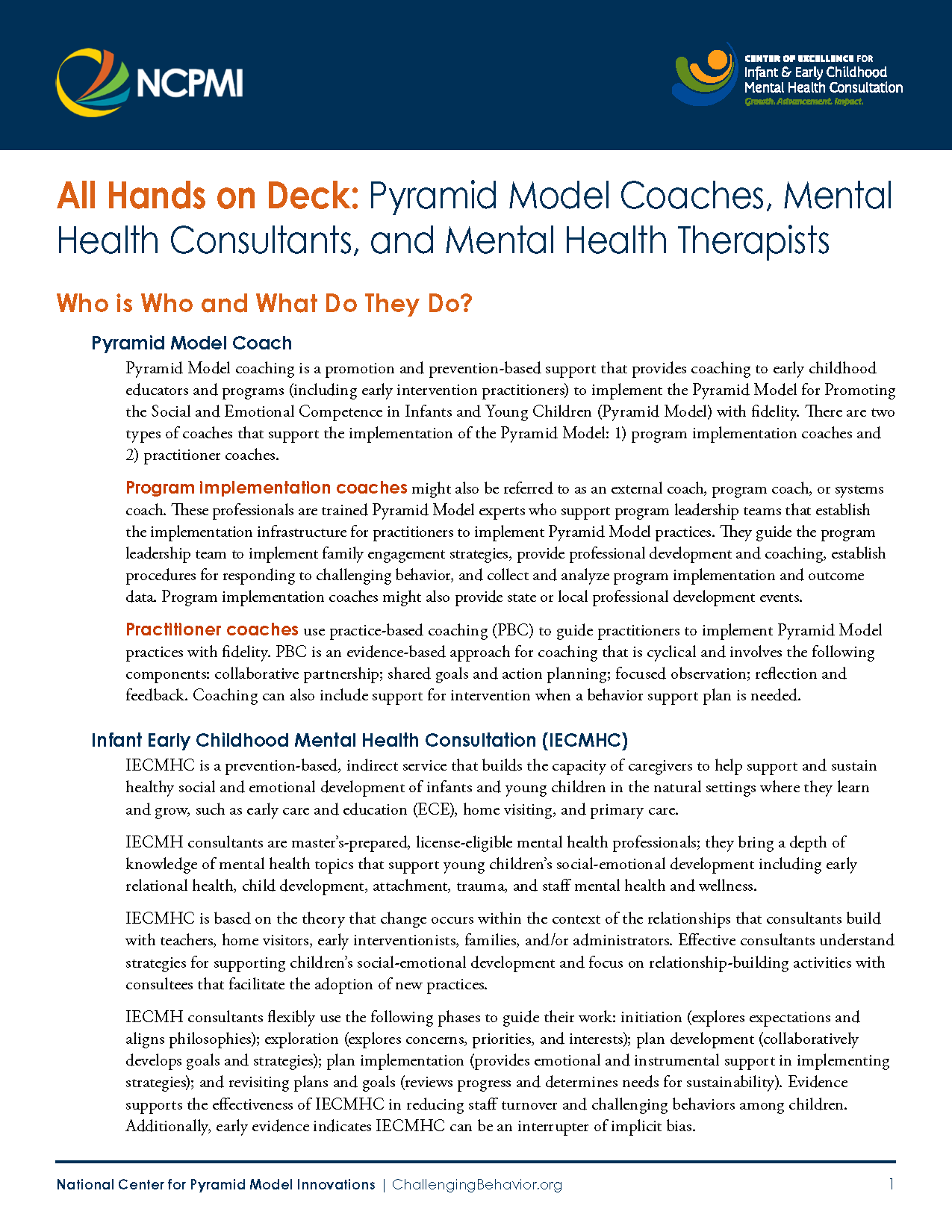
This fact sheet defines the roles of Pyramid Model coach, mental health consultant, and mental health therapist and answers frequently asked questions about these roles.
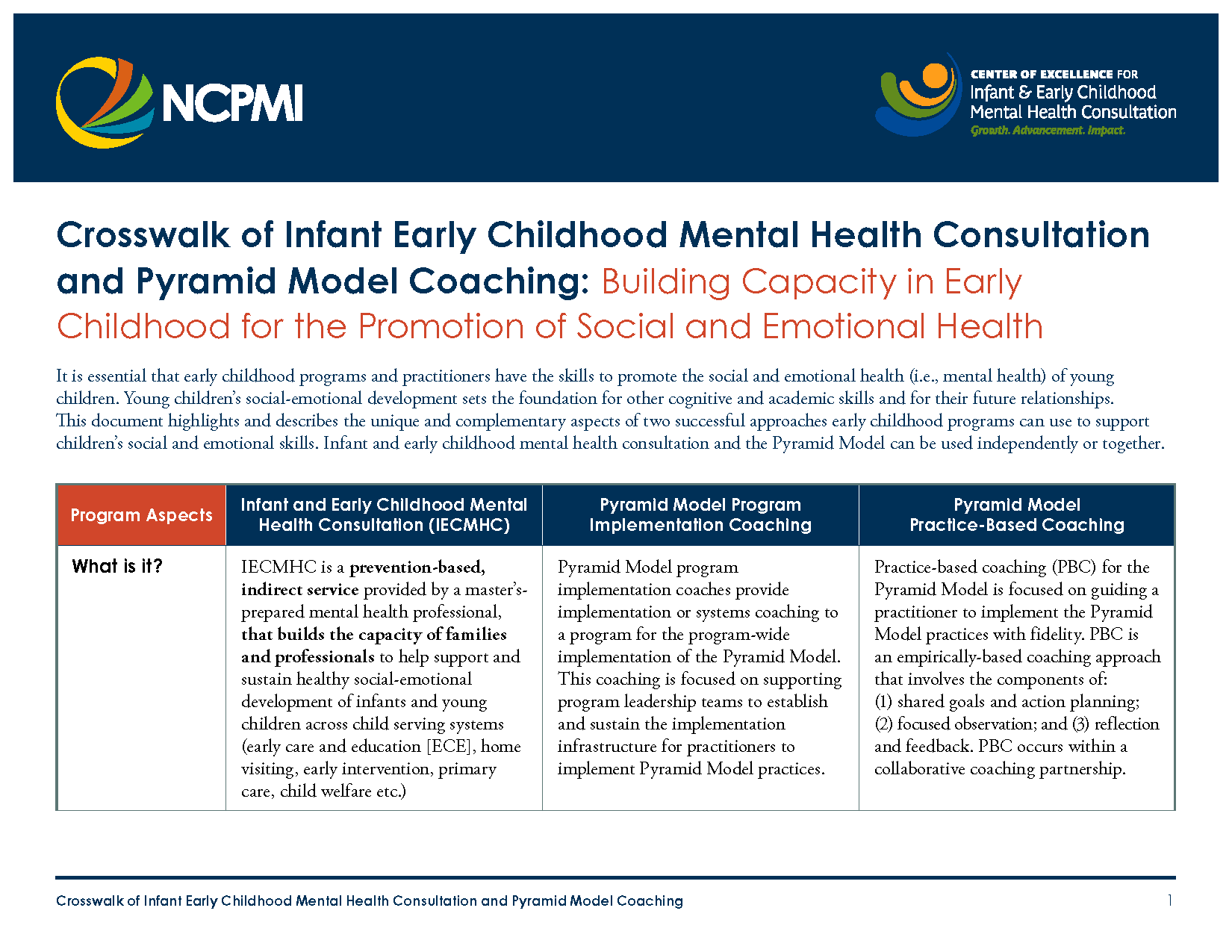
This table represents characteristics defining and differentiating common supports that aim to enhance the social and emotional health of young children. Although states, Tribal Nations and communities may define and use these supports somewhat differently, this table represents the most typical characteristics as identified by researchers and seasoned implementers from across the country.
Join us for a discussion to learn about how early childhood education and care programs are being guided to use Pyramid Model practices in addressing the needs of young children during the Pandemic and other Traumatic Events. Our panel will discuss the impact of trauma on young children’s social-emotional health and how Child Care Resource & Referral leaders are making a difference in the support of programs.
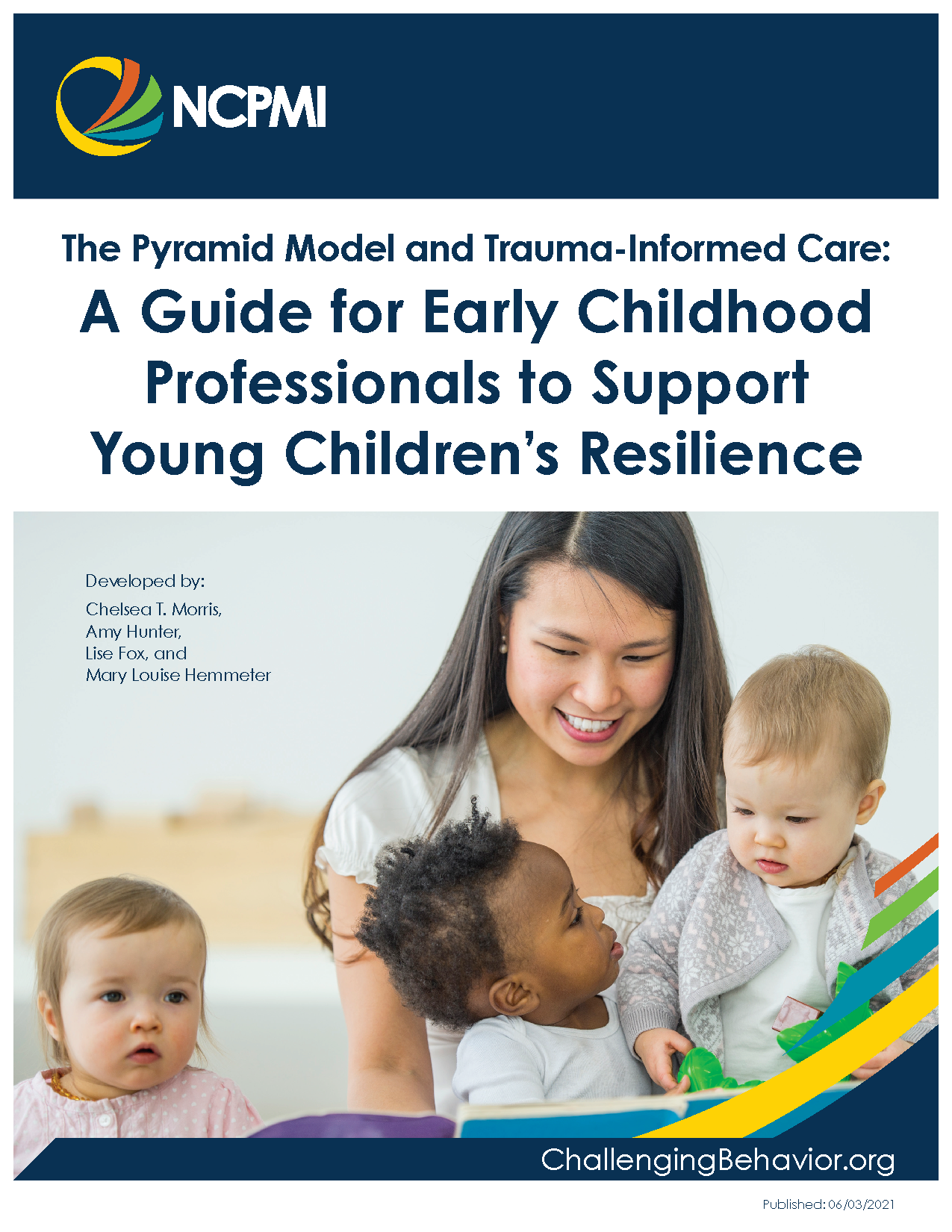
This guide provides resources that support early childhood professionals to integrate the Pyramid Model practices and trauma-informed care. The intended audience includes program leaders and administrators, educators, and staff in early intervention and early childhood classrooms. The purpose of this guide is to help early childhood professionals apply the principles of trauma-informed care in various settings to meet the diverse needs of young children and their families who have experienced trauma.
Brief video (9 minutes) that describes the impact of COVID-19 and potential impact on children’s social-emotional wellness. The video provides guidance on pivotal practices that can promote social-emotional skill development and how programs can use a trauma-informed care approach.
Brief video (9 minutes) that describes the impact of COVID-19 and potential impact on children’s social-emotional wellness. The video provides guidance on pivotal practices that can promote social-emotional skill development and how programs can use a trauma -informed care approach.
Infant and Early Childhood Mental Health Consultation (IECMHC) is emerging as an evidence-based intervention for supporting young children’s social and emotional development and addressing challenging behaviors. IECMHC aims to improve the ability of staff, families, programs, and systems to prevent, identify, treat and reduce the impact of mental health problems among children from birth to age 6 and their families. IECMHC occurs within the context of a collaborative relationship between a consultant with mental health expertise and early care and education provider, and/or a family member (Cohen & Kaufmann, 2000). In this webinar, we explain the relationship and role between IECMH consultants and Pyramid Model coaches. We also discuss how coaches can identify when they might need the support of a mental health consultant, and how to locate resources when the staff, families, or children they are working with require access to mental health supports.
This website was made possible by Cooperative Agreement #H326B220002 which is funded by the U.S. Department of Education, Office of Special Education Programs. However, those contents do not necessarily represent the policy of the Department of Education, and you should not assume endorsement by the Federal Government. This website is maintained by the University of South Florida. Contact webmaster.