Teacher’s Guide: Relationship-Building with Families
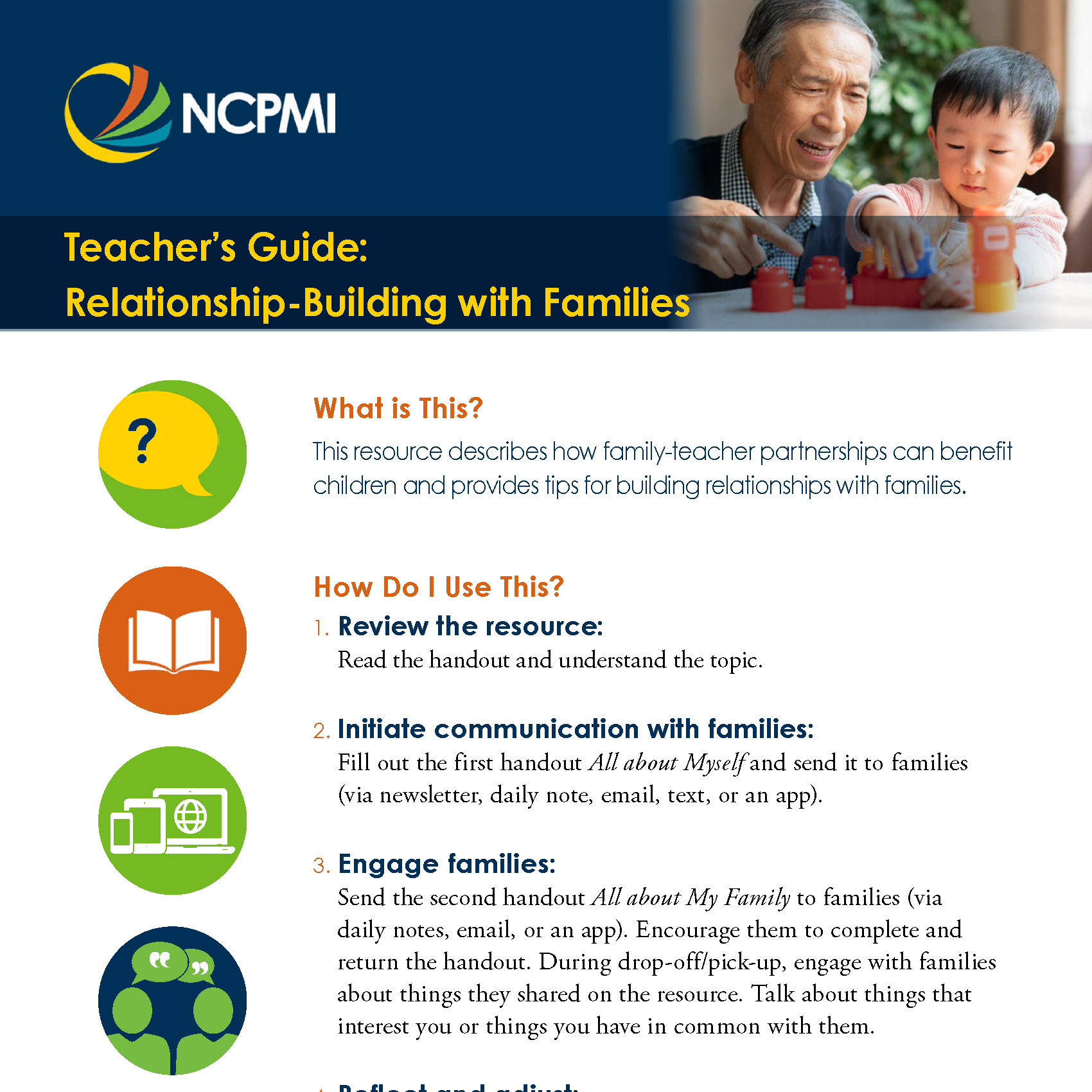
This resource provides teachers tools to build relationships with families. It includes a teacher’s guide for using the tool and two fill-in handouts for the teacher and families.
This resource provides teachers tools to build relationships with families. It includes a teacher’s guide for using the tool and two fill-in handouts for the teacher and families.
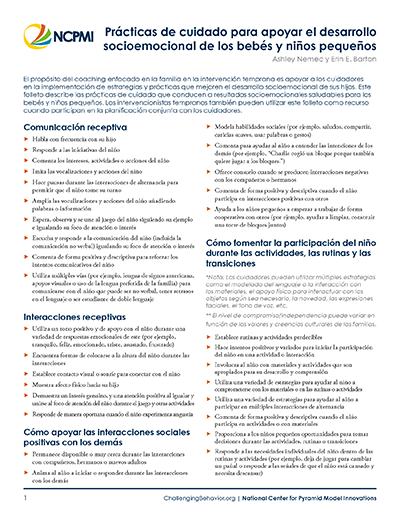
This handout outlines the caregiving practices that lead to healthy social-emotional outcomes for infants and toddlers. Early interventionists might use this handout as a resource when engaged in joint planning with caregivers.
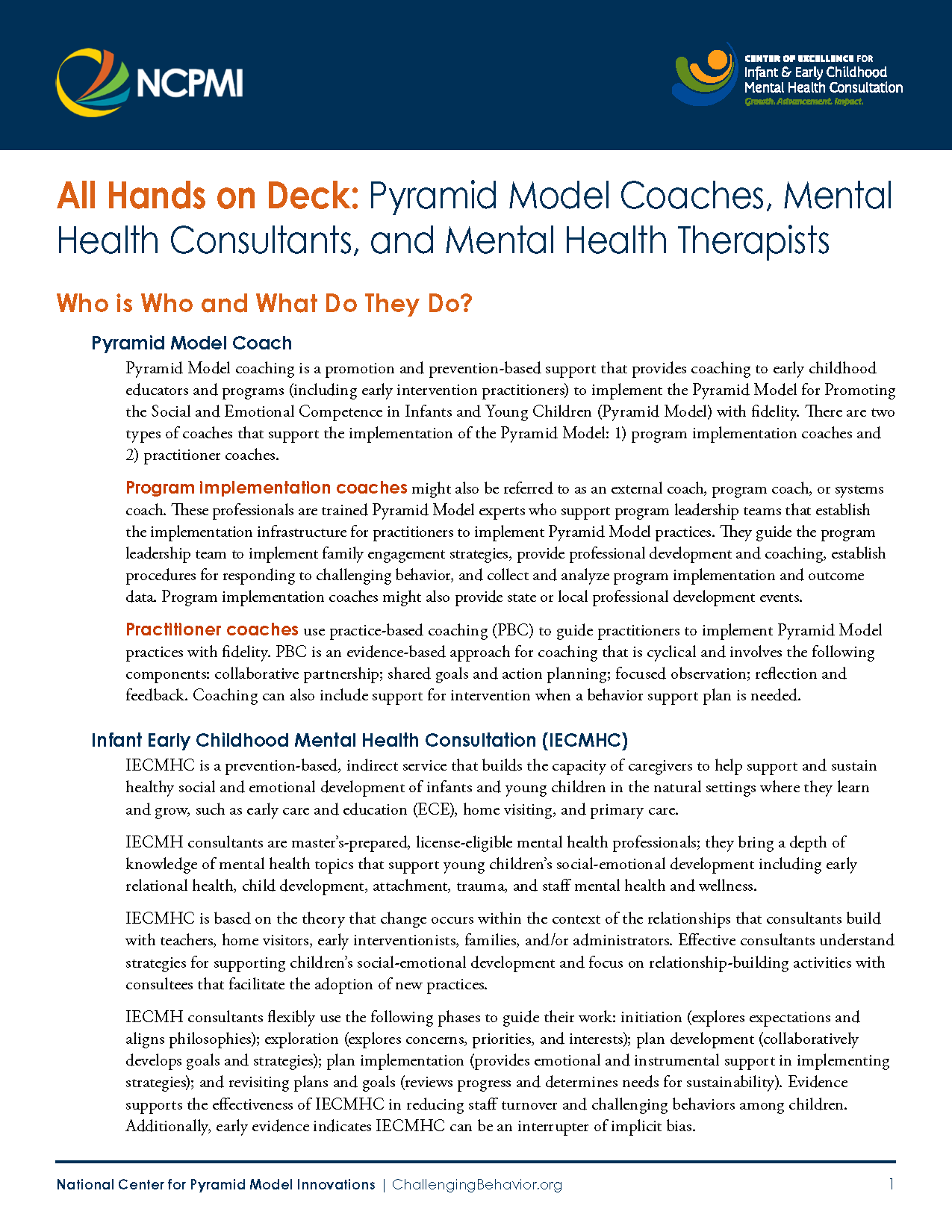
This fact sheet defines the roles of Pyramid Model coach, mental health consultant, and mental health therapist and answers frequently asked questions about these roles.
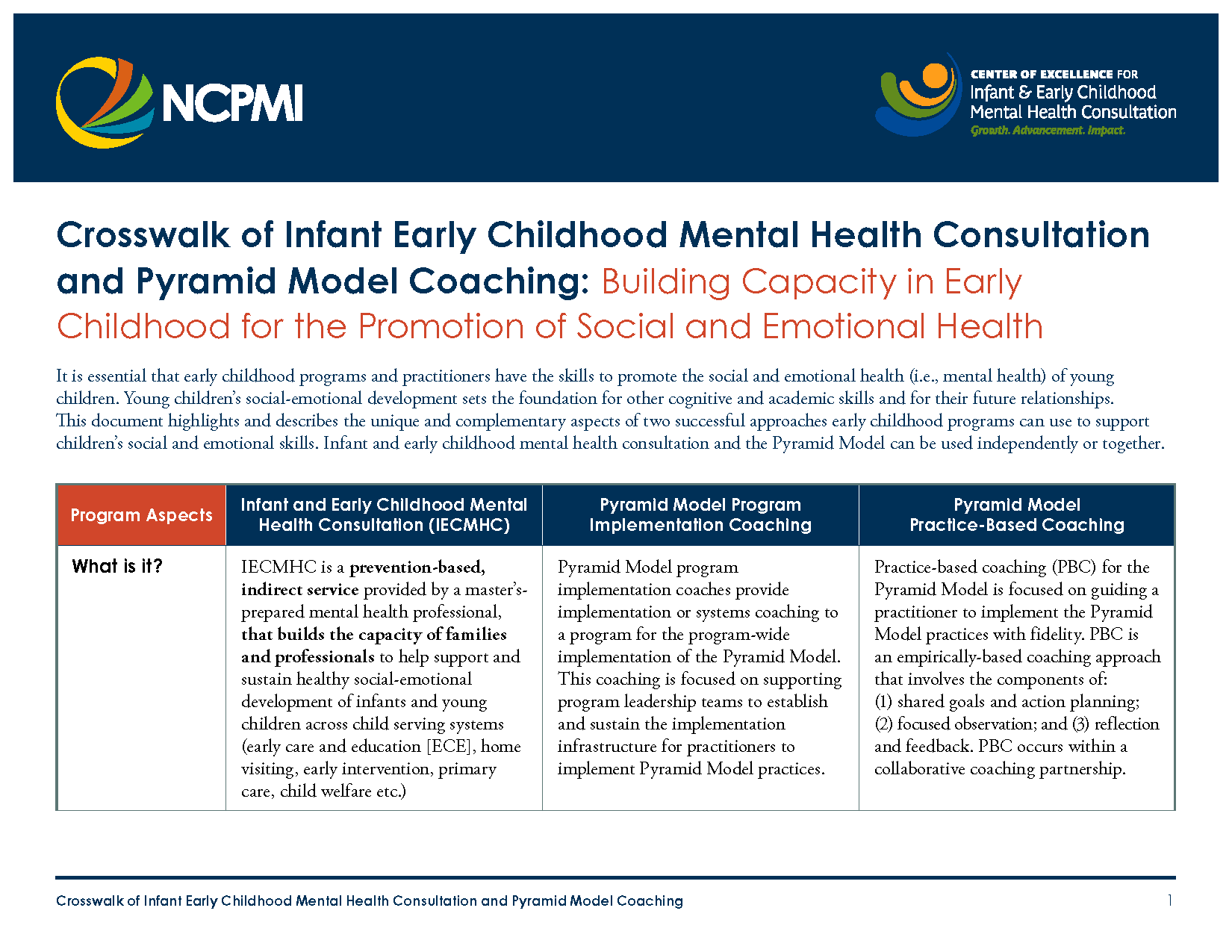
This table represents characteristics defining and differentiating common supports that aim to enhance the social and emotional health of young children. Although states, Tribal Nations and communities may define and use these supports somewhat differently, this table represents the most typical characteristics as identified by researchers and seasoned implementers from across the country.
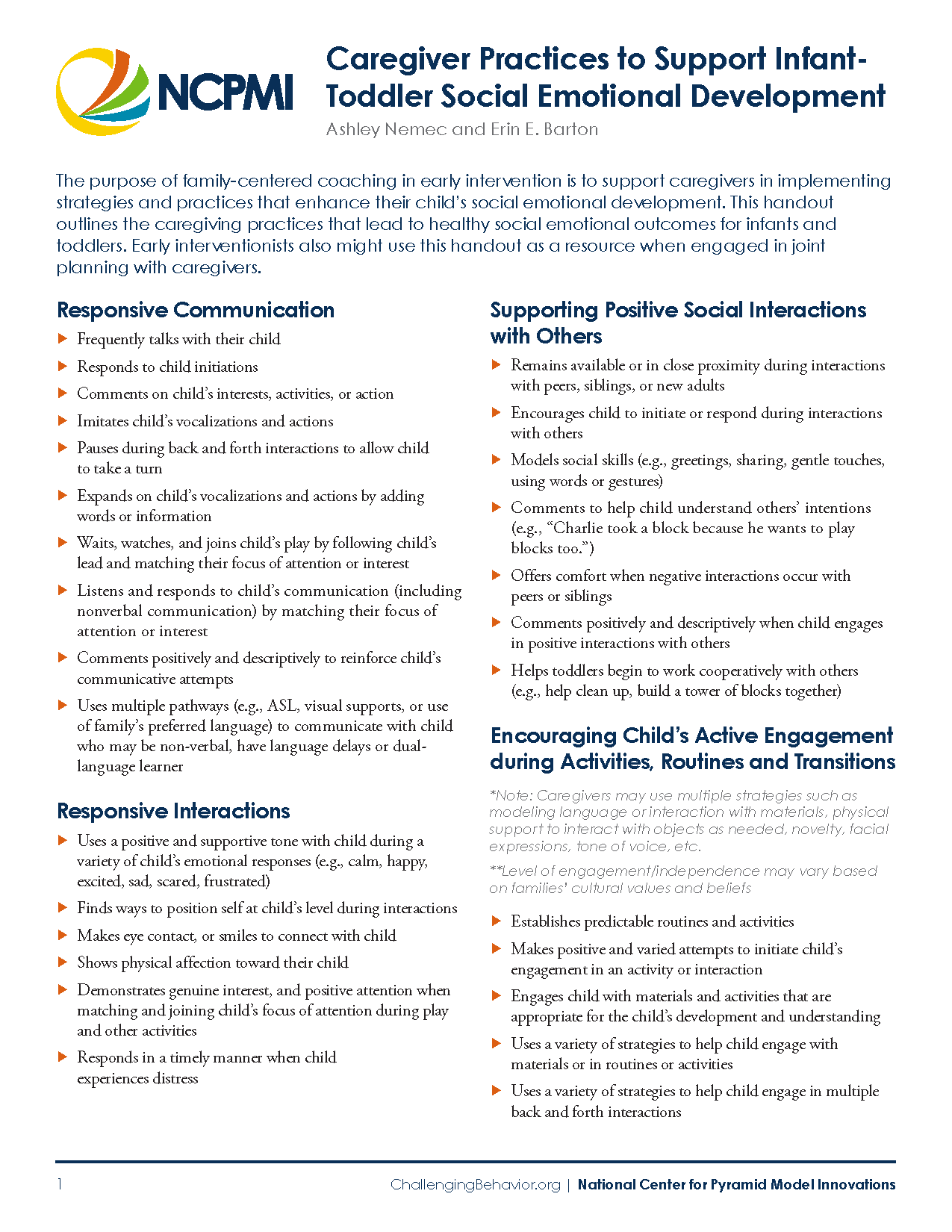
This handout outlines the caregiving practices that lead to healthy social-emotional outcomes for infants and toddlers. Early interventionists might use this handout as a resource when engaged in joint planning with caregivers.

Use this tip sheet to help practitioners of infants and toddlers intentionally plan and think about how to reconnect, help children transition back to the classroom, and support children’s social and emotional development after being away from the program.
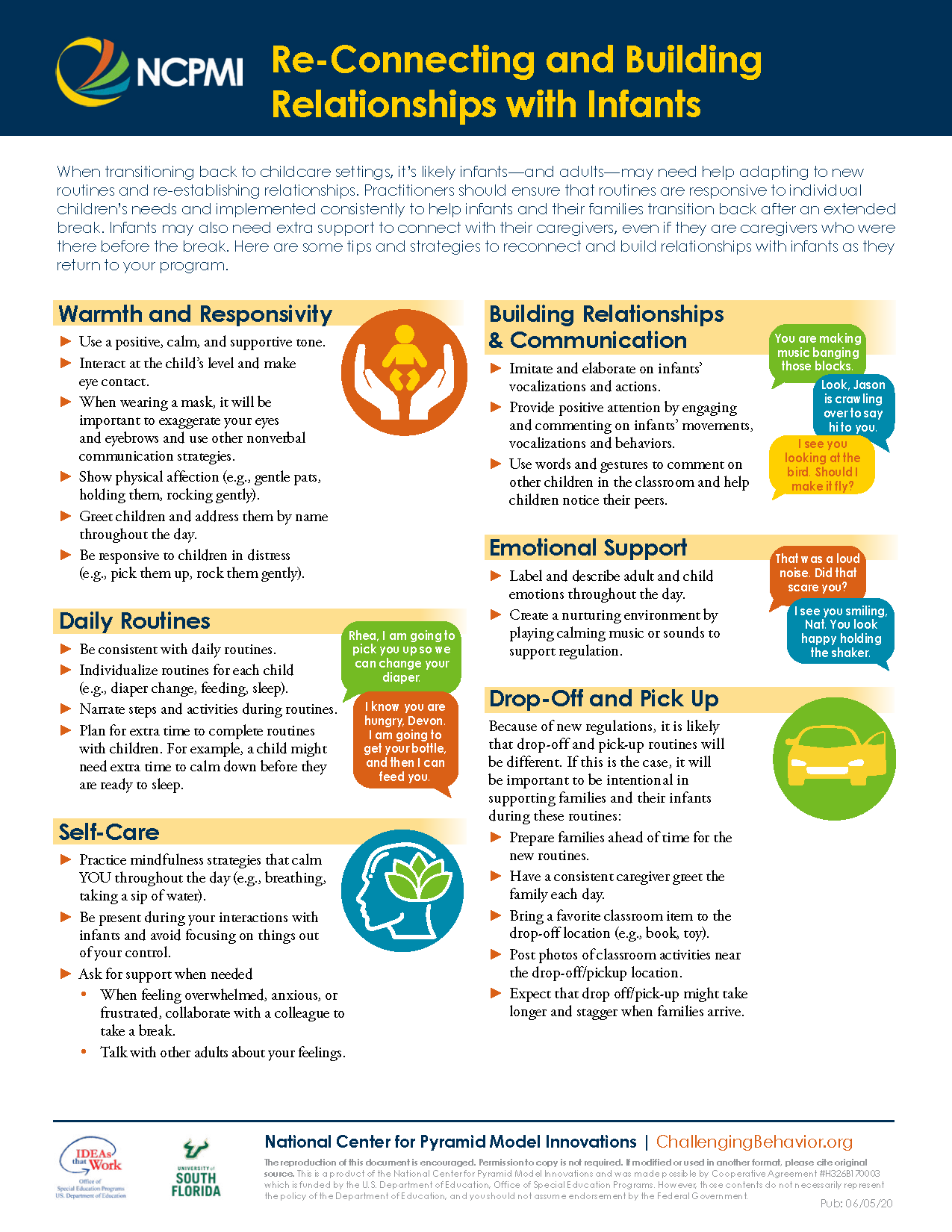
Use this tip sheet to help practitioners of infants and toddlers intentionally plan and think about how to reconnect, help children transition back to the classroom, and support children’s social and emotional development after being away from the program.
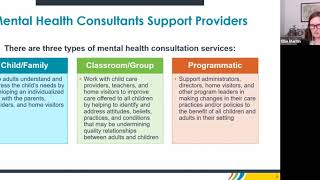
Infant and Early Childhood Mental Health Consultation (IECMHC) is emerging as an evidence-based intervention for supporting young children’s social and emotional development and addressing challenging behaviors. IECMHC aims to improve the ability of staff, families, programs, and systems to prevent, identify, treat and reduce the impact of mental health problems among children from birth to age 6 and their families. IECMHC occurs within the context of a collaborative relationship between a consultant with mental health expertise and early care and education provider, and/or a family member (Cohen & Kaufmann, 2000). In this webinar, we explain the relationship and role between IECMH consultants and Pyramid Model coaches. We also discuss how coaches can identify when they might need the support of a mental health consultant, and how to locate resources when the staff, families, or children they are working with require access to mental health supports.

Infant and Early Childhood Mental Health Consultation (IECMHC) is an evidence-based approach that pairs mental health professionals with people who work with young children and their families. Professionals who provide IECMHC can be critical partners in the implementation of the Pyramid Model. Join this webinar panel discussion to learn about two different IECMHC models and how each model incorporates the Pyramid Model in their work. The webinar panelists discuss the relationship between mental health consultation and the Pyramid Model highlighting how these distinct approaches align and supplement one another.
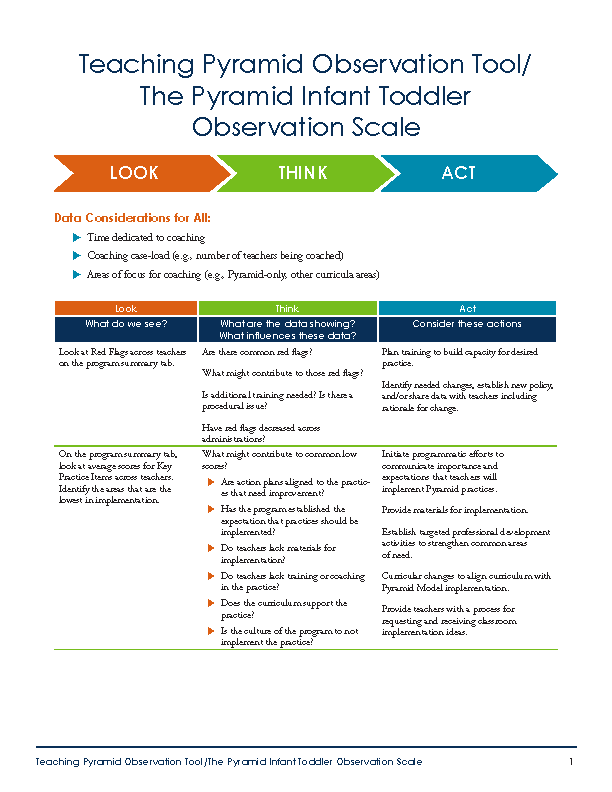
The Leadership Team can use this document to guide the three steps of data review and decision-making (Look-Think-Act). The guide provides the information on the data to review, the questions to consider, and potential actions. This guide is used with the data summaries of TPOT or TPITOS.



This website was made possible by Cooperative Agreement #H326B220002 which is funded by the U.S. Department of Education, Office of Special Education Programs. However, those contents do not necessarily represent the policy of the Department of Education, and you should not assume endorsement by the Federal Government. This website is maintained by the University of South Florida. Contact webmaster.