Home / pdf / Page 50

Making Life Easier: Bedtime and Naptime
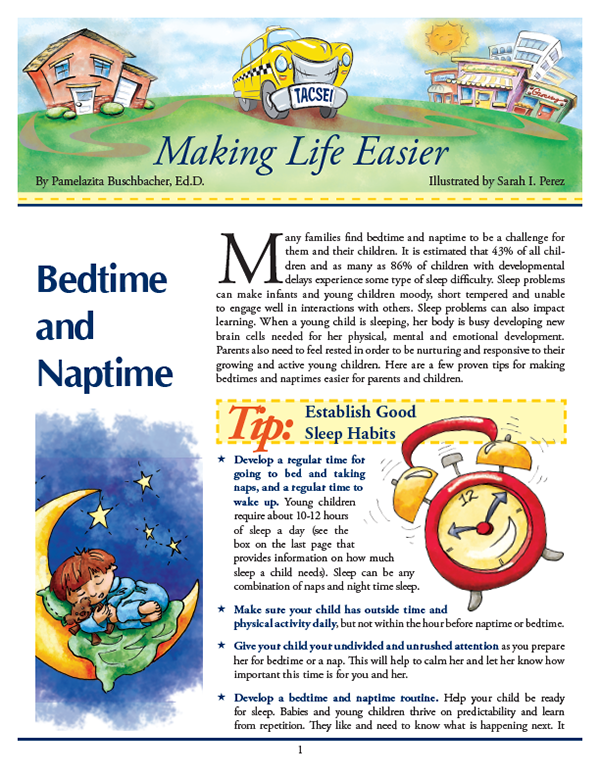
Many families find bedtime and naptime to be a challenge for them and their children. Sleep problems can make infants and young children moody, short tempered and unable to engage well in interactions with others. Sleep problems can also impact learning. Parents also need to feel rested in order to be nurturing and responsive to their growing and active young children. This first installment of the?Making Life Easier’series provides a few proven tips for making bedtimes and naptimes easier for both parents and children. Also includes a handy tip card for quick reference.

Making Life Easier: Running Errands (Chinese)

Running errands (e.g., going to the store, bank, etc.) is one of those essential household routines that all families experience. It is often thought of as a ?maintenance? activity that is necessary for the family, but not enjoyable for young children. While there can be huge benefits in taking your young child along, running errands can be extremely difficult if the child has challenging behavior. Still, there are several steps you can take to help you and your child get the most out of these outings. Also includes a handy tip card for quick reference. Translation provided by WestEd (https://cainclusion.org).

Making Life Easier: Diapering (Chinese)

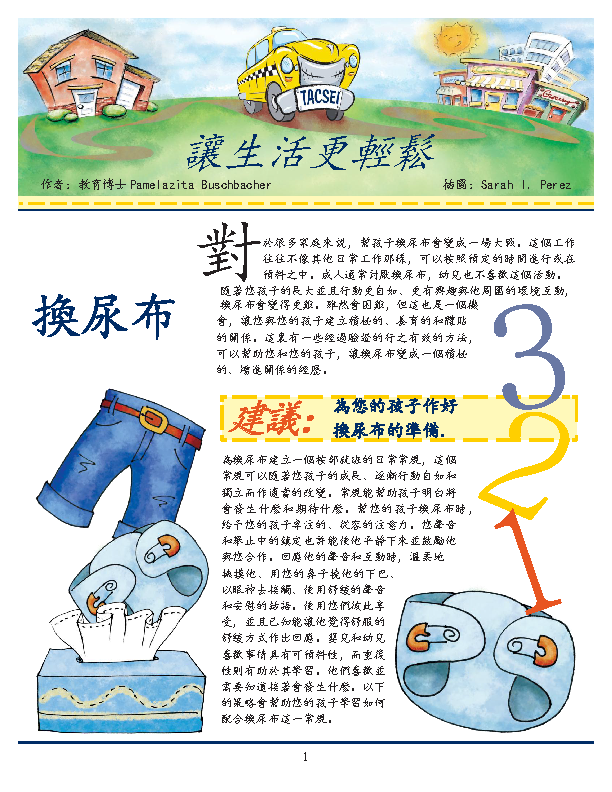
For many families, changing a child’s diaper can be a major battle. This routine is usually not as predictable as other activities, is often unpleasant for adults and not an event that the young child enjoys. While it can be challenging, it is also an opportunity to build a positive, nurturing and responsive relationship with your child. This installment of the Making Life Easier series provides several proven strategies to help make diapering a positive and relationship building experience for you both. Also includes a handy tip card for quick reference. Translation provided by WestEd (https://cainclusion.org).

Making Life Easier: Bedtime and Naptime (Chinese)

Many families find bedtime and naptime to be a challenge for them and their children. Sleep problems can make infants and young children moody, short tempered and unable to engage well in interactions with others. Sleep problems can also impact learning. Parents also need to feel rested in order to be nurturing and responsive to their growing and active young children. This first installment of the?Making Life Easier’series provides a few proven tips for making bedtimes and naptimes easier for both parents and children. Also includes a handy tip card for quick reference. Translation provided by WestEd (https://cainclusion.org).

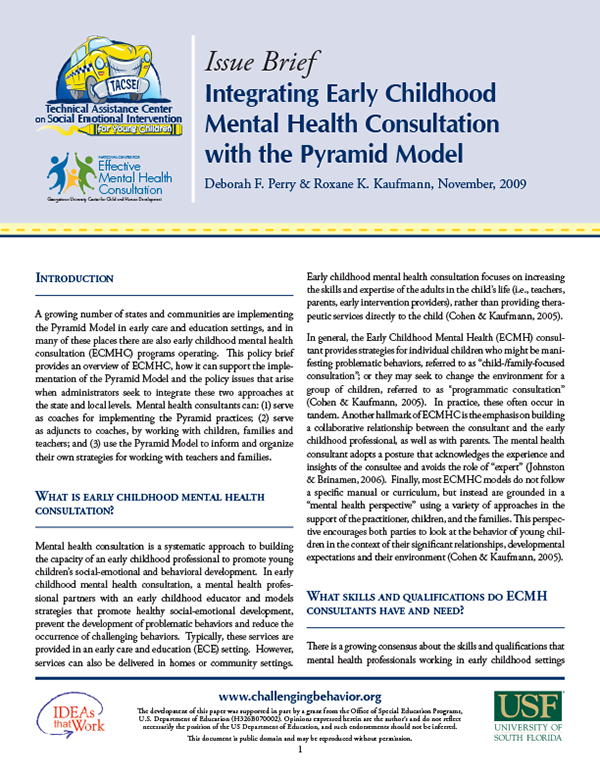
Integrating Early Childhood Mental Health Consultation with the Pyramid Model

A growing number of states and communities are implementing the Pyramid Model in early care and education settings, and in many of these places there are also early childhood mental health consultation (ECMHC) programs operating. This practice brief provides an overview of ECMHC, how it can support the implementation of the Pyramid Model and the issues that arise when administrators seek to integrate these two approaches at the state and local levels. Mental health consultants can: (1) serve as coaches for implementing the Pyramid practices; (2) serve as adjuncts to coaches, by working with children, families and teachers; and (3) use the Pyramid Model to inform and organize their own strategies for working with teachers and families. (November, 2009).

Administrator Strategies that Support High-Fidelity Implementation of the Pyramid Model for Promoting Social-Emotional Competence & Addressing Challenging Behavior

Implementing the Pyramid Model with fidelity and achieving positive outcomes for children and their families requires that administrators understand their roles in the implementation process. Every administrative decision impacts program quality and sustainability. This issue brief underscores the importance of facilitative administrative practices that provide sustained commitment, timely training, competent coaching, the use of process and outcome data for decision-making, and the development of policies and procedures that are aligned with high-fidelity implementation (July, 2009).