Home / pdf / Page 51

Response to Intervention and the Pyramid Model
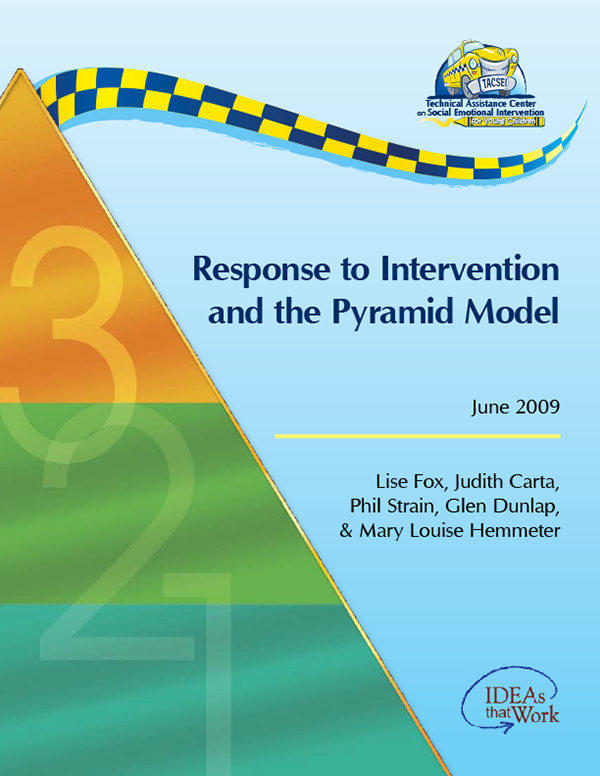
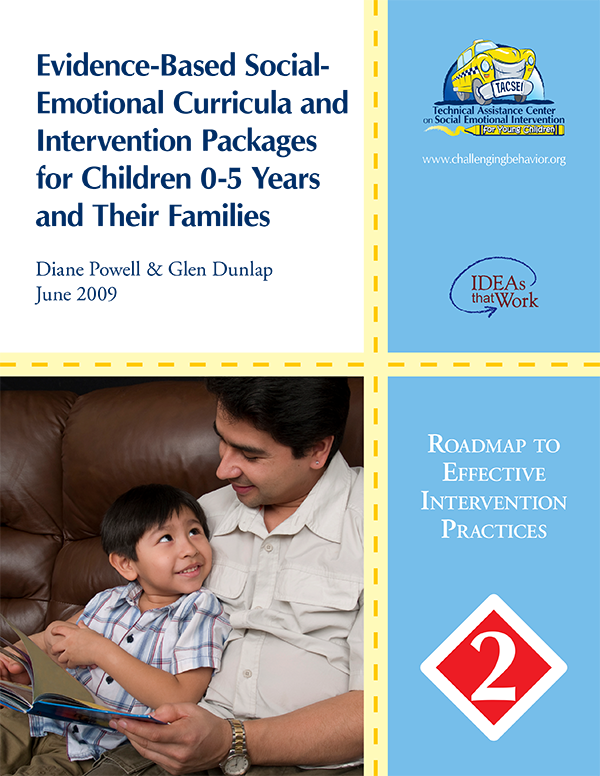
Response to Intervention (RtI) offers a comprehensive model for the prevention of delays in learning and behavior. While this problem-solving framework was initially designed for application within Kindergarten to 12th grade programs, there is substantial research that supports the value of the model for application within early childhood programs. This paper provides an overview of RtI and discusses the Pyramid Model (Fox, Dunlap, Hemmeter, Joseph, & Strain, 2003) and its application for promoting young children’s social competence and preventing behavior challenges (June 2009).
The Pyramid Model for Supporting Social-Emotional Competence in Infants and Young Children

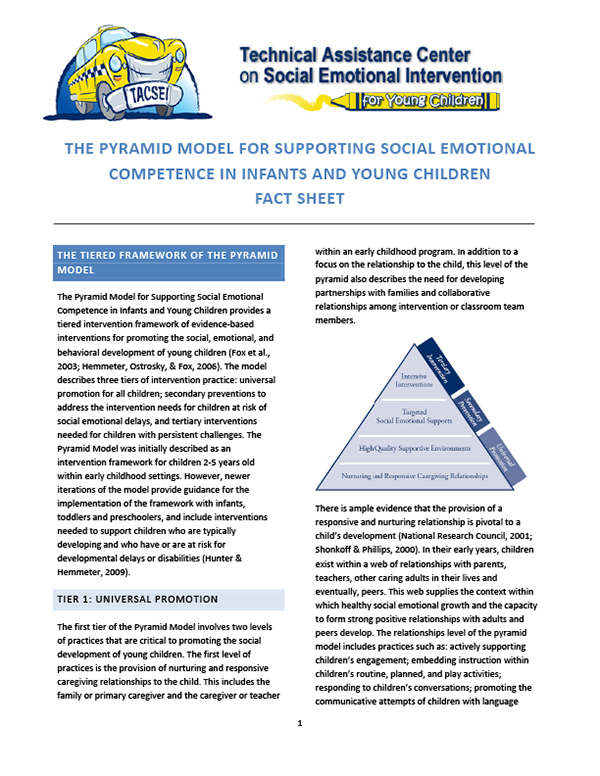
This four-page fact sheet provides an overview of the Pyramid Model for Supporting Social-Emotional Competence in Infants and Young Children. Specifically, this fact sheet describes the three tiers of intervention practice: universal promotion for all children; secondary preventions to address the intervention needs for children at risk of social-emotional delays, and tertiary interventions needed for children with persistent challenges. Additionally, six key assumptions that were made during the design process about how the Pyramid Model would be implemented are outlined.

Promoting Social, Emotional, and Behavioral Outcomes of Young Children Served Under IDEA

A growing body of evidence confirms that serious and persistent challenging behaviors in early childhood directly relate to later problems in school success, social relationships, educational and vocational success, and social adjustment. This brief addresses several important questions policy makers may have about challenging behavior and how these issues relate to young children served under IDEA (January, 2007).

“You Got It!” Teaching Social and Emotional Skills

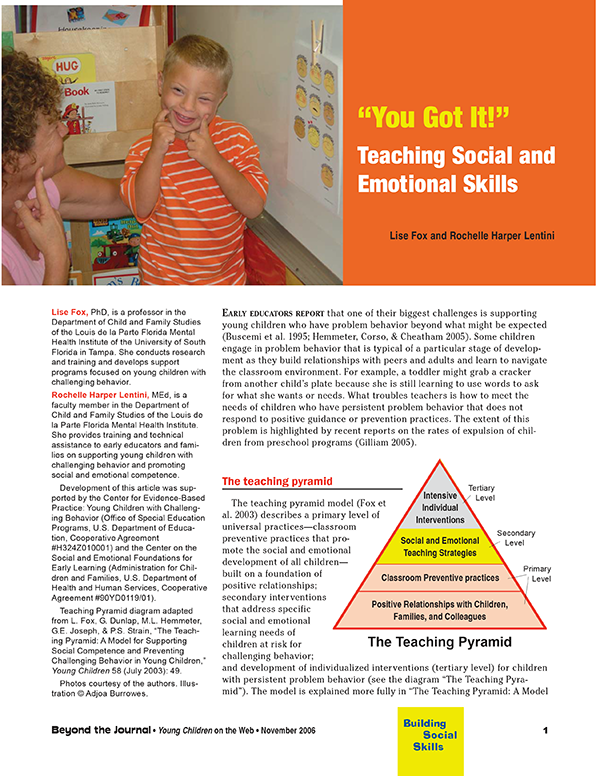
In this article we look at the secondary level of the teaching pyramid, which emphasizes planned instruction on specific social and emotional skills for children at risk for developing more challenging behavior, such as severe aggression, property destruction, noncompliance, or withdrawal. Children who may be considered at risk for challenging behavior are persistently noncompliant, have difficulty regulating their emotions, do not easily form relationships with adults and other children, have difficulty engaging in learning activities, and are perceived by teachers as being likely to develop more intractable behavior problems. (Published in Young Children, November 2006)