Home / English / Page 19

Pyramid Model STATE Leadership Team Guidance for Preventing the Use of Suspension and Expulsion and Promoting Equitable, Inclusive and Culturally Responsive Practice

This document provides state leadership teams with guidance on how to prevent suspension and expulsion by integrating with existing efforts including Pyramid Model, Multi-Tiered System of Supports (MTSS), Quality Rating Improvement System (QRIS), inclusion and State Systemic Improvement Plan (SSIP) efforts. This resource is organized around the Guiding Principles and Recommendations from the federal Joint Policy Statement on Expulsion and Suspension Policies in Early Childhood Settings (HHS/ED, 2014).

Preschool Module 1: Nurturing and Responsive Relationships

Establishing nurturing and responsive relationships within a caring community is the foundation of the Pyramid Model. This training focuses on practices for building relationships with children, promoting relationships between children, relationships with families that affirm family culture and identity, and relationships with team members.

Preschool Module 5: Addressing Challenging Behavior

This module provides the practices for understanding child challenging behavior, how to respond to challenging behavior, becoming aware of bias in responding, de-escalating behavior, and the components of developing a behavior support plan for children with persistent challenging behavior.

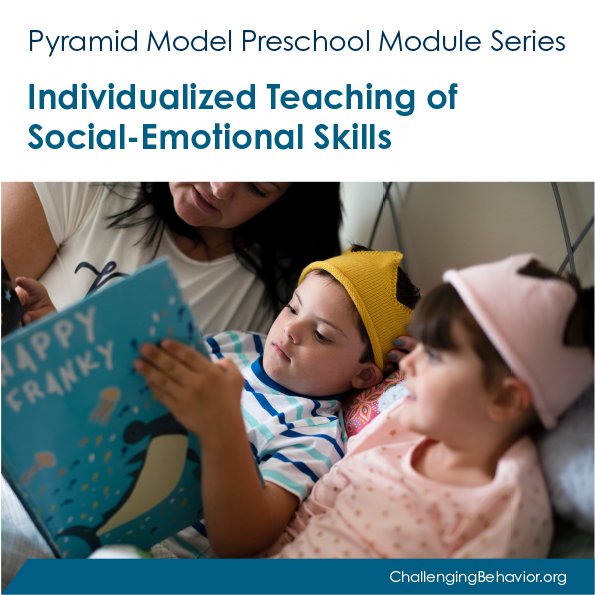
Preschool Module 4: Individualized Teaching of Social-Emotional Skills

This module guide practitioners in how to individualize instruction on social-emotional skills for children who need more targeted supports. Practices that are taught include: teaching systematically, peer-mediated intervention, planning for embedded instruction, and progress monitoring.

Preschool Module 2: High-Quality, Supportive Environments

This module focuses on the practices for establishing high-quality supportive classroom environments that promote social-emotional skill development and prevent challenging behavior. Practices related to schedules, routines, transitions, promoting engagement, expectations, and rules are addressed in the workshop.

A Conversation about Integrating Trauma Informed Care in the Functional Behavior Assessment and Behavior Support Plan Process

Cover slide

Young children are particularly vulnerable to the impact of traumatic experiences. In fact, traumatic experience can alter young childrens’ brain development. Young children who have experienced trauma may demonstrate a variety of emotional, behavioral and/or physical responses. Their responses to their experience depends on a variety of factors including: the nature, frequency, and intensity of the … Read more

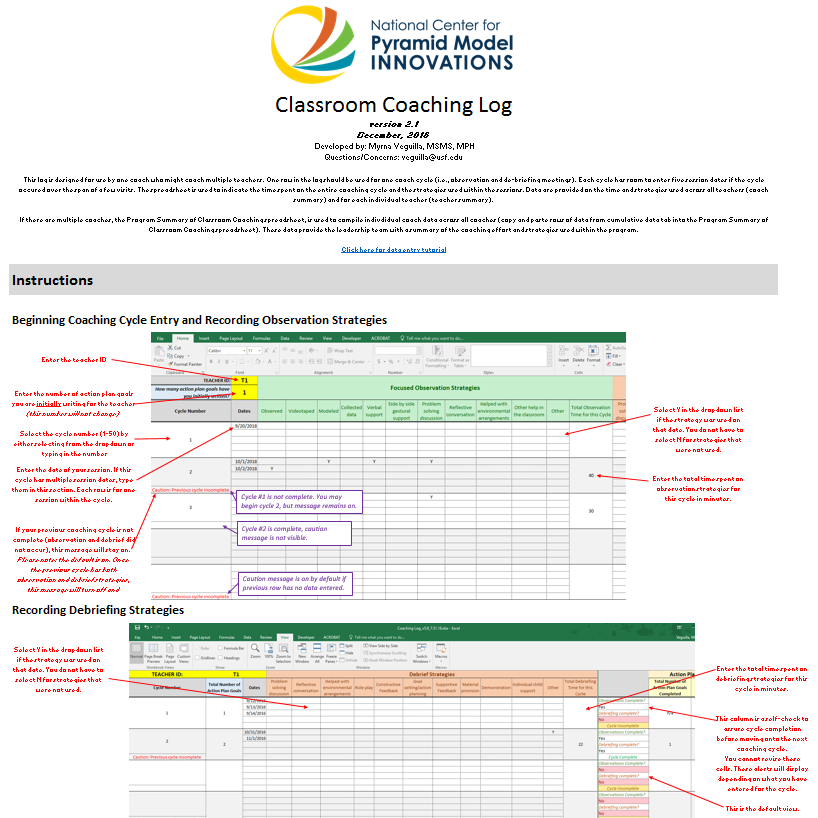
Classroom Coaching Log (Excel)

This Individual Coaching Log is designed for use by one coach who might coach multiple teachers. The spreadsheet is used to indicate the time spent on the entire coaching cycle and the strategies used within the sessions. Data are provided on the time and strategies used across all teachers (coach summary) and for an individual teacher (teacher summary).

Introduction to the Pyramid Model

This module introduces the Pyramid Model framework to participants and should be used before the other modules. Topics include: the relationship of the Pyramid Model to prevention science, equity, inclusion, trauma-informed care, anti-bias practice and the use of data for decision-making, understanding child behavior, and the research that provides an evidence-base for the use of … Read more