Home / English / Page 20

A Conversation About Integrating Trauma Informed Care in the Functional Behavior Assessment and Behavior Support Plan Process
Cover slide

Description Young children are particularly vulnerable to the impact of traumatic experiences. In fact, traumatic experience can alter young childrens’ brain development. Young children who have experienced trauma may demonstrate a variety of emotional, behavioral and/or physical responses. Their responses to their experience depends on a variety of factors including: the nature, frequency, and intensity of … Read more
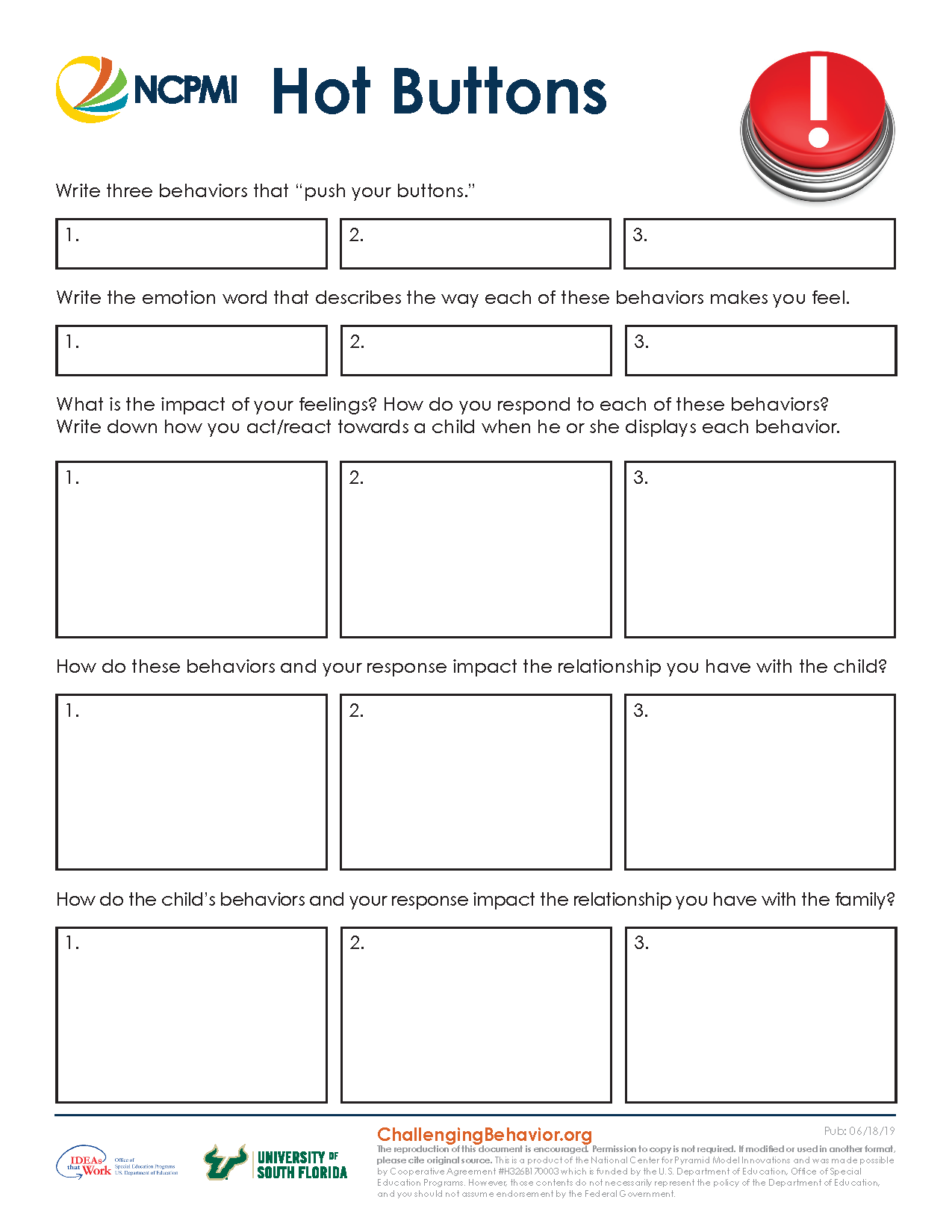
Hot Buttons Activity

This handout helps practitioners examine how challenging behavior impacts adult-child relationships.

Infant-Toddler Module 8: Challenging Behavior

In Challenging Behavior, a module of the Pyramid Model Infant-Toddler Module Series, participants will: identify and define challenging behavior, and work to understand why challenging behavior happens; discuss how to gather data and implement strategies that will prevent challenging behavior; and discuss strategies to address or respond effectively to challenging behavior when it is present.

Infant-Toddler Module 7: Individualized Teaching

In Individualized Teaching, a module of the Pyramid Model Infant-Toddler Module Series, participants will learn how to identify and address delays in social-emotional development. The module provides an overview of the screening and assessment process and guidance on how to develop a systematic plan to provide individualized teaching to children who have delays.

Infant-Toddler Module 6: Promoting Positive Peer Interactions

In Positive Peer Interactions, a module of the Pyramid Model Infant-Toddler Module Series, participants will gain knowledge on how to facilitate positive peer interactions and support the development of social and friendship skills, learn about the developmental stages of social and play skills, and apply that knowledge to classroom practices.

Infant-Toddler Module 5: Teaching About Feelings

In Teaching About Feelings, a module of the Pyramid Model Infant-Toddler Module Series, participants will explore what the development of emotional literacy looks like (i.e., labeling feelings in self and others, recognizing facial and physiological signs, modulating responses, developing coping strategies) and share a variety of strategies teachers can use to support and teach the … Read more

Infant-Toddler Module 4: Understanding Behavior

Working with infants and toddlers is rewarding, but it can also sometimes be challenging. In Understanding Behavior, a module of the Pyramid Model Infant-Toddler Module Series, participants will learn how to use observation to better understand child behavior. We will look at the many influences affecting behavior and use this knowledge to examine our own … Read more

Infant-Toddler Module 3: Responsive Routines, Schedules, and Environments

In Responsive Routines, Schedules, & Environments, a module of the Pyramid Model Infant-Toddler Module series, participants will learn how being intentional about establishing daily routines and setting up the environment can: help young children feel confident and secure, paving the way for social-emotional growth; promote children’s active and safe exploration and learning; and facilitate positive … Read more

Infant-Toddler Module 1: Introduction and Understanding Social-Emotional Development

As the first training module in the Pyramid Model Infant-Toddler Module Series, Understanding Social-Emotional Development will acquaint participants with the Pyramid Model, introduce important terms that will be used throughout the Pyramid Model training modules, and lay a foundation to better understand the role caregivers play in young children’s social-emotional development.