Research

Research on implementation of the Pyramid Model shows: Florida and Tennessee randomized study results published in 2016 The study was conducted within public school classrooms (40 classrooms and 494 children) enrolling preschool children with and without disabilities in Florida and Tennessee. Research Findings Florida and Tennessee randomized study results published in 2021 This study was … Read more

Tiers

The Pyramid Model builds upon a tiered public health approach to providing universal supports to all children to promote wellness, targeted services to those who need more support, and intensive services to those who need them. Now let’s take a look at what the research shows us.

Partners

National TA Center Partners NCPMI collaborates with other OSEP-funded technical assistance centers to ensure the development of high quality services and products that are relevant to state systems and local programs and meet the needs of multiple audiences. National Association and Organization Partners NCPMI collaborates with the following national membership associations and organizations to extend … Read more

Our Center

The National Center for Pyramid Model Innovations (NCPMI) is funded by the Office of Special Education Programs to improve state and local capacity to implement, scale-up, and sustain effective practices and policies to promote the social, emotional, and behavioral outcomes of young children with, and at risk for, developmental delays or disabilities. The goal of … Read more

Families Want to Know Tip Card

Map of the state of New Hampshire, with the words New Hampshire on top

Provides information about the State’s support of Pyramid Model and the benefits of focusing on social emotional development for professionals, families, and children and childcare.

Services

What do we do? NCPMI provides all its services with the goal of promoting the positive social, emotional and behavioral outcomes of young children (birth through five), reducing the use of inappropriate discipline practices, increasing the inclusion and ongoing participation of young children with disabilities in early childhood settings, and the promotion of family engagement. … Read more

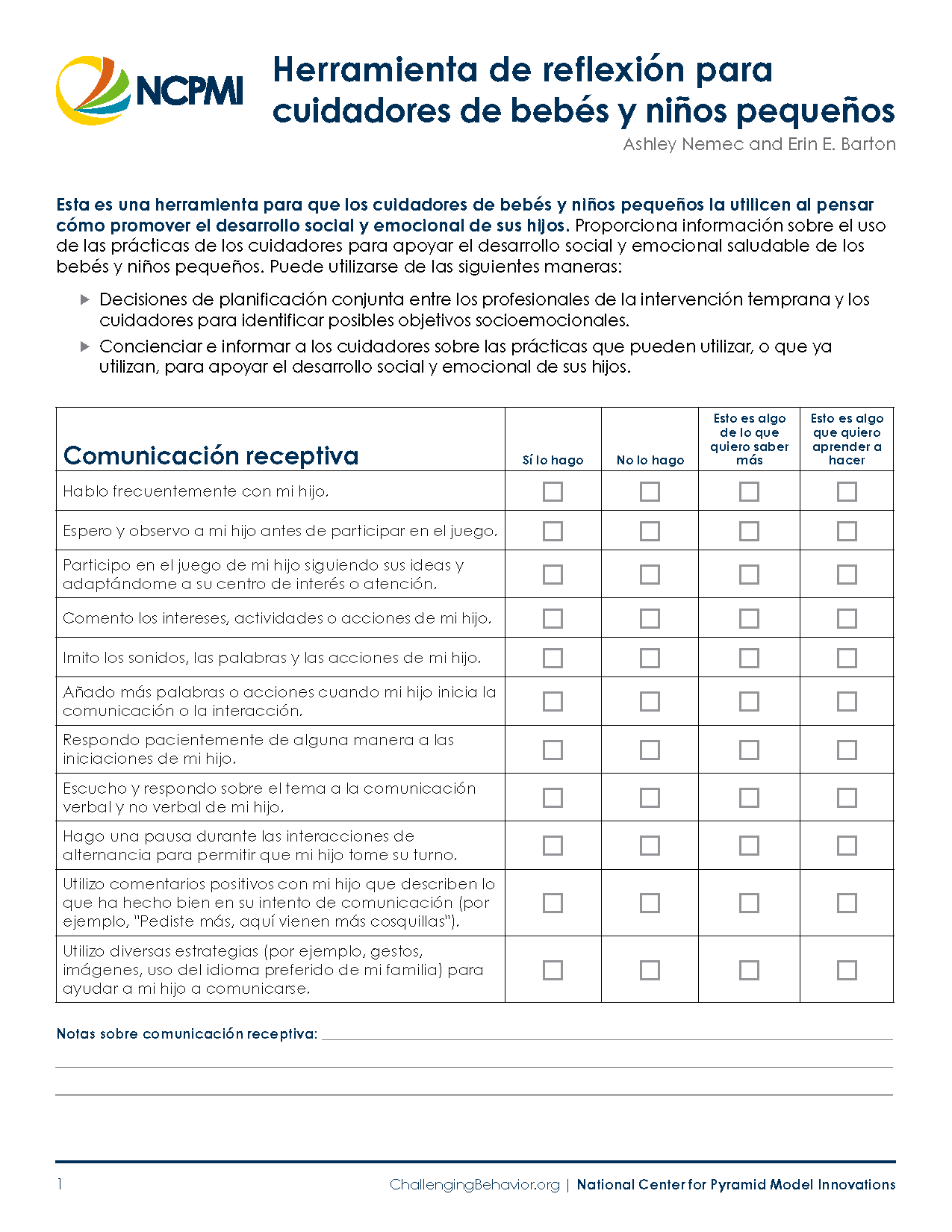
Infant-Toddler Caregiver Reflection Tool (Spanish)

This tool provides information on the use of caregiver practices to support healthy social emotional development in infants and toddlers. Early interventionists and caregivers can use this tool to build awareness and inform caregivers about what practices they currently use or can use to support their child’s healthy social emotional development. This tool might also be used to aid joint planning decisions when identifying social emotional goals with caregivers.

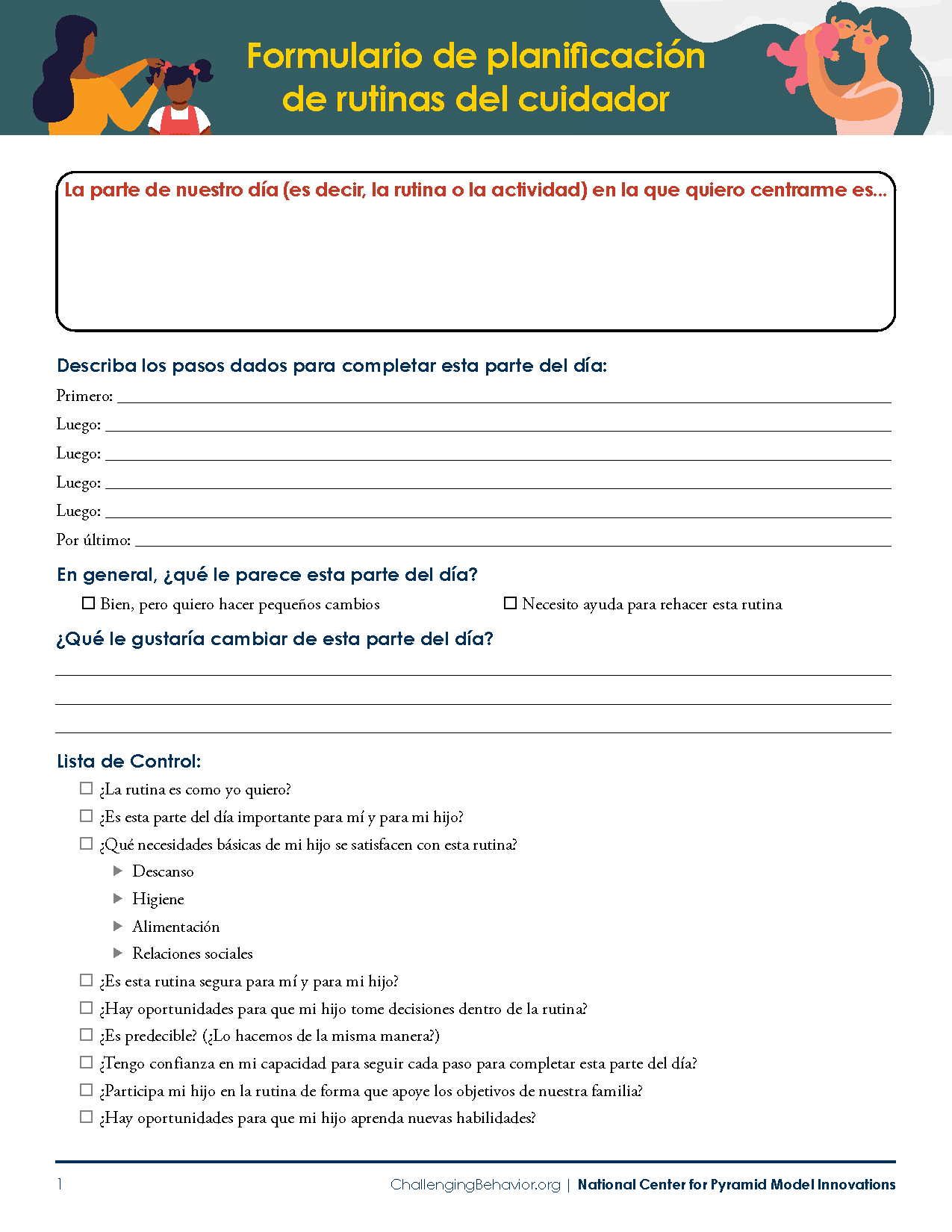
Caregiver Responsive Routines Planning Form (Spanish)

Early interventionists can use this form during home visits with caregivers to help them talk through their current daily routines as well as help them to plan out the ways they will embed supports that are responsive to their infant or toddler’s social-emotional development and teach new skills during specific moments in the family’s day.