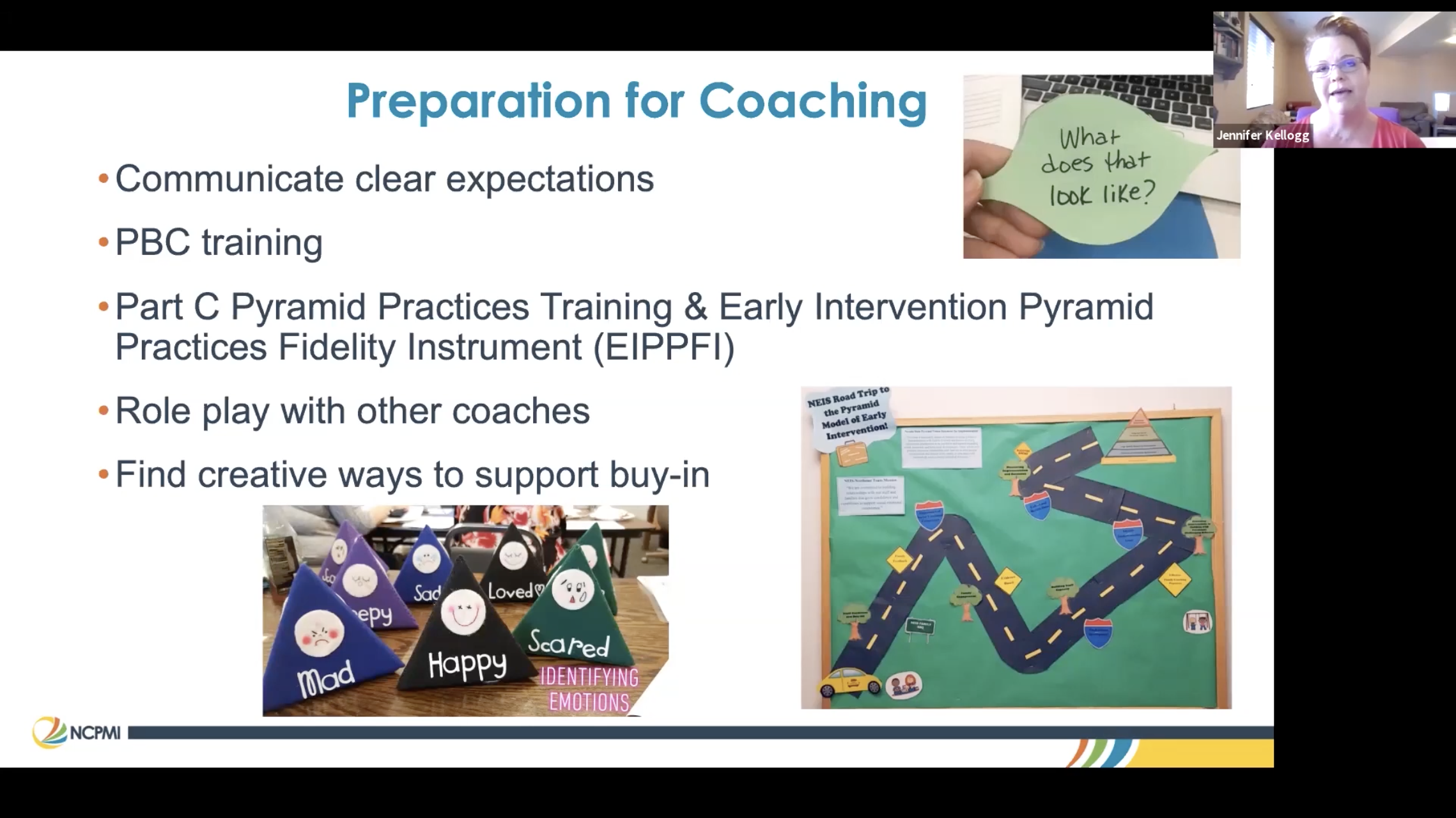
Addressing Behavior – How to Help Your Child Stop Biting (Arabic)
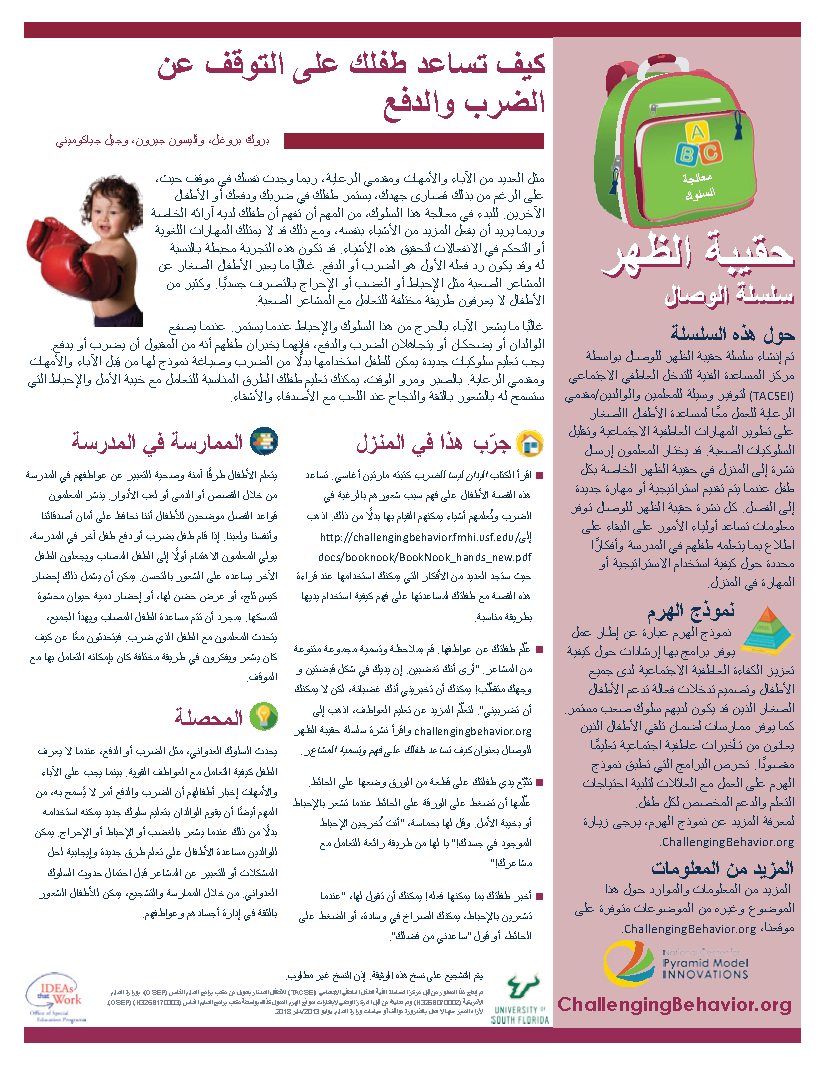
The Backpack Connection Series was created by TACSEI to provide a way for teachers and parents/caregivers to work together to help young children develop social emotional skills and reduce challenging behavior. Teachers may choose to send a handout home in each child’s backpack when a new strategy or skill is introduced to the class.
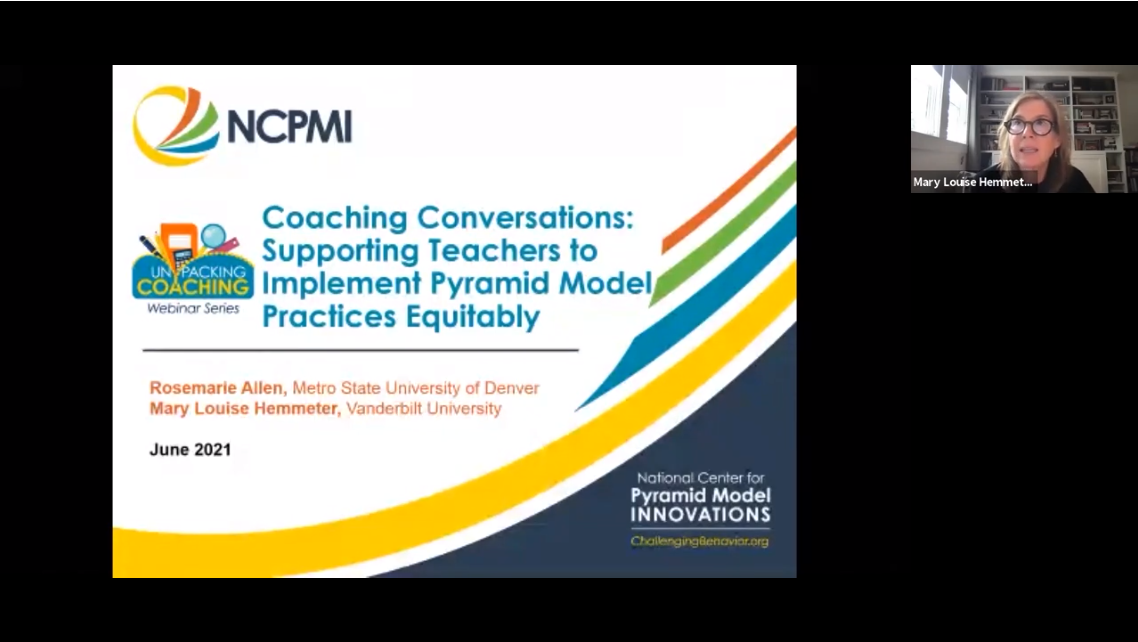
Coaching Conversations: Supporting Teachers to Implement Pyramid Model Practices Equitably

Coaches work collaboratively with teachers to support them in implementing Pyramid Model practices. Pyramid Model practices are designed to support young children’s development of social-emotional competence including emotional literacy, problem-solving, communicate their wants and needs, and peer relationship skills and to decrease the likelihood they will engage in challenging behavior. How do coaches support teachers … Read more

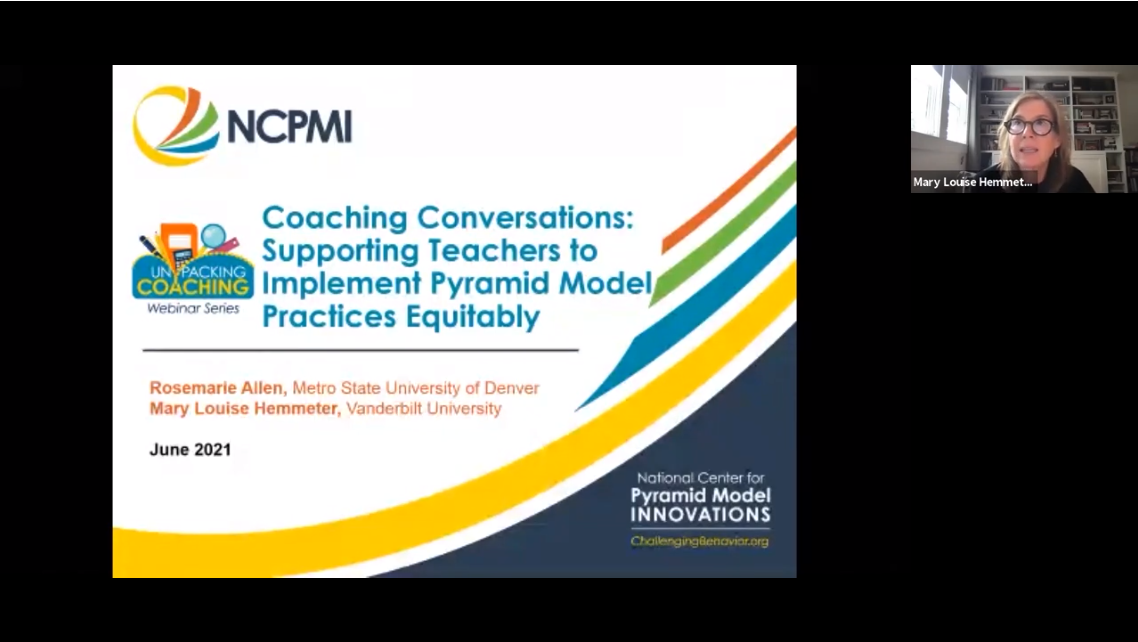
Coaching Conversations: Supporting Teachers to Implement Pyramid Model Practices Equitably

Coaches work collaboratively with teachers to support them in implementing Pyramid Model practices. Pyramid Model practices are designed to support young children’s development of social-emotional competence including emotional literacy, problem-solving, communicate their wants and needs, and peer relationship skills and to decrease the likelihood they will engage in challenging behavior. How do coaches support teachers to ensure they are using Pyramid Model practices to address the individual needs of each and every child in their classroom? In this webinar, panelists will discuss ways coaches can support teachers to implement Pyramid Model practices equitably.

Critical Considerations for the Return to School for Young Children

Join NCPMI leaders Lise Fox and Mary Louise Hemmeter for a discussion about what practices should be implemented to support children as they return to the classroom. The presenters will identify the priority social-emotional teaching practices for the preschool classroom, the use of Pyramid Model practices to support children entering kindergarten, and partnerships with families.

Critical Considerations for the Return to School for Young Children

Join NCPMI leaders Lise Fox and Mary Louise Hemmeter for a discussion about what practices should be implemented to support children as they return to the classroom. The presenters will identify the priority social-emotional teaching practices for the preschool classroom, the use of Pyramid Model practices to support children entering kindergarten, and partnerships with families.

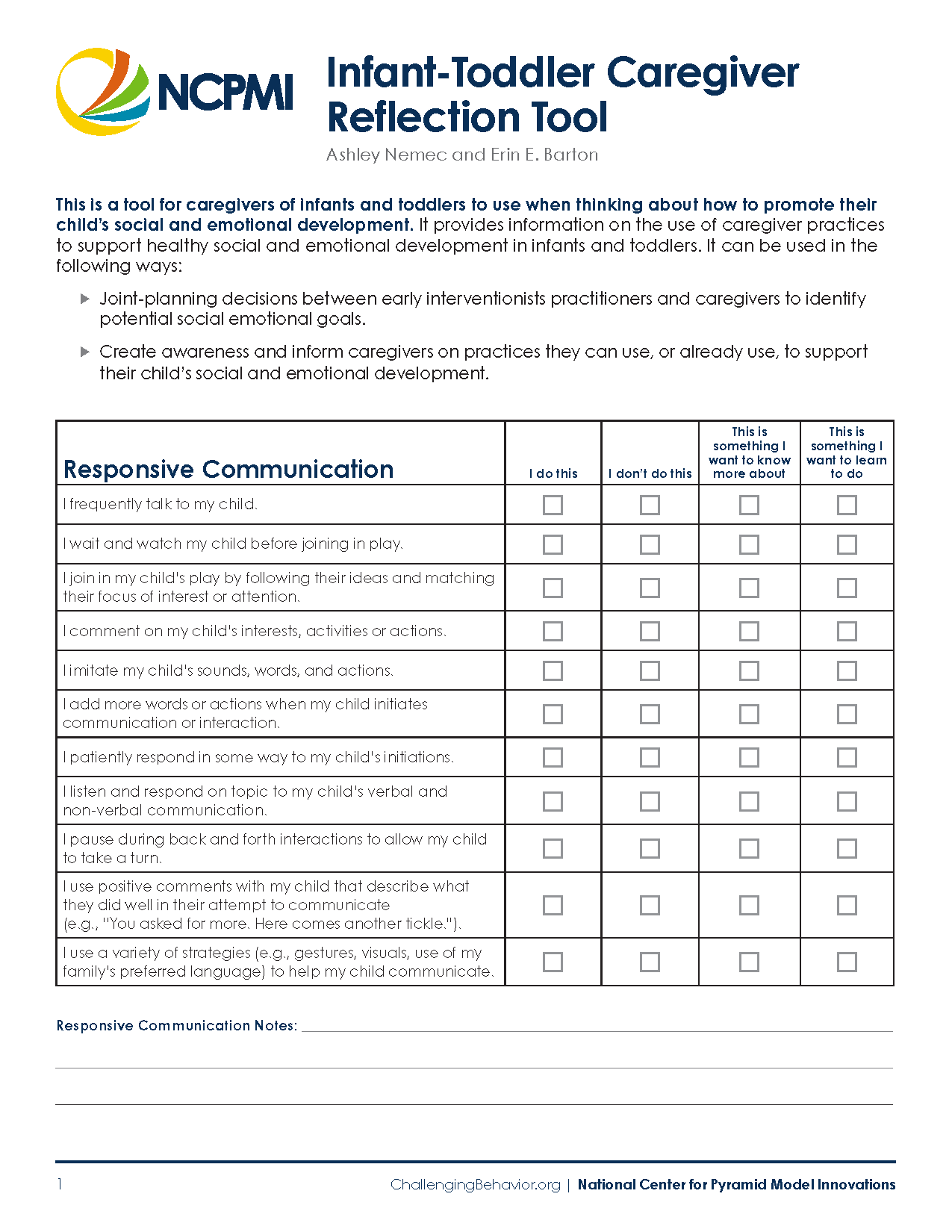
Infant-Toddler Caregiver Reflection Tool

This tool provides information on the use of caregiver practices to support healthy social emotional development in infants and toddlers. Early interventionists and caregivers can use this tool to build awareness and inform caregivers about what practices they currently use or can use to support their child’s healthy social emotional development. This tool might also be used to aid joint planning decisions when identifying social emotional goals with caregivers.

2018-2019 Rooted in Relationships Executive Summary

Rooted in Relationships is an initiative in Nebraska that focuses on 0-8 social emotional development, a big portion of what we do involves implementing the Pyramid Model in Child Care Centers and Homes. We also collaborate as a co-lead on the PSLT. Our annual report demonstrates the effectiveness of the Pyramid Model in our initiative … Read more

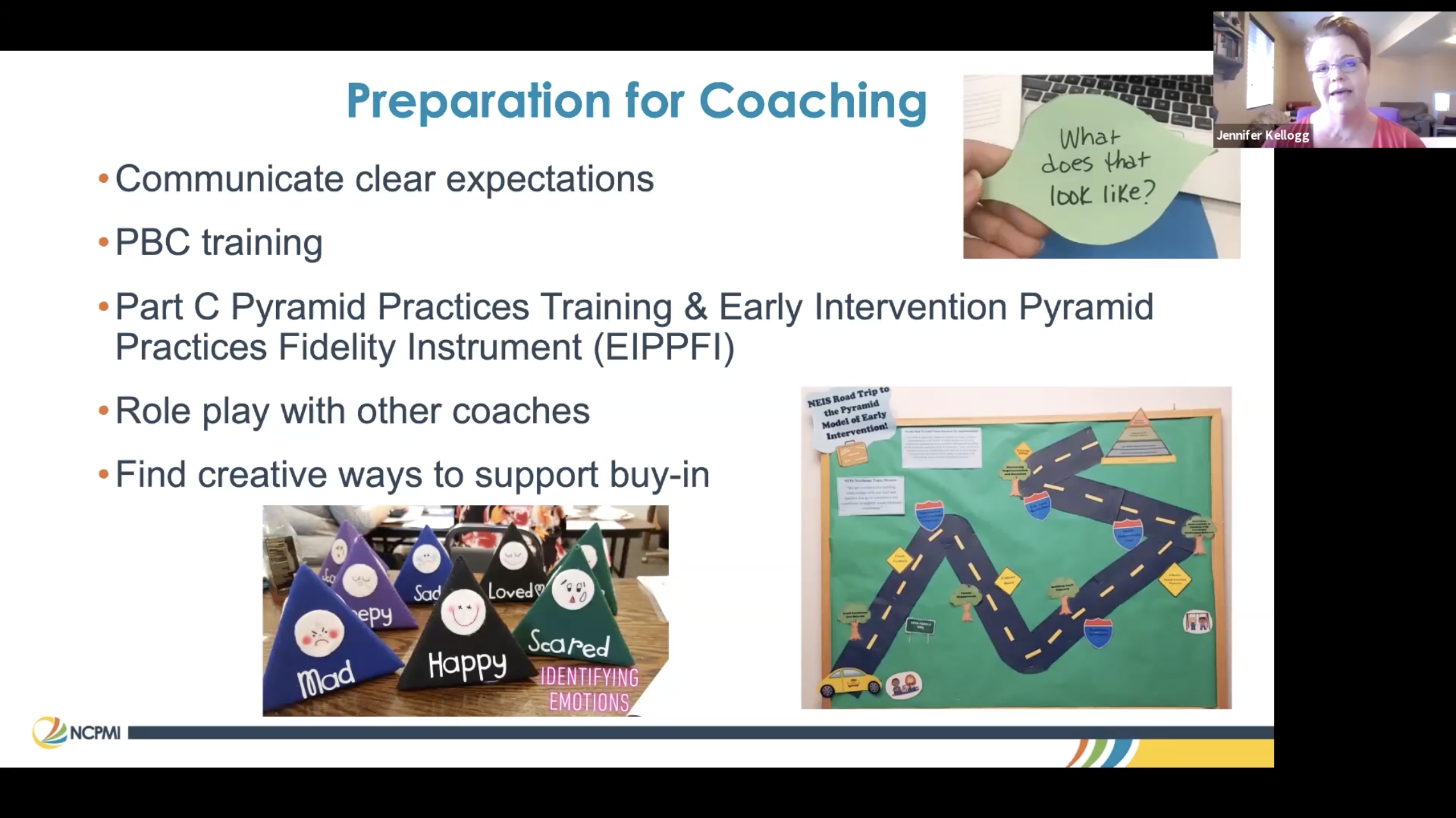
Using PBC to Coach Early Interventionists

Practice-Based Coaching (PBC) is an evidence-based coaching approach that supports practitioners to use effective teaching practices to promote positive child outcomes. PBC can be implemented in a variety of settings, including classrooms and center-based programs, family childcare homes, and early intervention and home-based programs. This webinar will outline the components of PBC and describe how … Read more

Using PBC to Coach Early Interventionists

Practice-Based Coaching (PBC) is an evidence-based coaching approach that supports practitioners to use effective teaching practices to promote positive child outcomes. PBC can be implemented in a variety of settings, including classrooms and center-based programs, family childcare homes, and early intervention and home-based programs. This webinar will outline the components of PBC and describe how to use PBC to coach early interventionists who are working with families in homes. The panelists will focus on using PBC to coach early interventionists to support families in enhancing their child’s social emotional competence. Panelists will share their experiences using PBC to coach early interventionists.

Coaching in a Virtual World

Due to the COVID pandemic, coaches and coachees have needed to adapt their coaching delivery and social-emotional teaching practices to a virtual format. Some of these practices are easier to adapt than others, leaving coaches and coachees wondering what to do. This webinar discusses how Pyramid Model practices can be used in virtual learning and strategies for implementing coaching of teachers virtually, including how to conduct observations and collect information on coachee practices.